Astrophotography lens advice

dbay

Suspended / Banned
Messages
344
Name
David Bayley
Edit My Images
Yes
I'm looking to have a go at astrophotography but only have a kit lens and a telephoto lens. After doing a small amount of research I have realised what I have isn't an optimum setup for what I'm trying to achieve.

So my question is what lens would be best suited for these night time shots? Makes and model numbers would help me a great deal as I'm still trying to understand all the abbreviations and meanings.

Camera I will be using is a nikon d5600 aps c sensor (so x 1.5 I believe) budget is circa £500.

Thanks in advance for the comments and input.
 
I have seen a nikon af-s 20mm f/1.8g ed local to me for decent money, but from what I've read it's a fx lens so would be a 30mm on my dx body.
 
I have seen a nikon af-s 20mm f/1.8g ed local to me for decent money, but from what I've read it's a fx lens so would be a 30mm on my dx body.
Sorry, no comment on that lens, but just general focal length information to help you out: all lenses, even ones designed for crop sensors, have their focal lengths written in full frame format.
 
When you say astrophotography I assume you mean wide starry landscape type shots rather than telescope type stuff?

Worth mentioning that before spending anything, if you have an 18-55 kit lens or similar, you already have something to get started with.

If you're after star trail images you can more or less choose any lens you fancy, stop it down to f/8, set the camera up to do long interval timed exposures and blend it all together later. Where it gets trickier and normally more expensive is when you want the stars to appear as points rather than lines. To do this, you need to let as much light into into the camera as quickly as possible. Some good guides on this, look up the '500 rule' as a starter.

On the assumption that you want to avoid star trails, it really depends how serious you are about it. Basic, normal ingredients are wide angle and wide aperture but many lenses have very soft corners wide open aren't ideal for this. You'll also read a bit about coma where bright stars at the edges of your image become an elongated shape. I'm not sure how important this really is in creating interesting images but if you ever print big it might be.

Hard to argue against the tokina 11-16 or 11-20 mentioned above. There's the ever popular samyang 10 and 14mm options too. You could also consider buying a full frame ultra wide instead. I rarely ever suggest this but the big benefit for astro is that you won't be using the corners which will always be the weaker areas. Something like a Tamron 15-30 or tokina 16-28 would be huge but would deliver great results and still be quite wide. Not sure on prices though.
 
I have seen a nikon af-s 20mm f/1.8g ed local to me for decent money, but from what I've read it's a fx lens so would be a 30mm on my dx body.

That doesn't stop you from doing panoramic shots with it. I have Sigma 35mm and for the ultimate IQ I'd maybe go through hassle of getting some 4 or 8 frames of the sky and then a few more longer exposures for the foreground. Well, I am yet to do this...

But zoom I thought would be more useful in general.
 
That doesn't stop you from doing panoramic shots with it. I have Sigma 35mm and for the ultimate IQ I'd maybe go through hassle of getting some 4 or 8 frames of the sky and then a few more longer exposures for the foreground. Well, I am yet to do this...

But zoom I thought would be more useful in general.

Only slight snag with longer lenses is that they're effectively magnifying star movement, so you'd need a higher shutter speed to avoid it or just not view it too large. If you stitch as you say and then don't view or print at 100%, that's not big issue assuming it's all stitched together nicely. No right or wrong approach of course but thought I should mention this as being a consideration. Many gravitate to wider lenses to get around this but one of my favourite astro photographers shoots a lot of stuff at 35mm or 50mm and stitches it. Though he is using 1.4 lenses which helps keep shutter speeds down. Speaking of which, the Sigma 20mm 1.4 Art lens sells used for about the same price as Nikon 20mm 1.8, think I paid just over £400 for mine. That's what I use for astro and it's a super lens. Downside is that it's huge, can't take filters and does show a bit of coma on full frame.
 
Only slight snag with longer lenses is that they're effectively magnifying star movement

Absolutely, but then moving from f/2.8 lens to f/1.4 reduces the problem to comparable levels, and larger image size helps to hide the noise. But then it is a lot of hassle and depth of field requires serious focus stacking efforts for foreground.
 
Just get the Samyang 14mm f1.4 for your Nikon.

this will give you 21mm EFL but with a large aperture to gather the light (which is at the top of your priority list with astro).

If you use a shutter speed of 23 seconds you won't get stars trailing.
 
Sorry, no comment on that lens, but just general focal length information to help you out: all lenses, even ones designed for crop sensors, have their focal lengths written in full frame format.

Thank you for bringing that to my attention, I wasn't aware that the focal length was in fx on all lenses.

When you say astrophotography I assume you mean wide starry landscape type shots rather than telescope type stuff?

Worth mentioning that before spending anything, if you have an 18-55 kit lens or similar, you already have something to get started with.

If you're after star trail images you can more or less choose any lens you fancy, stop it down to f/8, set the camera up to do long interval timed exposures and blend it all together later. Where it gets trickier and normally more expensive is when you want the stars to appear as points rather than lines. To do this, you need to let as much light into into the camera as quickly as possible. Some good guides on this, look up the '500 rule' as a starter.

On the assumption that you want to avoid star trails, it really depends how serious you are about it. Basic, normal ingredients are wide angle and wide aperture but many lenses have very soft corners wide open aren't ideal for this. You'll also read a bit about coma where bright stars at the edges of your image become an elongated shape. I'm not sure how important this really is in creating interesting images but if you ever print big it might be.

Hard to argue against the tokina 11-16 or 11-20 mentioned above. There's the ever popular samyang 10 and 14mm options too. You could also consider buying a full frame ultra wide instead. I rarely ever suggest this but the big benefit for astro is that you won't be using the corners which will always be the weaker areas. Something like a Tamron 15-30 or tokina 16-28 would be huge but would deliver great results and still be quite wide. Not sure on prices though.

I'm going to start small for the time being, I'll start with single shots and work my way up to stacking once I have the gist of things. From what I've read is I need a short focal length and a wide appature. But exactly with lens will be best suited as I'm still learning that part and the to confuse things a little further for me is the fx and dx formats which I now think I understand.

That doesn't stop you from doing panoramic shots with it. I have Sigma 35mm and for the ultimate IQ I'd maybe go through hassle of getting some 4 or 8 frames of the sky and then a few more longer exposures for the foreground. Well, I am yet to do this...

But zoom I thought would be more useful in general.

The lens needs to be multi purpose so I can get the full benefit from it.

Just get the Samyang 14mm f1.4 for your Nikon.

this will give you 21mm EFL but with a large aperture to gather the light (which is at the top of your priority list with astro).

If you use a shutter speed of 23 seconds you won't get stars trailing.

Thanks for that, I did look at these the other day. I'll have another look to see what I can find.
 
Just get the Samyang 14mm f1.4 for your Nikon.

this will give you 21mm EFL but with a large aperture to gather the light (which is at the top of your priority list with astro).

If you use a shutter speed of 23 seconds you won't get stars trailing.

Maybe just a typo but the samyang is a 2.8 lens. 1.4 would be nice!
 
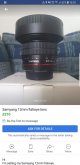
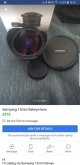
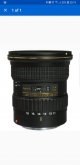
Would a fish eye be ok for astro work? Screenshot_20180828-165248_Facebook.jpg Screenshot_20180828-165300_Facebook.jpg
 
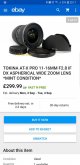
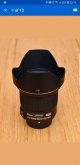
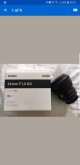
A few lenses that I have my eye on and are in budget, plus they are within a 30 mile radius from me so I can collect them and check the condition ect. So what is ideally more important. The focal length or the f stop? Which would you go for out of the bunch for doing single shot sharp pictures for night time aswell as day time (aswell as the 12mm fisheye lens above)

Many thanksScreenshot_20180830-201723_eBay.jpg Screenshot_20180830-201807_eBay.jpg Screenshot_20180830-201907_eBay.jpg Screenshot_20180830-201923_eBay.jpg Screenshot_20180830-201941_eBay.jpg
 
Guide me through this , I think I have all the gear but definetly no idea , never done night photography successfully so let’s start with the gear . Got a nice c/f sturdy tripod , a couple of heads 3 way pan and tilt and a jobu lightweight gimbal , camera either Panasonic g80, Olympus omd 10-mkii , or a canon 7D which I think I have wired remote for or even a wireless one , lenses for the mft bodies. A NIKKOR 50mm f1.8 or for the canon one a Helios 44m .
So what would the set up be , what exposures would I need for stars etc . I live on the north wales coast with easy access to the clwydian mountains or out over the Irish Sea , should I face north or south for best results ,help me Wanda !
 
See, that leads me onto another issue. What remote can I use on a d5600 (n)
 
Fisheye is a very specialist lens and only f/2.8. I'd basically run away from it unless you already have everything you could dream of. It's maybe good for diving if you can find a case for it.
 
Thanks for the help and advice everyone who participated. I have plumped for the nikkor 20mm f/1.8 lens and seeing as it's given a reasonably clear night in my location I will be out in the garden experimenting.
 
Back
Top