Stacking loads of pictures. That shot will have been taken with a high speed webcam on the end of a telescope, quite possibly with an effective focal length of 4 or even 6 metres. The webcam shoots video and software picks out the best frames and stacks them up adding together the signal elements and averaging the noise so the more frames the better the signal to noise ratio.
Paul.
I doubt it'll be a webcam, more likely one of the higher end Starlight Xpress or SBIG cameras. Perhaps even something more pricey with AO (adaptive optics - imagine IS on steroids where you're correcting for distortion caused by the atmosphere). Regular web/video cameras just have too much noise without some form of sensor cooling, even a DSLR isn't suited to the task.
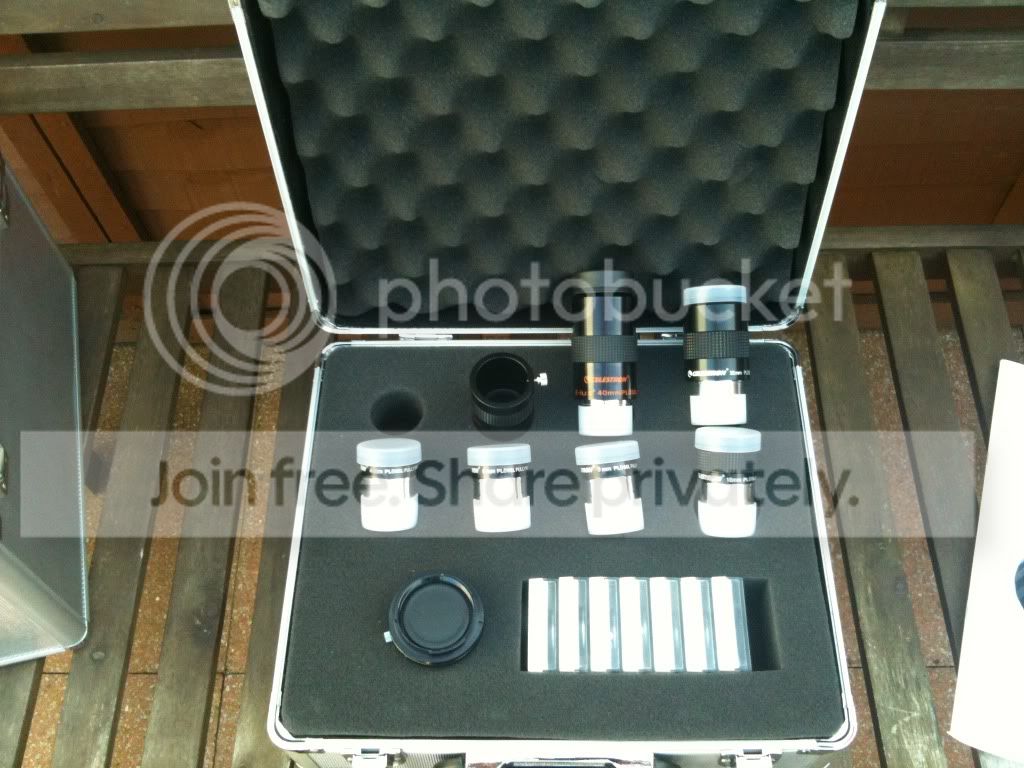
It looks too narrow field to be the sensor at the prime focal point, so he's probably doing eyepiece projection.
But yes, it'll be hundreds of images stacked, perhaps even selectively stacked for the moons.
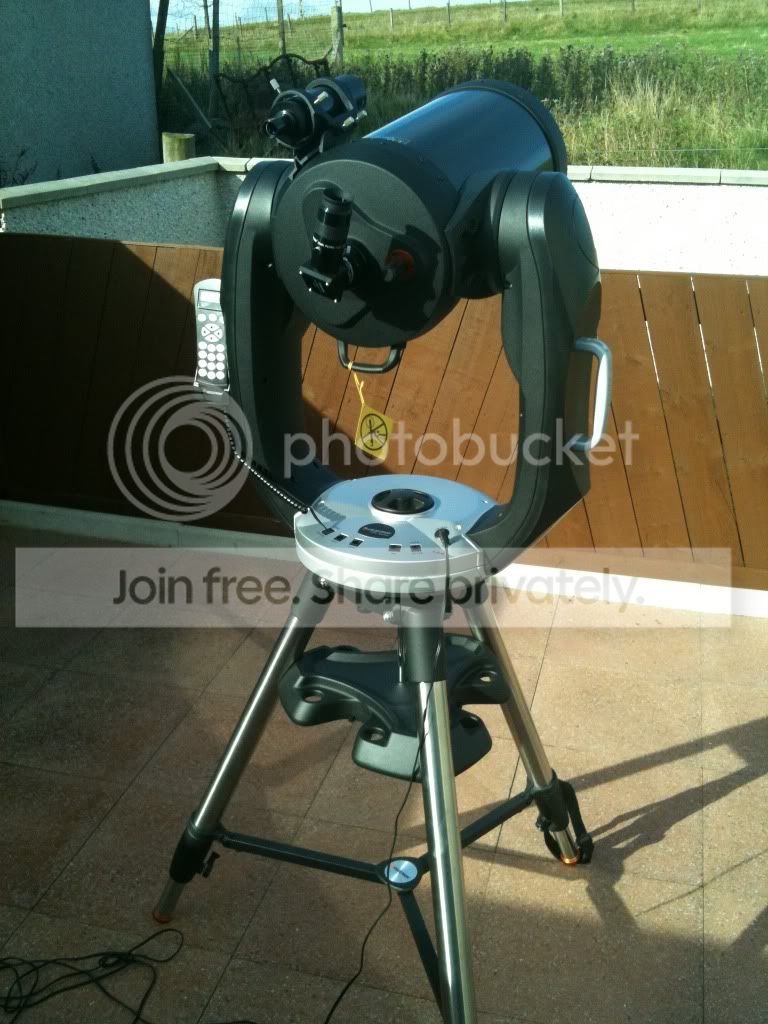
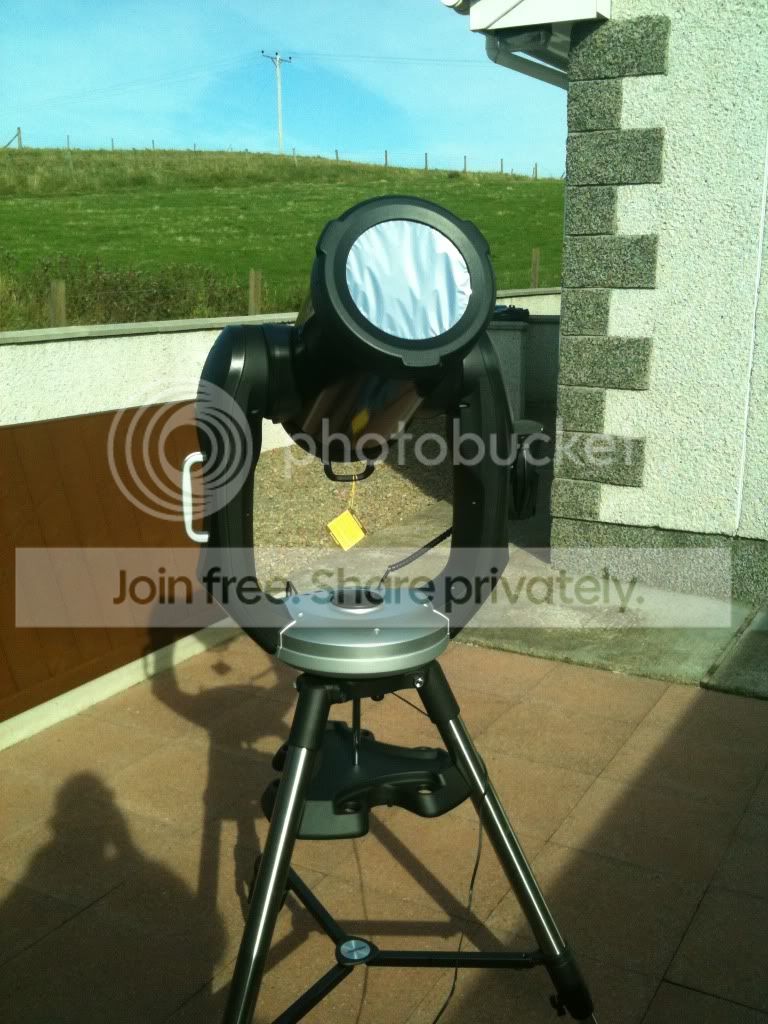
I used to have a (B&W) Starlight Xpress setup, on a 8" Celestron, on a Losmandy mount when I lived in the US (all told, the setup cost somwhere around $8000), and never got anywhere near that quality.
Astrophotography is one area where gear really does make a huge difference though, that image is probably on a 16"+ scope, using good eyepieces (probably 2" rather than the 'cheap' 1.25" eyepieces I had), probably a total cost somewhere in the 'large house' bracket.
Edit:
His site (
http://www.damianpeach.com/observatory.htm) has some info on his setup, it'll probably be the 14" Celestron, and his camera is either a Lumenera LU075M (
http://www.framos-imaging.com/lumenera_usb_lu070lu075.html?&no_cache=1&L=1) or Lumenera Skynyx 2.0M (
http://www.framos-imaging.com/lumenera_usb_skynyx20.html?&L=1)




 Maybe one day I'll learn how to do deep-space photography...