Astro Photography

EdinburghGary

Reply not Report
Suspended / Banned
Messages
19,271
Name
Gary
Edit My Images
Yes
I am very interested in seeing the responses as I have a telescope (ebay special - SEBEN) and would like to do this, however not had much luck with using the telescope. All I can ever see is darkness.....
 
Can I ask, what kind of setup would you need for these shots?

Just guessing but Hubble telescope should do it :)
 
Gary, you are having a laugh with that second pic from Star Wars. And the other two are pretty much out of this world too.
 
Gary, you are having a laugh with that second pic from Star Wars. And the other two are pretty much out of this world too.

There are lots of very similar examples all over the web. Are you saying it's impossible to do and these are photoshops? Or that it's just gonna cost too much?

Gary.
 
This is something that I have always been very interested in but as yet have not been able to bring it to fruition, I will one day though. :D

I have found this website and it specializes in all thing astronomy as well as having a classifieds section.

I hope this helps you out.

Cheers..,
 
Ok.. you can do that with my gear...

Scuse the poor picture..
IMG_7468.jpg


IMG_7465.jpg


Something to understand... the mount is key... if you want to do LX astrophotography...

The mount I have is a Skywatcher HEQ5 Syntrek (it's kinda designed for PC control really). Depending on how much weight you're going to want to put on top will determine whether this will suffice or you'll want the EQ6 or HEQ6 pro...

My pair of scopes weigh about 5 Kg in total.. they are a pair of refractors, one an Achromat (you get CA) guiding scope, the other is a near Apochromat (near because it only has a doublet lens cell, but it does a very good job correcting the CA) inmaging scope. I bought both of them in sales, so got them very cheap... but the equiv to the imaging scope is

http://firstlightoptics.com/proddetail.php?prod=evostar_80ed_ds

and the guide scope

http://firstlightoptics.com/proddetail.php?prod=st80ota

Connected to the guide scope I have a camera, this is connected to my PC which runs software that tracks stars at the subpixel level, so when the star starts to shift, the PC sends some correction signals to the mount. This has enabled me to shoot exposures of over 20 minutes without any sign of star trailling.

As for the capturing camera, you can use a dSLR, canon are best supported by the available astro software, but the others will work as well. The other option is a dedicated cooled astro CCD (big money for a decent resolution).

The image of M42 (first one) has been taken using either an Astro cam without an IR filter or a modded SLR (Canon again seems better supported for modding), which has had the IR filter over the sensor removed. The quantity of red in the image, is Hydrogen Alpha emissions which is in the IR spectrum. Here's my image of M42 shot with the kit detailed above with my unmodded SLR, you will see it's much bluer.

m42-14-22-feb-final.jpg


As for telescopes... if you're talking about looking, then the bigger the aperture the better (not focal ratio)... the larger aperture gathers more light, therefore makes the target easier to see. For photography, the focal ratio (exactly the same as on your camera lenses) is key, but... aperture also defines resolution, so more aperture, the more fine detail you can pick up.

A large aperture refractor will cost huge sums of money... I think I saw a 180mm refractor costing £18,000 pounds, a focal length of something like 2m, weighing in at 150kg. A 200mm reflector (uses a pair of mirrors to focus the light, instead of a lens), the closest in size, is available for significantly less. The diffraction spikes on the first image, are either inserted in processing, or caused by the spider vanes that hold the secondary mirror.

Once you have captured the data, with whatever camera, you will have a series of shorter exposures, be that 2 minutes or 20 minutes, then you stack them using something like DeepSkyStacker, to increase the SNR, remove planes, satellite trails etc. Save pass off to PS and start the processing...

HTH somewhat

 
Ok.. you can do that with my gear...

Scuse the poor picture..
IMG_7468.jpg


IMG_7465.jpg


Something to understand... the mount is key... if you want to do LX astrophotography...

The mount I have is a Skywatcher HEQ5 Syntrek (it's kinda designed for PC control really). Depending on how much weight you're going to want to put on top will determine whether this will suffice or you'll want the EQ6 or HEQ6 pro...

My pair of scopes weigh about 5 Kg in total.. they are a pair of refractors, one an Achromat (you get CA) guiding scope, the other is a near Apochromat (near because it only has a doublet lens cell, but it does a very good job correcting the CA) inmaging scope. I bought both of them in sales, so got them very cheap... but the equiv to the imaging scope is

http://firstlightoptics.com/proddetail.php?prod=evostar_80ed_ds

and the guide scope

http://firstlightoptics.com/proddetail.php?prod=st80ota

Connected to the guide scope I have a camera, this is connected to my PC which runs software that tracks stars at the subpixel level, so when the star starts to shift, the PC sends some correction signals to the mount. This has enabled me to shoot exposures of over 20 minutes without any sign of star trailling.

As for the capturing camera, you can use a dSLR, canon are best supported by the available astro software, but the others will work as well. The other option is a dedicated cooled astro CCD (big money for a decent resolution).

The image of M42 (first one) has been taken using either an Astro cam without an IR filter or a modded SLR (Canon again seems better supported for modding), which has had the IR filter over the sensor removed. The quantity of red in the image, is Hydrogen Alpha emissions which is in the IR spectrum. Here's my image of M42 shot with the kit detailed above with my unmodded SLR, you will see it's much bluer.

m42-14-22-feb-final.jpg


As for telescopes... if you're talking about looking, then the bigger the aperture the better (not focal ratio)... the larger aperture gathers more light, therefore makes the target easier to see. For photography, the focal ratio (exactly the same as on your camera lenses) is key, but... aperture also defines resolution, so more aperture, the more fine detail you can pick up.

A large aperture refractor will cost huge sums of money... I think I saw a 180mm refractor costing £18,000 pounds, a focal length of something like 2m, weighing in at 150kg. A 200mm reflector (uses a pair of mirrors to focus the light, instead of a lens), the closest in size, is available for significantly less. The diffraction spikes on the first image, are either inserted in processing, or caused by the spider vanes that hold the secondary mirror.

Once you have captured the data, with whatever camera, you will have a series of shorter exposures, be that 2 minutes or 20 minutes, then you stack them using something like DeepSkyStacker, to increase the SNR, remove planes, satellite trails etc. Save pass off to PS and start the processing...

HTH somewhat


Awesome photo and post. It looks like a lot of work and a lot of skill to learn. Not sure if I can cram it in at the moment.

Not sure what to do really. My wife wants a telescope, but I don't want to spend cash on something that can't eventually be enjoyed with the camera.

Gary.
 
Thanks Gary :D..

What does she want to look at Gary ? there's very few things that can't at some point be coupled to a camera.. you might need to invest in some things at a later date though. Something like http://firstlightoptics.com/proddetail.php?prod=dobsky200 will get cracking good views, easy to use and cheap to boot. At some later date you could mount that scope on an EQ mount... ok, you'd need the EQ6/HEQ6 pro but then you could couple the camera and be off, into the dark arts of imaging.
 
Thanks Gary :D..

What does she want to look at Gary ? there's very few things that can't at some point be coupled to a camera.. you might need to invest in some things at a later date though. Something like http://firstlightoptics.com/proddetail.php?prod=dobsky200 will get cracking good views, easy to use and cheap to boot. At some later date you could mount that scope on an EQ mount... ok, you'd need the EQ6/HEQ6 pro but then you could couple the camera and be off, into the dark arts of imaging.

I dunno - the planets I guess, basically she is a bit of a trekkie like me, and loves the thought of star gazing. I can't help but think of "big and bright", but I presume the Astrophoto's and what you see through the scope, are two VERY different things!!!

I mean is it possible to see star clusters up close through these things? With nice vivid colours?

Gary.
 
You will need a good computer driven telescope ( for finding and tracking objects), and for long exposures, you will need an equitorial mount.
You can find all the equipment you want HERE, obviously, there are other suppliers! A minimum size scope for deep sky imaging is going to be about 6 inches, more is better, most images you see posted like the ones you linked to will be with an 8, 10 or 12 inch scope.

If you start off with a computerised scope, you could use a DSLR to take images but will need an adapter ( to fit it to the scope) and software to process the images.
To get better quality, low noise images of deep space objects, you probably need a good quality CCD, something to guide it accurately with long exposures ( as well as the computerised telescope) and software to process the image. A laptop is useful too!
The cost goes up if you want better images and getting those images takes time. I would budget about £1000 as a starting point for basic imaging with a DSLR, bearing in mind that a heavy camera will need a sturdy mount and telescope with a good quality motor. Then you may need counterbalance weights....... the list goes on..

Allan
 
Jgs, if budget helps - whilst I don't want to spend just for the sake of it, I would consider spending up to £1k. I would only spend it if I needed to, or if it led to a much better experience for her in terms of clarity / reach etc.

Gary.
 
For this you need a good telescope optics (Meade springs to mind) and good cooled dedicated CCD - not SLR. Then you'd need Photoshop exposure blending plugins to produce false coloured images out of multiple exposures and lots of spare time...

:plusone:

A prime SCT (Schmitt-Cassegrain) by either Meade or Celestron, minimum 8" reflector eg. Celestron Nexstar 8se circa £1000,, best thing about these is you don't really need to know the sky at all, it's just a case of inputting your location and setting the telescope and let the computer find everything for you. and of course a good CCD these fit to the eye-piece (or replaces) and feeds direct to a laptop so you can sit inside and star gaze....:thinking: (sort of spoils it though IMO) :lol:.

Most important: Location; i wouldn't expect particularly decent results if you live in a town or close to one, unless you're looking at the moon or saturn at best. If you do, expect to have to travel on dark, clear, cold nights.

BTW, it's a subject i love and have decided i just live in the wrong place to justify the expense :(.

BTW, whats the gig with #2? :eek::thinking:
 
I mean is it possible to see star clusters up close through these things? With nice vivid colours?

Gary.

No vivid colours on star clusters with the naked eye. You need Jgs001's gear for that.

Allan
 
Cameras are great as they can see things we cant. Even a relatively modest SLR can see things a human eye cant even with a relatively large telescope.

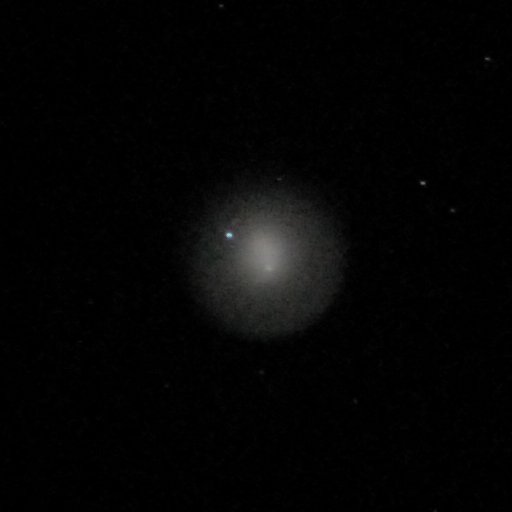
This is just a 300mm lens
holmes_2007-11-02.jpg

On the arty front it may not be great but its still a very informative photo.

This one is a SLR attached to a relatively small 9.25” telescope.
image.ashx

Looks great even with only a 3 minute exposure.

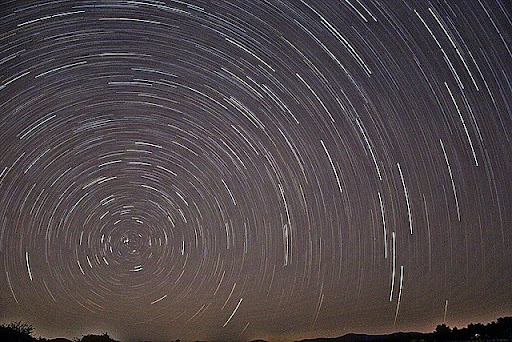
A big problem is that we are not stood still
Polestar-UMa-1.JPG

So a tracking stand really can help.

Other problem is how do you take photos of things you cant see?
 
I dunno - the planets I guess, basically she is a bit of a trekkie like me, and loves the thought of star gazing. I can't help but think of "big and bright", but I presume the Astrophoto's and what you see through the scope, are two VERY different things!!!

I mean is it possible to see star clusters up close through these things? With nice vivid colours?

Gary.

Hi Gary

You will not see vivid colours through any telescope as most of the colour in the photos are out of the range of the human eye! You may get a hint of colour but I'm afraid that's all. Astrophotography is an extremely skilled area to learn but very rewarding.
 
There are lots of very similar examples all over the web. Are you saying it's impossible to do and these are photoshops? Or that it's just gonna cost too much?

Gary.

Gary apologies mate, I was taking the mick a bit. Sorry fella, but I think perhaps all of the above.

I guess you've got the answers now - specialist gear, specialist techniques, turning non visible stuff visible etc etc. Sounds incredibly interesting and challenging, but well beyond what I can relate to in regular photographic terms.

Looking on the bright side, at least you've got the tripod :D
 
Gary apologies mate, I was taking the mick a bit. Sorry fella, but I think perhaps all of the above.

I guess you've got the answers now - specialist gear, specialist techniques, turning non visible stuff visible etc etc. Sounds incredibly interesting and challenging, but well beyond what I can relate to in regular photographic terms.

Looking on the bright side, at least you've got the tripod :D

Can you believe those b@*****s have the odacity to sell you a tripod at £800, and it has NO quick release! :D

Ordered a wee addition, £69.

Gary.
 
I'd suggest having a word with Steve at First Light Optics. He'll steer you right. No relationship other than as a satisfied customer. But if you wanna image it's damnably costly and it's all specialist gear to boot, although I could use my scopes for birding and spotting... if I could work out how the hell I adjust focus fast enough using a wheel... For up to a grand you can get a superb huge light bucket, that's easy to use and will mount on an EQ at some point in the future if you want.

Oh, btw... if she wants to have a look see to start and see if it's something she wants to get into... a pair of 10x50 binoculars are ideal. Magnification is meaningless on stars... (well excepting one, and you need specialist gear, yep more expense, to see that one properly and directly). Won't be so good on the moon, but you'll still get more detail than the naked eye. Viewing carefully with them mounted on a tripod you can see the rings of Saturn and the 4 galilean (the big ones) moons of Jupiter.
 
I'd suggest having a word with Steve at First Light Optics. He'll steer you right. No relationship other than as a satisfied customer. But if you wanna image it's damnably costly and it's all specialist gear to boot, although I could use my scopes for birding and spotting... if I could work out how the hell I adjust focus fast enough using a wheel... For up to a grand you can get a superb huge light bucket, that's easy to use and will mount on an EQ at some point in the future if you want.

Oh, btw... if she wants to have a look see to start and see if it's something she wants to get into... a pair of 10x50 binoculars are ideal. Magnification is meaningless on stars... (well excepting one, and you need specialist gear, yep more expense, to see that one properly and directly). Won't be so good on the moon, but you'll still get more detail than the naked eye. Viewing carefully with them mounted on a tripod you can see the rings of Saturn and the 4 galilean (the big ones) moons of Jupiter.

Any examples of this light bucket you refer to? :D

Gary.
 
You will not see vivid colours through any telescope

I concur that and in addition to my earlier post this is the PS plugin I was referring to. It is free and can be used to false colour the galaxies, nebulaes and the rest of them to what you see on all those Astro publications.
 
How about
http://firstlightoptics.com/proddetail.php?prod=swskyliner300p
Can be converted to EQ mounting for imaging, with the addition of rings and a bar

or if you want one that tracks without you having to move it...

http://firstlightoptics.com/proddetail.php?prod=skyliner_300p_flextube_auto
that you won't be able to eq mount for imaging.

They are both quite large... tube length 1500mm

Thanks mate. Is there a good combo of the two? One which tracks AND can have EQ / or evening comes with EQ in the box? :D

Sorry for all the silly questions.

Gary.
 
Dalex, why false colour the images ? I didn't add any colour to my M42 image. The colours are there, you just need enough exposure time to capture them.

Unless you get an absolute monster of a scope, there is not enough light coming into the eye to activate the cones (colour sensors), only the rods (B&W) being far more sensitive are active, known as dark adaptation and takes about 30 minutes ish.
 
Uh-oh, do I detect a little competition creeping in from Mrs EG? lol

Just dont forget that if you get to play with hers, she'll wanna play with yours :lol::lol:
 
You mean like this beast :D

http://firstlightoptics.com/proddetail.php?prod=sw300peq6pro

you may need a step of some sort to stand on to look through the eyepiece.

have a look through ...

http://firstlightoptics.com/products.php?cat=28&pg=3

Bear in mind, these are very large, and very heavy.... That rig I posted a shot of weighs about 30Kg... that's 5Kg of scope, 5Kg of counterbalance, and the rest is the tripod and head.

They looks sweet. Easy to setup and use for a COMPLETE novice? Do I just put in "star system" like a sat nav and press "Make it so" :D ?

I have Earl Grey you know!

Gary.
 
Oh... Gary, I forgot... power.. you'll need plenty of that too :D... I've been using a 17Ah power tank, and it's good for about 2.5 hours with my little kit... you can either use a 100Ah or something similar deep discharge leisure battery, or go mains.
 
Oh... Gary, I forgot... power.. you'll need plenty of that too :D... I've been using a 17Ah power tank, and it's good for about 2.5 hours with my little kit... you can either use a 100Ah or something similar deep discharge leisure battery, or go mains.


And these are useless when used in the city?

Gary.
 
They looks sweet. Easy to setup and use for a COMPLETE novice? Do I just put in "star system" like a sat nav and press "Make it so" :D ?

I have Earl Grey you know!

Gary.

Yeah right :D .... Who are you kidding :D..

I've managed to get my setup routing down so I can, from carting the kit out of the garage to starting the imaging run in about 30 minutes.

Setting up the tripod and levelling it is easy. Then you have to polar align the head, that's based on lattitude. Then load up the scopes, if they aren't already, and balance them out. Attaching a camera and focusing it will upset the balance. Then the mount moves in a strange way (or at least it feels like it when you're used to using a normal AltAz tripod. That's easy if you've got Goto as you can let the computer do that.

A lot will depend on your light pollution as to how big an aperture you need. That's why a lot of astronomers turn to imaging, as you can cut through the LP. However, there's someone in Southampton who is a visual astronomer and he has a 16" light bucket and works fine for him. Of course, mounting it on an EQ mount is going to be tough and even more expensive.
 
:lol:

That's why I suggested the Dobsonian mounting...

Cart it out... plonk it down... and off you go, you do have to find things yourself mind you... but "Turn Left at Orion" is a fab book for helping with that.
 
I think one of these may be in order ...


The Mount Claverham Observatory .. a friends 'home' in Bristol
 
I want something like that... or a roll off roof Obsy... a shed with a roof on wheels...
 
Guys,

Not an area I am hugely fussed in, but my wife is keen on getting a telescope so I thought I could have a play.

Can I ask, what kind of setup would you need for these shots?

http://www.flickr.com/photos/mattie_shoes/305603778/sizes/l/

http://www.flickr.com/photos/skiwalker79/3118030471/sizes/l/

http://www.flickr.com/photos/22397306@N07/3096168311/

Any help appreciated. Don't waste too much time, as not an area that I find *massively* important to my photography.

Gary.

You could probably do this with a budget of 1 to 1.5K if you invest wisely in second hand kit and use your DSLR as the main image camera. The list of stuff I'd get is as follows.

1) EQ6 telescope drive / mount. A big solid, accurate telescope drive which is capable of taking an AUTOGUIDER. I just bought off E-bay for 400 quid
10216-009-I01.jpg


2) Main imaging scope- a good APOCHROMATIC refractor will provide the wide image fields you are looking something like a Skywatcher 80ED. I bought it's bigger brother the 120mm ED on E-bay for 700 quid- the 80mm would be a lot less s/hand.
SW_E80_ED_APO.gif


3) Guidescope- a small wide field refractor like this Orion short tube 80. Typicaly around 100 quid new
80GuideScope.jpg


4) Auto Guiding Camera- fit to the guidscope , it feeds back micro adjustments to the EQ6 mount to keep star images pin sharp. This one is about 200 quid.
it030101.jpg


So a lot of money just for basic gear and then a steep learning curve to follow!!

A much cheaper and easier way into driven astrophotography is a basic driven camera mount like this one:

http://www.scsastro.co.uk/it240008.htm

or this one

http://www.scsastro.co.uk/it240001.htm

Then all you'll need is your camera and existing lenses and a cable release.
 
Back
Top