Ok.. you can do that with my gear...
Scuse the poor picture..
Something to understand... the mount is key... if you want to do LX astrophotography...
The mount I have is a
Skywatcher HEQ5 Syntrek (it's kinda designed for PC control really). Depending on how much weight you're going to want to put on top will determine whether this will suffice or you'll want the EQ6 or HEQ6 pro...
My pair of scopes weigh about 5 Kg in total.. they are a pair of refractors, one an Achromat (you get CA) guiding scope, the other is a near Apochromat (near because it only has a doublet lens cell, but it does a very good job correcting the CA) inmaging scope. I bought both of them in sales, so got them very cheap... but the equiv to the imaging scope is
http://firstlightoptics.com/proddetail.php?prod=evostar_80ed_ds
and the guide scope
http://firstlightoptics.com/proddetail.php?prod=st80ota
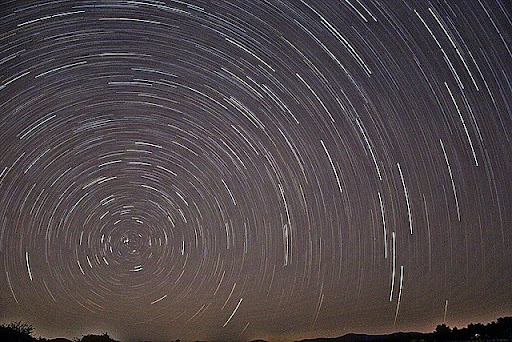
Connected to the guide scope I have a camera, this is connected to my PC which runs software that tracks stars at the subpixel level, so when the star starts to shift, the PC sends some correction signals to the mount. This has enabled me to shoot exposures of over 20 minutes without any sign of star trailling.
As for the capturing camera, you can use a dSLR, canon are best supported by the available astro software, but the others will work as well. The other option is a dedicated cooled astro CCD (big money for a decent resolution).
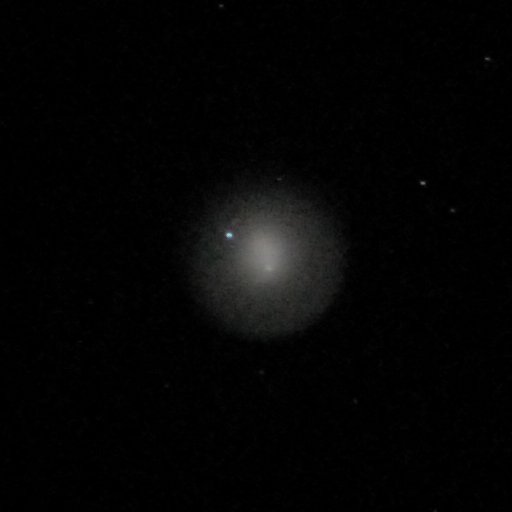
The image of M42 (first one) has been taken using either an Astro cam without an IR filter or a modded SLR (Canon again seems better supported for modding), which has had the IR filter over the sensor removed. The quantity of red in the image, is Hydrogen Alpha emissions which is in the IR spectrum. Here's my image of M42 shot with the kit detailed above with my unmodded SLR, you will see it's much bluer.
As for telescopes... if you're talking about looking, then the bigger the aperture the better (not focal ratio)... the larger aperture gathers more light, therefore makes the target easier to see. For photography, the focal ratio (exactly the same as on your camera lenses) is key, but... aperture also defines resolution, so more aperture, the more fine detail you can pick up.
A large aperture refractor will cost huge sums of money... I think I saw a 180mm refractor costing £18,000 pounds, a focal length of something like 2m, weighing in at 150kg. A 200mm reflector (uses a pair of mirrors to focus the light, instead of a lens), the closest in size, is available for significantly less. The diffraction spikes on the first image, are either inserted in processing, or caused by the spider vanes that hold the secondary mirror.
Once you have captured the data, with whatever camera, you will have a series of shorter exposures, be that 2 minutes or 20 minutes, then you stack them using something like DeepSkyStacker, to increase the SNR, remove planes, satellite trails etc. Save pass off to PS and start the processing...
HTH somewhat




 (sort of spoils it though IMO)
  .
. .
.