

arad85
Suspended / Banned
- Messages
- 9,438
- Name
- Andy
- Edit My Images
- Yes
Does that actually matter these days?whats laughable is teh fact Nikon dont make there own sensors, they just sue sony's.
Canon at least engineer it themselves

Does that actually matter these days?whats laughable is teh fact Nikon dont make there own sensors, they just sue sony's.
Canon at least engineer it themselves
I think Nikon still manufacture the ones in their top end bodies though don't they?
It does as it shows Canon make more effort in creating things on their own.Does that actually matter these days?

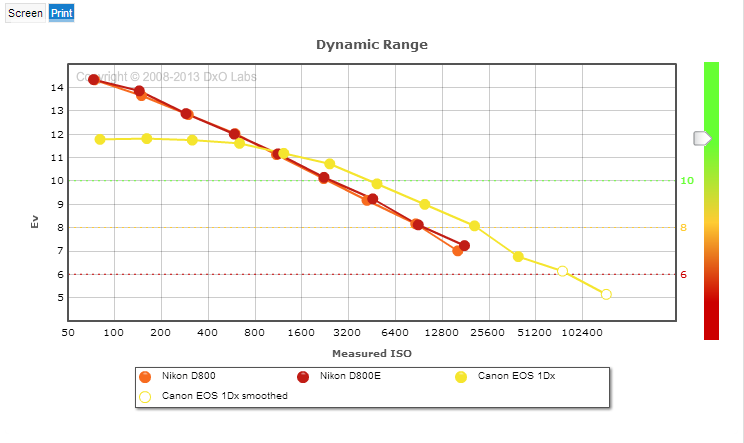
Canon crop sensors are not as good as other crop sensors. Canon FF sensors are not as good as other FF sensors. The dynamic range available tails off at lower ISOs on Canon sensors (in fact, the D3200 & CSCs such as the OM-D E-M5 beats the 5D3 on dynamic range below ISO 400).

It does as it shows Canon make more effort in creating things on their own.
A company can easily just buy the best sensor, the best lens tech and call it there own when really it is not.
They are different cameras for different markets. Where one excels, the other fails and vice-versa. Is that really so difficult to understand?
As for the 5D2½ comment... you clearly haven't used it (properly).
Which is of absolutely no importance if the thing doesn't perform. It does well enough, but isn't at the same quality level as its competitors. So, yes, they are losing their way (which was the original question raised).It does as it shows Canon make more effort in creating things on their own.
Exactly.As the owner of a D3200, I must point out that this is absolutely true. Obviously, if I owned a Canon, I would point out what total nonsense it is.

A high dynamic range scene (e.g. bright sunshine with shadows) that you want to post process and extract some detail from both the highlights and shadows cleanly is not an "exposure mistake".when you have to recover your exposure mistakes

Yawn. Another brand bashing thread.


Not real world tests though. lots of other reviewers can hardly tell the difference in DR.
Its like saying that the new 780GTX GPU is 10% slower yet in real world usage you cant tell the difference between a 780GTX and a Titan GPU
A high dynamic range scene (e.g. bright sunshine with shadows) that you want to post process and extract some detail from both the highlights and shadows cleanly is not an "exposure mistake".
Interesting that it remains a Nikon versus Canon when really it should be Sony versus Canon especially as the main discussion is around the sensor and we all know Sony's are best
No it isn't - not all of us are prepared to carry around flashes and/or reflectors and a couple of assistants to hold them, or tripods to do long exposure photography in stately homes - for example. A better sensor allows us to get images that we would otherwise find impractical. That is not poor photography, that is using the tools available to their best advantage.takin the picture in the light that requires so much lifting of shadows is an exposure mistake and poor photography.
No it isn't - not all of us are prepared to carry around flashes and/or reflectors and a couple of assistants to hold them, or tripods to do long exposure photography in stately homes - for example. A better sensor allows us to get images that we would otherwise find impractical. That is not poor photography, that is using the tools available to their best advantage.
The best sensors are supplied in multiples on flexible strips and a new one is used for each shot!
Steve.
The raw from a better sensor will require less manipulation and be able to give you more to help you get what you want - simple as.well it is if you have to rape the raw file


No it isn't - not all of us are prepared to carry around flashes and/or reflectors and a couple of assistants to hold them, or tripods to do long exposure photography in stately homes - for example. A better sensor allows us to get images that we would otherwise find impractical. That is not poor photography, that is using the tools available to their best advantage.

takin the picture in the light that requires so much lifting of shadows is an exposure mistake and poor photography.
A high dynamic range scene (e.g. bright sunshine with shadows) that you want to post process and extract some detail from both the highlights and shadows cleanly is not an "exposure mistake".


Different debate all together but don't current full frame sensors now outperform 35mm film?
For me though, a great sensor with 14 stops of DR.
Data & graph Copyright DxO (I'd link, but I've not found a way).Where do you get a sensor with such a huge range? That would even be pushing the limits of negative film

Tim Parkin
August 7, 2011 at 12:51
I've done quite a bit of extensive testing on colour negative film and found that the new Kodak Portra has around 19 stops of dynamic range. The film manages this by combining three speeds of film in each colour layer. This isn't possible in a colour transparency film which is generally limited to about 6-7 stops (which works out when you multiply that by three).
Kodak Ektar actually has the smallest dynamic range of available negative films – probably about 12-13 stops. The shadows in Ektar generally shift to deep royal blues quite abruptly and highlights can tend to straw yellow.
Hasselblad medium format digital cameras can supposedly manage 13 stops of dynamic range but the experience of quite a few ex-film photographers has been that you need grads when using a medium format digital back for landscape photography whereas you don't need grads with colour negative film (even when taking shots directly into the sun!).
Shooting negative film can be interesting too. Generally you reverse the general rule of exposing for the highlights (digital and transparency film tend to clip at +2 to +3 stops where as they have more extension in the shadows). Typically you should expose for the shadows so picking the darkest area you want detail in and placing that at -2 to -3 stops (possibly -4 to -5 for new Portra). This means you end up with up to +13 stops in the highlights! This is pretty much impossible to blow out completely.
The small amounts of dynamic range usually reported for negative and transparency film are historic based on printing to cibachrome or RA4 papers. With the possibility of using scanners, the full range of films can now be achieved. What used to be thought of as 4 stops for transparency film is actually more like 7 stops and what was thought of as 9-10 stops for negative film is actually more like 15-19.

This is what Techradar think...
Can't understand why the D700 or 5D Mk II are worse at their lowest ISO settings.
Tim Parkin is probably the person I would trust most. This is what he had to say in a reply to a post on Landscape Photography Magazine's website:
(from here: http://landscapephotographymagazine.com/2011/dynamic-range-of-negative-film/)
It's a bit academic though when you start printing on papers with a lower dynamic range but it's nice to have all the detail there to choose from.
Steve.
Yes.....This is what Techradar think...

No - that's not the point. The wide dynamic range allows you to have more choice over what you do in post and get onto print cleanly.It's a bit academic though when you start printing on papers
No - that's not the point. The wide dynamic range allows you to have more choice over what you do in post and get onto print cleanly.
but it's nice to have all the detail there to choose from.
Tee hee... Your sentence was quite contradictory.. I just chose carefullyHence the rest of my sentence!
 TR don't seem to know .... when it comes to measurement.
The autofocus system of a camera is my main priority.

Steve Smith said:Less than 3% of my cameras have that feature!
Steve.


