Hi any info and help on sunset and sunrise shots would be much appreciated like whats the best aperture to have your camera on ? can it damage your camera ?? just want to improve my photography so any help on this subject would make me happy .. I have only a canon 700d with 28-80mm lens at the moment .. when I have spare money I will treat myself to more lenses anyway if you can help me out it be great

and the site receives a small commission
You are using an out of date browser. It may not display this or other websites correctly.
You should upgrade or use an alternative browser.
You should upgrade or use an alternative browser.
any help on sunset and sunrise shots please
- Thread starter mr snap
- Start date

kendo1
Suspended / Banned
- Messages
- 7,574
- Name
- Ken
- Edit My Images
- Yes
Keep them straight!  unless you're posting for Instagram...
I'm in two minds about exposure. I normally expose for the colours in the sky and let the landscape go a bit dark.
If you expose for the foreground the colours in the sky pale out.
Graduated filters help to balance the exposure.
unless you're posting for Instagram...I'm in two minds about exposure. I normally expose for the colours in the sky and let the landscape go a bit dark.
If you expose for the foreground the colours in the sky pale out.
Graduated filters help to balance the exposure.

Nawty
Suspended / Banned
- Messages
- 6,473
- Name
- Ned
- Edit My Images
- Yes
Rather boringly, the best advice is to have a nice sunrise/set and be there with plenty of time to spare and lots of patience.
Lots of people find a tripod helps as it lets allows you to find the best composition and keep it there so all you have to do is wait for the light to look great, it also allows you to shoot at low ISO and a slow shutter speed so you can keep the aperture small without introducing lots of noise.
You will probably want a small aperture (high f-number) to keep most of the shot in focus and focus a third or so into the image to help achieve this (you could look up hyperfocal distance but I rarely bother). If you are using a tripod you can experiment with different settings while you wait.
As for exposure, you can use filters to balance out the sky/foreground or you can shoot multiple exposures (e.g. one for sky and one for foreground) and to exposure blending in Lightroom / Photoshop. I do the latter as I find it more flexible.
Lots of people find a tripod helps as it lets allows you to find the best composition and keep it there so all you have to do is wait for the light to look great, it also allows you to shoot at low ISO and a slow shutter speed so you can keep the aperture small without introducing lots of noise.
You will probably want a small aperture (high f-number) to keep most of the shot in focus and focus a third or so into the image to help achieve this (you could look up hyperfocal distance but I rarely bother). If you are using a tripod you can experiment with different settings while you wait.
As for exposure, you can use filters to balance out the sky/foreground or you can shoot multiple exposures (e.g. one for sky and one for foreground) and to exposure blending in Lightroom / Photoshop. I do the latter as I find it more flexible.
thanks people for your wise advice means a lot .. iv got a tripod but I have not yet used it might try it out soon .. I was playing about yesterday I dident do great as some as you could tell by my other post  but its all trial and error and this is the only way I will get better if I ask for help
still got loads to learn with lightroom 5 weeks into it I feel like iv learnt abit I love photography
but its all trial and error and this is the only way I will get better if I ask for help still got loads to learn with lightroom 5 weeks into it I feel like iv learnt abit I love photography

Eltheza
Suspended / Banned
- Messages
- 343
- Name
- Elizabeth
- Edit My Images
- Yes
Hi bradleigh!
As well as the great advice and support available here, there are helpful tutorials on the Australian website, Digital Photography School. Have a look here...
http://digital-photography-school.com/how-to-photograph-sunrises-and-sunsets/
!As well as the great advice and support available here, there are helpful tutorials on the Australian website, Digital Photography School. Have a look here...
http://digital-photography-school.com/how-to-photograph-sunrises-and-sunsets/
thanks eltheza I check that out nowHi bradleigh
As well as the great advice and support available here, there are helpful tutorials on the Australian website, Digital Photography School. Have a look here...
http://digital-photography-school.com/how-to-photograph-sunrises-and-sunsets/
Eltheza
Suspended / Banned
- Messages
- 343
- Name
- Elizabeth
- Edit My Images
- Yes
My pleasure! Have a look round the website. You can sign up for a weekly newsletter with tips and tutorials. They do sell stuff but there's no pressure; all the tutorials and tips are free. They also cover Lightroom quite extensively.
Good luck - hope this is useful...
http://digital-photography-school.com/tips/
! Have a look round the website. You can sign up for a weekly newsletter with tips and tutorials. They do sell stuff but there's no pressure; all the tutorials and tips are free. They also cover Lightroom quite extensively.Good luck - hope this is useful...
http://digital-photography-school.com/tips/
thank you iv just read that article after iv had dinner and the kids are a bed I have a proper look round itMy pleasure
Good luck - hope this is useful...
http://digital-photography-school.com/tips/

- Messages
- 49,339
- Name
- Nod (UK)
- Edit My Images
- Yes
I shoot loads of sunsets (rarely up for rises these days!)and tend to let the meter take the exposure for the sun itself and let the underexposure that usually gives bring the colours down in brightness but up in saturation (sort of...) I always do this using live view rather than an optical viewfinder - a sensor getting fried would spoil a day but a fnurkled eyeball would REALLY spoil the day. (Having said that, I used to use the OVF on an assortment of SLRs but can still see - the reduced brightness of the sun at rise/set hasn't boiled my aqueous humour off yet but I no longer risk it since technology now means I don't have to!)
thanks i did get a sure eye abit yesterday tbh walking back to my car after looking at the sun set for a while took a toll on them lol .. thanks for your help means a lot nod ..I did thimk to myself I take sun glass's next time but your idea of using live view seems a wiser optionI shoot loads of sunsets (rarely up for rises these days!)and tend to let the meter take the exposure for the sun itself and let the underexposure that usually gives bring the colours down in brightness but up in saturation (sort of...) I always do this using live view rather than an optical viewfinder - a sensor getting fried would spoil a day but a fnurkled eyeball would REALLY spoil the day. (Having said that, I used to use the OVF on an assortment of SLRs but can still see - the reduced brightness of the sun at rise/set hasn't boiled my aqueous humour off yet but I no longer risk it since technology now means I don't have to!)
iv been reading loads on that site thanks a lot been learning quiet abit thank you much appreciatedthank you iv just read that article after iv had dinner and the kids are a bed I have a proper look round it

- Messages
- 6,133
- Name
- Dave
- Edit My Images
- Yes
Have a look at TPE ( http://photoephemeris.com/ ). It gives the times and directions of sunrise and set (and also moonrise and set) for anywhere on the Earth on any day. It is very useful for getting a good location for a rise or set shot.
You will sometimes get a good shot by just being in the right place at the right time, but a lot of the time it needs some planning.
Check out the weather forecast. You cannot be sure there will be a good sunrise or set, but the forecast can help. The forecast is often better at telling you when not to bother.
If you have fund a likely place and the forecast looks good, allow yourself plenty of time to get there. This sounds obvious but I know how easy it is to be in the right place just after the right time. Watching a sunrise or set really shows how fast the Earth rotates, the scene changes very quickly and for each of the many changing patterns of light in each rise or set you get only one chance.
The 'problem' with these shots is the sky is lightly to be much brighter than the land and the camera sensor cannot cope with such a large range. Graduated filters, as mentioned above, will help balance out the difference; there is a good desciption of grad filters here - http://www.cambridgeincolour.com/tutorials/graduated-neutral-density-filters.htm
Another way is to take several exposures at different settings from exactly the same position and combine them with software. If you google for 'bracketing exposures' you'll find a lot of info.
Looking directly at the sun is not a good idea but often the sun is partly obscured by cloud so it is not a great problem and a completely unobscured sun doesn't make for the best shots anyway. If you are using the optical viewfinder you won't fry the sensor because the light coming out of the viewfinder never hits the sensor. My understanding is you are more likely to fry the sensor if you use live view. The live view image is generated by projecting the image created on the sensor onto the LCD screen.
Dave
You will sometimes get a good shot by just being in the right place at the right time, but a lot of the time it needs some planning.
Check out the weather forecast. You cannot be sure there will be a good sunrise or set, but the forecast can help. The forecast is often better at telling you when not to bother.
If you have fund a likely place and the forecast looks good, allow yourself plenty of time to get there. This sounds obvious but I know how easy it is to be in the right place just after the right time. Watching a sunrise or set really shows how fast the Earth rotates, the scene changes very quickly and for each of the many changing patterns of light in each rise or set you get only one chance.
The 'problem' with these shots is the sky is lightly to be much brighter than the land and the camera sensor cannot cope with such a large range. Graduated filters, as mentioned above, will help balance out the difference; there is a good desciption of grad filters here - http://www.cambridgeincolour.com/tutorials/graduated-neutral-density-filters.htm
Another way is to take several exposures at different settings from exactly the same position and combine them with software. If you google for 'bracketing exposures' you'll find a lot of info.
Looking directly at the sun is not a good idea but often the sun is partly obscured by cloud so it is not a great problem and a completely unobscured sun doesn't make for the best shots anyway. If you are using the optical viewfinder you won't fry the sensor because the light coming out of the viewfinder never hits the sensor. My understanding is you are more likely to fry the sensor if you use live view. The live view image is generated by projecting the image created on the sensor onto the LCD screen.
Dave
- Messages
- 49,339
- Name
- Nod (UK)
- Edit My Images
- Yes
TPE is great! Lets me know where the sun will be setting on specific dates so I know whether I need to be somewhere other than our balcony to get the sunset well placed.
Here are a couple from our recent holiday, taken about 1 minute apart. From the EXIF, the first was shot using average metering with 1 stop of underexposure dialled in to the camera and the second was shot using spot metering directly on the sun with no EC dialled in. The first was at 1/250th @ f/5.6 and the second was at 1/400th @ f/8. Shooting straight into the sunset has yet to cause any damage to my sensor (but there have been reports of damage occurring from such shooting.)

DSCF3385copy by Nod on Talk Photography

DSCF3386copy by Nod on Talk Photography
Here are a couple from our recent holiday, taken about 1 minute apart. From the EXIF, the first was shot using average metering with 1 stop of underexposure dialled in to the camera and the second was shot using spot metering directly on the sun with no EC dialled in. The first was at 1/250th @ f/5.6 and the second was at 1/400th @ f/8. Shooting straight into the sunset has yet to cause any damage to my sensor (but there have been reports of damage occurring from such shooting.)
DSCF3385copy by Nod on Talk Photography
DSCF3386copy by Nod on Talk Photography
Have a look at TPE ( http://photoephemeris.com/ ). It gives the times and directions of sunrise and set (and also moonrise and set) for anywhere on the Earth on any day. It is very useful for getting a good location for a rise or set shot.
You will sometimes get a good shot by just being in the right place at the right time, but a lot of the time it needs some planning.
Check out the weather forecast. You cannot be sure there will be a good sunrise or set, but the forecast can help. The forecast is often better at telling you when not to bother.
If you have fund a likely place and the forecast looks good, allow yourself plenty of time to get there. This sounds obvious but I know how easy it is to be in the right place just after the right time. Watching a sunrise or set really shows how fast the Earth rotates, the scene changes very quickly and for each of the many changing patterns of light in each rise or set you get only one chance.
The 'problem' with these shots is the sky is lightly to be much brighter than the land and the camera sensor cannot cope with such a large range. Graduated filters, as mentioned above, will help balance out the difference; there is a good desciption of grad filters here - http://www.cambridgeincolour.com/tutorials/graduated-neutral-density-filters.htm
Another way is to take several exposures at different settings from exactly the same position and combine them with software. If you google for 'bracketing exposures' you'll find a lot of info.
Looking directly at the sun is not a good idea but often the sun is partly obscured by cloud so it is not a great problem and a completely unobscured sun doesn't make for the best shots anyway. If you are using the optical viewfinder you won't fry the sensor because the light coming out of the viewfinder never hits the sensor. My understanding is you are more likely to fry the sensor if you use live view. The live view image is generated by projecting the image created on the sensor onto the LCD screen.
Dave
Thanks
 for the great bit of info dave I will check out all them links abit later when I have some time ..really appreciate your help .. I took some sun set shots the other day but when I processed them I think I might over done it this is the raw one any ideas how to process it please
Scirocco_09
Suspended / Banned
- Messages
- 1,386
- Edit My Images
- No
Don't just think you have to shoot into the sun. While the afterglow will be most intense facing that way, before the sun has set often the best shots are taken at 90 or even 180 degree angles using the sun's soft warm light. Using the light in this way also reduces dynamic range so you'll have less problems with exposure


Scirocco_09
Suspended / Banned
- Messages
- 1,386
- Edit My Images
- No
You also need to find interesting compositions as the sun alone doesn't make a good picture. Think of it as a light source - in the right circumstances it can be a great addition but you probably wouldn't photograph a light bulb thinking that makes a great picture alone. First find an interesting scene, then use the sun's light to enhance it. Lovely example of that here (this photographer also has other excellent sunrise/sunset images):
https://www.flickr.com/photos/jaketurner92/27537896014/in/album-72157662356062114/
https://www.flickr.com/photos/jaketurner92/27537896014/in/album-72157662356062114/
Last edited:
- Messages
- 49,339
- Name
- Nod (UK)
- Edit My Images
- Yes
To expand Bazza's advice "ad absurdia", stay up so late that you actually get up just in time for sunset (leaving time to get where you need to be for the sunset, of course!) then stay up on the lash (or not, if you can think of better things to do all night - astro photography for a start!!!) and get in place ready for the sun rise (using TPE to choose locations.) Probably not the best way to spend a family holiday... 
lol or just get out my head on cocaine with johnny cash and stay up for about a week playing a guitar on a hill top taking shots of sunsets and sunrise's yerTo expand Bazza's advice "ad absurdia", stay up so late that you actually get up just in time for sunset (leaving time to get where you need to be for the sunset, of course!) then stay up on the lash (or not, if you can think of better things to do all night - astro photography for a start!!!) and get in place ready for the sun rise (using TPE to choose locations.) Probably not the best way to spend a family holiday...
- Messages
- 6,133
- Name
- Dave
- Edit My Images
- Yes
Good point from Sirocco. I think sunrise and sunset shots are taken around the time of the events, but don't have to be of the event, 90 (or even 180) degrees away from the sun can give some great light.
Dave
Dave
Last edited:

Buck
Suspended / Banned
- Messages
- 5,682
- Name
- Adrian
- Edit My Images
- No
Sometimes shooting into the sunrise/set is not the best shot.
Often you get a more interesting shot with the light and shadows to the side/behind.
You can also get some really nice skies this way too. always worth a look behind you!
Often you get a more interesting shot with the light and shadows to the side/behind.
You can also get some really nice skies this way too. always worth a look behind you!
Sometimes shooting into the sunrise/set is not the best shot.
Often you get a more interesting shot with the light and shadows to the side/behind.
You can also get some really nice skies this way too. always worth a look behind you!
Cheers mate for your info and I agree with what your saying I try it out thank you

ancient_mariner
Moderator
- Messages
- 27,780
- Name
- Toni
- Edit My Images
- No
A general hint with sunsets is that the scene you're going to photograph needs to have some merit already i.e. the nice light and colours aren't going to be enough to make a boring and badly composed image look fabulous. That's not to say that you can't use aspects of the sunset as aids in composition to make the scene look great, but alone it's not enough:
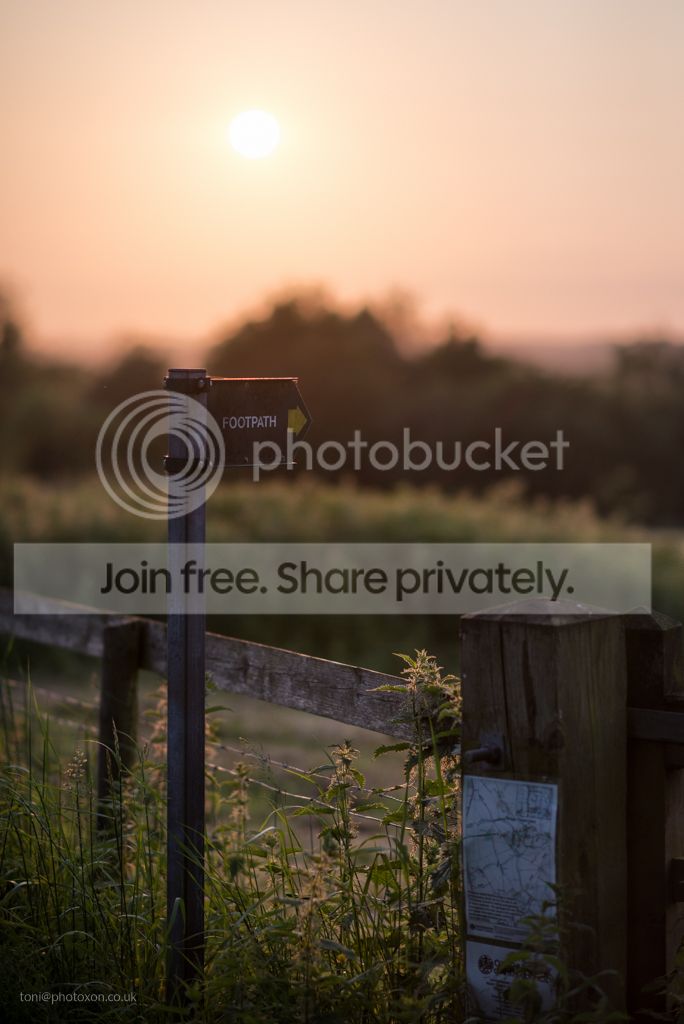
So with this, for example, the sun is a major element in the composition, but the picture is dominated by the map & footpath sign that create a story. This was shot exposing for the sky (light haze, so V bright) and then shadows lifted and the sky brought down to balance the image.
Multiple exposures have been mentioned: this is 3 exposures blended together using the layers module in On1 Photo software, but could have been done in any package that blends images. With the camera on a tripod I shot for the foreground (slow shutter speed to capture movement in the plants) for the misty landscape across the valley and then for the sky.

I am allergic to using graduated filters on the camera because they uncontrollably darken or colour anything that sticks up into the area that is darkened - it was OK in the days of film where dodging & burning was more difficult, but not in an age of easy post-processing and sensors with 12 stops of dynamic range.
It's worth mentioning that the sun should always be blown where it's in the frame unless you're trying to photograph the sun itself. Sometimes someone will try to be clever & recover the sun, resulting in a dull grey orb hanging rather sadly in a gaudy sky.
As already said, sometimes you don't need to have the sun in the shot:
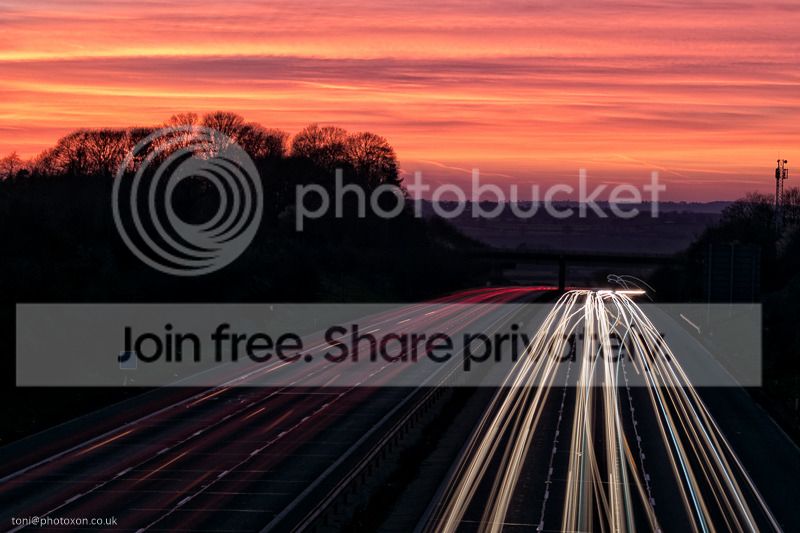
IIRC this was shot with a 30sec exposure using a 10 stop ND filter to allow a long exposure.
So with this, for example, the sun is a major element in the composition, but the picture is dominated by the map & footpath sign that create a story. This was shot exposing for the sky (light haze, so V bright) and then shadows lifted and the sky brought down to balance the image.
Multiple exposures have been mentioned: this is 3 exposures blended together using the layers module in On1 Photo software, but could have been done in any package that blends images. With the camera on a tripod I shot for the foreground (slow shutter speed to capture movement in the plants) for the misty landscape across the valley and then for the sky.
I am allergic to using graduated filters on the camera because they uncontrollably darken or colour anything that sticks up into the area that is darkened - it was OK in the days of film where dodging & burning was more difficult, but not in an age of easy post-processing and sensors with 12 stops of dynamic range.
It's worth mentioning that the sun should always be blown where it's in the frame unless you're trying to photograph the sun itself. Sometimes someone will try to be clever & recover the sun, resulting in a dull grey orb hanging rather sadly in a gaudy sky.
As already said, sometimes you don't need to have the sun in the shot:
IIRC this was shot with a 30sec exposure using a 10 stop ND filter to allow a long exposure.
Last edited:
- Messages
- 49,339
- Name
- Nod (UK)
- Edit My Images
- Yes
Possibly but IMO the halos completely ruin it. The HDR or sharpening ones are way too obvious and the one caused by the lamination on the notice on the left of the image is 'orrible! TBH, the notices would be enough for me to ignore the scene, especially with the fencing and barbed wire as well. I might have gone closer and lower to get the (glorious) sunset framed by the wooden fencing, possibly with the tree on the left in shot if that worked.
kendo1
Suspended / Banned
- Messages
- 7,574
- Name
- Ken
- Edit My Images
- Yes
I'll jump in
Just go to Loch Voil. It is close to facing West...
 Loch Voil, Helios 44-2 by Ken, on Flickr
and the sunset lasts for ages the further North you go.
Just go to Loch Voil. It is close to facing West...
Loch Voil, Helios 44-2 by Ken, on Flickrand the sunset lasts for ages the further North you go.
Possibly but IMO the halos completely ruin it. The HDR or sharpening ones are way too obvious and the one caused by the lamination on the notice on the left of the image is 'orrible! TBH, the notices would be enough for me to ignore the scene, especially with the fencing and barbed wire as well. I might have gone closer and lower to get the (glorious) sunset framed by the wooden fencing, possibly with the tree on the left in shot if that worked.
cheers for your view nod ..yer I'm having troubles sometimes with the halos need more practice with pp
ancient_mariner
Moderator
- Messages
- 27,780
- Name
- Toni
- Edit My Images
- No
As Nod said, the halos are a problem, usually when one starts pushing the shadows & highlights sliders too hard. I've got a bunch of images that I want to go back & reprocess because of the halo problem. Your image was interesting with the sun coming through the fence, but as always, it's the stuff round the outside that's too easy to overlook & can spoil things. Do keep trying and experimenting - it's how we learn.
As Nod said, the halos are a problem, usually when one starts pushing the shadows & highlights sliders too hard. I've got a bunch of images that I want to go back & reprocess because of the halo problem. Your image was interesting with the sun coming through the fence, but as always, it's the stuff round the outside that's too easy to overlook & can spoil things. Do keep trying and experimenting - it's how we learn.
Cheers for your views mate and your time in trying to help me out I will get there
Don't just think you have to shoot into the sun. While the afterglow will be most intense facing that way, before the sun has set often the best shots are taken at 90 or even 180 degree angles using the sun's soft warm light. Using the light in this way also reduces dynamic range so you'll have less problems with exposure
I 100% agree with this. For years I was taking landscape photos with the sun in the frame, thinking that it was needed for sunset shots. As soon as I started turning 90 degrees to get the sun out of the frame, I found I was still getting nice colours in the sky, but also had wonderfully lit subjects too. Plus I didn't have to battle with keeping highlights from blowing as much!
