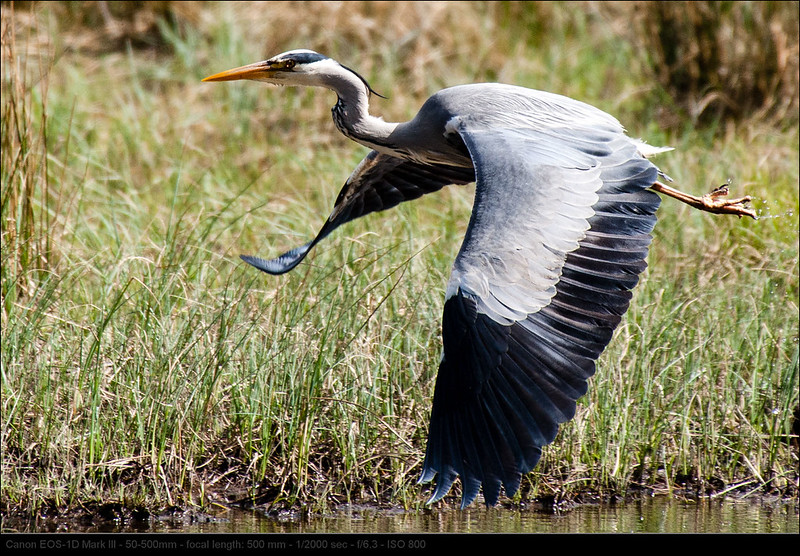
Any Birds-in-Flight tips?

Vertigo1

Suspended / Banned
Messages
2,065
Edit My Images
No
There was a brief & impromptu display by a falconer at the weekend so I tried taking a few snaps.

Whilst static shots are obviously not a problem, trying to capture the birds in flight was a serious challenge. Firstly, I was having trouble actually tracking them properly. I tried single point focus but was having problems keeping the focus point on the bird's head so tried switching to the central 9-point area mode. That helped but the camera then obviously decided itself which point to use and this wasn't always the eye/beak of the bird.

The second issue was, when the birds were flying straight at me, the AF just didn't seem able to keep up at all and every shot was out of focus.

I've never tried shooting anything that moves this fast. Anyone have any tips for next time I try it? :)
 
Centre point expansion, AF Servo, and set the Cn function 3 I to one position past slow, is how I have mine set for BIF
 
A smaller aperture will give you a larger dof which helps
 
Lots of practice :shrug:
Seriously, have a look in the bird section and you will see 90% + of shots are sat on a stick, BIF is "probably" one of the hardest types of photography.

Good light
Fast shutter speed
Getting enough of the bird in the frame
Back button focusing
Keeping the focus point on the bird
Not cropping to much
Aperture and DOF
Keeping the ISO down (depending on the camera)

Those are in no particular order but are all things that need to be taken into consideration.
Did i mention practice ;)
Good luck :thumbs:
 
There is no right or wrong way and it varies so much depending on what size of birds, distance, background etc

I tend to use AV mode. Unless the light is dire. f8 should give you a reasonable depth of focus - forgivable if you miss the bullseye. If the resulting shutter speed is a bit low then up the ISO.

Tracking the birds in AI Servo, centre point focus with surrounding AF assist points on works best for me.

Spot meter if it's against the sky, you may need to dial in a bit of over exposure. Get the light behind you or over your shoulder. To retain the shutter speed don't be scared to push the ISO in favour of shooting wide open.

Keeper rates are still low but that's 'birds in flight' for you - it's what I've found works best for me - others may choose a different approach.

PS - the above is how I approach 'birds in flight' - which for me means tracking them travelling through the sky.

For birds launching / landing / hovering by a perch I tend to to pre focus on the perch select an aperture to give me an area of dof (infront or behind the perch depending on what I'm waiting for the bird to do), turn the AF off, set shutter speed and ISO to correctly expose and then fire off as the bird moves in the hope that I catch the bird as it moves through my pre set area of dof
 
Assuming your camera was set up reasonably well the biggest tip is PRACTICE. The fewer focus points you can use to keep a track on the bird the better, so that means you have to be very good at following the bird accurately. The more active focus points you bring into play the more data the camera has to process, the more decision making it has to do and the higher the risk of it making a bad one.

Keep a bead on the bird and follow it before firing the shutter, making sure the focus point is where it should be and that the bird is in focus before you fire. If you lose focus then release the AF button and re-acquire the target. It won't always be easy to track these birds in close quarters, but learning their flight patterns and speed will improve your odds of predicting their trajectory and tracking them accurately.

Also be careful not to confuse blur/shake for misfocus. Generally shutter speeds should be fairly high for BIF (1/1000 or faster) - especially if your skills don't yet allow you to pan and track the bird smoothly. Sure you can shoot at lower speeds, but the need for skill and luck increases.

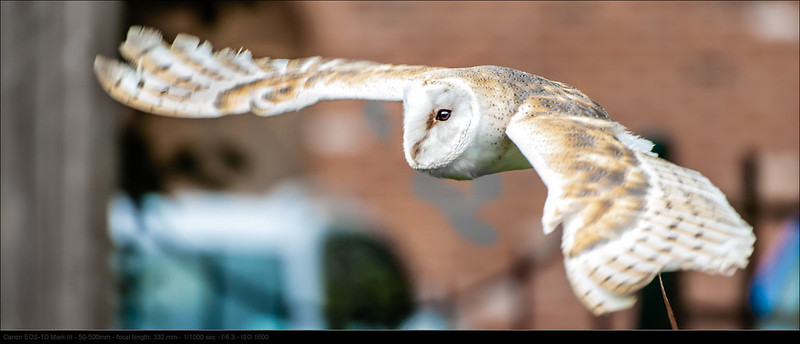
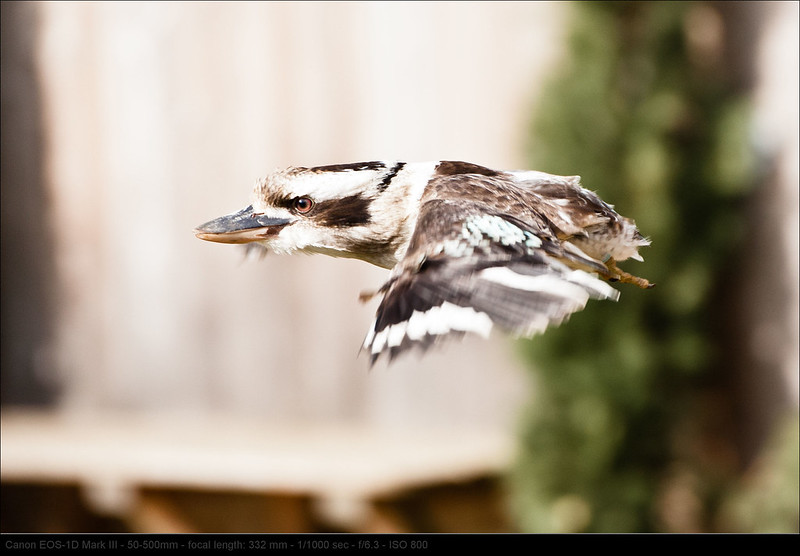
Here are a few of mine from a zoo display recently....

20130701_140632_9604_LR.jpg


20130701_141855_9647_LR.jpg


20130701_154809_9814_LR.jpg


20130701_155019_9843_LR.jpg


20130701_141053_9619_LR.jpg
 
Some lovely shots there and good advice throughout the thread, the only thing I'd add is that you will get a lot of duffers, don't let that worry you at all, as far as I know this is the same for everyone.
 
Have a look at this and this, looks like a really good guide and artyman's tip is very good, just about the only bird I can get reliably :)

One more thing I thought of and may be of no use to you, but I use a hand strap rather than a neck scrap as I found them cumbersome, and also a RS Rapid if I'm using a bigger lens - as you may have guessed I also handhold.

Oh and go to local bird displays if there are any near you, a great chance of getting some things you usually wouldn't - then in time you could expand to "in the wild" photography (I'm nowhere near that part yet)

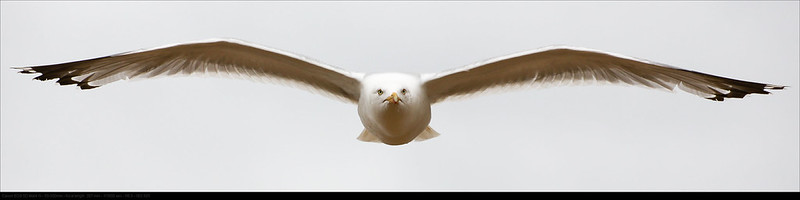
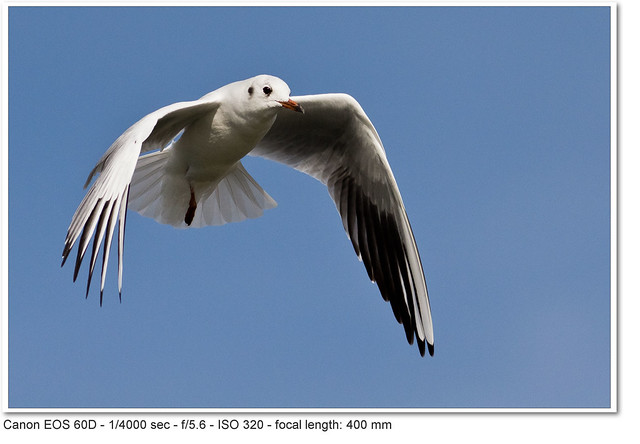
Here are a few shots I've taken and I show the exif data on the pictures so it may help a bit, but bear in mind I'm no Kaz :)


120720_0066 by magsnorton, on Flickr


2011_10_01_4305 by magsnorton, on Flickr


120408_9484 by magsnorton, on Flickr


120226_8213 by magsnorton, on Flickr


120413_9965 by magsnorton, on Flickr
 
Last edited:
Thanks for all the tips & advice.

I did manage to get a few reasonably sharp shots but more luck than anything else :)

IMG_8296.jpg
 
Luck's all you need ;) (well skill helps too!)

Nice shot and well done, shame it wasn't just that little bit wider to get the feather tips - but I've lost count of the number of shots I've got like that!
 
Thanks - it didn't help that I was shooting at f/2.8 because the background was relatively close and I wanted to blur it out effectively.
 
And try to get a good composition, all these shots are far to tight in the frame leaving no space for the bird to fly into.
 
Thanks - it didn't help that I was shooting at f/2.8 because the background was relatively close and I wanted to blur it out effectively.

I disagree, 2.8 makes the subject pop from the background and as I'm guessing you were pretty close that would have been what I'd have done too.
 
Not sure where you live, but if you have Red Kites anywhere near you they are also good to practice on. They're big, tend to hang in the wind, and to top it all, they look great as well.

First BIF I ever did was at a show, this set on Flickr shows the results. After that I was hooked and wanted to do more. Lots of good advice on here, although I do tend to shoot as wide as possible, back button focus, and as mentioned, use centre assist focus points.
 
And try to get a good composition, all these shots are far to tight in the frame leaving no space for the bird to fly into.

Noted, although I was having enough trouble getting the damn bird in the frame at all most of the time lol :)

I disagree, 2.8 makes the subject pop from the background and as I'm guessing you were pretty close that would have been what I'd have done too.

Oh yeah I know, just saying that, by using f/2.8, the shallow DoF makes it harder to get sharp shots - I could have stopped down to increase the DoF and get more keepers but the background would have been too in-focus then.

Not sure where you live, but if you have Red Kites anywhere near you they are also good to practice on. They're big, tend to hang in the wind, and to top it all, they look great as well.

I'm in south-east Birmingham near Solihull - if anyone has any recommendations on places to go then I'm all ears, all I seem to find around here is ducks!
 
Ducks are good to practice on.Go to your local pond,bird reserve and practice on them.

If your against a plain sky, you may need to dial some + exposure compensation in.

F8, servo focus, shutter speed as high as you can.

Nikons have auto ISO, I use that all the time,set your ISO at whichever speed your camera can handle, and ramp the shutter speed. Dunno if Canons do that,I think not.
 
Last edited:
Yeah I have auto ISO, never use though to be honest as I prefer to be in control of everything. Maybe I need to let go of that for something as dynamic as BIF and let the camera do some of the work/thinking :)
 
Ducks are good to practice on.Go to your local pond,bird reserve and practice on them.

If your against a plain sky, you may need to dial some + exposure compensation in.

F8, servo focus, shutter speed as high as you can.

Nikons have auto ISO, I use that all the time,set your ISO at whichever speed your camera can handle, and ramp the shutter speed. Dunno if Canons do that,I think not.

:thinking:
Auto iso on a 7D, if it goes past 800 you may as well go home :lol:
 
:thinking:
Auto iso on a 7D, if it goes past 800 you may as well go home :lol:

lol, really depends on how much noise you're okay with, some people can take loads, I can't so sold the 7D - auto ISO on the 5D3 too and its a God send!
 
Last edited:
:thinking:
Auto iso on a 7D, if it goes past 800 you may as well go home :lol:
Ah, I let mine go to 6400 if needs be.Didn`t realise the 7d was so tardy at high iso.
 
Yeah I have auto ISO, never use though to be honest as I prefer to be in control of everything. Maybe I need to let go of that for something as dynamic as BIF and let the camera do some of the work/thinking :)

Yep, I would, may as well use the technology if it helps mate.
 
:thinking:
Auto iso on a 7D, if it goes past 800 you may as well go home :lol:

No prize winner, for sure, but this was with my 7D at 3200 ISO and is cropped. A sharper lens and better framing (i.e. bigger within the frame as I had focal length to spare) and I think it would be passable, for the web at least. Actually it looks pefectly fine on my 40" Full HD TV from across the room too.

20100429_155238_7068_LR-001.jpg


I have to admit though, at the pixel level it looks like trash.

20130804_133217_.JPG
 
I'm in south-east Birmingham near Solihull - if anyone has any recommendations on places to go then I'm all ears, all I seem to find around here is ducks!

Well a trip down the M40 will see you right. Plenty in the Stokenchurch area, around J5 & 6. And a trip to Watlington is also a must do if you're in that area.

Steve
 
I find using the focus hold buttons on the end of my lens works well ...It works like this... So I'm aiming at the bird in flight with a centre focus point, as the bird dips out of my focus I hit the focus lock to maintain visual track-ability, and more importantly to stop my lens from 'hunting' for focus, then, as I get back on the oof bird I release focus lock and Bang my centre focus quickly grabs on in sharp focus.

Effectively this way I'm kinda pre-focused at useful distances all the time, and I'm simply releasing the auto focus to grab the bird sharp when ever I can get it into my frame nicely...easy. ;)
 
Back
Top