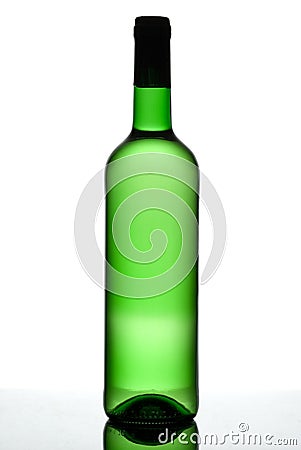
Another "How do I light this" question!

mickledore

Suspended / Banned
Messages
9,372
Edit My Images
Yes
I've got this vase that I picked up in the Oxfam shop because I liked the shape and colour. Sorry about the poor quality photo but it's only for illustration purposes.
Thought I could use it in some arty farty type shot.
I had the idea of using a splash kit to have drops falling on a full vase of water. This uses flash guns to freeze the action.

Trouble is there are so many reflections that it spoils any shot. You can see me, the background, floor, ceiling and walls. The light tubes are clearly visible.
How do I light it?

My "studio" is the attic which is boarded out and painted white. It is approx 6'6" high in the middle and runs down to the eaves so the only place to stand upright is dead centre. The floor is about 8' - 10' wide. There's no room to put a set of studio lights and all the lights I have are 4 Canon 580EXii guns. One on flash softbox and one shoot through umbrella. I don't want to light it from behind because that might spoilt the effect I'm after.

There are so many curves on the glass that some reflections may be inevitable, but am I trying to achieve the impossible? I even get reflections of reflections. Help!


FXT16112
by mickledore on Talk Photography
 
Last edited:

One tip I can share is…
Specular surfaces will reflect only (but all) what they "see"!

Glass%20B1342small.jpg
 
Last edited:
Thank you. I had my name down for one of his tutorial days and was going to take this with me but the day was cancelled due to lack of interest!
Since then I've been thrashing about on my own and going nowhere fast!!!
 
You need very large lighting panels... probably over 3 ft. I would use 6x8 silks (cheap shower curtains). You might get away with hanging them close to the vase and bouncing your speedlights off of the walls behind them.
If you and the camera are behind a very large dark sheet you can minimize "the reflection." Do some research on dark field backlighting...
 
I've got this vase that I picked up in the Oxfam shop because I liked the shape and colour. Sorry about the poor quality photo but it's only for illustration purposes.
Thought I could use it in some arty farty type shot.
I had the idea of using a splash kit to have drops falling on a full vase of water. This uses flash guns to freeze the action.

Trouble is there are so many reflections that it spoils any shot. You can see me, the background, floor, ceiling and walls. The light tubes are clearly visible.
How do I light it?

My "studio" is the attic which is boarded out and painted white. It is approx 6'6" high in the middle and runs down to the eaves so the only place to stand upright is dead centre. The floor is about 8' - 10' wide. There's no room to put a set of studio lights and all the lights I have are 4 Canon 580EXii guns. One on flash softbox and one shoot through umbrella. I don't want to light it from behind because that might spoilt the effect I'm after.

There are so many curves on the glass that some reflections may be inevitable, but am I trying to achieve the impossible? I even get reflections of reflections. Help!


FXT16112
by mickledore on Talk Photography
You'll just have to experiment, that's how we learn to understand light. But, I'll start you off:)

1. Diffused specular highlights, lit from each side... Get two pieces of frosted plastic, heat them up and bend them to the shape of the glass, fire a flashgun through each, and you will then have diffused specular highlights that match the shape of the glass, it's the only way of achieving that effect.
2. Brighfield lighting... Kodiak's example is classic and you're right, it may not produce quite the effect you want - but why not do it sideways? Place a flashgun each side, very nearly touching each side, and clone the flashguns out in PP. The lighting effect will be both dramatic and interesting, and you can either spray water droplets (preferably 75% water and 25% glycerine) onto the outside front surface, or simply throw water at it, and time it right. Experiment with the positions of the flashguns, one high and one low might work well.
 
This is intresting. Please post your tries here as each time you try you will get nearer and the good peeps in this section will keep pushing you nearer and nearer to the result your after.


Gaz
 
You'll just have to experiment, that's how we learn to understand light. But, I'll start you off:)

1. Diffused specular highlights, lit from each side... Get two pieces of frosted plastic, heat them up and bend them to the shape of the glass, fire a flashgun through each, and you will then have diffused specular highlights that match the shape of the glass, it's the only way of achieving that effect.
2. Brighfield lighting... Kodiak's example is classic and you're right, it may not produce quite the effect you want - but why not do it sideways? Place a flashgun each side, very nearly touching each side, and clone the flashguns out in PP. The lighting effect will be both dramatic and interesting, and you can either spray water droplets (preferably 75% water and 25% glycerine) onto the outside front surface, or simply throw water at it, and time it right. Experiment with the positions of the flashguns, one high and one low might work well.

Thanks Garry.

I'll have a play today. I haven't seen the example you mention but I'll try your two sugestions. I'll post up anything that is half decent.

Shreds...thanks for the PMs. You can count me in if you need to.
 
Thanks Garry.

I'll have a play today. I haven't seen the example you mention but I'll try your two sugestions. I'll post up anything that is half decent.

Shreds...thanks for the PMs. You can count me in if you need to.
The example I mentioned is the photo of the glasses, 2nd post
 
Thanks Garry. I hadn't seen post#2 - ignore button and all that!
I've tried the water and glycerine and that didn't really impress.
I'm now playing with bent diffusers from a spare light fitting.
We shall see!
 
Well this is the best I've come up with.
So many reflections and the top stem reflects into the bottom bulb.
I fiinshed up not quite certain what was reflecting from where.
I tried Garry's two sugestions but wasn't overly happy with my efforts.
I then went dark field and here it is.You can still see the camera and tripod. You can still see the ceiling and background.
I've decided to give up. This will have to do.
Hope compression to fit in here doesn't "spoil" it too much!


blue-glass
by mickledore on Talk Photography
 
With a subject as complex as this one it is quite likely that compositing multiple images would work best. I don't see the tripod/camera in this result, it's a nice start.
But to really light something like this really well you need a lot of light control...
There is another method that might work well if the vase is translucent. You light the vase from behind thru a cutout in the BG... To make the cutout you run a flashlight thru the camera's eyepiece so the vase casts a shadow on the BG. Then trace just inside the shadow line and cutout the silhouette (if the shadow isn't "hard" trace/cutout smaller). If all of the light is coming forward from/thru the vase you shouldn't get other reflections.
 
Wow that sounds clever!
Yes it is translucent so it could work.
You can't see the tripod - now!!!

I'm not sure that any sort of polariser would have any effect. The reflections are "hard" on the surface of the glass.

I'll have a bash at this unless there are other ideas.
 
But to really light something like this really well you need a lot of light control...
There is another method that might work well if the vase is translucent. You light the vase from behind thru a cutout in the BG... To make the cutout you run a flashlight thru the camera's eyepiece so the vase casts a shadow on the BG. Then trace just inside the shadow line and cutout the silhouette (if the shadow isn't "hard" trace/cutout smaller). If all of the light is coming forward from/thru the vase you shouldn't get other reflections.

A bit like I did in this one.. https://www.talkphotography.co.uk/threads/glass-vase.607589/#post-7132496 - though I only used that technique to make the vase glow a bit. I didn't bother with the flashlight and it doesn't work with mirrorless anyway, I just kept trimming until it looked right.

I'd dismissed it in this case as I think the vase is too shiny.
 
Reflections from glass are already polarized. But I don't think you will be able to "selectively" remove them (maybe one at a time) and you don't want to eliminate all of them... if there is no light being reflected from the glass, what are you photographing?

Seeing the tripod/camera isn't "a reflection" as such, it's more of "a shadow." Unless the camera/tripod is reflecting light back to the vase, which it almost always will (that's why I mentioned the large black panel to shoot thru/behind.
Intentionally reflecting a shadow is called "negative lighting." For instance, black panels are often used to negatively light and "hold the edges" of clear glassware by making them darker.
 
A bit like I did in this one.. https://www.talkphotography.co.uk/threads/glass-vase.607589/#post-7132496 - though I only used that technique to make the vase glow a bit. I didn't bother with the flashlight and it doesn't work with mirrorless anyway, I just kept trimming until it looked right.

I'd dismissed it in this case as I think the vase is too shiny.

In that thread I assume that you are just using the one flash mounted softbox to the right? What is the panel in front of the box? It seems to be perforated and only letting through a small portion of the light.
 
A bit like I did in this one.. https://www.talkphotography.co.uk/threads/glass-vase.607589/#post-7132496 - though I only used that technique to make the vase glow a bit. I didn't bother with the flashlight and it doesn't work with mirrorless anyway, I just kept trimming until it looked right.

I'd dismissed it in this case as I think the vase is too shiny.
I think you used a reflector behind the vase? Yes, that is often used as well, but it is dependent on/competing with a light source coming from the side/front.
"Shiny" isn't an issue with backlighting... but opacity is. If you backlight glass you get a bright(er) center and darker edges (as seen in the example Kodiak posted). By backlighting thru a cutout you can combine that lighting with dark field lighting (from behind/sides).
 
Here's an example of a backlit bottle.
green-bottle-4335070.jpg


If it had been backlit thru a cutout in a black BG all you would see is the bottle center and all of the darker parts would tend to get lost. So it then needs to be additionally lit to pull up/retain the edges/fill. In this example, if it were on black I would reduce the backlighting ratio and use the "dark field" method of wrapping some light around the edges at a higher ratio.

That's essentially what I did here... I used gold reflectors to backlight the bottle/glass using the dark field lighting as primary.
Flying Fish by Steven Kersting, on Flickr
 
Last edited:
So is that saying two light sources behind the bottle? One shooting through the cut out and the second doing darkfield?
 
It's two (very large) light sources from the sides (the dark field "wrap") w/ one also being reflected thru the bottle/glass by a reflective cutout.
There's also a spotlight on the label and a large reflector for subtle fill... (if I were to reshoot it there are a couple small things I would refine/change)
 
I think you used a reflector behind the vase? Yes, that is often used as well, but it is dependent on/competing with a light source coming from the side/front.
"Shiny" isn't an issue with backlighting... but opacity is. If you backlight glass you get a bright(er) center and darker edges (as seen in the example Kodiak posted). By backlighting thru a cutout you can combine that lighting with dark field lighting (from behind/sides).

I'd (slightly) misread your original description. Yes, I'm using a shaped reflector behind rather than an actual backlight.

Shiny can be an issue if backlighting isn't the sole source of light - which is what mickledore was originally trying to achieve, as I was in my vase shot.

Reflections from glass are already polarized

Only partially. IME The partial nature of the polarization is more obvious under artficial light than under clear daylight, which is already somewhat polarized.

Seeing the tripod/camera isn't "a reflection" as such, it's more of "a shadow." Unless the camera/tripod is reflecting light back to the vase, which it almost always will (that's why I mentioned the large black panel to shoot thru/behind.

In the original shot it's definitely a reflection. That's as much to do with the light bouncing around the room as anything else.
None of which means that using two polarizers will help in this case. You're quite right to point out that if we eliminate all the light there will be nothing left :)

It's also worth taking a look at Garry's replies to my previous faintly similar topic: https://www.talkphotography.co.uk/threads/lighting-shiny-cylinders.608689/
 
In that thread I assume that you are just using the one flash mounted softbox to the right? What is the panel in front of the box? It seems to be perforated and only letting through a small portion of the light.

The softbox is gridded and partly flagged with two pieces of cardboard (one brown attached to the softbox, one white gaffer taped to the rear edge) to stop light spilling on to the black backdrop. The softbox is angled slightly forwards and downwards; I wanted the top to be a little brighter than the bottom.

In front of the softbox is a piece of tracing paper. That produces much softer edged specular highlights - if you look at the highlights on the edges of @sk66 's beer glass you'll see that they end rather abruptly. There's a piece of semi-translucent Correx attached to the tracing paper to effectively extend it further backwards - If I'd had a bigger piece of tracing paper I'd have used that.

There's some black craft foam on the left of the vase to kill the any reflections on that side and enhance the 3-dimensionality. I also held another piece of Correx over the vase for the final shot to bounce a little more light on the top edge and reduce another of the hard-edged highlights I was getting. I didn't manage to get rid of all the hard edges, though - there was one large one I missed on the back of the camera but you can actually make out the leading edge of the tracing paper too, about 1/3 of the way in from the right edge.

There's a shaped reflector behind the vase to make it glow.

Steven is right, this kind of stuff is much easier with large modifiers and lots of space. Perversely I quite enjoy doing it in a small space; I'm trying to see what I'm capable with the limits imposed.
 
In the original shot it's definitely a reflection. That's as much to do with the light bouncing around the room as anything else.
Yup...and so is the "negative lighting" (it's only "negative" because everything else is brighter)
It's also worth taking a look at Garry's replies to my previous faintly similar topic: https://www.talkphotography.co.uk/threads/lighting-shiny-cylinders.608689/
In that instance I would have lit the cylinder from the front and used negative lighting (black flags) to darken the edges. That would move the central black stripe to the side and make it more of a gradient. Or if lit from above front, it would push it to the bottom...
 
if you look at the highlights on the edges of @sk66 's beer glass you'll see that they end rather abruptly.
Steven is right, this kind of stuff is much easier with large modifiers and lots of space. Perversely I quite enjoy doing it in a small space; I'm trying to see what I'm capable with the limits imposed.
Actually, they were added using foamcore reflectors. I had a 4ft para camera rt and a 3ft box behind a 6ft silk camera left... both w/in 2ft. Without the reflectors I had no specular highlights.
But everything else you said is right.
 
Steven is right, this kind of stuff is much easier with large modifiers and lots of space.
I suspect that is the largest problem for me. I have little space and no room for large pieces of gear.
Tomorrow is another day:)
 
Back
Top