All the gear.... No Idea!!!!!

ElcoCat

Suspended / Banned
Messages
2
Name
Catherine
Edit My Images
No
Greetings!!

I'm brand spanking new to TP but desperately need your help.

I've set up a new studio at work to take product shots (gadgets the size of an iphone) but haven't really done it before.

I've got great kit - a Nikon D7000, Sigma 105mm, Nikon 18-200mm, Nikon 50mm, a couple of SB700's and Lastolite EzyBox's & stands, even reflectors etc but could really do with some pointers in getting the lighting right.

The real problem is the gadgets have LCD display screens that act like mirrors! Whats the best way to get round this as I need close up of the screens to show the working information on them!

Anyway - any help/advice would be greatly appreciated!

Big Kisses!!!

Cat x

PS.... Thanks to Petethe Primate for helping me find the right place to post this!!!! MWAH!!!! x
 
Go on strobist - I'm sure there will be info on there about shooting glass and reflective surfaces...

...if you want aditional info, buy 'Light: science & magic', which is a superb book that has a massive section about just this and how to work lighting to your benefit with glass and metal...

It's all do do with apparent size of light source, specular highlights and angles, all too scientific for me to give you a full explanation because I don't understand it all myself :lol:
 
Last edited:
Actually you haven't got any of the gear - or at least not the gear you need for this job.

What you need is either a small or large product shooting table (either will be fine for this job, the large one is more convenient but much bigger and more expensive)
Then you put a flash head with a large softbox over the top of the table using a boom arm. For your purpose, a 60 x 60 softbox would be fine, but you would need a much larger one for similar items that are bigger. This light would rake forward at an angle that bounced the specular reflection (the reflection of the light source) off at an angle that doesn't make the LCD screen act like a mirror - and, apart from another flash head more or less from the front, fitted with a honeycomb in a standard reflector, that's about it, although some subjects would be better with another type of light shaper, such as a softbox.

This photo gives you an idea of the basic setup


And quite possibly a reflector, which you already have.
 
Last edited:
What Garry said. All I'm aware of with this kind of shooting is have a light source much larger than the product you are shooting.
Try bouncing the flash off a white ceiling that is not too high above your head for a trial shoot to see what it would look like. A softbox is much more controlled and directional so if this is an ongoing thing you should go down that route.
 
Cacoon or light tent? We also take two shots, one of product & one of screen then ps them.
A lot of people do that and it works, if the shots don't look too un-matched - but it's a very slow, complicated way of doing a very quick, simple job - and the light tent doesn't exactly make the product jump off the page and say "buy me" either.
 
A lot of people do that and it works, if the shots don't look too un-matched - but it's a very slow, complicated way of doing a very quick, simple job - and the light tent doesn't exactly make the product jump off the page and say "buy me" either.

That depends :)

Most of my pack shots seem to sell for the clients. What do you need to do to make your product say 'buy me' other then it be a good product and you put 'buy me' in the advert :lol:

You hint you want it to be quick but also have a wow factor to make people want it. How are you going to acheive this?

Im not being a git honest, just need to see what your trying to do ;)
 
That depends :)

Most of my pack shots seem to sell for the clients. What do you need to do to make your product say 'buy me' other then it be a good product and you put 'buy me' in the advert :lol:

You hint you want it to be quick but also have a wow factor to make people want it. How are you going to acheive this?

Im not being a git honest, just need to see what your trying to do ;)
I could write a book about this - in fact I have - but basically "quick" is no more than having the right equipment, the knowledge to use it properly (that's the most important bit probably) and getting everything as close to perfect in camera as possible, to avoid unnecessary PP work.

And the "wow factor" is dependent on just 3 things...
1. Knowing the benefits of the product and shooting from a position/angle that brings them out.
2. Composition
3. Lighting that creates the highest possible contrast without losing detail - that involves far more control of the lighting than can every be achieved with a light tent.

Obviously there are far more factors, such as absolute cleanliness, very consistent shot-to-shot light quality, perfect exposure and so on, but these should really be a given anyway.
 
Agree with Garry.

But the bit you're missing is studio heads with modelling lights.

Frankly, you will get nowhere using those Nikon flash guns. Positioning the lights is very critical for product photography, and never more so when reflections are invloved.

You need some studio lights - check out Bowens, Elinchrom and Lencarta.

You also need to know how to use them of course, and that is made more difficult by wanting to show LCD screens etc. Various ways around that, and easy if you know how, but you're embarking on quite a learning curve ;)

And welcome to TP :)

Edit: you also won't get far with a light tent if you want to control reflections.
 
Last edited:
Agree with Garry.

But the bit you're missing is studio heads with modelling lights.

Frankly, you will get nowhere using those Nikon flash guns. Positioning the lights is very critical for product photography, and never more so when reflections are involved......

Hoppy, that's a really good point. Although there's nowt wrong with the 'strobist' approach, whenever I've used a full speedlight set-up for product stuff (especially when I have to knock out picture after picture), I've always found I've been spending a lot more time at the start and through the shoot changing light position. Don't get me wrong, speedlights are ace, but modelling lights are more than a luxury, they're almost a neccessity because they not only speed things up as you're shooting, they give you confidence you're doing things right because it's there in front of you....
 
Hoppy, that's a really good point. Although there's nowt wrong with the 'strobist' approach, whenever I've used a full speedlight set-up for product stuff (especially when I have to knock out picture after picture), I've always found I've been spending a lot more time at the start and through the shoot changing light position. Don't get me wrong, speedlights are ace, but modelling lights are more than a luxury, they're almost a neccessity because they not only speed things up as you're shooting, they give you confidence you're doing things right because it's there in front of you....
Yes, modelling lamps ARE a necessity with product lighting - but there's far more to it than that...

The overhead softbox light MUST be evenly lit and that just doesn't happen with hotshoe flashes because the built in reflectors don't distribute the light off of the sides of the sofbox. It can work, but only by fitting 3 hotshoe flashes into the softbox, at different angles, which also goes some way towards overcoming the lack of power, but that's only worth doing if you already have a few hotshoe flashes - it's much cheaper to buy 1 flash head than 3 hotshoe flashes, in fact it's often cheaper to buy 1 flash head than 1 hotshoe flash plus S-fit adapter...

The other common problem is varying colour temperature, caused by quenching the hotshoe flash electronically. This cuts the 'tail' off the flash, causing it to lose the 'red' end. I don't use hotshoe flashes much myself so have limited means of testing them, but the tests I carried out on 1 particular flash showed a variation of 1000K, which is enormous. Some people don't notice this in people photos, especially when the light from the flash is only supplementing daylight, but everyone would notice it with product shots
 
Garry - interesting stuff. 1000K is a massive shift, much, much more than I ever thoght would be likely... I know firing like a machinegun you are at the mercy of the speedlight's recycle time and ability to output all that energy and more often than not, you get changes in both output power and colour temperature, but as you say, because it's mixed with daylight generally, it's not that noticeable. You have set the cogs in my head turning... :)
 
Yes, modelling lamps ARE a necessity with product lighting - but there's far more to it than that...

The overhead softbox light MUST be evenly lit and that just doesn't happen with hotshoe flashes because the built in reflectors don't distribute the light off of the sides of the sofbox. It can work, but only by fitting 3 hotshoe flashes into the softbox, at different angles, which also goes some way towards overcoming the lack of power, but that's only worth doing if you already have a few hotshoe flashes - it's much cheaper to buy 1 flash head than 3 hotshoe flashes, in fact it's often cheaper to buy 1 flash head than 1 hotshoe flash plus S-fit adapter...

The other common problem is varying colour temperature, caused by quenching the hotshoe flash electronically. This cuts the 'tail' off the flash, causing it to lose the 'red' end. I don't use hotshoe flashes much myself so have limited means of testing them, but the tests I carried out on 1 particular flash showed a variation of 1000K, which is enormous. Some people don't notice this in people photos, especially when the light from the flash is only supplementing daylight, but everyone would notice it with product shots

I think you're being a bit harsh there Garry. Getting the light even with a hot-shoe gun in a softbox is really very easy. A stofen cap is usually enough, certainly with a double diffuser softbox it's no problem. I won't mention softboxes like the McGillycuddy with built-in deflectors... ;)

And this colour temperature thing. I've never noticed it, and when I check for it with my Canon guns (and I don't mean with the Canon auto-correction feature enabled) if there is any change it's so slight as to be the least of the many potential contributors.

Sure, when you're blasting away and the gun fires at less than full charge, you can get both colour and exposure shifts, sometimes a lot, but that's unlikely to be an issue here. And I would also hazard a guess that many studio heads would be pretty bad at this too - as you know, some of the lesser brands can be rather poor when it comes to consistency of both exposure and colour, even when they're fully charged.
 
I think you're being a bit harsh there Garry. Getting the light even with a hot-shoe gun in a softbox is really very easy. A stofen cap is usually enough, certainly with a double diffuser softbox it's no problem. I won't mention softboxes like the McGillycuddy with built-in deflectors... ;)
Richard, I accept that a stofen cap does a good job, but the standard of eveness needed for illuminating a reflective product are far higher than for people...
And this colour temperature thing. I've never noticed it, and when I check for it with my Canon guns (and I don't mean with the Canon auto-correction feature enabled) if there is any change it's so slight as to be the least of the many potential contributors.
My tests were with a Nikon SB-800, tested at full, half, quarter, eight etc power, and the difference was just over 1000K from full to minimum power.

And I would also hazard a guess that many studio heads would be pretty bad at this too - as you know, some of the lesser brands can be rather poor when it comes to consistency of both exposure and colour, even when they're fully charged.
True. Some of them are awful and I've encountered 2 makes, not sold in any quantity in this country, where the difference has again been in the region of 1000K, and with up to 110% variation in flash energy too. And many of the ones that are reasonably OK are nothing like as good as their sellers claim. But if people stick with the known brands they won't have any problems.
 
1000K variance is a lot, very noticeable. Is that what your colour temp meter says, or what you have observed in images? I'll post summat later to show what I'm getting at different power levels.
 
1000K variance is a lot, very noticeable. Is that what your colour temp meter says, or what you have observed in images? I'll post summat later to show what I'm getting at different power levels.
That's colour temperature measurements - the human brain is far more tolerant to variation
 
I think you have a point Garry :) though with my Canon 580EX the colour shift when power is reduced is not 1000K - maybe less than half that. It's noticeable in a direct comparison though.

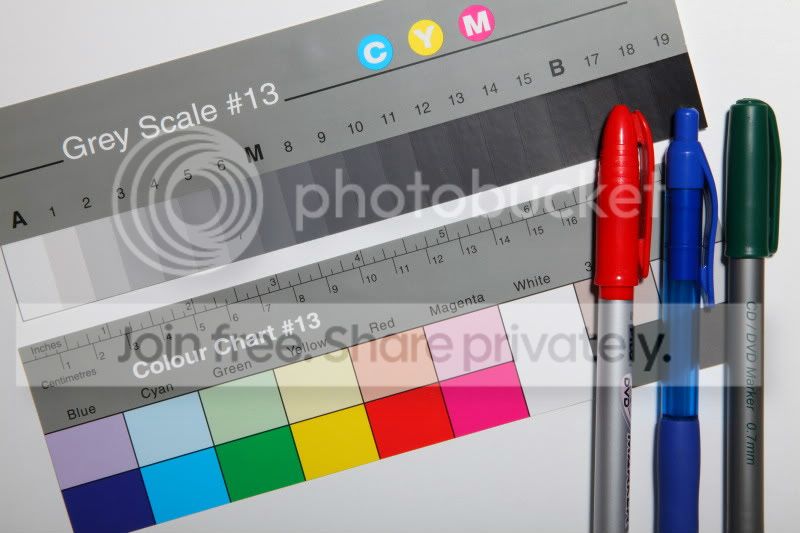
First shot is a Canon 580EX at full power, white balance set at 6000K (Canon's claimed figure).

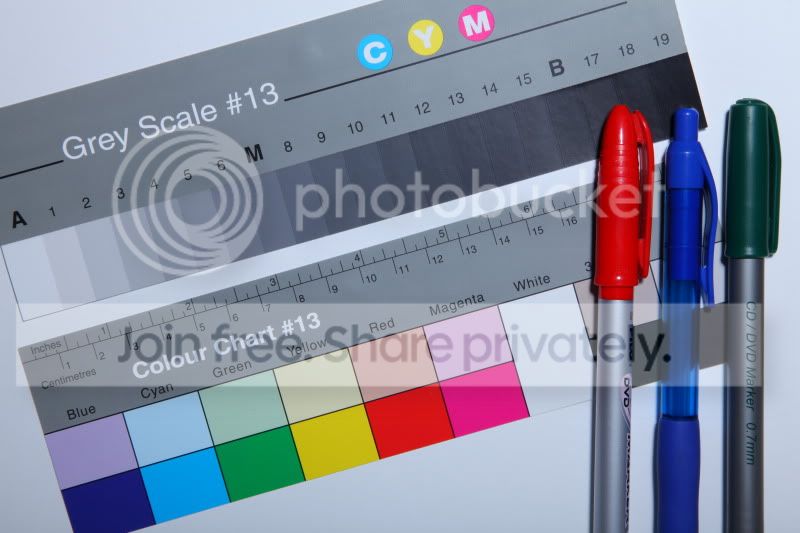
Second shot is the same, but with the white balance dropped to 5000K, which makes the light cooler.

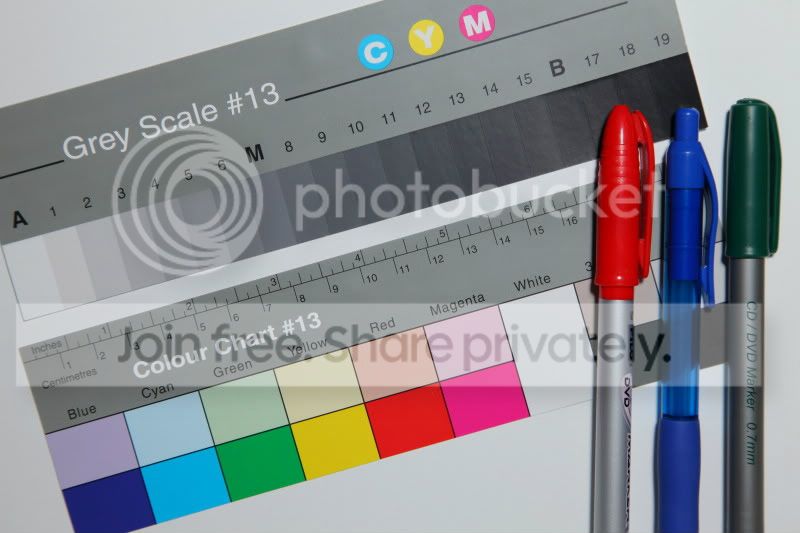
Third image, power is reduced to 1/16th and the white balance reset to 6000K, same as the first shot. And it's noticeably cooler, 300-400K? I used 1/16th power as further research (from Canon) suggested that this shows the maximum colour shift from full power with Canon guns.

The colour shift is less at different settings, and since I rarely change the power by four stops from shot to shot, probably explains why I'd never noticed it. It's there if you look closely though.

Canon 580EX, full power, 6000K
IMG_5127-1.jpg


Canon 580EX, full power, 5000K
IMG_5128.jpg


Canon 580EX, 1/16th power, 6000K
IMG_5129-1.jpg
 
Last edited:
Well, there you go then. Maybe Canon flashes vary less than Nikon, I don't know because I'm a pro photographer so don't know anything about Canon:exit:

Has the flak died down yet? :lol::lol:I'll continue then.

It's also possible that my SB-800 is different to other Nikon models, again I don't know. I do have some other hotshoe flashes, maybe I should test them.

It is possible to get a reasonably good objective measurement of colour temperature in PS, though in my experience a meter is quite a lot better.

As you say, it isn't always obvious with people photography and especially with mixed light sources, but as I said, it's very obvious with product photography.
 
<snip>

As you say, it isn't always obvious with people photography and especially with mixed light sources, but as I said, it's very obvious with product photography.

I don't think I did say that Garry ;) I said that I'd never noticed it, in any circumstances, which is not surprising when you see how slight the difference is, and that's the maximum I could achieve. Other guns may be worse though, but I'm surprised about what you found with Nikon (unless you've dropped your temp meter :D).

It's not just product photography, and if you get the colour of the bride's dress wrong, or far worse, different from shot to shot, then you're in major trouble. I don't recall many wedding photographers reporting this difficulty though.

I honestly don't think that the shifts shown above are anything to worry about, for wedding photography or product work for that matter. You get greater changes that that by using different reflectors and brollies.

As you know, I prefer studio lights whenever there's a choice, mainly for the modelling light and fast recycle, but I just think you were being a bit harsh on the drawbacks of hot-shoe guns ;)
 
I had the misfortune of shooting 300+ pairs of shoes earlier in the year.

The colour shifts from the old Elinchrom 500 heads that we started out using between the morning when they were cold and the afternoon was some 200k which, when you're trying to get the colours absolutely spot on was a nightmare.

Probably not for most due to the cost, but I highly recommend the Minolta colour meter.. it opens your eyes to fine white balance and colour shifts.
 
Back
Top