airshow advice needed

iron maiden

Suspended / Banned
Messages
430
Name
iron
Edit My Images
Yes
i am going to attend a airshow this weekend,

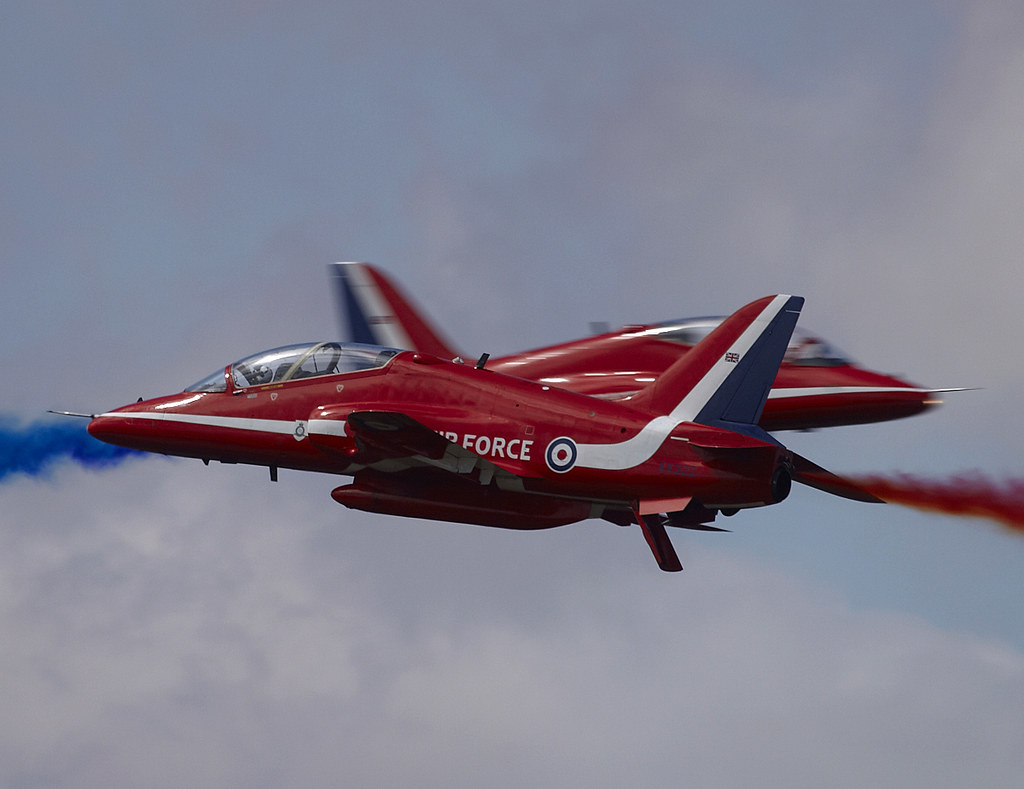
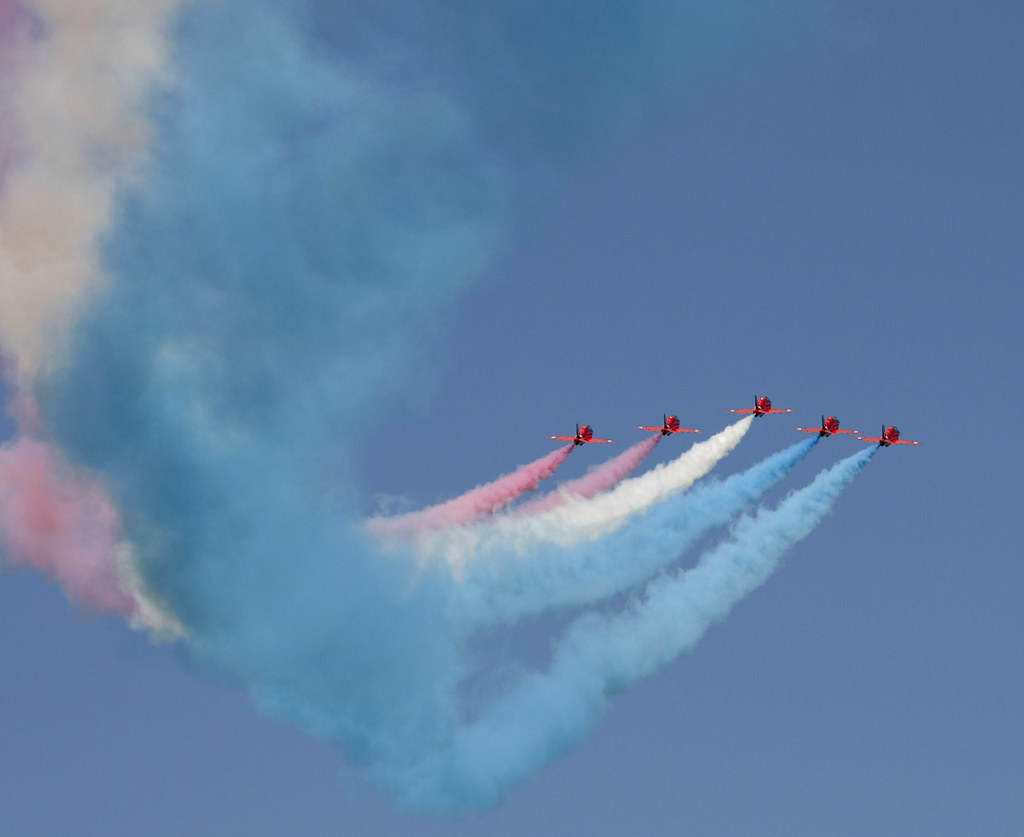
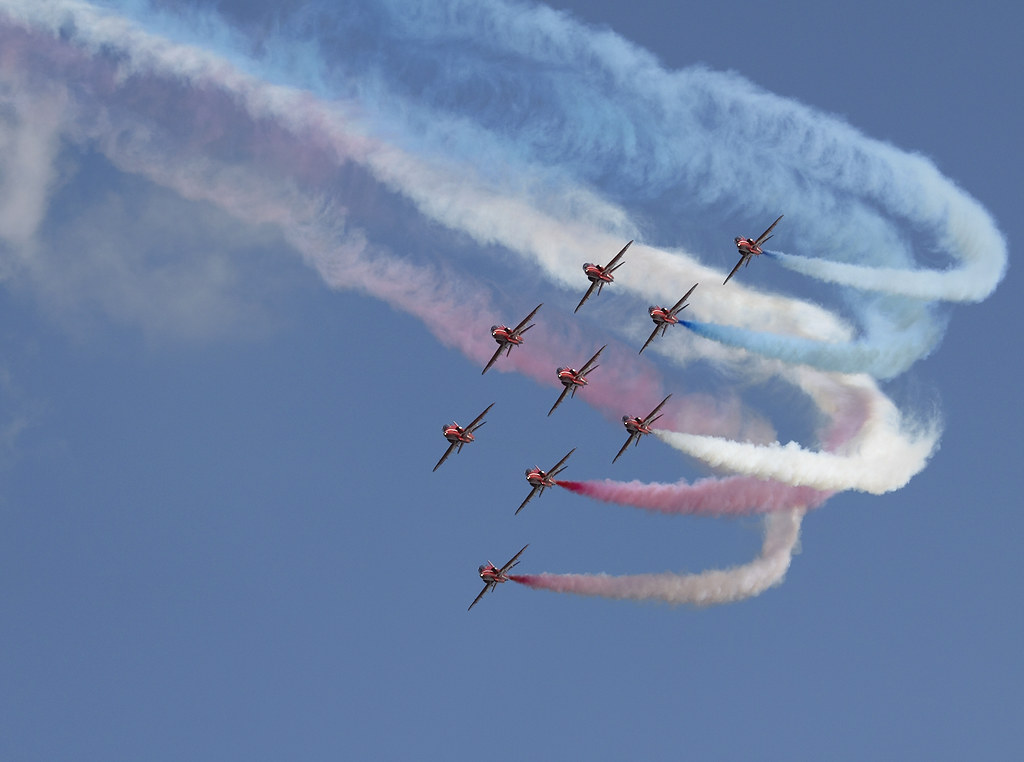
i will be taking photos of the red arrows and would like advice on camera settings please,

shutter speed,

would 1/1000 be enough,

and would F7.1 be ok,

or is this all wrong,

iron
 
i am going to attend a airshow this weekend,

i will be taking photos of the red arrows and would like advice on camera settings please,

shutter speed,

would 1/1000 be enough,

and would F7.1 be ok,

or is this all wrong,

iron

Adjust the shutter speeds and aperture by doing test shots?
 
1/1000 should be fine for fast moving jets like the red arrows, if there's enough light. Best thing to do is set the camera to shutter priority and let the camera choose the aperture, and as above, adjust as you go along.

For any propellor driven aircraft and helicopters that you may want to photograph, use something a lot slower - maybe 1/250 and then work down from there.
 
1/1000 should be fine for fast moving jets like the red arrows, if there's enough light. Best thing to do is set the camera to shutter priority and let the camera choose the aperture, and as above, adjust as you go along.

For any propellor driven aircraft and helicopters that you may want to photograph, use something a lot slower - maybe 1/250 and then work down from there.

X2
 
i am going to attend a airshow this weekend,

i will be taking photos of the red arrows and would like advice on camera settings please,

shutter speed,

would 1/1000 be enough,

and would F7.1 be ok,

or is this all wrong,

iron

Lowestoft by any chance ?
 

I like Richard Seaman's advice about wide aperture. The planes are gonna be distant enough not to worry about shallow depth of field, and you will have plenty of speed.

As for spot metering, IMHO that can give wildly inaccurate exposures unless you know exactly where your 'spot' is. Much better is centre-weighted on cameras where you can set the 'centre' disc size to smaller than default.

At my last airshow, weather was so mixed that light levels were all over the place, so manual exosure was out. Mostly shooting against white/light grey skies though, so I set exposure bias of +.7 EV. Mostly good results, a few still underexposed.
 
FWIW I shoot almost exclusively with spot metering and manual exposure, especially for things like aircraft and BIF, because I like the control it gives me. Here is an example from last weekend with no edits except cropping....

20110811_124344_000.jpg


In this example I shot in raw with manual exposure and spot metered the brightest part of the sky which I felt would be part of my scene at +3. That way I achieved an ETTR exposure, wasting none of the dynamic range available and making the subject as bright as possible without blowing the sky. There are tiny portions of clipping (marked in red on the image) which are neither important, nor beyond recovery if I should even care. The image might need a little tweaking to improve aesthetics, but as a raw file this is as good an exposure as I would ever hope to achieve.

My approach to setting the expoure does vary with the conditions, but usually I'll spot meter something in the scene, or my own palm if in the same light as the subject, and then lock my exposure manually. So long as the lighting doesn't alter there is no need for my exposure to change either.
 
To be honest, you'll get all sorts of advice, but its what works for you.
Personally, for jets I use AV, not TV, and set the aperture either as 5.6 or sometimes if its very bright a couple of stops smaller.
Evaluative metering works fine, I find the problem with spot is that it exposes for a very dark underside if you plant it wrongly. Thats easy to do with something thats shifting very quickly, and you end up with a very bleached picture.
For props, then I wind down the aperture until I get to about 125th shutter speed. For a prop aircraft thats usually good enough. Helicopters are another matter! Even down at 1/25th second on say a chinook, the rotors will only be blurred in an arc. I've never been brave enough to go lower than that.
All that works for me, and I've been doing airshows since the Mid 80's. Ok, TV may work for others, but both have drawbacks, for example, shutter or aperture not being able to match what you want to use as the opposite value.

Anyway, this is the sort of thing you can end up with doing it the above way.

5943560525_ea76dc51c9_b.jpg


4730556165_14628bcfcd_b.jpg


4718507276_30b35d7717_b.jpg
 
Last edited:
Lots of variables in that situation. I would use spot key-tone metering, in manual, along the lines Tim suggests.

Set your exposure by trial and error, any way you like and chimp the LCD/histogram/blinkies until it's right. Lock it in manual and it will be right for dark planes and light planes. Then take a spot meter reading off the palm of your up-turned hand, angled a bit towards the camera, and note what the meter needle says. It will probably be around +1.0 to +1.6. Whatever it is, that's your key-tone reference and if the light changes, clouds etc, if you just go back to your palm and adjust the exposure so it reads +1.3 or whatever, and you'll be back on track.

You palm is a handy (haha!) constant reference, but you can use anything that is in the same light as the subject. Grass is popular for this becuase it's close to mid-grey and will read around zero in the viewinder, brickwork, concrete, tarmac, sand - any constant tone that you can reference easily at any time if the light changes. Just note the shift in the viewfinder, and always maintain that differential.
 
Last edited:
I have also found at airshows no matter how many memory cards you take its never enough :lol:
 
i am using,

7D,
400d

canon 70-300mm ulta sonic lens,
sigma 120-300 2.8 APO IF,
 
Back
Top