Advice on simple lighting setup

Stupar

Suspended / Banned
Messages
45
Name
Stuart
Edit My Images
Yes
Ok I'm looking for a bit of lighting advice which I know may be like ask "how long is a piece of string".

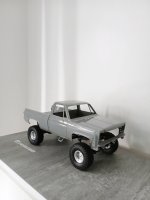
Im looking to try and give evencand consistent lighting when taking photos of my RC models that i build.

The space where I build my RC models has a white wall behind and left, nothing to the right and a white ceiling above.

I'm thinking a simple flashgun bounced off the ceiling with maybe a reflector to the right would suffice because I have white decor what do you folks reckon?

Below gives a rough idea of the setup.

1000007464.jpg
 
Interesting question.
The advice depends on exactly the effect you’re trying to create.
You might want to start by reading @Garry Edwards product lighting book.
What I'm after is lighting that is fairly even but without being too flat and (when doing full model shots as well as zoomed in detailed shots).
Garry's guide may prove useful as it may be that lighting will change depending on the overall shot being taken.

Thanks for chipping in with assistance Phil
 
That will work, up to a point. The same location, reflective sources and light source will always produce a consistent result, but not the best one.
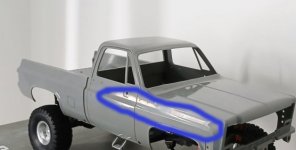
For example, these (presumably unwanted) ugly specular highlights will need a much closer light at the right angle
rc car_1.jpg

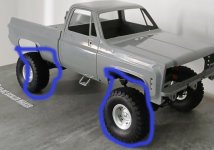
And the unlit bits will always lack any detail, and the only way around this is to use as many lights as you need, no single lighting arrangement can do everything
rc car_2.jpg
So, you just need to decide on the standard you want, there are no rights or wrongs as such.
 
That will work, up to a point. The same location, reflective sources and light source will always produce a consistent result, but not the best one.
For example, these (presumably unwanted) ugly specular highlights will need a much closer light at the right angle
View attachment 445145

And the unlit bits will always lack any detail, and the only way around this is to use as many lights as you need, no single lighting arrangement can do everything
View attachment 445146
So, you just need to decide on the standard you want, there are no rights or wrongs as such.
Thanks Garry, this certainly gives me some food for thought indeed.
 
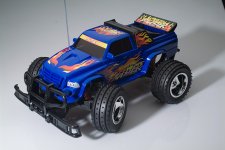
This may or may not help, but it's one of my very old shots
old rc car.jpg
As you can see from the shadow, the key light was a softbox above and to the left, and there must have been a very small light, or possibly a piece of mirror, illuminating the suspension arm. I tend to create, rather than avoid controlled shadows, but that's just me.

As you can see, this is a SOOC shot with zero computer work.

If you just want bland lighting (although I'm not a fan of this particular tool) a light tent may be your easiest solution.
 
This may or may not help, but it's one of my very old shots
View attachment 445148
As you can see from the shadow, the key light was a softbox above and to the left, and there must have been a very small light, or possibly a piece of mirror, illuminating the suspension arm. I tend to create, rather than avoid controlled shadows, but that's just me.

As you can see, this is a SOOC shot with zero computer work.

If you just want bland lighting (although I'm not a fan of this particular tool) a light tent may be your easiest solution.
I think I would lean towards controlled shadows to make the images more dynamic.
Plus I'm not selling anything it's just to do as part of taking detailed build shots so controlled lighting would lend itself better I think.
 
Unless you mean to go for high-key shots such as these:

51221981578_dee95da6f9_o.jpg

51676701639_84127917ee_o.jpg

... which style does not lend itself too well to your subject matter, I think, then I would rather go for a black background/backdrop. White backgrounds look too much like Amazon photography. The very best would be to create bespoke environments tailor-made for the type of car you’re illustrating, but that would probably be too much work, I don’t know.

Personally, my æsthetics tend to make me go for darker, moodier environments, which are also better to obtain more saturated, less washed-out colors. I don’t do cars but maybe this shot of another technical subject may inspire:

51314567516_a97766c555_o.jpg

With a simple white card to camera left, it would be possible to open up the shadows on the darker side of the subject.
 
There is a guy on a Youtube Channel that demonstrates how to light small subjects rather well. His channel is "Camera Club Live". He takes the viewer step by step through the lighting and setup for many table top type shoots. His use of Matt Board reflectors and other techniques should be of significant help in your attempts to get the perfect lighting for this. A few pieces of Matt Board can reduce the need for many light sources down to just one or two. I did this type of photography many years go, but watching him got me started doing it again. It's much easier using digital cameras now than it was using film so many years ago.


Charley
 
There is a guy on a Youtube Channel that demonstrates how to light small subjects rather well. His channel is "Camera Club Live". He takes the viewer step by step through the lighting and setup for many table top type shoots. His use of Matt Board reflectors and other techniques should be of significant help in your attempts to get the perfect lighting for this. A few pieces of Matt Board can reduce the need for many light sources down to just one or two. I did this type of photography many years go, but watching him got me started doing it again. It's much easier using digital cameras now than it was using film so many years ago.


Charley
Yeah, he’s good. A bit on the slow side sometimes. And has a hell of a lot of super expensive gear!
 
There is a guy on a Youtube Channel that demonstrates how to light small subjects rather well. His channel is "Camera Club Live". He takes the viewer step by step through the lighting and setup for many table top type shoots. His use of Matt Board reflectors and other techniques should be of significant help in your attempts to get the perfect lighting for this. A few pieces of Matt Board can reduce the need for many light sources down to just one or two. I did this type of photography many years go, but watching him got me started doing it again. It's much easier using digital cameras now than it was using film so many years ago.


Charley
I will give his content a watch thank you
 
Unless you mean to go for high-key shots such as these:

View attachment 445291

View attachment 445292

... which style does not lend itself too well to your subject matter, I think, then I would rather go for a black background/backdrop. White backgrounds look too much like Amazon photography. The very best would be to create bespoke environments tailor-made for the type of car you’re illustrating, but that would probably be too much work, I don’t know.

Personally, my æsthetics tend to make me go for darker, moodier environments, which are also better to obtain more saturated, less washed-out colors. I don’t do cars but maybe this shot of another technical subject may inspire:

View attachment 445293

With a simple white card to camera left, it would be possible to open up the shadows on the darker side of the subject.
I'm definitely not going for high key for similar reasons to yours.

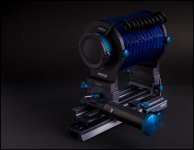
I like the style of your third image though and wouldn't be against that as a lighting option.
It would boil down to space for setting it up I guess.
 
It would boil down to space for setting it up I guess.
You do not need a lot of space, although as always, it is better to have more than less... However, smallish subjects can be happy on small-size sets. The issue is more to organize backgrounds and backdrops, and to have enough space to step back so that you can shoot without having to resort to shorter focal lengths that may induce some distortion.

If you like the look of the bellows photo, then you’ll need to acquire some pieces of black card of assorted dimensions, and possibly some black perspex plates for a glossy look with nice reflections. One or two speedlights and a roll of tracing paper for makeshift scrims, and learn gradient lighting techniques. Karl Taylor has a good video on the subject here. Don’t hesitate to ask if in doubt! ;)
 
You do not need a lot of space, although as always, it is better to have more than less... However, smallish subjects can be happy on small-size sets. The issue is more to organize backgrounds and backdrops, and to have enough space to step back so that you can shoot without having to resort to shorter focal lengths that may induce some distortion.

If you like the look of the bellows photo, then you’ll need to acquire some pieces of black card of assorted dimensions, and possibly some black perspex plates for a glossy look with nice reflections. One or two speedlights and a roll of tracing paper for makeshift scrims, and learn gradient lighting techniques. Karl Taylor has a good video on the subject here. Don’t hesitate to ask if in doubt! ;)
I'm definitely ok for space to place a suitably dark backdrop behind and underneath my subject and I've definitely got room to step back and use longer focal lengths.

The rest I will need to figure out as I go.

I do like the look of a lighting cone for gradient lighting. This would definitely have a place when photographing smaller chrome parts.

Thanks for your help thus far (y)
 
You don't need a huge space. For most of my life I pushed the living room furniture aside and set up for portrait and still life shots in the middle of the living room. I started with an ironed bed sheet hung from the curtain rods and some metal reflector spring clip lights and several size light bulbs 40, 60, and 100 watt. Brightness adjustment mostly involved moving the light forward and back. I clipped gels over them to change the color, and used DIY light stands made from wood. I used a card table to do still life shoots, with a black table cloth on it, some times with scraps of wood under the table cloth to make it have several levels.
When the shoot was over, everything got packed up and put in the back of a closet, until the next time. Then all of the furniture was put back where it belonged.

I have wanted my own studio most of my adult life, and 5 1/2 years ago realized that now, with my children grown, married and out of the house, that there was an almost empty 2nd Master Bedroom Suite upstairs in my home that might make a small, but adequate, photo/video studio, so I began converting it. I finished just about the time that COVID hit, so it sat mostly unused for about two years. I had done some "Still Life" shoots years ago, so decided to do some of them again, and now, whenever I have nothing else going on in the studio I've been relearning and doing "Still Life" shoots again. It's much easier with digital cameras than it was with film. Being fully retired now, I continue my love for photography in this studio.

My shooting room is 19' X 26' with a six backdrop roller system on the ceiling close to the 19' East Wall. The 10' wide backdrops are centered along this 19' wall, so I have about 4 1/2' of space along the North and South walls for prop storage, etc. I have computer tables along the South wall with printers, charging station, etc. on them. So the 10' wide by about 20' long center of the room is used in many ways, depending on the type of shoot. To keep light stands and power cords off the floor as much as possible for safety reasons, I built a ceiling support grid from steel angles, 4" below the ceiling, 10' long and spaced about 4' apart, running parallel with the backdrops. I use 5' lengths of this same angle material to bridge between any two of the adjacent 10' angles to allow hanging lights, etc. anywhere below the ceiling grid and I added power outlet strips on the ceiling running past both ends of these 10' long ceiling grid angles, giving me an electric outlet every 6" along each strip all the way to the backdrops.. These short 5' long angles allow me to hang lights anywhere within the 10' wide by ~ 24' long shooting space. So power is available on the ceiling within about 5' of any hanging light location, and above the usual floor positions that I might wish to place a light stand. I still use light stands, but not always on the floor. The tether cable also runs up to the ceiling grid with enough cable slack to allow free movement of the camera anywhere within the camera half of the room. I have an extension tether cable should I ever wish to move beyond this first cable capability.

So, although I would love a larger studio, what I have is far better than I have had for most of my photography life. But pushing the living room furniture out of the way and using the center of the room for portraits and still life is still possible, and many just getting started make do, just as I did, but hopefully with better lights, stands, camera, etc. than I had. We have come a very long way in photography since I started back in the 1950's.

Charley

 
You don't need a huge space. For most of my life I pushed the living room furniture aside and set up for portrait and still life shots in the middle of the living room. I started with an ironed bed sheet hung from the curtain rods and some metal reflector spring clip lights and several size light bulbs 40, 60, and 100 watt. Brightness adjustment mostly involved moving the light forward and back. I clipped gels over them to change the color, and used DIY light stands made from wood. I used a card table to do still life shoots, with a black table cloth on it, some times with scraps of wood under the table cloth to make it have several levels.
When the shoot was over, everything got packed up and put in the back of a closet, until the next time. Then all of the furniture was put back where it belonged.

I have wanted my own studio most of my adult life, and 5 1/2 years ago realized that now, with my children grown, married and out of the house, that there was an almost empty 2nd Master Bedroom Suite upstairs in my home that might make a small, but adequate, photo/video studio, so I began converting it. I finished just about the time that COVID hit, so it sat mostly unused for about two years. I had done some "Still Life" shoots years ago, so decided to do some of them again, and now, whenever I have nothing else going on in the studio I've been relearning and doing "Still Life" shoots again. It's much easier with digital cameras than it was with film. Being fully retired now, I continue my love for photography in this studio.

My shooting room is 19' X 26' with a six backdrop roller system on the ceiling close to the 19' East Wall. The 10' wide backdrops are centered along this 19' wall, so I have about 4 1/2' of space along the North and South walls for prop storage, etc. I have computer tables along the South wall with printers, charging station, etc. on them. So the 10' wide by about 20' long center of the room is used in many ways, depending on the type of shoot. To keep light stands and power cords off the floor as much as possible for safety reasons, I built a ceiling support grid from steel angles, 4" below the ceiling, 10' long and spaced about 4' apart, running parallel with the backdrops. I use 5' lengths of this same angle material to bridge between any two of the adjacent 10' angles to allow hanging lights, etc. anywhere below the ceiling grid and I added power outlet strips on the ceiling running past both ends of these 10' long ceiling grid angles, giving me an electric outlet every 6" along each strip all the way to the backdrops.. These short 5' long angles allow me to hang lights anywhere within the 10' wide by ~ 24' long shooting space. So power is available on the ceiling within about 5' of any hanging light location, and above the usual floor positions that I might wish to place a light stand. I still use light stands, but not always on the floor. The tether cable also runs up to the ceiling grid with enough cable slack to allow free movement of the camera anywhere within the camera half of the room. I have an extension tether cable should I ever wish to move beyond this first cable capability.

So, although I would love a larger studio, what I have is far better than I have had for most of my photography life. But pushing the living room furniture out of the way and using the center of the room for portraits and still life is still possible, and many just getting started make do, just as I did, but hopefully with better lights, stands, camera, etc. than I had. We have come a very long way in photography since I started back in the 1950's.

Charley

House sizes are often much larger in the US than here in the UK.
We live in a reasonably sized house for the UK and our largest bedroom is ~ 12'x12' - having a 19'x26' room as the 2nd bedroom would be considered very large by the vast majority of those in the UK I would imagine, would be wonderful to have that much space available!
 
Is the 12 X 12' adjoining another room? If there is a middle doorway between two rooms you can shoot from one with the subject in the other. Remember that what is in view of the camera gets wider with distance. The living room in my previous home was 10 X 14' and with the furniture pushed aside It was more than adequate for portraits. For head shots you will be even closer. Many pro photographers use large lenses and get back far from their subjects, because these lenses don't distort the face of the subject as much, but a 24-70 mm or similar set for about 85 mm will do just fine in this size room. For full length shots, maybe backing through a doorway into the next room with the camera will be needed. Even a 50 mm fixed lens will get reasonable results. Group shots will require more careful positioning of the subjects, but singles and doubles should be easy in 12', if the backdrop is on the opposite wall or very close to it.

Get your camera out and try positioning someone near the opposite wall from you in this room. Not against it, but with a 2-3' space between them and the probable backdrop location. Now, decide how close and how far from them that you can get and keep them framed in the camera. You will be surprised at what is possible. A camera to subject distance of only 3-5' is good for head shots. Upper body shots will require backing up a few feet, full length shots may be a bit difficult.

Charley
 
Is the 12 X 12' adjoining another room? If there is a middle doorway between two rooms you can shoot from one with the subject in the other. Remember that what is in view of the camera gets wider with distance. The living room in my previous home was 10 X 14' and with the furniture pushed aside It was more than adequate for portraits. For head shots you will be even closer. Many pro photographers use large lenses and get back far from their subjects, because these lenses don't distort the face of the subject as much, but a 24-70 mm or similar set for about 85 mm will do just fine in this size room. For full length shots, maybe backing through a doorway into the next room with the camera will be needed. Even a 50 mm fixed lens will get reasonable results. Group shots will require more careful positioning of the subjects, but singles and doubles should be easy in 12', if the backdrop is on the opposite wall or very close to it.

Get your camera out and try positioning someone near the opposite wall from you in this room. Not against it, but with a 2-3' space between them and the probable backdrop location. Now, decide how close and how far from them that you can get and keep them framed in the camera. You will be surprised at what is possible. A camera to subject distance of only 3-5' is good for head shots. Upper body shots will require backing up a few feet, full length shots may be a bit difficult.

Charley
The comment wasn't intended to suggest it is impossible to use a spare room in the UK, just to point out that the room you described as "small, but adequate" would be considered a large space here.
When I do set stuff up at home, I use the lounge, which is ~20'x11' - so much better length wise, but a bit tricky width wise as there is furniture which needs to be moved to the edges.
Much easier if I'm wanting a dark background than if I have to find space for lights behind the subject.
 
Unless you mean to go for high-key shots such as these:

View attachment 445291

View attachment 445292
Neither can be described as high-key, which requires all tones to be lighter than average. White or light backgrounds don't amount to high key.
I'm definitely ok for space to place a suitably dark backdrop behind and underneath my subject and I've definitely got room to step back and use longer focal lengths.

The rest I will need to figure out as I go.

I do like the look of a lighting cone for gradient lighting. This would definitely have a place when photographing smaller chrome parts.

Thanks for your help thus far (y)
That sounds like a plan. There are loads of different possible approaches. Photographing your cars from a purely amateur perspective allows you to do whatever you want, in terms of effort, time, approach. You're not limited to the so-called 'professional' limitation of having to produce stylistically consistent results.

A light cone can be a useful tool, but in my experience a sheet of white shower curtain or similar, deliberately unevenly lit, is much easier and more versatile.

Bear in mind that the focal length of the lens has no actual effect on perspective, it's distance from lens to subject that effects perspective, but if you work on the basis that about 1 and a half times "normal" shooting distance generally produces a pleasant result that will be a good starting point.
 
That sounds like a plan. There are loads of different possible approaches. Photographing your cars from a purely amateur perspective allows you to do whatever you want, in terms of effort, time, approach. You're not limited to the so-called 'professional' limitation of having to produce stylistically consistent results.

A light cone can be a useful tool, but in my experience a sheet of white shower curtain or similar, deliberately unevenly lit, is much easier and more versatile.

Bear in mind that the focal length of the lens has no actual effect on perspective, it's distance from lens to subject that effects perspective, but if you work on the basis that about 1 and a half times "normal" shooting distance generally produces a pleasant result that will be a good starting popoint.
Yeah this is purely for pleasure so I can play to my hearts content without any pressure.

I'm planning on a table top back drop system with a studio light through a softbox camera left to start with.
If I need fill from the right I will try out a reflector first.
Will see what this initial set up gives me and adapt from there.

Cheers for the tip for an alternative to a light cone, will bear that in mind.
 
Regarding light cones, I can recommend an excellent one (I have one) by V-Flat: here.
 
Back
Top