Advice on Camera Gear for Nature Photography

paulina

Suspended / Banned
Messages
5
Name
Paulina
Edit My Images
Yes
Hi everyone! :giggle:

I’ve been doing nature photography for a while now, but I’m thinking about upgrading my gear to improve the quality of my shots. Currently, I’m using a mid-range DSLR with a kit lens, but I’d love to invest in something better for landscapes and wildlife.

Do you have any recommendations for lenses or cameras that work well for capturing nature? I’m especially curious about wide-angle lenses for landscapes and telephoto lenses for wildlife. Also, is it worth getting a tripod for long exposure shots, or are there lighter alternatives for hiking?

Thanks in advance for your advice! (y)
 
If I was putting together a kit specifically for wildlife photography I would be looking at the OM system. Landscape is generally more forgiving on gear and I still just use the kit lens on my Fuji for landscapes, but there will be something suitable for most systems.

A tripod is pretty much essential for long exposure shots - the lighter the camera you are using the lighter the tripod you can get away with. I am using the Peak Design tripod, it is light, and pretty sturdy, but expensive. The main draw for me is that it folds up much smaller that other tripods, which is useful when hiking.
 
Paulina
welcome to TP first of all.

It would help a bit if you mentioned what camera/lens you already have. As for quality of shot remember it is the photographer not the camera or lens that makes a picture the gear only does what you get it to do.
As Andrew says it is all down to your budget .
If I was starting from scratch my question would be first cost, followed by make, then type of camera and then look at lenses for that camera. Each photographer has their own idea so I can only say what I did.
I s came away from DSLR full frame cameras due to weight of camera and lens. So went onto four thirds cameras
Panasonic being my choice.
So the Panasonic G9 and then the G9ii were my purchases now own both. Reason being both G9ii and G9 not only have built in image stablisation but so do most of the lenses, doubling up on stablisation. Adding the 12 -60 mm elmart lens and the 100-300mm lens covers most of the range your looking for. I would even go as far as not needing a tripod with the G9ii except for long exposure. Even the video side of the camera produces excellent videos.
Anyway that is my personal choice, lighter camera and lighter lenses.
Whatever camera one can always start off on auto mode and from there to setup choice in the menu If there is a decent camera shop near you go in and try a hands on to see how you find if it fits your needs
as for tripods the" manfrotto befreelive" range is worth a look

this may help you a bit in choice " https://www.camerapricebuster.co.uk"
 
Last edited:
The Panasonic G9 has sometimes been called the best camera for wildlife, and there are plenty of examples of it on youtube.

With 3 lenses, you can cover 14-800mm (FF eq) the 7-14, 14-140 and 100-400. The 100-300 mkii is also very good, and costs substantially less than the 100-400
As mentioned, even at 400 (800 FF eq) you can hand hold down to 1/15 quite easily, but a lightweight tripod and remote make things much easier.

G9s can be found for £400 now, excellent ergonomics and very customisable. All the lens range have fantastic IQ, with the possible exception of the 50-200, which is still good, but not quite up to the rest.
I have not found the need or urge to upgrade either G9 to a G9ii yet :)

But a lot would depend on what is available and popular wherever you are
 
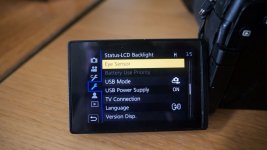
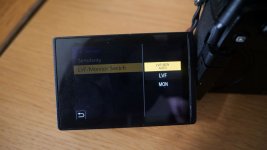
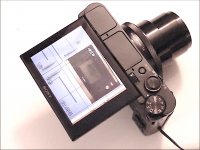
I did have one problem with the G9 and entirely down to me. If for example photographing up a tree trunk with the flip out sceen open on the side, the picture cut out. First thoughts was a dodgy connection ribbon between screen and camera. Being thick and stupid it took me ages to work out that a shoot like this my hand cross the eye piece. That was set to eye sensor on live/mono/auto when it should be on mono only to stop the screen cutting out
P1000851.JPG
below wrong setting

P1000852.JPG
should of had in on mono. Ever felt being a right pratt?
 
Last edited:
...it took me ages to work out that a shoot like this my hand cross the eye piece.
Bazza has brought up something that I think is not considered enough when choosing a camera: "Is the viewfinder suitable for your needs"?

With digital, there are now various choices, besides the basic eye-level finder. There are three basic types of large finder.

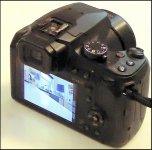
The default seems to be the fixed display, mounted on the back of the camera...

PAnasonic FZ82 Rear screen in use TZ70 P1040083.jpg

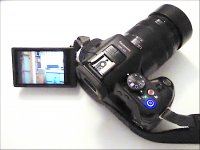
The next most common for dSLRs is the flip out style, as Bazza mentions above...

Panasonic G5 flip-out screen in use TZ70 P1030855.JPG

and the tilt style...

Sony HX90 flip screen in use TZ70 P1030854.JPG

Decades of using film cameras with "waist level" viewfinders means that I prefer the tilt versions.

However, for someone concentrating on nature photography, I think that it would be worth their while to consider this aspect carefully when choosing a camera.
 
Last edited:
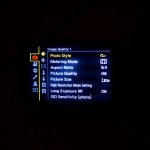
G9ii screen with 2 rows of information, the G9 above only has one and a lot less in the menu


P1060604.JPG
 
Last edited:
I also have that lift up screen type camera the Panasonc DC-TZ95 . Why I didn't mention it because Pauline asked about lenses as well. That one only has a retractable lens .
 
Last edited:
Why I didn't mention it because Pauline asked about lenses as well
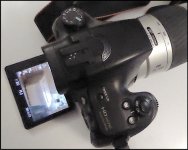
I keep my Sony A65s because they have tilt screens, although hinged at the bottom. The top hinged type are slightly easier to use in my opinion but the bottom hinged type is OK as well...

Sony A65 tilt screen in use TZ70 P1040084.jpg
 
Hi Paulina,

First things first, your current DSLR is probably up to the job of both landscapes and nature, especially if it is a 'modern' DSLR. If you are happy with the camera then my suggestion would be to invest in higher quality lenses and tripod. Not knowing what system you have it's difficult to make recommendations.
 
Hi @paulina and welcome to TP.
as a few others have mentioned, it’d be really useful to know what your current kit is, and what the limitations are, also useful if you’ve got a budget in mind.

The simple truth is; there’s very few bad cameras, and better lenses, and improved technique will pay dividends better. But if you’ve already got a £2000 camera and want something ’better’ that’s a very different problem than if you have a 20 yr old entry level camera.
 
What camera do you currently use, and how much do you want to spend?
Right now, I’m using a Nikon D5600 with the standard 18-55mm kit lens. It’s been great for learning the basics, but I’m ready to step up my game, especially for wildlife and landscapes.

As for budget, I’d like to keep it around £1,000–£1,500 for now, including lenses if possible.
 
If I was putting together a kit specifically for wildlife photography I would be looking at the OM system. Landscape is generally more forgiving on gear and I still just use the kit lens on my Fuji for landscapes, but there will be something suitable for most systems.

A tripod is pretty much essential for long exposure shots - the lighter the camera you are using the lighter the tripod you can get away with. I am using the Peak Design tripod, it is light, and pretty sturdy, but expensive. The main draw for me is that it folds up much smaller that other tripods, which is useful when hiking.
Thanks for the suggestions! I’ve heard great things about the OM system for wildlife photography – its lightweight design and excellent stabilization definitely sound appealing for hikes and longer shoots.

The Peak Design tripod sounds like a great investment, especially for hiking. I really like the idea of something compact and lightweight – carrying bulky gear on long trails can be a real pain
 
Paulina
welcome to TP first of all.

It would help a bit if you mentioned what camera/lens you already have. As for quality of shot remember it is the photographer not the camera or lens that makes a picture the gear only does what you get it to do.
As Andrew says it is all down to your budget .
If I was starting from scratch my question would be first cost, followed by make, then type of camera and then look at lenses for that camera. Each photographer has their own idea so I can only say what I did.
I s came away from DSLR full frame cameras due to weight of camera and lens. So went onto four thirds cameras
Panasonic being my choice.
So the Panasonic G9 and then the G9ii were my purchases now own both. Reason being both G9ii and G9 not only have built in image stablisation but so do most of the lenses, doubling up on stablisation. Adding the 12 -60 mm elmart lens and the 100-300mm lens covers most of the range your looking for. I would even go as far as not needing a tripod with the G9ii except for long exposure. Even the video side of the camera produces excellent videos.
Anyway that is my personal choice, lighter camera and lighter lenses.
Whatever camera one can always start off on auto mode and from there to setup choice in the menu If there is a decent camera shop near you go in and try a hands on to see how you find if it fits your needs
as for tripods the" manfrotto befreelive" range is worth a look

this may help you a bit in choice " https://www.camerapricebuster.co.uk"
Thank you for the warm welcome and the detailed response!

Currently, I’m using a Nikon D5600 with the 18-55mm kit lens. It’s been a great starter camera, but I’ve started to notice its limitations, especially for wildlife photography where I need more reach and stabilization.

Panasonic G9 and G9ii sound like fantastic options, especially with the dual stabilization system.

I’ll definitely check out the “Manfrotto Befree Live” tripod range too – portability is so important for me. Thanks again for the thoughtful advice, and I’ll see if I can try out some gear in a local shop as you suggested
 
The Panasonic G9 has sometimes been called the best camera for wildlife, and there are plenty of examples of it on youtube.

With 3 lenses, you can cover 14-800mm (FF eq) the 7-14, 14-140 and 100-400. The 100-300 mkii is also very good, and costs substantially less than the 100-400
As mentioned, even at 400 (800 FF eq) you can hand hold down to 1/15 quite easily, but a lightweight tripod and remote make things much easier.

G9s can be found for £400 now, excellent ergonomics and very customisable. All the lens range have fantastic IQ, with the possible exception of the 50-200, which is still good, but not quite up to the rest.
I have not found the need or urge to upgrade either G9 to a G9ii yet :)

But a lot would depend on what is available and popular wherever you are
Thanks so much for the detailed breakdown – that’s really helpful!

I had no idea the Panasonic G9 could be found for as little as £400 now – that’s incredible for what it offers. The lens suggestions are also helpful.
 
Hi Paulina.

I think deciding on what lenses you want is quite important. Do you want a standard range zoom or something longer? Primes maybe? What aperture range?

I think my Sony A7 kit is very nice. I've had Panasonic Micro Four Third since the early days but in my opinion there are better systems with Panasonic and wider MFT weaknesses being the relatively restrictive (for some people or uses) aperture ranges and the strength v weaknesses considerations of the smaller sensor.

If money and bulk and weight allow I'd say go 35mm equivalent full frame. FF should give you a step up in image quality over your current APS-C camera. Whatever you go for I'd recommend you at least take a look at mirrorless cameras rather than another conventional DSLR as mirrorless cameras do IMO offer real advantages over DSLR's.

Good luck choosing.
 
Your choice is to either keep the current Nikon D5600 and get lenses that would cover your needs of wildlife and landscape, or replace the body (and possibly memory cards) and obtain lenses as well. Given a budget of up to £ 1500 I'd be tempted to keep the existing body and get a couple of good lenses, probably secondhand to maximise budget.
 
Your choice is to either keep the current Nikon D5600 and get lenses that would cover your needs of wildlife and landscape, or replace the body (and possibly memory cards) and obtain lenses as well. Given a budget of up to £ 1500 I'd be tempted to keep the existing body and get a couple of good lenses, probably secondhand to maximise budget.
Agree with this. A 70-300, 80-400 or 200-500, depending on your tolerance for size/weight would be a good starting point. Then can upgrade the body later and always adapt to Z if needed.
 
Agree with this. A 70-300, 80-400 or 200-500, depending on your tolerance for size/weight would be a good starting point. Then can upgrade the body later and always adapt to Z if needed.
The Nikon AFS- 70-300 VR is a very nice lens. I had one a good while ago. Good value and pretty sharp. Also, when/if you decided to upgrade to the Nikon Z range, with an adapter the lens is perfect. I used that lens a good while ago on a Z7 and was very very happy! Switched to Canon R and OM-5 so that's why I don't have it anymore.. no reason not too, just constantly itch for something different!
 
Back
Top