Adox Rodinal, anyone had recent experience?

NickT

Suspended / Banned
Messages
642
Edit My Images
No
In common with many people, I have not been out and about much lately, nor taking photographs. I have a large stock of Poundland Vista and a largish bottle of Adox Rodinal which I intend to use to semi-stand develop the film. In the past this has worked out OK but lacking in contrast. Now that Asda don't process film at all, options for cheap photography are diminishing. I know that some types of Rodinal had a legendary shelf life, whilst my own experience of RO9, taught me that some types of Rodinal don't!

This bottle that I have has turned a bit brown, so I I wonder how it's going to work out with my usual 1:50 for an hour regime? I'm going to do it anyway, but please have a say if you think you've got relevant experience (rather than something you read on the internet)
 
I thought it was 1:100 for an hour. 1:50 seems like a dilution for non-stand development. I'm no expert though because I haven't used Rodinal for a while and when I did, it was at 1:25.
 
I have no experience with Rodinal per se, but colour changes in developer do indicate a chemical reaction, usually oxidation. In some developers like Promicrol this happens extremely quickly after first use, but is not a problem as you can continue to use it when it looks like brown windsor soup.. Other developers like Neofin Blue do not keep longer than an hour or two after opening.
While other working solutions like D76 can be kept and used almost continuously for months on end provided they are topped up with fresh developer, or replenisher, I used to replace the contents my 3 gallon tanks twice a year with new developer. however D76 when used diluted 3-1 should be used once and discarded.
I think your Idea of sucking it and seeing, is the best option, perhaps trying with a short end first to see if the development time need adjusting. It is unlikely anyone else will have tried Rodinal that is in exactly the same condition as yours. so it will be difficult to interpolate their results to your own
 
Semi stand is generally 1:100 solution though I can’t see anything wrong in experimenting with different concentrations.

The only way you are going to know for sure how the chems will perform is simply by using them.

Turned brown doesn’t necessarily mean they are completely dead but of course it comes down the the importance of the images that you have as to wether you purchase fresh.

As for semi stand deving.
It has a place and without doubt comes in very handy for films where brand, speed or process method is unknown ( regardless of processing method, c41, e6, b&w neg etc) .

For ‘everyday’ processing, I feel the lack of contrast means a loss of many frames.
Contrast boost in pp can render a good result but it is very much a hit and miss affair with each frame.

Of course some togs swear by the method for all their developingwhich is fine if they are happy with what they can achieve from the negative.
 
lack of contrast when developing always indicates under development.
However this can be caused by insufficient active developer agent in a highly diluted developer. whereby no matter how long you develop you get no further development, as all the active developer has been used up. This can be caused by the developer being oxidised or by the wrong dilution for the film.
With highly dilute developers they are exhausted at the end of the processing time, so the activity of the developer is critical.

In those circumstances giving more development time is pointless, the better option is to lower the dilution.

With hour long development you are developing to exhaustion. with a very dilute developer and stand development this should result in maximum shadow detail and unblocked highlights.at the same time maximising edge sharpness. It usually has no effect on the resulting grain, which will be inherent in the film used.
 
Last edited:
I've got so much Vista and Rodinal that I have to try it out. I'm just annoyed with myself, having looked under artificial light, at my two supermarket milk containers and full of ID11 and deciding that I need to order some new powder. I looked today in daylight and they are very nearly completely transparent. At least powder won't go off. It's getting very expensive now to buy film and chemicals. As a schoolboy in Liverpool and when I lived in London for 35 years, I could get materials anywhere and when I left even Silverprint had quit in-person sales. Now back in Liverpool, I have to use e-bay.
 
I've got so much Vista and Rodinal that I have to try it out. I'm just annoyed with myself, having looked under artificial light, at my two supermarket milk containers and full of ID11 and deciding that I need to order some new powder. I looked today in daylight and they are very nearly completely transparent. At least powder won't go off. It's getting very expensive now to buy film and chemicals. As a schoolboy in Liverpool and when I lived in London for 35 years, I could get materials anywhere and when I left even Silverprint had quit in-person sales. Now back in Liverpool, I have to use e-bay.
I had a quick google on this one, and it turns out there is a thread about it on here by @Cuchulainn , who is still active and might have further thoughts?
 
It's getting very expensive now to buy film and chemicals.

Depends what you consider to be very expensive.

Film, yes i appreciate that some brands don't come cheap but when broke down ( I'm talking 36 exposures of 35mm which I no longer use) , a film costing 7 quid works out at +/- 20pence a frame

As for chemicals( b&w) , then I'm sorry but we very much differ in opinion.

Stop and fixer last forever and developer, when calculated to the cost for each film, works out at litterally coppers per frame.
 
I use Agfa Rodinal (still! - it may yet go off...) and have never tried the other variants which didn't exist when I last (bulk) bought. I use either 1:25 or 1:50 depending on contrast required.
 
If you have a small clip of film leader you can test developer and get some idea of its current potency.

These steps are done in normal room lighting
  • Make up just enough of the developer to test, 20ml or so in a small clear beaker (not easy to do at 1:100 Rodinal so may as well make up a bit more).
  • Wet leader clip in water
  • Dip film half way into developer, I use tweezers
  • Start a stopwatch/timer
  • Agitate continuously
  • Note time when it goes dark grey, not black.
If developer is good that should be about 1/5th of usual time - much longer and dev is suspect.

{You can estimate dev times for unknown films in same way - just multiply time to dark grey by 5}
 
Good old Watkins!
 
  • Like
Reactions: dmb
I have a small bottle (120ml) of R09 that is still sealed, that I got from a bulk buy of darkroom stuff. I won't use it, so you can have it if you want some fresh. Just PM me your address and I'll whack it in the post. Got to help out fellow north-westerners where we can right?

Also - apologies for not fully reading "semi-stand" clearly in your OP.
 
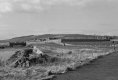
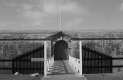
Having recently found an ood Poundland Agfa film lurking in the car, I decided to try processing it in Rodinal to see how it looked. The camera was the £5 Chinon CM4S with the u/s meter I picked up a couple of years ago, so metering was by the free version of the Light Meter app on my phone. I used an old Tamron Adaptall 2 SP 35-80 lens for most of the shots, then splashed out 6ml of my old brown Rodinal at 1:50 for 13 mins, being halfway between Brian's 11 mins (post #7) and a Lomography.com article that suggested 15 mins. Scanned as colour negative previews on a Minolta film scanner at auto settings.

#1 Straight scan only reduced in size for posting here

2021-03-18-0024-copy-colour.jpg

#2 Desaturated, auto curves, noise reduction filter and slight smart sharpen.

2021-03-18-0024-copy-2-auto-curves-copy-filtered.jpg
 
Last edited:
That HAS worked well, Peter!
 
Back
Top