Action shots

chrisnjulie

Suspended / Banned
Messages
197
Name
Julie
Edit My Images
Yes
Hi all

I currently have a Sony Cybershot DSC-H20 . It has 10x optical zoom , 10.1 mega pixels and full HD 1080 . It has been a good little camera BUT I've not been successful with it taking action shots of my dogs or parrot flying . I get blurring , or no subject as its gone past whilst waiting for the shutter to click ! I've tried it on burst but end up with blurring , over exposed and half an animal !

I'm thinking digital DSLR .......

I'm used to point and shoot cameras BUT willing to give it a try ......I would like a camera that will be not off putting (not too technical! if poss) and also a camera that will grow with me as my camera skills grow .

I have no idea how much I want to spend .........but not £1000's

What have been looking at ?
Canon EOS 40d
Sony SLT A58K
and another point and shoot Panasonic Lumix tz50 .....

I like taking photos of anything and everything ......animals , landscape , flowers , food , people , I take my camera eveywhere !!
So if you can help me with some suggestions that would be great .....If you would like me to post some of my efforts I will be up for that too !!
 
It sounds like your biggest issue is that you're not tracking the subject with the camera. There are technical aspects of DSLRs that mean they're better for action shots than most other cameras (response time and focusing speed for example) but that's all for nought if you're not tracking the subject fairly accurately in the first place.

It's very common for people to point the camera at a location, wait for the subject to move into it and then press the button while keeping the camera static - or to whip the camera up, take a shot and then lower the camera again - but you're very unlikely to get a good shot this way unless the subject is very slow moving. You'll usually end up with a blurred subject if you catch the subject at all.

In the case of the dog, you need to move the camera to follow the dog as it approaches the point you want to take a photo and then continue to follow it for a little while afterwards to make sure the camera movement is as smooth as possible. It can take a bit of practice to get this movement right.

The camera might still struggle to focus (depending on how exactly the dog is moving) and you will probably get bits of blur in the legs (or wings in the case of the parrots) but you should try to get the best you can out of what you've already got before parting with more money.
 
Last edited:
Hi julie, welcome to TP.

If you want to capture moving objects, especially ones as quick as dogs and parrots, then you really do need a DSLR. The problem you have with compacts, as you're probably aware, is there is a lag between pressing the shutter and actually taking a photo. This time gets close to disappearing with a DSLR.

The good news is you have plenty of choice in what you go for, all recent entry level models are up for the job and will give a choice of automatic, semi-automatic and fully manual modes, so enough to get you started, and 'grow into' as you become more experienced.

If you want to buy new then I'd consider buying a 2 lens kit. Others may suggest going with just one lens, but you suggest a wide range of subjects so a bit more versatility may be required.

The 2 big hitters in the DSLR world are Canon and Nikon, with Sony another fairly popular alternative as a brand. Each brand have their own fans who will shoult loudest about being the best, but in reality, there isn't much between them.

I had a look on http://www.camerapricebuster.co.uk/ and came up with a couple of options. There are plenty of other alternatives though based on price.

Option 1 - Canon eos 600d with an 18-55mm and a 55-250mm lens - £589

Option 2 - Nikon D3100 with 18-55mm and 55-200mm lenses - £399.

Add in a few quid extra for memory cards and that should give you some idea of your start up costs.

If thats coming out above budget, then going second hand can save you money, for virtually the same quality

Hope that helps for starters

Mike
 
I'm thinking digital DSLR.......I like taking photos of anything and everything.....I take my camera eveywhere !!

I Googled your Sony and can see how you managed to take it everywhere, I'm guessing if you got a DSLR, due to it's size it wouldn't go everywhere with you.
 
The important thing to bear in mind is that when you buy your first DSLR you are not buying the camera, you're buying into a whole system.

So if you choose canon and subsequently add some lenses then it becomes expensive if you subsequently want to swap to Nikon/Sony and so on. With that in mind it is worth doing 2 things at the outset.

1) Try as many bodies as you can - to find which one suits you best (button positions, weight, size and so on). Making the right choice early will hopefully guard against changing later.

2) Take a look at the whole range of "add ons" available - lenses and flashes etc. Be sure to check both third party and original and compare prices. This will guard against hitting the problem where you need a 200mm f2.8 lens only to find that the chosen system either doesn't have one or it is massively expensive.

Of your shortlist I'd say the 40D has a lot to offer - it is a great camera and is getting every cheaper due to the large number on the used market (both the 30D and 50D are also worth a look, 30D being cheaper still and the 50D being a bit higher specced). I can't comment on the others as not familiar.

The other thing to bear in mind is that (especially with action shots) is there is a bit of a learning curve - things that your compact does automatically take on greater significance - Aperture, Shutter Speed and ISO are all fairly easy concepts to understand, but can be a little daunting to apply - don't be put off by what initially seems complex as it soon becomes easy with some reading and a healthy dose of trial and error!
 
Last edited:
I Googled your Sony and can see how you managed to take it everywhere, I'm guessing if you got a DSLR, due to it's size it wouldn't go everywhere with you.

I've always got a camera bag over my shoulder . I like to look after what I've got PLUS I keep my spares in there ......so I'm not that bothered by size ......I'd still take a big camera or both cameras with me everywhere !
 
I've always got a camera bag over my shoulder . I like to look after what I've got PLUS I keep my spares in there ......so I'm not that bothered by size ......I'd still take a big camera or both cameras with me everywhere !

Silly me making assumptions! If size isn't an issue then go for it.
 
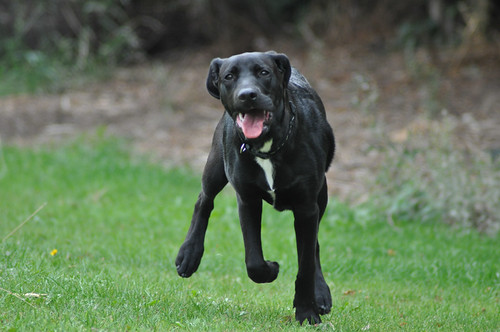
As you can see by the top photo I can sort of get it right BUT then the other two aren't great !!
 
Always best to lead with the examples ;)
They're just out of focus from the looks of it, it's been a long time since I used a lens that didn't have USM* focusing on something like this so someone else will have to comment on whether you'd be likely to get a running dog in focus with a standard focusing SLR lens.

As for the Canon 40D, I've got two and they're alright but they're starting to feel a bit old now. I would imagine you're going to be better off with a lower-level but newer camera body.

*Canon's faster focusing system, other manufacturers call it different things.
 
Last edited:
My guess is that in the 2nd picture you've used the digital zoom that's available on the camera which is why all the grass is lacking detail aswell?
 
So why on this photo are the buttercups in focus and she's not ......because she's moving ? So does that mean I cant have both ?

 
A higher shutter speed would freeze the action so you should be able to have both.
 
It sounds like your biggest issue is that you're not tracking the subject with the camera. There are technical aspects of DSLRs that mean they're better for action shots than most other cameras (response time and focusing speed for example) but that's all for nought if you're not tracking the subject fairly accurately in the first place.

It's very common for people to point the camera at a location, wait for the subject to move into it and then press the button while keeping the camera static - or to whip the camera up, take a shot and then lower the camera again - but you're very unlikely to get a good shot this way unless the subject is very slow moving. You'll usually end up with a blurred subject if you catch the subject at all.

In the case of the dog, you need to move the camera to follow the dog as it approaches the point you want to take a photo and then continue to follow it for a little while afterwards to make sure the camera movement is as smooth as possible. It can take a bit of practice to get this movement right.

The camera might still struggle to focus (depending on how exactly the dog is moving) and you will probably get bits of blur in the legs (or wings in the case of the parrots) but you should try to get the best you can out of what you've already got before parting with more money.

I do tend to track rather than wait for the subject to come into view .....I think I need to master the settings on this camera first and then maybe move onto a more high spec camera .....I just get so disappointed because they're photos you dont get the chance to take every day .....I would just love some great shots of my dogs in action .....I've even tried setting it to burst for succession of snaps but with that the subject has gone past by the time the screen has come back into play .....The info booklet is rubbish and I've searched for other info and never quite found what I was looking for ......so where do I get a camera that thinks for me and adjusts accordingly ?? ;-)
 
Last edited:
So why on this photo are the buttercups in focus and she's not ......because she's moving ? So does that mean I cant have both ?

You probably won't get both absolutely completely sharp without a very, very high shutter speed (impractically high) but if it's fairly bright outside you should be able to get close enough that it doesn't look blurry unless you look very closely.

One of the upsides of an SLR is that you can see and control the specific numbers, such as the shutter speed, so you know exactly what is going on at all times (provided you've learnt what the numbers are) but most compacts don't allow this so it can be a bit hit and miss.

I've even tried setting it to burst for succession of snaps but with that the subject has gone past by the time the screen has come back into play

I would guess that with a compact there's a fairly long delay between different things happening that makes it harder to track a subject, especially something like a dog that moves around semi-randomly. This might be something an SLR would help with too as everything happens quicker so you'd be back to being able to see through the viewfinder/screen faster.

-

It might be a good idea to try and learn photography in a more general sense (exposure and so on). It could be a bit tricky without a camera you can manually set the exposure settings on as you won't be able to put the things you read into practice but it might help with understanding why certain shots don't come out how you want them to. And it would help with picking any other equipment you chose to buy as you'll understand exactly what you need a bit better.
 
Parallel post on General:= What do they mean ?
Danny posted link to the user-guide pdf, even.
I'm now confused what camera we are talking about though; may be this one:=http://www.manualowl.com/m/Sony/DSC-H10/Manual/210
You probably won't get both absolutely completely sharp without a very, very high shutter speed
6.3 mm - 63 mm - F/3.5-4.4, would suggest it's not so slow; and while I cant find max shutter speed, definitely goes up to at least 1/500th which is fast enough to freeze a speeding racing car, so ought to be quick enough to catch a pooch in action!

One of the upsides of an SLR is that you can see and control the specific numbers, such as the shutter speed,
They can. Both sets of instructions suggest the camera has fully manual modes as well as semi auto modes, program adjust modes as well as full program settings.

ONLY thing that, looks a bit nadgery is suggestion in review that it has no aperture iris; aperture is fixed, f-stop varying only due to focal length change with zoom.

It might be a good idea to try and learn photography in a more general sense (exposure and so on).

I think a three prong strategy; reading up on the basics of camera operation; exposure, and the aperture-ISO-shutter triangle, and effects of each; techniques such as panning; combined with the user manual to work out how to effect that control on that camera, and some trial and error putting it into practice to understand how it works.

Meanwhile, I suspect theres a few things going on, most already mentioned.

1/ Not taking time to read the manual & get to grips with the settings to be able to use & exploit properly.

2/ Over-Use of zoom & digital zoom. Bigger you make the subject in the frame; the more any movement in either camera shaking in your hand, or the subject shifting, is going to 'blur' accross the frame. Lower the shutter speed, worse that will be. Also, tracking faster moving subjects, less space you have around it, more likely it is going to fall out of the frame.

3/ Shutter Lag MAY be an issue. Delay between pressing shutter button & camera taking photo. BUT, all digitals suffer this to some degree or other, and if you are tracking, or panning with a moving subject, you just have to 'lead' o n the shutter a little, predicting the moment you want the shot ahead of it happening a fraction.

.....so where do I get a camera that thinks for me and adjusts accordingly ?? ;-)

Wrong question. Cameras dont 'think' they measure and guess. YOU have to do the thinking.

Comment in parallel post about O/H's point & shoot. Its a Nikon L320. It has no manual controls, and has 'smart' program settings. You choose from one of fifty 'situation' programs, from portrait, to sport, to party, there's even a firework display and museum mode! But set what you like, the 'smart' system looks at the image and then over rides YOUR setting and selects the one IT 'best guesses' as most apropriate! One of the things I really hate about it!

BUT, a good % of the time, it will 'best guess' the settings better than the O/H ever would.... doesn't mean its thinking for her.... just that the programmers have given it enough logic commands to guess pretty accurately a lot of the time....

But ALL cameras are STUPID... and they all work on a fundamental presumption, and that is that the 'average' scene is 18% grey....

You take a photo of a white sheep in a field of snow on a sunny winter afternoon.... camera will presume that the scene is 18% grey and make it darker than the white it is.

Take a photo of a lump of coal, in the road at night? camera will presume the scene is as 'bright' as the sheep in the snow... and try making it brighter... probably putting the flash on for you.

Only YOU know what you are really looking at, and whether its really bright or really dim, or whether its rather contrasty, bright in places dark in others, and which bit you are most concerned with.

The 'program' modes, you set on the camera; 'sport' or 'night' or 'landscape' or whatever, are the programmers getting you to give the camera a few more clues to help best guess the most appropriate settings to use, but at the end of the day, that is ALL the camera can do 'Best Guess' based on a set of logic functions programmed by a person who has NO IDEA what you are actually looking at, even LESS what you want the picture to look like.

Modern cameras are good guessers.. but they aren't mind readers... and they STILL cant 'think'.

YOU have the brain. YOU can 'think'. Camera cant. Its a machine. It follows instructions, no more no less.

O/H's L320 is pretty smart... and 'seems' to do a lot of thinking for you, but really it isn't. Very good P&S and as said, guesses right for the O/H an awful lot. BUT, she still gets a lot of pictures fouled up like yours and worse, and probably for the same reasons. She zooms in too far; cant hold the camera still; prodding the shutter button & twisting the camera in the process; Does have remarkeably little shutter lag, though. And very fast sequence, but only in lower resolution image settings.

Wouldn't reccomend it as solution to your problem though; it has no manual control or over-ride what so ever, and that super-zoom range is, I think your biggest problem. If you don't have it, you cant use it, and you'd probably get better shots.

Likewise, I'd find it hard to reccomend a full DSLR as solution to your problems. I have a Nikon D3200. One of its 'entry level' features is a 'tutorial' mode; its a bit like having a 'How to take photo's' guide built in. As well as all the usual auto, semi auto and fully manual modes as well as over rides and compensations.

The user manual is 1/2" thick.... if you haven't got to grips with the half dozen pages of how to set the menus in the Sony manual... I might as well hand you the circuit diagrams for a missile guidance system!

Though shorter 'kit' zoom, that at max zoom, is hardly any 'tighter' than your cameras lens at the wide end, would I think do a lot for you...

Brings me back to my suspicion; you use too much zoom!

Zoom out; shoot wider; avoid so much motion blur from using so much magnification. Which would you rather have? Big blurry dog, or slightly smaller sharper one?

Read some basic tutorials; read your user manual; learn what the camera controls do for your pics; learn how to make those control settings on the camer; practice doing it.

YOU do the thinking... cos cameras cant. they JUST follow instructions.
 
1/500th which is fast enough to freeze a speeding racing car
It isn't. It's enough that, if the car was going fairly slowly, it might look pretty close when you view it normally (i.e a small, full view of the image) but it's not nearly enough to actually freeze the subject and background. That's why I made the distinction about what's actually there and how it appears when you look at it normally as they're often different things when you're talking about sharpness.
Even at something like 1280px wide you can see motion blur in the wheels and the background (or the body if you get your tracking wrong) at 1/500. Cars are a bit quicker than dogs but I've got a few 1/500 shots of our dog that aren't sharp because I didn't track properly or because there were too many different movements going in different directions (legs, head, body, tail, etcetera) for 1/500 to freeze.

I stand corrected on this specific camera's modes though. I had a quick look and didn't see a mention of any non-auto modes but after looking at a photo of the top it does indeed have an M and a P setting as you suggest which should be perfectly fine to learn with. It's the H20 though, not the H10 you've linked.

Wrong question.
I think you missed the wink at the end of that question ;-)
 
...so where do I get a camera that thinks for me and adjusts accordingly ?? ;-)

When you can create one, you'll be very rich.
A camera like that doesn't exist, and I can't ever see the day that there is a camera that is smarter than a human.
 
Just had another thought; Another VERY 'Basic', that might be helpful; Camera holding.

Mentioned my O/H is a booga for wonky horizons; mainly because she holds the camera in a death grip and presses the shutter button like she was wringing out the last drips of a dish-cloth!

Might find some benefit looking up you-tube tips on camera holding and avoiding camera shake.

As said; I think that too much zoom is making things more difficult and magnifying the errors for you; but basics of hand-holding, and keeping the camera steady are a key-skill, that I think a lot of people probably never think about.

Super-Zoom compacts would seem to be particularly prone to poor handling; unlike SLR's they are little, so aren't the easiest to get a great grip on, and they are light, so people dont think they have to support them so much, while they dont have the mass to damp movement as much.

Start with the basics;

- Empty hands of all but the camera & put down any luggage, or anything swinging from arms, like a camera bag or dogs lead.

- stand feet slightly apart, so as to give yourself a more stable 'base'.

- Hold camera in right hand, firmly, but not tight, and support underneath the camera with the palm of your left hand, tucking elbows into your waste.

- Like a marksman; then control your breathing; so you aren't swaying or jerking; and squeeze the trigger... sorry shutter, don't prod or snatch at it.

- Take your time; dont rush. Be 'smooth' and positive.

Basic stuff, but can make a very big difference.
 
Just had another thought; Another VERY 'Basic', that might be helpful; Camera holding.

Mentioned my O/H is a booga for wonky horizons; mainly because she holds the camera in a death grip and presses the shutter button like she was wringing out the last drips of a dish-cloth!

Hahahaha very funny !

Might find some benefit looking up you-tube tips on camera holding and avoiding camera shake.

As said; I think that too much zoom is making things more difficult and magnifying the errors for you; but basics of hand-holding, and keeping the camera steady are a key-skill, that I think a lot of people probably never think about.

Super-Zoom compacts would seem to be particularly prone to poor handling; unlike SLR's they are little, so aren't the easiest to get a great grip on, and they are light, so people dont think they have to support them so much, while they dont have the mass to damp movement as much.

Start with the basics;

- Empty hands of all but the camera & put down any luggage, or anything swinging from arms, like a camera bag or dogs lead.

- stand feet slightly apart, so as to give yourself a more stable 'base'.

- Hold camera in right hand, firmly, but not tight, and support underneath the camera with the palm of your left hand, tucking elbows into your waste.

- Like a marksman; then control your breathing; so you aren't swaying or jerking; and squeeze the trigger... sorry shutter, don't prod or snatch at it.

- Take your time; dont rush. Be 'smooth' and positive.

Basic stuff, but can make a very big difference.

Hiya Mike
I was thinking of just that the other day . Sometimes I'm so blaze about holding such a small camera , I just hold it in my right hand and hold it without it being stable !! I dont get wonky horizons but I do get blur because of my shakiness ! I will practice more and get my OH half to shout 'two hands' when I'm doing it wrong !!
Its all about learning new habits and I WILL get there .
 
When you can create one, you'll be very rich.
A camera like that doesn't exist, and I can't ever see the day that there is a camera that is smarter than a human.
I was a Trouble-Shooter in Project Management, in Aerospace, then Telecoms industries..... I was the bloke sent in when there was a problem....
I think you may be WAY over-estimating Human's capacity to employ 'Inteligence'... especially when they aren't on 'Bonus'...

Bizarre irony; Chap on the production line; wrecking components with a worn out bit of tooling, making lots and lots of scrap or 'something' equally daft....

"Why didn't you STOP when you saw they were all cracked?... I mean, surely you could SEE that they weren't any good! Why did you carry on making them like that.... ALL WEEK!"

"Look, I just work the machine, mate. I pull the lever, press the button, tip-em in the basket"

Followed by circular argument, in which keeps going round and round in circles, and ultimately concludes with the answer that operator, whilst on the clock is more of a machine than the machines!

Machines jam, when something goes wrong; they break... or, we hope, big red flashing lights light up, alarms sound and the machine stops working.... PEOPLE.... no.. they just carry on, doing ONLY what they were told to!

Until break time.... when, you can sit in the smoke room with them, debating the intellectual conundrums posed by the discovery of Richard the III's boar broach in the marshes at Bosworth, or the eccentric stone core of medieval cannonnballs; latest break throughs in genetic research; the ins and outs of the 'Zombie Ecconomy'; or many other diverse and challenging topics in which they can show an incredible degree of knowledge, reasoning and intelectual accumen.....

But then the bell goes, and they go back to work....... and follow the program again!:lol:
 
Nice shot ....will have a look at that camera - there are so many (my brain hurts)
The camera you have at the moment is fine...
Work on the basics, and getting the best you can out of it.

D90 like iwols, or a D3200 like mine, with a pair of kit lenses to give you as much zoom as your Sony, is like to be an £6-7-800 investment if you bought new; probably £500 ish second hand.

But the big 'leap' in camera, will not deliver such a big leap in photo quality, unless you know how to use it properly and have the basic techniques to exploit it.

There are a few things about such a camera that might get you better pictures, straight out the box;

Being bigger; you wouldn't be so blase in your camera handling; you would have to hold it properly; and you would have to hold it in two hands, as the zoom is worked by holding and turning the lens barrel with the left hand while right hand grips the camera. & presses the shutter button..

Having optical veiw-finder; you are likely to use that instead of the view-screen, so hold the camera up to your eye, where again, its more likely to be better supported in traditional photographer 'pose' elbows tucked into waste making a trestle for it, rather than holding it away from your body so you can look at the screen.

And... by dint of sink-or-swim logic; intimidated by a more 'professional' and sophisticated bit of kit, that looks like you HAVE to know what you are doing with it, rather than consumer friendly compact that doesn't suggest you need know more than how to switch it on, point & press; you are likely to be more diligent, and put some time into reading the instructions.... or if you had the D3200, using its 'Tutorial' mode, stepping up to the mark and getting a bit more serious about taking pictures....

BUT... you don't NEED to buy a fancy camera to learn how to hold or use a camera!

And a little bit of getting 'clued up'; learning how the camera works; how to get the best from it; and a little work on your technique and 'discipline' in actual photo-taking, and you ought to be able to get pretty cracking shots with that little camera.

While I have the big DSLR and numerous Film SLR's... over the years, I have taken more, and probably more 'good' photo's with 35mm compact cameras or pocket digitals.

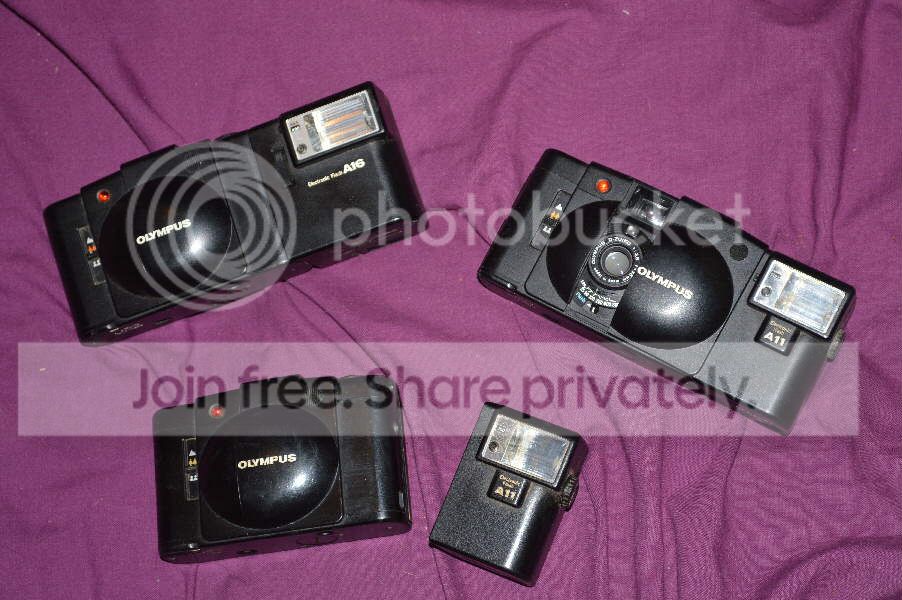
dsc_1310_zpsfa485763.jpg


That is actually my all-time favorite camera. Yes, I know there's three of them. They are all the same; but my real ultimate fave is the one at the bottom with the flash detached... and I have had it since I was ten years old; it's been 3/4 of the way around the Northern Hemisphere, from North America to Asia with me and taken countless thousands of photos... so is consequently a little 'worn out'! Hence the other two... so it can be happily retired!

Fixed 35mm lens, and little manual control other than exposure compensation; it isn't hugely versatile; certainly less so than your Sony. BUT.. little bit of know-how to get the best out of it; and I have sets of photo's containing pics taken with that camera, mixed with others taken with my 'fancy' cameras, and you would NOT know, which camera they were taken with, unless I told you.

The fixed focal length is a little constraining, lacking zoom reach; and it's not so good for close-up photo's; but all cameras have their limits, and its a case of knowing where they are, working within them or exploiting know how to push them into the margins.

Loath, until recently, to spend the big money needed to get a Digital SLR, when I have a bunch of very good film ones, for the few instances where I really want to venture beyond what I can do with a more mainstream consumer compact; for the last ten years, I have been using digital compacts for most of my photography... and nothing as 'powerful' as you have in your pocket!

A 'cheap' fixed focal length 'lens-less' compact; has been general purpose camera, and actually rather good for close-up macro work.. (I take a lot of detail shots of bits of engines or old motorbikes or Land-Rovers to show how to change brake pads or fix clutches and stuff) While for general family pictures, I've been using a little Kodak 7Mpix camera with mere 3x Zoom, with almost no manual control, and very limited ISO range and things.

YET I have managed, with a little know-how and a little basic technique to take fantastic pictures (to me at least!) with them.

It's the old argument; Good Cameras don't take Good Pictures - good PHOTOGRAPHERS take good pictures.

By all means check out 'better' cameras; but do bear that in mind.

Just getting a more serious SLR camera, is unlikely to get you better photo's; probably will.... but it will be as a by product of YOU getting more serious about how you use it, as much as any capability of the camera... and you could do that with what you got, believe me.

When I bought my Nikon this Christmas, being honest with myself; I knew that I REALLY didn't 'need' it, and for digital convenience; could have got myself a much cheaper bridge camera; and done as much with it. There is really only one feature of the DSLR, that I can truly say is an advantage over a bridge or compact for my photography, and that is the optical view-finder, for when tricky lighting makes the view-screen a bit hard to see.... That 'niggle' has vexed me on probably less than a hand full of occasions in the last decade!

And I take a lot of photo's; over wide ranging subjects, from general holiday snaps and family photo's; through my mechanical illustration macro-photography, to fast action motor-sport, to low-light rock gigs; I can really push a camera into those 'margins'... YET... still hard to justify a DSLR as something I NEED to be able to get those shots.

If you want to get more serious, then, and you WANT to feel you have 'serious' camera to go with it; then a DSLR might be part of the process of stepping up your game.

But... you ought to be able to step up your game and go a LONG way with that little camera you already have....

And a tip; even if you DO decide to get an SLR.... don't be tempted to trade the Sony in to get it! Keep it!

As said, it is a powerful little tool; and if you step up your game and get more serious, wit a DSLR... good chance that you will start to appreciate just how powerful that little Sony is.... and as the more portable and pocketable camera, more likely to take it with you, when you don't set out to take serious photo's, and dont want to be lugging the big one about... in your pocket, in your hand-bag... its there, and you are likely to end up taking even more pictures with it, like I did that little Olympus XA.

 
The camera you have at the moment is fine...
Work on the basics, and getting the best you can out of it.

D90 like iwols, or a D3200 like mine, with a pair of kit lenses to give you as much zoom as your Sony, is like to be an £6-7-800 investment if you bought new; probably £500 ish second hand.

But the big 'leap' in camera, will not deliver such a big leap in photo quality, unless you know how to use it properly and have the basic techniques to exploit it.

There are a few things about such a camera that might get you better pictures, straight out the box;

Being bigger; you wouldn't be so blase in your camera handling; you would have to hold it properly; and you would have to hold it in two hands, as the zoom is worked by holding and turning the lens barrel with the left hand while right hand grips the camera. & presses the shutter button..

Having optical veiw-finder; you are likely to use that instead of the view-screen, so hold the camera up to your eye, where again, its more likely to be better supported in traditional photographer 'pose' elbows tucked into waste making a trestle for it, rather than holding it away from your body so you can look at the screen.

And... by dint of sink-or-swim logic; intimidated by a more 'professional' and sophisticated bit of kit, that looks like you HAVE to know what you are doing with it, rather than consumer friendly compact that doesn't suggest you need know more than how to switch it on, point & press; you are likely to be more diligent, and put some time into reading the instructions.... or if you had the D3200, using its 'Tutorial' mode, stepping up to the mark and getting a bit more serious about taking pictures....

BUT... you don't NEED to buy a fancy camera to learn how to hold or use a camera!

And a little bit of getting 'clued up'; learning how the camera works; how to get the best from it; and a little work on your technique and 'discipline' in actual photo-taking, and you ought to be able to get pretty cracking shots with that little camera.

While I have the big DSLR and numerous Film SLR's... over the years, I have taken more, and probably more 'good' photo's with 35mm compact cameras or pocket digitals.

dsc_1310_zpsfa485763.jpg


That is actually my all-time favorite camera. Yes, I know there's three of them. They are all the same; but my real ultimate fave is the one at the bottom with the flash detached... and I have had it since I was ten years old; it's been 3/4 of the way around the Northern Hemisphere, from North America to Asia with me and taken countless thousands of photos... so is consequently a little 'worn out'! Hence the other two... so it can be happily retired!

Fixed 35mm lens, and little manual control other than exposure compensation; it isn't hugely versatile; certainly less so than your Sony. BUT.. little bit of know-how to get the best out of it; and I have sets of photo's containing pics taken with that camera, mixed with others taken with my 'fancy' cameras, and you would NOT know, which camera they were taken with, unless I told you.

The fixed focal length is a little constraining, lacking zoom reach; and it's not so good for close-up photo's; but all cameras have their limits, and its a case of knowing where they are, working within them or exploiting know how to push them into the margins.

Loath, until recently, to spend the big money needed to get a Digital SLR, when I have a bunch of very good film ones, for the few instances where I really want to venture beyond what I can do with a more mainstream consumer compact; for the last ten years, I have been using digital compacts for most of my photography... and nothing as 'powerful' as you have in your pocket!

A 'cheap' fixed focal length 'lens-less' compact; has been general purpose camera, and actually rather good for close-up macro work.. (I take a lot of detail shots of bits of engines or old motorbikes or Land-Rovers to show how to change brake pads or fix clutches and stuff) While for general family pictures, I've been using a little Kodak 7Mpix camera with mere 3x Zoom, with almost no manual control, and very limited ISO range and things.

YET I have managed, with a little know-how and a little basic technique to take fantastic pictures (to me at least!) with them.

It's the old argument; Good Cameras don't take Good Pictures - good PHOTOGRAPHERS take good pictures.

By all means check out 'better' cameras; but do bear that in mind.

Just getting a more serious SLR camera, is unlikely to get you better photo's; probably will.... but it will be as a by product of YOU getting more serious about how you use it, as much as any capability of the camera... and you could do that with what you got, believe me.

When I bought my Nikon this Christmas, being honest with myself; I knew that I REALLY didn't 'need' it, and for digital convenience; could have got myself a much cheaper bridge camera; and done as much with it. There is really only one feature of the DSLR, that I can truly say is an advantage over a bridge or compact for my photography, and that is the optical view-finder, for when tricky lighting makes the view-screen a bit hard to see.... That 'niggle' has vexed me on probably less than a hand full of occasions in the last decade!

And I take a lot of photo's; over wide ranging subjects, from general holiday snaps and family photo's; through my mechanical illustration macro-photography, to fast action motor-sport, to low-light rock gigs; I can really push a camera into those 'margins'... YET... still hard to justify a DSLR as something I NEED to be able to get those shots.

If you want to get more serious, then, and you WANT to feel you have 'serious' camera to go with it; then a DSLR might be part of the process of stepping up your game.

But... you ought to be able to step up your game and go a LONG way with that little camera you already have....

And a tip; even if you DO decide to get an SLR.... don't be tempted to trade the Sony in to get it! Keep it!

As said, it is a powerful little tool; and if you step up your game and get more serious, wit a DSLR... good chance that you will start to appreciate just how powerful that little Sony is.... and as the more portable and pocketable camera, more likely to take it with you, when you don't set out to take serious photo's, and dont want to be lugging the big one about... in your pocket, in your hand-bag... its there, and you are likely to end up taking even more pictures with it, like I did that little Olympus XA.


Some great points made .....a lot to mull over . I know I get some great photos from my Sony - its the dog ones that are the disappointing ones and thats what I really want to photograph ! I will do more practice panning and holding the camera correctly .....I do miss the eye piece on the 'old type' cameras and you do get less shake than these ones with the big 3in led screen . There are so many factors to think about ......I totally forgot about the view finder on a camera .....I much prefer a view finder (in fact my mother in law still tries to hold my Sony up to her eye !! )
I really appreciate the time and effort you've put into your answers and advice you've given me .....so far I have controlled the urge to go out and impulse buy a camera . I'm going to be sensible and do the right thing ....learn learn learn and lots of practice . Thank you .
 
Some great points made .....a lot to mull over . I know I get some great photos from my Sony - its the dog ones that are the disappointing ones and thats what I really want to photograph ! I will do more practice panning and holding the camera correctly .....I do miss the eye piece on the 'old type' cameras and you do get less shake than these ones with the big 3in led screen . There are so many factors to think about ......I totally forgot about the view finder on a camera .....I much prefer a view finder (in fact my mother in law still tries to hold my Sony up to her eye !! )
I really appreciate the time and effort you've put into your answers and advice you've given me .....so far I have controlled the urge to go out and impulse buy a camera . I'm going to be sensible and do the right thing ....learn learn learn and lots of practice . Thank you .

That is good advice Julie, knowledge and technique is vital here, but don't expect great results using a bridge camera for running dogs. Despite what's been said, you will only achieve success there on a random hit and miss basis - at best.

Focus-tracking something fast moving, at relatively close distance, coming more or less straight for the camera is technically very demanding of equipment - about as hard as it gets in fact. The only cameras capable of doing that consistently are DSLRs with a fast-focusing lens. Bridge cameras have fundamentally different focusing systems and are frankly hopeless for tracking moving subjects.

For sure, you need to practise and learn, and practice and learn some more. But you also need a decent DSLR and lens to nail those running dogs.

See this thread http://www.talkphotography.co.uk/forums/showthread.php?t=461016 and also this one http://www.talkphotography.co.uk/forums/showthread.php?t=460348 especially Tim Dodd's posts.
 
I got what you meant about using too much zoom .......it seems like things are clicking into place .
..... and I get an 'Einstein' moment .....
I've just had one of them.....
I really need to go back to basics
THAT was what you said right at the beginning....
Along with
I need to get to know my camera
And we have basically confirmed those notions...
But along the way; nagging at the nub has been whether your camera is the most helpful... and if not... what might be...
.....so far I have controlled the urge to go out and impulse buy a camera ......
It's obviousely still there in the back of your mind, along with
I'm going to be sensible and do the right thing ....learn learn learn and lots of practice
Which is following through; 'getting clued up, getting serious' about your photo's.

OK.... mulling....

I know I get some great photos from my Sony - its the dog ones that are the disappointing ones and thats what I really want to photograph !

Its the doggy piccies you are struggling with... and..... I dont want to totally rubbish Hoppy's advice, its very valid, BUT.....

don't expect great results using a bridge camera for running dogs. ......
Bit like this then?
5-10-2013_101.jpg

is technically very demanding of equipment - about as hard as it gets in fact. The only cameras capable of doing that consistently are DSLRs with a fast-focusing lens.

Sorry, but no. They aren't. I took that photo, in 1995 with a Olympus OM4 and Tameron 28-70 Manual Focus lens... and it isn't in focus by shear chance! Its in focus because of TECHNIQUE.

I achieved decent focus through selecting an aparture that gave me a depth of focus zone big enough to get the dogs sharp, front to back, with a little margin either way; then simply focusing a little ahead of the dogs, so that they were running in to focus as I depressed the shutter. And I did it faster than AF systems of the day could, because I didn't think about it; I just did it, with practiced technique.

So, sorry, but high end Digital SLR's with fast acting AF are NOT the only cameras that can capture this kind of action, with or without any degree of consistency.

See, no fluke.
3-29-2013_025C.jpg


That sort of advice is typical of modern wisdom, and very valid if you are resigned to technology dependance.

I am not a 'great' photographer, and I am certainly no specialist. But, I could consistantly get results in what you now deem 'very demanding' situations with my limited skill, with old cameras with slow shutter speeds and no auto-focus; exponents of that kind of photography achieved excellent results and consistancy with lequipment, lacking such sophisticated technology.

And some-times a lot can be learned from 'old wisdom'.

Hence my Eurokia moment..... Julie...

What about a FILM camera?

We were discussing how you might benefit from an SLR as part of your bid to become a better photographer, even if it's not essential.

Following recommendations or suggestions of current, conventional wisdom though, would prompt suggestions of an entry level DSLR like my Nikon D3200; typical entry level camera, with the particular feature for a newby, of its in-camera tutorial mode; but, advice like Hoppy's, pointing out how 'demanding' your subject is, then pushed higher end DSLR's like the D90 iwol suggested, which are a little less newby freindly, but are 'faster' for the demands of the action... though of course that then leads to suggestion you need better lenses to go with it, that are equally 'fast'... and so it goes on, chasing the technology, escalating the costs....

Back to where you started BACK TO BASICS

As a training tool, a film camera has a lot to offer.

Devoid of much technology, you have to go back to basics to use it. And lacking a screen on the back and ten menus full of user settings.... you have the BASIC functions; which should all be relatively obvious and easy to set; so that when you do some reading around, as you get 'clued up', you don't have to work your way through a bible thick manual to try and translate the suggestions to the camera!

Now... what if I told you that you could buy a good 35mm Film SLR for as little as £20?

Yeah... they need film, and that's 'expensive', but hey! £20! Compared to what you would spend on a Digital SLR chasing the technology.... you could afford a HECK of a lot of film! (About £5 a roll or so, for film and processing if you hunt about)

And you ONLY really want it for this 'demanding' situation, getting photo's of the dogs 'really', don't you? As I said before, that Sony is a very powerful little camera, and great for everything else... so carry on using it for what its best at.

As you develop as a photographer; it's likely that you will find you are using a the film SLR more and more, and that initial 'cheapness' is starting to pall a little, as you are forking out more often for Film & Processing; BUT.. part of the journey of discovery. There are many new-converts to film, who carry the zeal only converts can; but that is a potential avenue you might explore later.

Here and now, could be a stepping stone and training tool, to get back to basics, learn some photo-craft, concentrating on technique, without being able to rely on technology; get some nice pics of pooches in the process, and learn a lot along the way.

At some point in the future; if you get to that point; and decide that you do want a 'better' camera, and that digital SLR is the way to go; then you'll be far more clued up as to what would be more suitable, and how to use it, when you got it. Still be expensive, BUT, you'd be getting value from it.

And, little encouragement; the image quality from a 35mm Film SLR is very high. That picture of the running dogs, is probably not the best advert for the format; but even so. Taken on cheap mail-order processing 'Free-Film' (kind they sent you back with your prints to get repeat business), and scanned (always the weak link in making film pictures digital), with a low rent webcam-type scanner, the 'original' digital image is 17Mpix... higher than most older DSLR's and many of the lower end contemprary ones.

Potential with film, is there to get pictures as good or better than you could with some of the most expensive, top of the range modern Digital cameras costing £1000's... and you could do it with kit costing pocket money.

I said a good film camera could be got for £20 or so; but you can pick up truly great film SLR's for not a lot more. £100 or so, you could have a very good and comprehensive SLR 'kit'.

Just a thought; one of your Einstein moments; BUT.... if you are struggling to resist that urge to buy 'something'... in your bid to become a better photographer? Could be a way to go.
 
Mike, if you are going to quote me in order to contradict what I said, then please take the whole of the relevant quote and not omit the bit about focus-tracking that is central to it.

The quality of results I'm talking about are well illustrated in the two threads I linked. My comments stand.
 
...
Bit like this then?
5-10-2013_101.jpg


Sorry, but no. They aren't. I took that photo, in 1995 with a Olympus OM4 and Tameron 28-70 Manual Focus lens... and it isn't in focus by shear chance! Its in focus because of TECHNIQUE.

Mike
Like I said in the other thread, you've given some great advice - but it's being over - egged a bit with those images, do you honestly believe they're of a standard to be aspired to?

I know they're not up for critique, but if you're using images to prove a point, it'd help if they did actually prove that point :thinking:.

I helped my cousin shoot rally cars with a P&S once, in order to get any kind of shot I had to stop the camera processing everything but AF, and even then the shutter lag meant that he had to press the shutter as soon as the car was in sight and to track it hoping that he'd get it in shot (nearly a second later). It's possible to do, but for someone who genuinely wants excellent results, the best thing to do is buy an SLR and learn how to use it.

With an SLR the OP can produce fantastic images and not settle for 'almost good enough'.
 
been following this thread and what i can see a decent dslr is the way to go for good quality shots, nothing here has changed my mind if these dogs are the main subject........just my opinion
 
Like has been said before. The most important thing is knowledge.
That will enable you to get the best out of whatever camera you own & make the absolute most out of whatever light is available.
Lewis Hamilton driving a fiat panda would still beat me around a track no matter what I was driving.
 
I know they're not up for critique, but if you're using images to prove a point, it'd help if they did actually prove that point :thinking:.
Well the point was that you don't 'need' super-fast AF to get running dogs in focus.
They are in focus. - how no prove point?
 
Well the point was that you don't 'need' super-fast AF to get running dogs in focus.
They are in focus. - how no prove point?

Because ill have to take your word for 'in focus' they're far from sharp and therefore a bad example.
 
Back
Top