

accessories help (filters mainly)

Bletch

Suspended / Banned
Messages
434
Name
James
Edit My Images
No
Hello everyone
I'm just trying to assemble a list of bits n pieces that I need to buy for my new camera which I'll be getting in just under 3 weeks. I've got my heart set on a Nikon D5100 which comes with a standard 18-55mm lens. But I'll also be buying the Tamron 18-270mm vc pzd lens.

After a tripod & camera backpack I'm not going to have that much money to spend on several filters and to be honest, I'm not really that up to date on what they all do.
Am I right in saying that the Tamron lens can just about take any type of shot that the standard oneo can do? If so, perhaps I could limit my filters to two:

'protector/skylight' filter for Tamron lens - used for wildlife parks and other shots where necessary. Would it be a good idea to just keep it on the Tamron on at all times? I just really want to protect it from all the dust..

'Polarising' filter kept on the standard Nikon lens - used for landscapes, street scenes etc.. Take off for night snots?
I choose polarising filter because this puts colour back into the sky. White skys look awful - I've got plenty.

I will also try to concentrate on night photography too this time as my last holiday shots would make anyone shudder.

One of the cities I'll be visiting again is featured in the website below (NOT my photography).
http://www.asiaexplorers.com/india/night_time_in_varanasi.htm

Anyway, thanks for reading :)
 
First of all it's not really necessary to put UV filters on your lenses. If you keep the hood on to protect the lens you should be fine. I had fairly expensive UV filters on all of my lenses but some of my photos were a bit soft so, after reading on the forum, I decided to remove them and the IQ has improved a lot. CPL and ND filters can be very helpful in some situations where the sky is bland or if you want to take long exposures of water etc.
Secondly, be aware that most superzoom lenses do tend to lose sharpness at the extremes of the zoom. I had a Tamron 28-300 F/3.5-6.3 XR Di LD VC and was very happy with it upto about 250 before sharpness fell off. Not used the 18-270 myself but was thinking of getting one so asked about them on here and it seems most people have the same problem. The IQ is fine for looking on a computer or a smallish print, but you do see the softness when looking at the full size image.
 
Dont leave the polariser on all the time, you loose 1-2 stops of light, and it only puts colour in the sky if there is colour to start with. It wont solve blown white skies and it wont help on overcast days.
It only works when the sky is blue and you are at 90 degrees from the sun.

Dont bother with the skylight/UV filter. Use the hood. Dust is a part of life with DSLR's. Besides, on zoom lenses, dust usualy enters from the zoom mechanism, not through the front element, so a filter wont help there either. If you are shooting rallying or a warzone, then maybe consider it, but otherwise just a waste of money.

Save the money and buy a good quality tripod.
 
Don't want to sound too negative but a polariser can be a bit of a pain with the nikon 18-55 kit lens. Because the front element rotates when you focus, you effectively have to nail your focus before adjusting the polariser. It's very difficult to adjust the polariser without knocking your focus out because the focusing ring is right next to the filter and it is quite loose so very easy to move.

I assume you're looking at the Tamron 18-270 for convenience when travelling? If so, it's pretty hard to beat as a do-it-all lens. If you can sacrifice the length, it would be maybe worth looking at the Nikon 18-105. It's a very good landscape lens, has VR, is well built and it's front element doesn't rotate so using a CPL is much easier. It would save you a lot of money as well. Just a thought...
 
Thank you all for your suggestions. Skip the polariser then, sounds a pain to use but I'm really keen on keeping a UV filter on the expensive Tamron zoom, although I accept what you say Tom, about dust not coming in through the front element.

Yes, quality tripod is constantly at the back of my mind too and so is small, small, small. Really keen on the 3LT 'Adrian' which closes up to about 44mm. although shops online don't seem to stock it.

Graham - the reason I choose the Tamron 18-270 was because I'm probably going on Safari and I'm coming into the DSLR world as a newbie who previously owed a 36x bridge camera - as long as the Tamrom gives my better images at full zoom than that, I'll be pretty happy :) (I'm sure it will).

Thanks for helping guys, you too Stuart!

PS. Damn, I could flog my camera for some extra dosh!
 
Last edited:
filters wise I have cheapest UV filters I could find, in all sizes (for each of my lenses). Reason being, I sometimes shoot in VERY dusty/Sandy environments where quality is down anyway (and also seal the body with duct tape and cover the lens barrel with bike innertube!)

Other than that, they are, in my opinion a bit pointless, just put the lens cap back on.

Polarising filter is quite useful, though I don't use it often, when I have, I have been happy with the results.

Best thing you can buy? Spare Battery. NOthing worse than running out when you need it, and charging on safari might be hard and you'll be taking a lot of shots.
 
Yes, quality tripod is constantly at the back of my mind too and so is small, small, small. Really keen on the 3LT 'Adrian' which closes up to about 44mm. although shops online don't seem to stock it.

Give 3LT a ring, the new second generation is due any day but they may have some of the first generation Adrian in the warehouse, as returns or cancelled orders. 01234 828834

Also the Benro Travel Angel is very, very similar to 3LT Adrian and can be had for approx £130.

McShug
 
@ James - Batteries, Oh I'll be taking 4-5 of those, no worries. I was also entirely happy with my Energizer versions for my bridge camera which I'm sure cost half the price of the original Nikon version. Already have a few class 10 Transend memory cards maybe a few more (hopefully taking a netbook with me to store photos on too). Thanks for your thoughs, really appreciated.

@ Hugh - thanks for pointing me to the 3LT phone number, I didn't realise they were about to release new tridods, maybe that's why no one has anything in stock. Will check out the Benro Travel Angel too, thank you!
 
What sort of filter can you attach to a camera to stop scratches on the lens please?
 
protection or UV can be used to protect.

(The UV has no effect iirc as the sensor has a filter already or something)

I use one as I've got kids and I'm out with them and the camera and I'd rather scratch a £20 filter than a £300 lens.
 
What sort of filter can you attach to a camera to stop scratches on the lens please?

The lens cap.

What environment are you going to be in where you predict the lens could get scratched? A UV filter is often used to protect the front lens, but I would only ever use it for speedway/bangers when the shale is flying around, or perhaps on the beach if the wind was getting up and blowing the sand and saltspray around fiercely. Otherwise I prefer to use the lens hood to protect the lens.
 
The lens cap.

What environment are you going to be in where you predict the lens could get scratched? A UV filter is often used to protect the front lens, but I would only ever use it for speedway/bangers when the shale is flying around, or perhaps on the beach if the wind was getting up and blowing the sand and saltspray around fiercely. Otherwise I prefer to use the lens hood to protect the lens.

I would use it on the beach.
 
Dont leave the polariser on all the time, you loose 1-2 stops of light, and it only puts colour in the sky if there is colour to start with. It wont solve blown white skies and it wont help on overcast days.

I'm sorry but you clearly arent talking from a position of authority! Polarisers darken blue skies, reduce reflections (thereby increasing saturation), reduce atmospheric haze (increasing saturation) and intensify rainbows. For any form of landscape short and plenty of still life images, a polariser could be regarded as essential!

To answer the question I agree with other posters that a UV filter is unnecessary PARTICULARLY if you use lens caps. I use neither and my optics are perfect, that said, a polariser is very regularly on my wideangle.

I strongly recommend a polariser unless you are limiting your photography to sports and portraits. I can assure you that using a polariser on a rotating front element is not an issue (I did it for years).

On the workshops that I hold people are frequently suprised at just how much of a positive effect a polariser can have yet most beginners dont own one. The idea of buying a UV filter for protection is bogus in my opinion, particularly if you are buying it in preference to a polariser! If youa re going on safari the ability to deeped blue skies and cut down on haze will be helpful I am sure. I suggest buying the polariser in the largest filter size you are likely to need and then buying step up rings for the lenses with smaller filter sizes.

Hope that helps,

Alex
 
Last edited:
I'm sorry but you clearly arent talking from a position of authority! Polarisers darken blue skies, reduce reflections (thereby increasing saturation), reduce atmospheric haze (increasing saturation) and intensify rainbows. For any form of landscape short and plenty of still life images, a polariser could be regarded as essential!

To answer the question I agree with other posters that a UV filter is unnecessary PARTICULARLY if you use lens caps. I use neither and my optics are perfect, that said, a polariser is very regularly on my wideangle.

I strongly recommend a polariser unless you are limiting your photography to sports and portraits. I can assure you that using a polariser on a rotating front element is not an issue (I did it for years).

On the workshops that I hold people are frequently suprised at just how much of a positive effect a polariser can have yet most beginners dont own one. The idea of buying a UV filter for protection is bogus in my opinion, particularly if you are buying it in preference to a polariser! If youa re going on safari the ability to deeped blue skies and cut down on haze will be helpful I am sure. I suggest buying the polariser in the largest filter size you are likely to need and then buying step up rings for the lenses with smaller filter sizes.

Hope that helps,

Alex


I said, and I quote.. A polariser wont add colour in the sky where there is none..

Is this correct?. Yes it is.
I said, It will loose you two stops of light
Is this correct, Yes it is
I said it wont solve blown white skies
Is this correct? Yes.

I also said it will darken blue skies.
Im sorry, but was your point?

Very few people leave a polariser on all the time, as its just not needed.
 
Last edited:
I'm sorry but you clearly arent talking from a position of authority! .............Alex

and you are..?....:shrug:

quite rude IMO...:shake:

i was lead to believe - unless you can instruct me otherwise - that polarisers DO do exactly what you state providing the light is at 90deg

ie if you have a back-lit subject or are shooting with the sun behind you - the C-PL will not show it's effect

regards...john
 
Yardbent said:
and you are..?....:shrug:

quite rude IMO...:shake:

i was lead to believe - unless you can instruct me otherwise - that polarisers DO do exactly what you state providing the light is at 90deg

ie if you have a back-lit subject or are shooting with the sun behind you - the C-PL will not show it's effect

regards...john

Ah he runs workshops, he must have much more authority than any of us mere mortals.

Remind me never to book a workshop with this so called expert.
 
James, seriously bud, I would not buy anything until you have thoroughly got to grips with the camera and kit lens. It's a very capable and versatile combo and you'll learn more not flitting between this lens/filter and that. When you've done that, you will almost certainly want to get something different to what you're thinking now.

If you want another toy for Xmas ;) get a decent flash gun and learn to use it by pointing it anywhere except at the subject.
I wouldn't get that Tamron, ever, but if you need something longer for safari, save up for a Nikon 70-300 and get a polariser for the kit lens.

PS My money's on the Rude Boy :D
 
Last edited:
Sorry, the tone of my response was completely wrong. I'm just aware of the fact that you are likely to mislead people if you give them the wrong information.

Whilst what was said is technically correct it implies that that is what a polariser is for. The majority of landscape photographers use a polariser for its other properties. The ability to darken blue skies at 90 degrees to the sun is nice, but the ability to cut out reflection and haze thereby adding saturation and improving contrast is far more useful

Whilst I'm not calling myself an 'expert' I do use polarisers day in day out, and I know what they can be used for. It's possible that you do to, but a beginner could very easily read that post something like this:
"Oh so a polariser only darkens blue skies and only at 90 degrees to the sun. I dont really need that and I can probably do that in processing. Sounds unnecessary to me"

The comment about you not talking from a position of authority was me speaking before I think, something I have a bad habit of doing. In reality I obviously have no idea what authority you have on the subject, but the post implies that you don't fully understand what polarisers do.

Alex
Ah he runs workshops, he must have much more authority than any of us mere mortals.
Remind me never to book a workshop with this so called expert.

To be honest, I brought that up to point out that it is common for beginners to have no awareness of the usefulness of a polariser though reading it back it just sound big headed, particularly along with my first comment.

Anyway back to subject, if you are deciding whether to get a polariser, this is what it will do (all of what is said above is correct, I only took issue with what wasn't said)

- Lose between 1.5 and 2.5 stops of light depending on the scene and the polariser
- Deepen blue skies, with maximum effect at 90 degrees
- Cut out haze, with maximum effect at 90 degrees to the sun
- Cut down on reflections on a particular plane. Given that most leaves face upwards this means you can remove reflections of the sky on foliage and massively increase saturation. It is also brilliant for rivers and waterfalls at allowing you to see into the water.
- Intensify Rainbows - you can rotate the filter to improve saturation in different areas of the rainbow.

Apologies for my rude comment TCR4x4
 
James, seriously bud, I would not buy anything until you have thoroughly got to grips with the camera and kit lens. It's a very capable and versatile combo and you'll learn more not flitting between this lens/filter and that. When you've done that, you will almost certainly want to get something different to what you're thinking now.

You've given me other things to mull over now Richard, probably a good thing though! I might have to have a read up on that Nikon 70-300 you mention. Thanks for taking time to reply to my thread.

Alex, everyone thank you too.
 
Last edited:
I strongly recommend a polariser unless you are limiting your photography to sports and portraits. I can assure you that using a polariser on a rotating front element is not an issue (I did it for years).

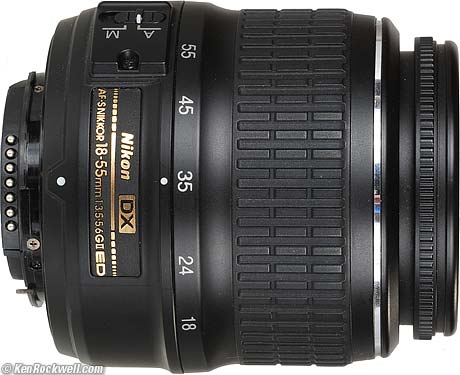
I assume you're referencing my post regarding the rotating front element? As stated, I wasn't specifically dismissing CPL filters for lenses with rotating front elements, just the particular lens the OP was talking about. The problem isn't particularly that the front element rotates but that the focusing ring is right next to the screw thread, offers almost no resistance to movement and si easy to knock. When you're trying to look through the viewfinder and adjust the CPL at the same time, it is a serious challenge not to knock the focus out as well. Been there, done that, gave up as it was extremely frustrating.

This is the lens in question. Look how close the focus ring (the small knurled ring just behind the front element) is to the front screw thread!

D3S_4461-460.jpg
 
Yeah it was exactly the same story with the 18-55 canon kit lens I was using, it didnt bother me personally but I guess the specifics of the resistance of the focus ring could make it more problematic!
 
Back
Top