A little adapter puzzle for those that like a challenge.

Kell

Suspended / Banned
Messages
5,130
Name
Kell
Edit My Images
Yes
So I'm confused.

It's easily done, so bear with me.

I have a Sony A7 and am using adapted Minolta lenses on it.

I have a Minolta Fish-eye 16mm lens and the MFD is around 30cm from memory. I'd like to take some really distorted pics, (portraits or the cat for example) but when the MFD is 30cm, they don't have that real FISH-EYE feeling.

I can just about do it when I tried a bit of free-lensing, but I'm not comfortable doing it.

I currently have two sets of Minolta extension tubes, but using the thinnest one from either set still means that in order to take a photo, the front element of the lens is touching whatever you're shooting.

So I need to figure out a way to build an adapter that is deeper than my current FOTASY one, but isn't as deep as that adapter plus either of my thinnest extension tubes.

Using THIS FLANGE FOCAL DISTANCE GUIDE, I can see that Minolta SR mounts are 43.5mm and Sony E Mounts are 18mm. Making an adapter 25.5mm.

So - I'm looking for some sort of workaround that might involve using two adapters that are thinner than my 25.5 mm adapter and a 14mm Extension tube.

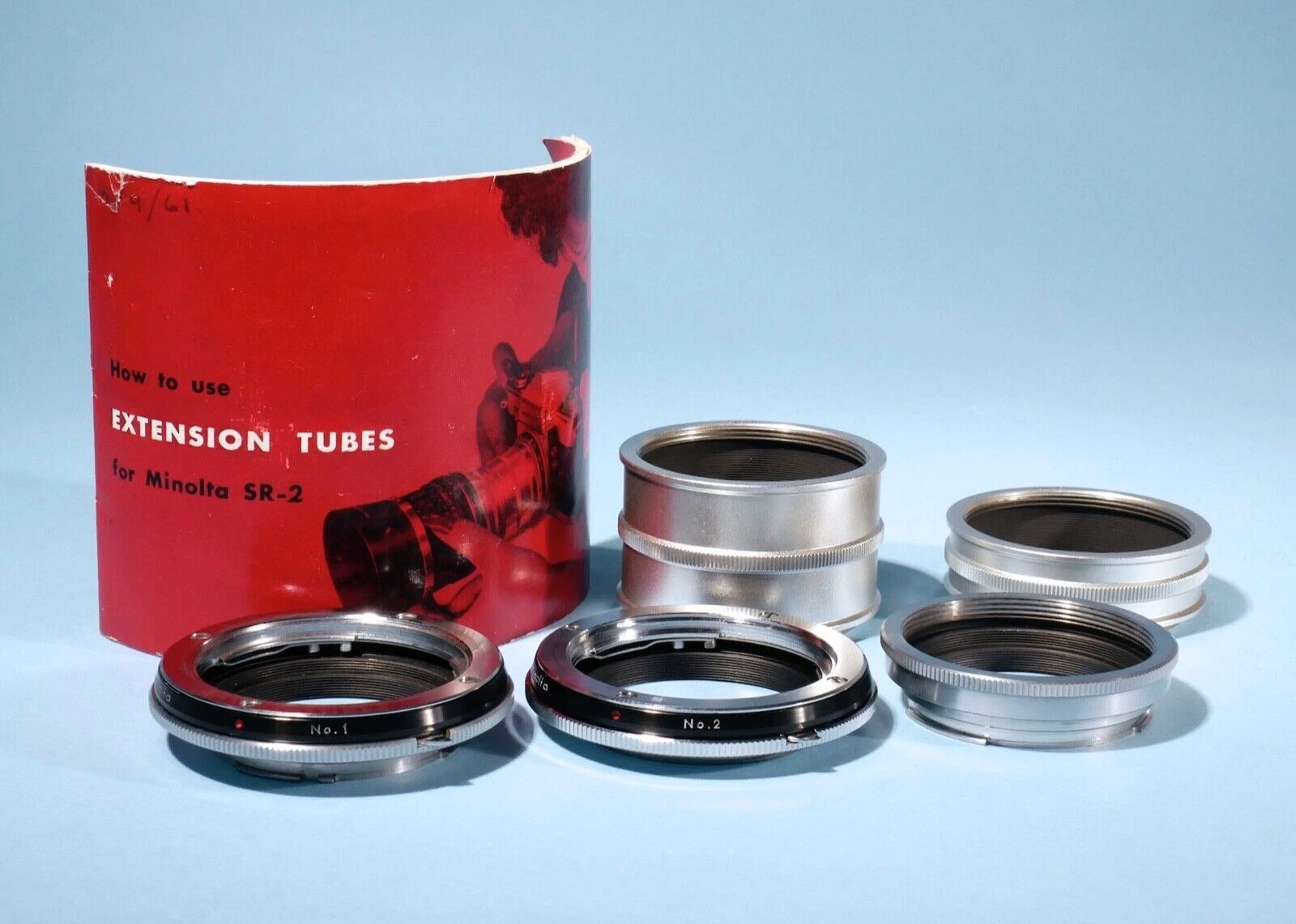
One set looks like this


Minolta Extension tube set by Kell, on Flickr

The other set says the thinnest extension tube is 7mm, but it's a two-piece system and I haven't measured how thick it is when the two pieces are clamped together.
s-l1600.webp


One Idea I have is that my K&F adapter is a two piece version. I could (theoretically) take it apart and add a shim to reduce the MFD by a little. I don't use it anymore (ironically as it was starting to come apart) so wouldn't mind fiddling with it a bit. As I already own it, it would be a low cost solution.

The other might involve something else like going through another system i.e. Minolta > (i.e. Fuji) > Sony to make up an adapter of two other adapters, but I'm not really seeing a way to work this out.

It's going to be a bit of trail and error to try and make this work I think as I don't know how to calculate the ideal way to bring the MFD down to Xmm partly because I simply don't know how and partly because I don't know what X should be.

Anyway - anyone have any thoughts or ideas?
 
Last edited:
A bit of Chat GPT reckoning:

Okay, let's calculate the precise additional extension needed to bring the MFD of your 16mm MDII Fisheye lens from 30cm down to 10cm.

We'll use the thin lens formula for this, which provides a good approximation: 1/f = 1/u + 1/v Where:

  • f = focal length of the lens (16mm)
  • u = object distance (MFD)
  • v = image distance (distance from the lens's optical center to the sensor)
Step 1: Calculate the original image distance (v_original) when focused at 30cm (300mm).

  • f = 16mm
  • u_original = 300mm
1/16 = 1/300 + 1/v_original 1/v_original = 1/16 - 1/300 1/v_original = (18.75 - 1) / 300 (common denominator 300) 1/v_original = 17.75 / 300 v_original = 300 / 17.75 ≈ 16.901 mm

Step 2: Calculate the new image distance (v_new) required to focus at 10cm (100mm).

  • f = 16mm
  • u_new = 100mm
1/16 = 1/100 + 1/v_new 1/v_new = 1/16 - 1/100 1/v_new = (6.25 - 1) / 100 (common denominator 100, or 400 for more precision: (25-4)/400 = 21/400) 1/v_new = 5.25 / 100 (or 21/400) v_new = 100 / 5.25 ≈ 19.048 mm (or 400/21 ≈ 19.048 mm)

Step 3: Calculate the additional extension needed.

The additional extension is the difference between the new image distance and the original image distance: Extension = v_new - v_original Extension = 19.048 mm - 16.901 mm Extension ≈ 2.147 mm

Step 4: Calculate the total adapter thickness.

  • Base adapter thickness for infinity focus (Minolta to Sony E-mount): 25.5mm
  • Additional extension needed: ~2.15mm
Total Adapter Thickness = 25.5mm + 2.15mm = 27.65mm

Conclusion:

To achieve an MFD of approximately 10cm with your 16mm MDII Fisheye lens on a Sony E-mount camera, you would need a total adapter thickness of around 27.65mm.

This means you'd need an adapter that is roughly 2.15mm thicker than the standard 25.5mm adapter required for infinity focus.
 
Or for 15cm MFD: just over 1mm

Okay, let's calculate the additional extension needed to halve the MFD from 30cm to 15cm for your 16mm MDII Fisheye lens.
We'll use the same thin lens formula: 1/f = 1/u + 1/v
  • f = focal length of the lens (16mm)
  • u = object distance (MFD)
  • v = image distance
Step 1: Original image distance (v_original) when focused at 30cm (300mm).(This is the same as our previous calculation)
  • 1/16 = 1/300 + 1/v_original
  • 1/v_original = 1/16 - 1/300 = (18.75 - 1) / 300 = 17.75 / 300
  • v_original = 300 / 17.75 ≈ 16.901 mm
Step 2: New image distance (v_new) required to focus at 15cm (150mm).
  • f = 16mm
  • u_new = 150mm
  • 1/16 = 1/150 + 1/v_new
  • 1/v_new = 1/16 - 1/150
  • 1/v_new = (9.375 - 1) / 150 = 8.375 / 150
  • v_new = 150 / 8.375 ≈ 17.910 mm
Step 3: Calculate the additional extension needed.
The additional extension is the difference between the new image distance and the original image distance:Extension = v_new - v_originalExtension = 17.910 mm - 16.901 mmExtension ≈ 1.009 mm
Step 4: Calculate the total adapter thickness.
  • Base adapter thickness for infinity focus (Minolta to Sony E-mount): 25.5mm
  • Additional extension needed: ~1.01mm
Total Adapter Thickness = 25.5mm + 1.01mm = 26.51mm
Conclusion:
To achieve an MFD of approximately 15cm with your 16mm MDII Fisheye lens on a Sony E-mount camera, you would need a total adapter thickness of around 26.51mm.
This means you'd need an adapter that is roughly 1.01mm thicker than the standard 25.5mm adapter required for infinity focus.
 
Good old Chat GPT - Basically saying it's not possible to go through another system.

Okay, let's make it super simple, like building with blocks.
Imagine you have three blocks:
  • Block A: Represents your Minolta lens's distance (43.5mm).
  • Block C: Represents your Sony E-mount camera's distance (18mm).
  • The Gap: The space you need to fill between them is 43.5mm - 18mm = 25.5mm. This is what a direct adapter does.
Now, you're asking if you can use a middle block (Block B) to change that total gap.
Let's say you pick an intermediate camera system, like Canon EF (FFD 44mm) or Nikon F (FFD 46.5mm) from your list. This is your "Block B."
Here's what happens:
  1. Adapter 1 (Minolta to Block B): This adapter fills the gap between Minolta (43.5mm) and your chosen Block B's FFD.
  2. Adapter 2 (Block B to Sony E): This adapter fills the gap between your chosen Block B's FFD and Sony E (18mm).
The problem is, the "Block B" part gets added and then immediately taken away.
Think of it like this:
  • You start at Minolta's distance (43.5mm).
  • You subtract Block B's distance to get the first adapter's thickness.
  • Then, you add Block B's distance back in (because the second adapter starts from Block B's distance).
  • Finally, you subtract Sony E's distance (18mm) to get the second adapter's thickness.
No matter what Block B you choose, the calculation always boils down to:
Minolta Distance - Block B Distance + Block B Distance - Sony E Distance
The "Block B Distance" cancels itself out!
So, the total thickness of the two adapters combined will always be Minolta Distance - Sony E Distance, which is 25.5mm.
You can't "trick" the system into giving you a different total thickness (like 27.65mm) by just adding an intermediate camera mount. That intermediate mount just acts as a temporary stop, but the overall distance you need to cover remains the same.
To get a different total thickness, you need to either:
  • Make a single adapter that is the exact thickness you want (like 27.65mm).
  • Add a separate, dedicated extension tube to a standard 25.5mm adapter.
 
IF you were closer, I'd lend you either a Nikon FF with an 8mm fisheye or a Fuji with a 6mm, either of which would give you the images you're after without the faff of adaptors! Maybe hire a native fisheye (if they exist) for a weekend to scratch the "odd shot" itch.
 
I do also have a 12mm Sigma lens, but it's Rectilinear (and also an MFD of 30cm).

I think I'm going to try and bodge it one of two ways.

1: Make a shim for my K&F adapter, and if that doesn't work...
2: Buy a Pentax K to Sony E mount and change the front attachment from Pentax to Minolta.
 
If you can use your current fisheye completely without electronic communication with the camera (your comment about freelensing suggests you can), maybe a few simple cardboard rings used as spacers would allow you to have better stability between lens and body than completely freelensing.
 
Years ago but still in these digital days I had a couple of cheap screw on adapters. I sold them years ago but there are still lots of them on ebay from under £10 to the mid £20's. As I remember one was pretty good and one was pretty poor but even the pretty poor one was ok for whole picture viewing, if going for that look, and one might just give you the look you're looking for.
 
Yeah - it's a fully manual film-era lens. It's adapted to fit the Sony already. I think the bits and pieces from ChatGPT above, plus my very non-scientific free-lensing experiment, makes me think I just need something around 1-2mm (on top of the adapter) to make this work.
If you can use your current fisheye completely without electronic communication with the camera (your comment about freelensing suggests you can), maybe a few simple cardboard rings used as spacers would allow you to have better stability between lens and body than completely freelensing.
 
Just for clarification and to put this thread to bed.

I had a spare adapter which I took apart and tried using some shims to move the ring further out. It was semi-succesful.

The problem with moving the ring further out was that the locking mechanism didn't then really grip the lens.

I kept searching though and came across a post which mentioned helicoid adapters.

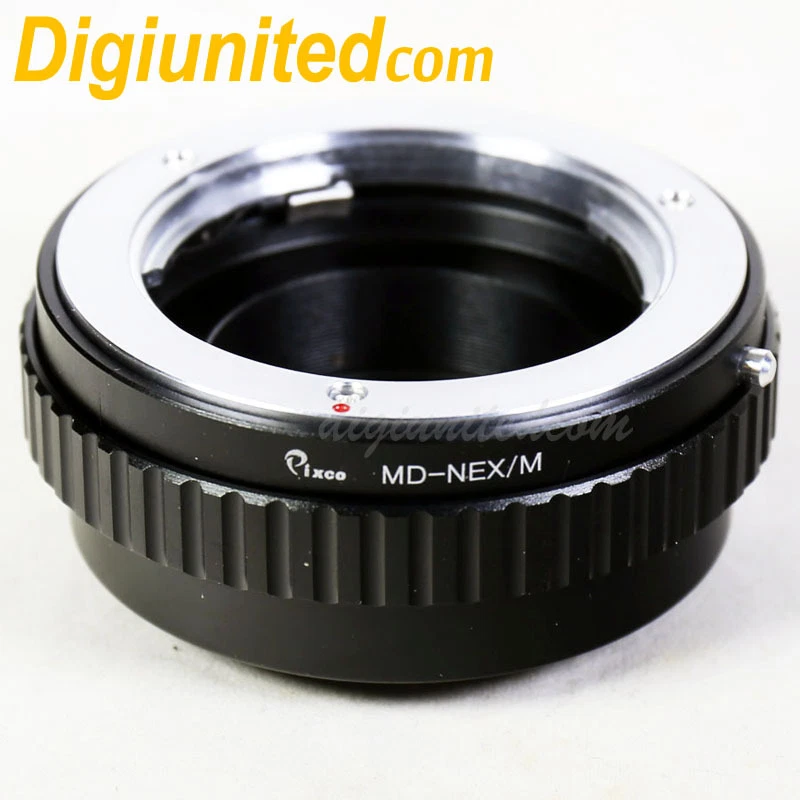
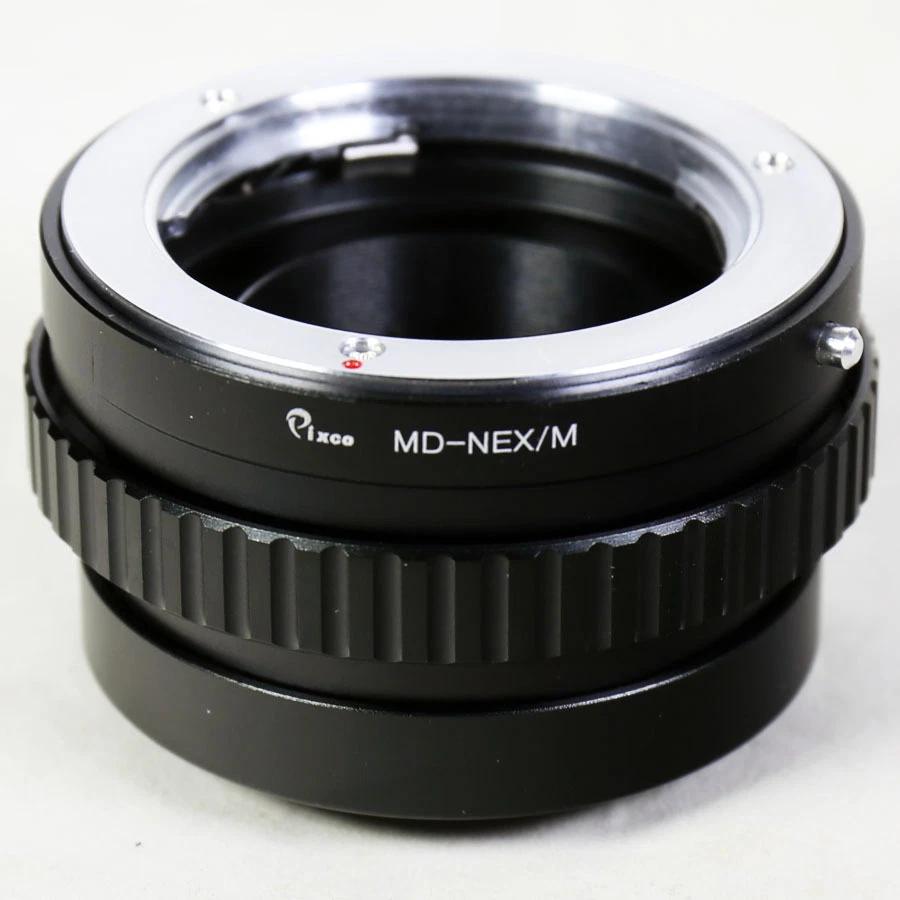
So I found one for MD-NEX online.

Essentially it allows a sort of miniature bellows action so you can extend it a little from being able to focus to infinity to being able to shift MFD much closer. The good thing is that you can easily change it for different lenses.

One of these:

s-l1600.webp


s-l1600.webp
 
  • Like
Reactions: Nod
Glad you got sorted.
 
Back
Top