Beginner A beginners first proper adventure, and when are you no longer a beginner?

Oldbones

Suspended / Banned
Messages
422
Edit My Images
Yes
This morning I went out to take some photographs, I usually go to the shore and as its so close to home it is great for experimenting and trial and error.
Not today I decided to have a very small adventure, so I drove inland a short way, when I found a spot that was interesting, I decided to stop the car and go and investigate.
It was a small stream with an old stone bridge, I thought it would be good for wildlife and flowers etc.
So as I was reversing the car in to a space at the end of a disused track, out of the corner of my eye I saw the roof of an abandoned house.
So I changed my mind about the stream and went to the house.
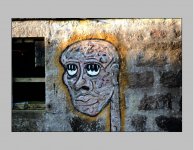
Here is the first photograph I took, what a find.
Looks to me this was used by people who were quite artistic.
The face on the farm.
The face on the farm..jpg
 
That's excellent!

As to your question in the title, I think there is a difference between when someone is a beginner and when someone reaches a level of expertise etc

I think a beginner is probably someone 'beginning' in their journey who is still learning what they 'should' do.

Some beginners can achieve very good results very quickly.

Equally you can have people who have learnt what they should do and maybe have been taking phtographs for a while but may be less naturally talented in composition, judgment about how to set the photo up and processing etc but struggle to get as good results

I am a beginner but I suspect my path is in the second camp!
 
I have other photographs from that day yet to process and I will go back when the light is better, this was done early morning, I think I should have waited an hour to take the one I have posted.
 
Went out this morning, went to the last place I took some photographs, but for some reason did not take any, don't know why, might be because I don't want to repeat what I have done, maybe at a later date I will go back there.
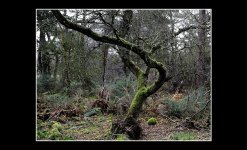
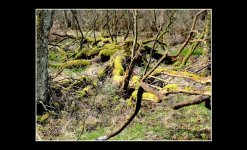
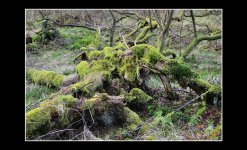
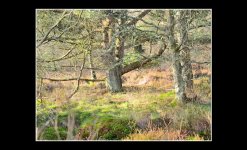
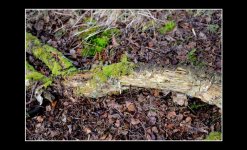
I did fine a small patch of trees so I decided I would give woodland photography a wee try.
Here is what happened.
Woodland 1.jpg

Woodland 2.jpg

Woodland 3.jpg

Woodland 4.jpg

Woodland 5.jpg

Woodland 6.jpg
 
I can relate to your content & your framings - you have a good eye - keep it up, and keep refining it. In the one with the old spreading larch tree (at least in this posted version of it) there's a blown highlight near the middle of the picture which is a bit of a no-no and something to try & guard against. It could even be recoverable by re-processing, depending ...
 
I can relate to your content & your framings - you have a good eye - keep it up, and keep refining it. In the one with the old spreading larch tree (at least in this posted version of it) there's a blown highlight near the middle of the picture which is a bit of a no-no and something to try & guard against. It could even be recoverable by re-processing, depending ...
Thank you for your very helpfull input, its exactly what I need, there has been a few comments very close to yours from members of the camera club I am in.
Its only recently that I have been leaving the house and useing the car to find spots which are in my eyes suitable for my photography.
Before that its was very local and on the beach not far from the house.
What spured me to leave the local vicinity was after an internal club comp, where it went well for me.
A boost to my confidence so to speek.
With editing, i have found that I go too far at times, which of course is beginners problems..
Again thank you, it really helps.
 
Personally I'd say you're no longer a beginner when you can get a reasonable amount of positive feedback without any caveats about your inexperience etc - i.e. People appreciate your work for what it is.

BUT if I stopped there that would be a hugely misleading post.

You could be accomplished at landscapes, but clueless about studio lighting. A fantastic sports photographer but terrible at weddings. A street photographer natural but clueless about macro. The list goes on. There are so many different skill sets within photography that I think everyone is always a beginner in some (if not most) aspects, but that doesn't mean that you don't know your chosen field damn well.

Just my 2p.
 
As @droj says, you appear to be able to 'see' pictures. Keep doing what you're doing and evaluating as you go.
You could be accomplished at landscapes, but clueless about studio lighting. A fantastic sports photographer but terrible at weddings. A street photographer natural but clueless about macro. The list goes on. There are so many different skill sets within photography that I think everyone is always a beginner in some (if not most) aspects, but that doesn't mean that you don't know your chosen field damn well.
However, there's no need to be good at all areas of photography so long as you are good, and keep getting better at, at the areas that interest and excite you.
 
@Oldbones I'd say that if you spend more time figuring out HOW to shoot something than actually shooting it, you're a Beginner :)

Think of it like learning to drive a car. initially, all the knobs and pedals are confusing, once you get past the HOW you can apply yourself to the actual driving

Then the confusing knobs are just the other drivers :D
 
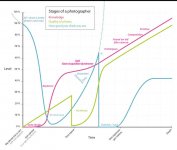
very late to the party... but this pretty much covers the whole journey...

Screenshot 2025-12-13 172733.jpg

Beginner really starts at "Just Started" and ends just before the line plummets to "Dammit, I suck"

50 years of shooting so far, and I reached the "composition" plateau about 10 years ago, before, honestly, just taking photo's now to support my other hobbies.
 
I am at I found an old film camera point.
 
As for the question about being a beginner vs. moving up, I'd say you are no longer a beginner when you feel confident enough in what you're doing, you have more or less stable style you've found for yourself and you are able to analyze the critique and decide whether listening to it would benefit you or not.
I don't think it depends a lot on the amount of positive feedback, as other suggested, though that certainly means you're doing something right. The real question is whether it feels right for you, and if it does then you're no longer a beginner imo.
The learning process never stops though, you can be fluent with your camera and know enough Photoworks tricks to edit your pictures properly, but there will always be something new.
 
For the question in the title: I came from the technical side of the craft, so I'll break the mold this time...

Since the advent of automatic exposure control in electronic cameras (0): the point I would consider someone being graduated from the novice state, is when he finally managed to consistently produce usable shots with Manual mode.

Because every adjustments that entail in Manual mode: sensitivity, white balance, aperture, exposure time, and focus distance, are the fundamentals variables in all camera-based optical imaging works. Ability of making these variables work together or compensate each other to produce usable snapshots is a mark of someone who understands the basic mechanism behind his craft. Once accomplished this, he could proudly peel off the "novice" or "beginner" label he had given to himself.

A use of Manual mode also usually involve reading the camera's full user manual (1), which helps in the "know thy camera" department as well. It baffles me that many people in general either don't RTFM on their gadget, or mistook quick start guide as the manual; then proceed to ask around about things that manufacturers had already spent effort documenting up front...

Even with that said though, this doesn't mean that an intermediate-level or expert photographers couldn't or shouldn't use Auto or similar modes when appropriate or sufficient. The rite of passage in Manual mode however, makes sure that he knows which exact intervention was needed in scenarios where the camera's automatic adjustments fail to give desirable result. (2) Bonus points when he also knows how to do so in the least-effort fashion; including by using semi-automatic whatever-priority modes or scene-position presets that the camera provides.

For the matters beyond the camera operations: like having eyes for spotting good scenes, creative uses of impromptu scene compositions, creating and managing artificial scenes and lighting, making optimal/creative uses of found lighting, achieving fast lens-open-to-shutter-press, ability to capture both details and hints of movement in fast-moving objects as a still, and ability to creatively position optical quirks or custom exposure time as photographic effects, etc... I'd consider those rather are matters that distinguish between intermediates and experts in each photographic sub-fields.


(0) For the film age before the automatic cameras, I would rather draw the line at someone's ability to consistently produce usable shot at all.

(1) Not the quick-start pamphlet or abridged booklet that's often provided in the camera's box! I meant the full version that is a few-hundred-pages PDF file provided in the CD or made available on the manufacturer's website. You don't have to read it back-to-back to be effective; just jump directly to the section that concerns usage relevant to your current photographic subject/practice session. Eventually, your curiousity would get better of you; and you would find yourself casually sift through the nearby chapters on your own.

The manual would also narrate on how you should take care of your camera (including quirks and unexpected catches you might need to watch out for), which I think can be important too; DSLRs and mirrorlesses are not cheap. Some would even teach you how to hold the camera in the way that manufacturer thought to make an "optimal" shooting experience on that camera model; which can be interesting to read and compare with the way you are currently using.

(2) Or clear, normally-desirable result; but without the aesthetics/artistic quality the photographer was looking for.

 
Last edited:
Back
Top