7D noise

I assume that anybody reading my post has also read the rest of the thread. If they have they will already have encountered the expansion of DPP and should have noticed that Lightroom was mentioned in several previous posts, at least one of which referred to it in full as well as using the abbreviation.

No.

If I come in on page 7 or whatever of a thread I like many, and don't say we all read every one will read the first and a few more comments to see what it is about then hopefully post, is it so hard to reply with manners than be so off with a reply, some of us don't have all day to read dozens of complete threads.

Sorry to have put you out.

Oh and never assume.
 
I do not shoot high ISO on my 7D very often, but here is a sample ISO 3200 image processed with DPP with and without NR. I also attach the RAW file incase anyone wants to play (or show me how NR should be done:)).

Sample jpeg without NR
Sample jpeg with NR
Sample RAW file

Sorry about the large file sizes.

edit: I just noticed that my DPP shrapness setting is set to 5, making the jpeg without NR look MUCH noiser than it would otherwise do without sharpening.

I think you struck a nice balance there, almost eliminated the noise and retained plenty of detail :thumbs:

I also really like the subject, now that's what I'd call Art :)
 
I have the answer to 7D noise but you may need to re-arrange these words

workman, bad, a, tools, blames, always, his. :wave: :lol:
 
odd jim said:
Noise Ninja isn't as good, not by a long shot.

obviously depends how you use it. work
flow is much quicker using CS5 and noise ninja than attempting to use DPP. but it's all down to personal opinion
 
Neil B said:
I have the answer to 7D noise but you may need to re-arrange these words

workman, bad, a, tools, blames, always, his. :wave: :lol:

or blames to very high pixel count on a small sensor lol
 
Oggy said:
Works well enough for me.

What would you recommend?

As stated, DPP.

I find simply converting DPP (without even tweaking NR) is far better as I've already said, and reducing noise, and more importantly, retaining detail.
 
Last edited:
If I come in on page 7 or whatever of a thread I like many, and don't say we all read every one will read the first and a few more comments to see what it is about then hopefully post, is it so hard to reply with manners than be so off with a reply, some of us don't have all day to read dozens of complete threads.

Sorry to have put you out.

Oh and never assume.

I suppose you spend half your life writing to authors complaining that you don't understand theur books because you started reading them two-thirds of the way through.

Welcome to my 'ignore' list.
 
Oh how those Silverbacks like to squabble! Seems like a whole bunch of peeps got out of the wrong side of the bed earlier today.

Chill.
 
Hollis has a point.

You shouldnt come into a thread without reading half of it then critisise others for something that was explained the page before.
 
Last edited:
OP here, I've been having a play for a while now and taking note of some of the suggestions on here, many thanks for the input.

I do find the images a bit noisy but I find this is due in part down to the size of the image and my overly close scrutiny in Lightroom. What I have noticed is that the parts that you want in focus and when nailed spot on are excellent, the detail and colour is amazing. That said the parts you get wrong, by god are they blatantly obvious. I have printed an image out at 10x8, one that I thought was suspect, once printed it was fine, no issues at all.

For those debating Lightroom vs DPP, I prefer the workflow of Lightroom but can see the difference when using DPP and I may run things through that first then tweak in Lightroom, its one worth experimenting with.

For those having doubts about the 7D, don't, its a great bit of kit, but as with any high quality piece of equipment it demands that you treat it with a certain amount of respect to get the best out of it, it will highlight the good bits and highlight the bad bits.

Here is a recent shot that at first I didn't like, but now I do.


IMG_0800-Edit-Edit by Ben_Lee, on Flickr
 
It's very easy to produce an image that shows loads of noise - just underexpose when shooting, boost the exposure in PP (post-processing) and view at a stupid magnification. But there are loads of examples on the WWW (World Wide Web) that show how proper exposure at the time of shooting, combined with proper processing, can produce high ISO (International Stadards Organisation) images that retain detail without suffering from exxcessive noise.

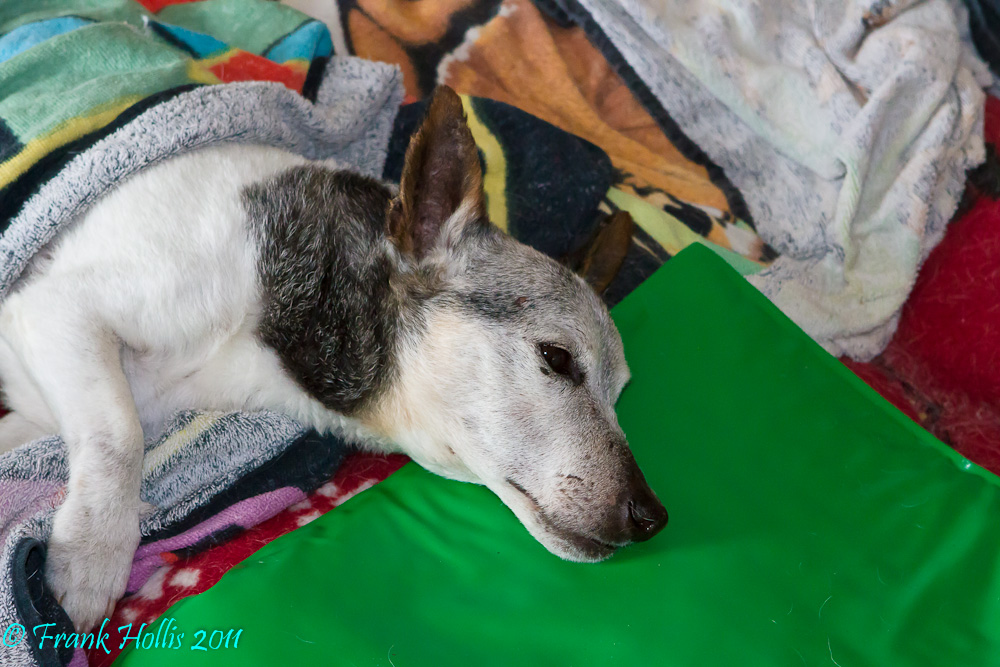
Here's my, poor, example. Shot at ISO (International Stadards Organisation - repeated just in case somebody started reading the post halfway through) 6400 there is virtually zero noise visible in the reduced-for-web image, nor is there any visible in a 24x16cm print.
StanNoise%20%281%20of%202%29.jpg

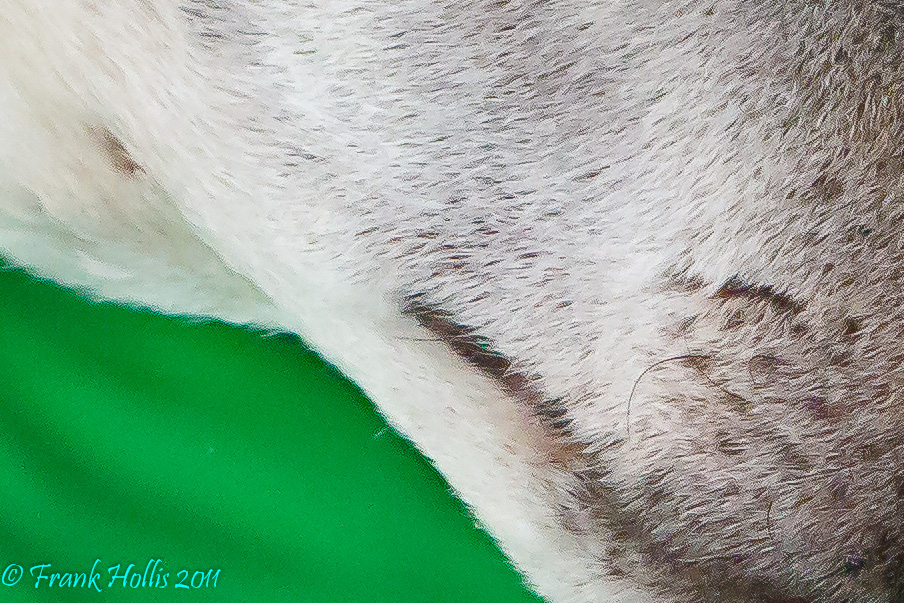
Even when blown up to 100% the noise is minimal, yet the fur detail is retained.

StanNoise%20%282%20of%202%29.jpg
 
Think all this viewing at 100% has got out of control, just looking for problems that don't really exist and never going to look at anything that size in everyday life.

Printed out a couple of photos yesterday at A4 and they looked pretty good to me which was the main aim.

Think some people are better or should that be worse for seeing noise, to use an analogy,daresay our car could have a few faults found with it, but starts, runs fine and stops again.
 
Even when blown up to 100% the noise is minimal, yet the fur detail is retained.

StanNoise%20%282%20of%202%29.jpg

Sorry to say it but to me that example looks hideous and would certainly put me off buying a 7D if I thought that was the kind of results you got from it.

Not sure what you did in PP to produce those artefacts but I think I'd rather put up with the noise.

.
 
Sorry to say it but to me that example looks hideous and would certainly put me off buying a 7D if I thought that was the kind of results you got from it.

Not sure what you did in PP to produce those artefacts but I think I'd rather put up with the noise.

.

My old EOS10D is better than this it is terrible sorry, is this a 7D.

Detail retained, what detail, looks like it was taken with a 4MP compact.
 
Last edited:
Guys youre missing the point I think.

For 100% at iso 6400, what do you expect??!

We really need to get a reality check and forget about noise at 100% (remember, at 100% you are looking at a section of an image that printed out, would measure over 7 metres in width and about 4 metres in height!!), or at anything as long as its not visible in print size - as thats all that matters.
 
Last edited:
My old EOS10D is better than this it is terrible sorry, is this a 7D.

Detail retained, what detail, looks like it was taken with a 4MP compact.

You are aware your 60d shares the same sensor as the 7d arnt you, and I'm guessing you're happy with that?
 
Last edited:
I suppose you spend half your life writing to authors complaining that you don't understand theur books because you started reading them two-thirds of the way through.

Welcome to my 'ignore' list.

What a silly comment
 
Guys youre missing the point I think.

For 100% at iso 6400, what do you expect??!

We really need to get a reality check and forget about noise at 100% (remember, at 100% you are looking at a section of an image that printed out, would measure over 7 metres in width and about 4 metres in height!!), or at anything as long as its not visible in print size - as thats all that matters.

AH! thanks for the explanation NOW and I am not alone as I was not the only one to comment, understand, thank you.
 

I mean that if you did the same with the 60d, you'd get similar results, so with the 10d you could expect the relative deterioration, and I'm guessing you're getting better results from your 60d than your 10d?

The point was simply putting it in perspective and in fact a 4mp compact would be terrible in comparison!
 
I think it comes down to the fact that with the 7D you need to know how to get a good result when using high ISO, get it wrong and it isn't very forgiving.
Another thing I've noticed is people using "half stop" ISO settings which doesn't help.

Every time I see "woah look at the noise from my 7D" it turns out the problem is under exposure.

Look for posts on here by tdodd for the picture of his dog running and an explanation. here is another example: http://www.talkphotography.co.uk/fo...=3359267&highlight=noise+exposure#post3359267

Expose to the right and it'll be kind to you.

I think the other thing with the 7D is lots of people have upgraded from the xxxD range.. There is an awful lot to get used to with it, with the focus system particularly. With my 450D I was almost always shooting at as much as -1EV, wit the 7D thats often +1EV.

The 7D has its own characteristics and you need to get used to them. I'm far from an expert but I think the shooter needs to learn the camera before condemning it.
 
noise is shocking and there is pretty much no detail in the fur.

if thats a good example I'd hate to see a bad one lol

Even when blown up to 100% the noise is minimal, yet the fur detail is retained.

StanNoise%20%282%20of%202%29.jpg
 
I mean that if you did the same with the 60d, you'd get similar results, so with the 10d you could expect the relative deterioration, and I'm guessing you're getting better results from your 60d than your 10d?

The point was simply putting it in perspective and in fact a 4mp compact would be terrible in comparison!

I know it is a lot to ask but when a complete explanation as you provided is given it can be understood and I thank you for elaborating.

Yes of course I do, however, I have recently printed some old 10D photos in A3+ and am amazed by the quality for the age.
 
I don't understand the problems that some people see with 7D noise. Can anyone show me another 1.5/1.6 crop sensor with >18MP and less noise? I think the only real challenger in the 7D class is the D700, which offers slightly better high-ISO performance at the cost of less pixels and ultimate definition in good lighting situations. The 7D has been around for two years and IMHO is still about the best 1.5/1.6 crop body money can buy.
 
Guys youre missing the point I think.

For 100% at iso 6400, what do you expect??!

We really need to get a reality check and forget about noise at 100% (remember, at 100% you are looking at a section of an image that printed out, would measure over 7 metres in width and about 4 metres in height!!), or at anything as long as its not visible in print size - as thats all that matters.
:clap:

As an example here is a shot taken at 3200 ISO on the Canon 1DS Mk II with the camera set to JPEG (Large) no sharpening and no NR:

4323_-_100_crop.jpg

This shows the massive noise increase from one side of the face to the other due to underexposure in that area.

However at the more usual size for viewing noise is obviously much reduced:


4323_-_reduced.jpg


In fact with a small amount of NR noise at that size would be (subjecively) totally eliminated.

And even if the image was printed poster size noise would still be almost unnoticed because you would have to stand quite a way back in order to see the whole image.

Pixel peeping at 100% CAN be used constructively but in the end photography is surely about the pictures NOT the pixels!

.
 
I think it comes down to the fact that with the 7D you need to know how to get a good result when using high ISO, get it wrong and it isn't very forgiving.
Another thing I've noticed is people using "half stop" ISO settings which doesn't help.

Every time I see "woah look at the noise from my 7D" it turns out the problem is under exposure.

Look for posts on here by tdodd for the picture of his dog running and an explanation. here is another example: http://www.talkphotography.co.uk/fo...=3359267&highlight=noise+exposure#post3359267

Expose to the right and it'll be kind to you.

I think the other thing with the 7D is lots of people have upgraded from the xxxD range.. There is an awful lot to get used to with it, with the focus system particularly. With my 450D I was almost always shooting at as much as -1EV, wit the 7D thats often +1EV.

The 7D has its own characteristics and you need to get used to them. I'm far from an expert but I think the shooter needs to learn the camera before condemning it.

I don't understand why people keep talking about 'exposing to the right' when using high ISO. If it were that easy to expose to the right under dark circumstances, why not just lower the ISO instead, thereby getting less noise in the photo? Exposing to the right is fine in a normal situation when there is enough light to do so. Correct me if I'm wrong.
 
I'm a little vague on this as well, surely if you expose to the right you stand more chance of blowing the highlights.
 
chroma noise is easy to remove and you've still got detail plus the image is smooth. There is a mass of difference between that image and the 7D image.

did you do any processing to the image at all?

:clap:

As an example here is a shot taken at 3200 ISO on the Canon 1DS Mk II with the camera set to JPEG (Large) no sharpening and no NR:

4323_-_100_crop.jpg

This shows the massive noise increase from one side of the face to the other due to underexposure in that area.

However at the more usual size for viewing noise is obviously much reduced:


4323_-_reduced.jpg


In fact with a small amount of NR noise at that size would be (subjecively) totally eliminated.

And even if the image was printed poster size noise would still be almost unnoticed because you would have to stand quite a way back in order to see the whole image.

Pixel peeping at 100% CAN be used constructively but in the end photography is surely about the pictures NOT the pixels!

.
 
If shooting high ISO, followed by Lightroom.

Shoot RAW, and process the RAW file, using Lightroom's noise reduction.

Bear in mind that you're only seeing a draft preview, until you export your work. The noise reduction will be better in the final processed image.
 
I don't understand why people keep talking about 'exposing to the right' when using high ISO. If it were that easy to expose to the right under dark circumstances, why not just lower the ISO instead, thereby getting less noise in the photo? Exposing to the right is fine in a normal situation when there is enough light to do so. Correct me if I'm wrong.

Exposing to the right simply means shifting mid-grey away from its 'correct' position in the middle of the histogram - it doesn't matter how you do it.

I'm a little vague on this as well, surely if you expose to the right you stand more chance of blowing the highlights.

How far you can push it depends on the subject, how much headroom you've got, and how far you're prepared to let unimportant highlights blow.

But the upside is that, typically, you can put another couple of stops exposure in there which makes a huge difference to shadow detail and noise. Then you darken everything down to it's rightful tonal values in post processing, so that mid-grey returns to the middle, but with the other benefits retained.

But you have to know what you're doing, and it's more visually effective with subjects that have a lot of darker tones. With more high key subjects, you might not notice any difference, and the penalty of, say, two stops longer shutter speeds, might not be worth it.
 
Last edited:
Nobody really needs to read any of the above; all you have to do is one thing.

Buy a Nikon :lol: :nuts:
 
chroma noise is easy to remove and you've still got detail plus the image is smooth. There is a mass of difference between that image and the 7D image.

did you do any processing to the image at all?

None whatever apart from cropping and resizing the larger size image to 10x8 inches.

Normally I would have used Neat Image to remove the noise then adjusted the brightness and shadows etc and after resizing to the smaller size some final sharpening.

.
 
Last edited:
I don't understand why people keep talking about 'exposing to the right' when using high ISO. If it were that easy to expose to the right under dark circumstances, why not just lower the ISO instead, thereby getting less noise in the photo? Exposing to the right is fine in a normal situation when there is enough light to do so. Correct me if I'm wrong.

I see what you mean.
But lets say you've got the lens wide open (or don't want to use a wider aperture for sharpness/aesthetic reasons), rather than underexpose and try and recover it you might be best off adding a stop of ISO to get a better exposure and dealing with the resulting noise. If you underexposed and then pushed exposure in PP to correct it I think you may sometimes generate more noise that upping the ISO at the time of shooting.

I know I've tried pushing underexposed shots in PP and ditched the image because of the resulting noise, I haven't yet ditched one that was ETTR and pulled back a bit...
 
Last edited:
Yeah. A properly exposed shot at ISO 3200 for instance will look much cleaner than one shot at 1600 underexposed by 1 stop
 
Even when blown up to 100% the noise is minimal, yet the fur detail is retained.

StanNoise%20%282%20of%202%29.jpg

This is not typical of a high ISO 7D image viewed at 1:1 - in fact it's looking way over-sharpened at the pixel level.
 
You should do!

Canons DPP (digital photo professional) is a powerful raw editing and conversion tool. A lot of people overlook this which is silly as it's designed soley for Canons cr2 files.

I can't understand why people always overlook the software gifted to them by the cameras designers!

Well my 400d diddnt come with DPP mate!!
 
Back
Top