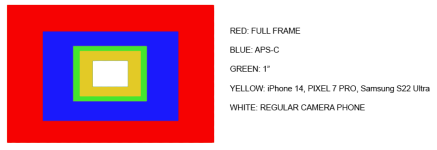
50MP Mobile phone cameras are they real ?

BADGER.BRAD

Suspended / Banned
Messages
4,252
Edit My Images
Yes
My lad always keeps up with the latest trends and has a Samsung s22 ultra and was saying that a lot of the phones have 50mp+ cameras, I looked into this and most of them quote 50mp triple camera system does this mean they are adding up the MP count of all the cameras or are they really 50mp ?

I on the other hand tend to go backwards

red-01.jpeg


This one is a bit of a lie as I've been given an out of date battered smart phone which I use as a MP3 player and use the camera occasionally. It a pain in the rear as it's always flat, The Nokia would last two weeks on a charge the Smart phone 2 -2-1/2 days
blue.jpg
 
Last edited:
I believe they list individual RGB sites as pixels, or some similar funny game, so you can divide it by at least 4. They will be still small pixels and a typical phone shot is hardly ever over 2-4 mp equivalent
 
No I believe they will be quoting a single camera however because the pixel size is significantly smaller than what you would get on a say 24mp mirrorless they would absorb significantly less light. So they use a process calked pixel binning to increase the amount of light in the picture. So I think samsung has done over a 100mp camera however it used a 9-1 pixel binning so equivalent to around 12mp or something.

Those numbers aren't exact but you get the idea. Also they lose colour accuracy through the process and other issues that software doesn't correct 100% atm so the results can be a bit meh so I believe.
 
My Poco X5 has a 108mp camera, though it uses pixel binning to bring down the file size.

Once again, it demonstrates that there's more to a photo than pixels.
 
Thanks everyone , I gathered it wasn't going to be quite what it seems ! The only thing I generally think about Higher Pixel count is a camera with more pixels will more likely be a more modern design with improvements else where. Not that I chase such things any way, My Sony A6000 will hopefully last me a good number of years before I up grade.
 
The iPhone 14pro has three cameras. Two are 12mp and one is 48 mp. To make use of the 48mp you have to shoot in raw because if you shoot normally it will be recorded as a 12mp Heic file. So yes you can shoot 48mp but the image will have none of the AI auto editing that the 12MP Heic will have. At a recent wedding I was shooting backlit group shots with Sony A7iv when a guest asked me to take one on his phone. In my image the sky was blown out, which I had to recover in lightroom. The phone shot with its AI looked amazing, both the people and the blue and cloud sky were correctly exposed. So the phone did an auto HRD and the result was very good. Phones have come a long way and it will be interesting to see if camera makers start using more of the AI found in camera phones
 
Phones have come a long way and it will be interesting to see if camera makers start using more of the AI found in camera phones
I thought the whole idea of pro cameras was that you can freely do whatever you like to unedited raw data in post stage on your PC rig. sorry jpeg shooters.
 
. The phone shot with its AI looked amazing
Was it still amazing on A4 print? How about A3? Bloody 48 mp should be pin sharp for double a0. I wonder what that looks like
 
The phone shot with its AI looked amazing, both the people and the blue and cloud sky were correctly exposed. So the phone did an auto HRD and the result was very good

Mine will do auto HDR too, but it's not a great look for a serious picture, though ok for WhatsApp.
 
Was it still amazing on A4 print? How about A3? Bloody 48 mp should be pin sharp for double a0. I wonder what that looks like
I've seen A0 prints from 6MP cameras that were most impressive, as at this exhbition...

Wildlife photography exhibition at Winslade Park DSC01097.JPG

...the technical details for each image were given on the description alongside the print. The densest sensor used was, if I recall correctly, a 1/2.3 8MP type in a Panasonic bridge camera.
 
Yes they are 50MP. The S22 Ultra has a 108MP main sensor. For normal use they "pixel bin" down to 12MP. So combine 4 or 9 pixels into one to output a 12MP jpeg. This can have some benefits in low-light as you're essentially making one big RGB pixel, but I think it's largely marketing fluff for people who think more megapixels means better photos. Most (not all) do allow you to shoot full resolution as well though, and it's very easy to shoot Raw on a phone and edit however you want these days.

My Pixel 6 has a 50MP main sensor but will only ever spit out a 12MP file, even shooting Raw.
 
Last edited:
I thought the whole idea of pro cameras was that you can freely do whatever you like to unedited raw data in post stage on your PC rig. sorry jpeg shooters.
You can do that on most phones. And I can edit the Raw right there on my phone in Lightroom too. No hulking great PC needed. I haven't edited on a PC for years.
 
  • Wow
Reactions: Sky
You can do that on most phones. And I can edit the Raw right there on my phone in Lightroom too. No hulking great PC needed. I haven't edited on a PC for years.
Editing on 6" screen... What else can I say?!
 
Was it still amazing on A4 print? How about A3? Bloody 48 mp should be pin sharp for double a0. I wonder what that looks like
You miss my point. The small sensor of a phone will not be able to compete for large prints but the Ai in these phones is amazing. They will print nicely at A4 and lets be real, what percentage of photos taken by jo public make it to print of any size. You only have to look at compact camera sales to realise for most people, the new mobile photons are more than enough.
 
You miss my point. The small sensor of a phone will not be able to compete for large prints but the Ai in these phones is amazing. They will print nicely at A4 and lets be real, what percentage of photos taken by jo public make it to print of any size. You only have to look at compact camera sales to realise for most people, the new mobile photons are more than enough.
No this is the point. At 50mp you can easily print a1 unless it is a very fake 50mp, more like 5 or less.
In fact my attempt to print A4 from my Xiaomi or client's latest iPhone resulted in what I regard a clear failure. 6x4 " would be more realistic from that pos.
Just because they apply aggressive sharpening, saturation, shadows and highlights recovery doesn't make them good, nor actually qualifies as AI. It is a basic machine learning at best
 
You miss my point. The small sensor of a phone will not be able to compete for large prints
How do you know that? Have you seen an exhibition of A0 prints made from a variety of sensor sizes, in order to compare?

Photographic quality is entirely in the eye of the individual and the idea, that a picture is better because it has more pixels, is only true if you use a magnifying glass to look at it.
 
My Samgsung A52s 5g has a 64mp main camera and to be fair it's impressive, I've not tried the raw yet but jpegs can be around 30mb. As someone said above they seem to cope well with difficult lighting, and mines good in low light too.
To be fair this would give a decent compact a run for it's money,
 
Oh it's so important to have 50px sensor or more to get good quaily A1 or A2 prints, has everyone forgotten how utter rubbish all the canon 1D mkIII 10mp photos where
 
Oh it's so important to have 50px sensor or more to get good quaily A1 or A2 prints, has everyone forgotten how utter rubbish all the canon 1D mkIII 10mp photos where
I think I'm far more qualified than most here to talk about large prints from 10mp file. Just saying, and it's ideally not what you want to do but when you have to you have to and you do a lot of prep work to make it acceptable, the latter being the key phrase
I had the said body and it was a real mistake to buy it. It was far inferior to the older 1ds mkii

To be fair this would give a decent compact a run for it's money,
I can believe that because compacts run off 1/2.5" sensor which is same or smaller, slower aperture, lesser CPU, but have a sort of zoom lens as a bonus
1" compacts should still have comfortable lead in iq
 
Last edited:
The iPhone 14pro has three cameras. Two are 12mp and one is 48 mp. To make use of the 48mp you have to shoot in raw because if you shoot normally it will be recorded as a 12mp Heic file. So yes you can shoot 48mp but the image will have none of the AI auto editing that the 12MP Heic will have. At a recent wedding I was shooting backlit group shots with Sony A7iv when a guest asked me to take one on his phone. In my image the sky was blown out, which I had to recover in lightroom. The phone shot with its AI looked amazing, both the people and the blue and cloud sky were correctly exposed. So the phone did an auto HRD and the result was very good. Phones have come a long way and it will be interesting to see if camera makers start using more of the AI found in camera phones
This isn’t true actually, you can only shoot 48mp in ProRaw which still has a lot of processing, especially HDR, and I really don’t like the ProRaw images from my iphone 14 pro. However, in Lightroom you can change the profile from ProRaw to Adobe and it does give it a much more natural look, although in doing so you end up with a stop or so underexposed shot (I’m guessing because it’s not got the higher exposed images added). Tests so far show no detrimental effect of having to raise the exposure. In terms of IQ in good light I’m having to pixel peep to see the difference in tests shots against my Sony A9II.

3rd party apps allow you to capture unprocessed raw but only at 12mp, when I contacted them they said Apple have blocked the ability to extract standard raw at 48mp.

Also, I change non raw from HEIC to jpeg, HEIC are even worse than jpeg.
 
I think the point is that even a 6 MP DSLR can still print large with decent results because the sensor is relatively large, I’ve got images that I took with my old Canon 350 D and they still look decent even veiwed large but a phone camera has a very small sensor so has to make up for that with software trickery
 
Phone cameras now are pretty amazing considering the package they come in and I'm now finding for general use they are superior to a dedicated camera because they are more convenient (you are already carrying your phone), the AI takes care of the majority of settings so it's quick to grab and get that shot, there's a ton of post-processing tools and everything is all integrated in one device for quick sharing with almost zero effort. But I rarely print, so this works for me.

However, I have to admit that if I'm intending to print or if it's for specific situation (fast animal in motion, pano landscape etc) then I would still go for the dedicated camera because I do think you will always get the ultimate quality with hardware specifically designed for the task.

Some phone examples (posted elsewhere on here a well):

I saw the lovely sky and whipped my phone out; I didn't have my dedicated camera on me so would have missed it. I did some editing on the phone and came up with this, which is great for online but I'm not sure what it would look like printed. The dynamic range is insane for a phone (probably AI trickery), the foreground had lots of detail in the original shot but I deliberately edited it for a silhouette effect but you can still see it in the sky. Although I don't have it set for saving RAW, I'm wondering if it actually uses a RAW copy when editing as there's an awful lot of play available.

Sunset.jpg

Then there's the low light ability, that would usually be the weak point of a phone camera but look at what it can do now. This is hand held and obviously if there's someone moving in the frame then there will be some blur with them but it's pretty amazing all things considered.

Original photo then night sight activated. The green light is just the power LED from the shower, that's how dark it was. I don't think I could achieve this photo from a DSLR handheld.

Pixel 7 Pro Normal.jpg Pixel 7 Pro Night Sight.jpg
 
Last edited:
This morning Mrs WW showed me some pictures one of her friends in Thailand has just sent her and they often look very nice, stunning even on the phone or tablet screen but on my pc the issues are easy to see. With this latest batch some looked good but some others even on the tablet screen had clearly had an avalanche of ai/processing land on them and although they could look good to many people to me they looked clearly and badly over processed.

I still haven't seen anything from a phone or tablet that would make me give up even my 1" sensor compact never mind anything with a bigger sensor.
 
Some nice comparisons in this video:

 
I think the point is that even a 6 MP DSLR can still print large with decent results because the sensor is relatively large, I’ve got images that I took with my old Canon 350 D and they still look decent even veiwed large but a phone camera has a very small sensor so has to make up for that with software trickery
A3 with a very generous amount of help from AI enlargement software
 
This morning Mrs WW showed me some pictures one of her friends in Thailand has just sent her and they often look very nice, stunning even on the phone or tablet screen but on my pc the issues are easy to see. With this latest batch some looked good but some others even on the tablet screen had clearly had an avalanche of ai/processing land on them and although they could look good to many people to me they looked clearly and badly over processed.

I still haven't seen anything from a phone or tablet that would make me give up even my 1" sensor compact never mind anything with a bigger sensor.
That's the whole point. Most people are using mobiles and at most tablets, so cameras and software are optimised for these smaller displays. It doesn't take very high resolution to fill the space - usually between FHD and 4k, so that's where things really are at
 
That's the whole point. Most people are using mobiles and at most tablets, so cameras and software are optimised for these smaller displays. It doesn't take very high resolution to fill the space - usually between FHD and 4k, so that's where things really are at

I think with some devices or maybe only in some lighting we're heading away from what I'd think of as photographs and heading more into an ai art version of the scene. One picture in particular was of Mrs WW's friend at a wedding reception. The lighting may have pushed the camera phone to throw corrective software at the picture but it just doesn't look like a photograph any more, IMO. Mrs WW made no comment along these lines so I suppose many people and maybe most will be happy with it. I thought it was superficially nice for a fraction of a second and then I changed my mind and thought it was just... horrible. Lovely lady though :D
 
This morning Mrs WW showed me some pictures one of her friends in Thailand has just sent her and they often look very nice, stunning even on the phone or tablet screen but on my pc the issues are easy to see. With this latest batch some looked good but some others even on the tablet screen had clearly had an avalanche of ai/processing land on them and although they could look good to many people to me they looked clearly and badly over processed.

I still haven't seen anything from a phone or tablet that would make me give up even my 1" sensor compact never mind anything with a bigger sensor.

Some of the latest phones are only a smidgen away.

1667229045140.png


Telephoto is where the 1" compact will have an edge with sensor size, as currently the phones will use a different and smaller sensor.
 
I think mobile cameras are OK for shots 'down the pub' but not for real stuff.

I was running a lighting workshop the other night. We finished off just doing some stuff from the reflected light of a chip shop window, all at f1.4 on fairly modern full frame sensors, all at ISO3200 or higher.


Then one of the guys took a few shots with his iPhone 14. The results were truly remarkable. I haven't had chance to look at them on a big screen yet but on the phone they were more than usable.


I know that's down to computational photography as much as the lenses and sensor but it's still spectacular.
 
That's the whole point. Most people are using mobiles and at most tablets, so cameras and software are optimised for these smaller displays. It doesn't take very high resolution to fill the space - usually between FHD and 4k, so that's where things really are at

This is part of my point from earlier, choose the right tech for the job. All the focus seems to be on image quality, when there is still the element of cost, convenience, mobility and seamless integration to consider. I can't imagine phone cameras ever replacing dedicated kit for specialist task, but they are getting better at serving the more generic roles.
 
Back
Top