
Wildlife settings dilema

a1ex2001

Suspended / Banned
Messages
3,780
Name
Alex
Edit My Images
Yes
Please be patient I'm not exactly experienced in this field! In a few days I'm off to Sri Lanka for a couple of weeks and will be visiting two national parks in the hope of seeing among lots of other things wild elephants and leopards. I have acquired a Canon 100-400mm l for the trip and have been debating the best settings as a starting point. When I rented the same lens for a trip to India photographing tigers I shot on tv mods with a shutter speed of 400 set this worked pretty well except in one dark location when j forgot to change the ISO. I now have a 5d mkii with auto ISP so was contemplating shooting in av with an aperture of about f6.3 set and letting the camera balance shutter speed and auto Ido for s decent exposure.

Hope that makes sense which is the best solution or do you guys shoot another way?
 
As a general rule your shutter speed should be a minimum of your focal length, e.g 400mm no slower than 1/400 of a second. I'd keep an eye on your shutter speed and make sure it stays fast, to avoid any motion blur. I haven't used one yet, but at 400mm I'm assuming its quite difficult to hold the lens steady. Is there a way on the mark 2 that you can set auto ISO with a minimum shutter speed value, to stop it going below 1/500 for example?
 
As above... aim for a minimum shutter speed of 1/400 (although this may need to be increased if you're capturing animals on the run or birds in flight).

Personally, I'd go for Av mode too and set to f5.6/f6.3 (maybe go a little higher if light permits) and choose an ISO that allows decent exposure.

I use this technique for cricket, rugby and football......... Not quite the same but I've captured some right animals at some games :lol:
 
Personally, I usually stay on Manual, with auto-ISO enabled. My usual wildlife lens is a Nikkor 300mm f/4D + TC14-E, making for an effective 420mm at f/5.6 - but with the best time around the end of the day, I'll usually need to keep a close eye on the ISO. I'm comfortable with around 1/1000th, but will drop to 1/800 or even 1/640, if the light's weaker; similarly, if the light's adequate, I might stop down to f/6.3, 7.1, or 8, if I feel I might want that extra DoF, to take into account any sudden leaps or chases.

As the light fades, I'll sometimes take the TC off, and regain that extra stop. I might also bring the Sigma 120-300mm f/2.8 along, but as my subjects are often a bit further away, the Sigma's slight softness works against it, despite being very good for lower light, plus the considerable extra weight.
 
At 400mm the canon lens is in fact pretty massive. Can't comment on weight, mine won't be here until Thursday.

With Canon I believe there are different versions. Someome came to my workshop with a relatively small 400mm canon lens. It wasnt the prograde lens though.

Missed the op saying which lens they have. So I may be wrong with that specific one.
 
400mm against 200mm and it's massive, against a 600mm it's not so bad after all. All things are relative. Also if you're into birding then it's no big deal but for someone that normally does portraits then yes it will seem huge.
 
Last edited:
As a general rule your shutter speed should be a minimum of your focal length, e.g 400mm no slower than 1/400 of a second. I'd keep an eye on your shutter speed and make sure it stays fast, to avoid any motion blur. I haven't used one yet, but at 400mm I'm assuming its quite difficult to hold the lens steady. Is there a way on the mark 2 that you can set auto ISO with a minimum shutter speed value, to stop it going below 1/500 for example?

As above... aim for a minimum shutter speed of 1/400 (although this may need to be increased if you're capturing animals on the run or birds in flight).

Personally, I'd go for Av mode too and set to f5.6/f6.3 (maybe go a little higher if light permits) and choose an ISO that allows decent exposure.

I use this technique for cricket, rugby and football......... Not quite the same but I've captured some right animals at some games :lol:


You use the settings that get the shot, simple as that, the shutter speed=focal length statement is a pile of poop :bonk:
Check the settings this guy uses
http://www.talkphotography.co.uk/forums/showthread.php?t=490482
Knowing your gear and how to use it makes a great shot.
 
You use the settings that get the shot, simple as that, the shutter speed=focal length statement is a pile of poop :bonk:
Check the settings this guy uses
http://www.talkphotography.co.uk/forums/showthread.php?t=490482
Knowing your gear and how to use it makes a great shot.

It would be interesting to know how the shot in the link posted was taken. handheld or tripod mounted?

"Knowing your gear and how to use it makes a great shot"
Indeed, an ef500 f4+tc at 1/40 on a tripod I should imagine

"The shutter speed=focal length statement is a pile of poop"
I disagree somewhat, if you can hold your gear rock solid then yes, but if you have a shake or two then the general rule of shutter speed=focal length is good advise! It certainly works for me and probably thousands more that have a shake or two.
 
It would be interesting to know how the shot in the link posted was taken. handheld or tripod mounted?

"Knowing your gear and how to use it makes a great shot"
Indeed, an ef500 f4+tc at 1/40 on a tripod I should imagine

"The shutter speed=focal length statement is a pile of poop"
I disagree somewhat, if you can hold your gear rock solid then yes, but if you have a shake or two then the general rule of shutter speed=focal length is good advise! It certainly works for me and probably thousands more that have a shake or two.

And what if you can't get that shutter speed, you know 700mm of lens =1/800sec, living in North Yorkshire i may as well sell up as i would only use my gear a couple of times a year :lol:
 
Please be patient I'm not exactly experienced in this field! In a few days I'm off to Sri Lanka for a couple of weeks and will be visiting two national parks in the hope of seeing among lots of other things wild elephants and leopards. I have acquired a Canon 100-400mm l for the trip and have been debating the best settings as a starting point. When I rented the same lens for a trip to India photographing tigers I shot on tv mods with a shutter speed of 400 set this worked pretty well except in one dark location when j forgot to change the ISO. I now have a 5d mkii with auto ISP so was contemplating shooting in av with an aperture of about f6.3 set and letting the camera balance shutter speed and auto Ido for s decent exposure.

Hope that makes sense which is the best solution or do you guys shoot another way?

Back to your OP, the way i would set up is if the light is constant then i always use manual mode, take a test shot and "CHECK THE HISTOGRAM".
Once you are happy that the exposure is to the right you can forget about changing anything and concentrate on composition.
If you find hand held is a problem and your probably going to be in a vehicle i would take a small empty bean bag and fill it with rice when you get there.
 
There are no hard and fast rules.

Sometimes you need high shutter seed,sometimes you don`t.

Shallow depth of field one shot,the next may need more.

Sometimes iso 200 is fine,sometimes you need 3200.

Use what you need to get the shot.

I shoot manual,have my cameras set with auto ISO on,command wheel for aperture and sub wheel for shutter speed. So I can easily control aperture and shutter speed and just let the ISO go.
 
You use the settings that get the shot, simple as that, the shutter speed=focal length statement is a pile of poop :bonk:
Check the settings this guy uses
http://www.talkphotography.co.uk/forums/showthread.php?t=490482
Knowing your gear and how to use it makes a great shot.

It's not a "statement", it's a guideline.

In some circumstances it may be possible to hold a DSLR with 400mm lens attached still enough to avoid lens movement blur so it's far from a "pile of poop" as you so eloquently put it.

Given that wildlife photography may involve fast moving animals (note the reference in the OP's first post to leopards) you don't want to be setting yourself up for 1/40 as you'd probably end up with a blurry mess of legs & fur ;)

You can know how to use your gear all you like but if your shutter speed is too slow there's nothing you can do about a blurry shot!
 
It's not a "statement", it's a guideline.

In some circumstances it may be possible to hold a DSLR with 400mm lens attached still enough to avoid lens movement blur so it's far from a "pile of poop" as you so eloquently put it.

Given that wildlife photography may involve fast moving animals (note the reference in the OP's first post to leopards) you don't want to be setting yourself up for 1/40 as you'd probably end up with a blurry mess of legs & fur ;)

You can know how to use your gear all you like but if your shutter speed is too slow there's nothing you can do about a blurry shot!

And you obviously didn't read the first 8 words of my post ;)
 
And you obviously didn't read the first 8 words of my post ;)

Guessing you missed the bit where Russ said 'Aim for'

You don't have to hit it, but it is no bad thing to aim for it. In the opening post Alex stated he is not experienced - so would benefit from aiming for 1/focalLength shutter speed. Now sure how you would think otherwise :shrug:
 
For wildlife using telephoto focal lengths I tend to prefer AV with widest aperture set. This gives the fastest possible shutter speed for the given conditions and you can't have too fast a shutter speed. (Well I know you can if you are wanting motion blur or some special effect). Maximum sharpness is the target in my opinion. If there is a lot of light then stop down depending on how much DOF you are after.
 
At 400mm the canon lens is in fact pretty massive.

:) I suppose it all depends on what you're used to. I take my 100-400 out when I want to travel lightweight.
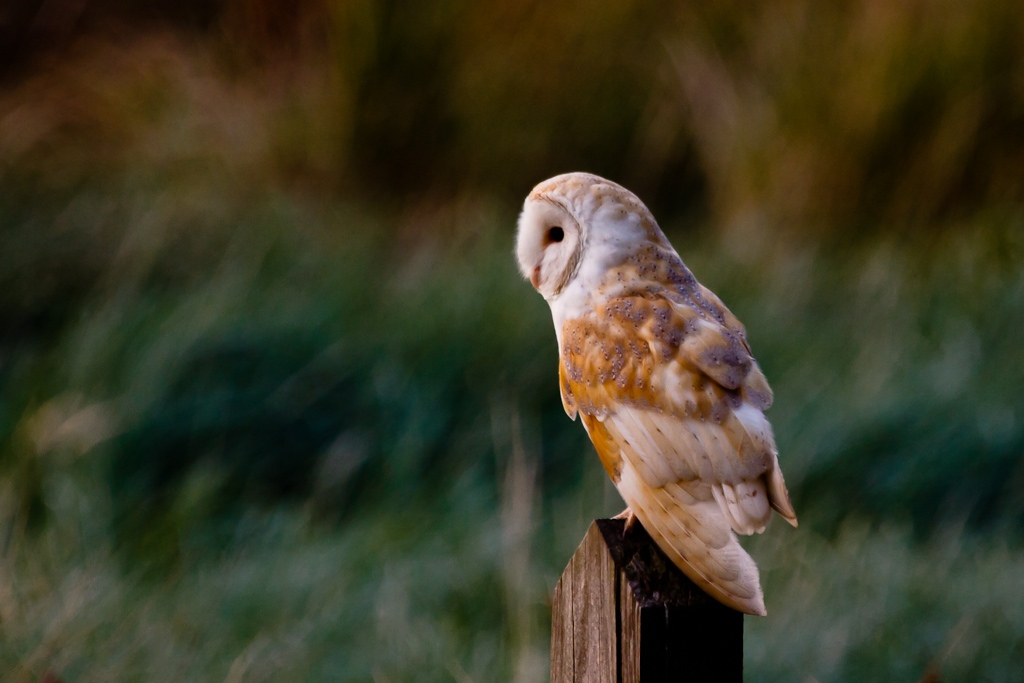
As for the 1/FL 'rule' it's so inaccurate as to be nearly useless. My friend needs to shoot at around 1/(2xFL) while I can often shoot at around 4/FL (which is why she calls me 'the human tripod' - at least I think that's why).

But there are other things that affect the minimum shutter speed. As well as technique the two other factors are IS and luck. Combine them all and you can shoot at 600mm and 1/30s

Barn%20Owl%2020090909%20001-2.jpg
 
Write down all the suggested ideas and place in a hat, pull out and use the first three suggestions :thumbs:
 
Back
Top