

When 2tb is only 1.8tb

Skyline

Emmet Brickowski
Messages
4,497
Name
Dave
Edit My Images
No
I was going to ask on here why my new Toshiba flex is only showing 1.8.
I thought a got a broken one, or companies being dishonest.
After watching this the penny dropped and all made sense.

Just posting for the next person that thinks, why have I been short changed.
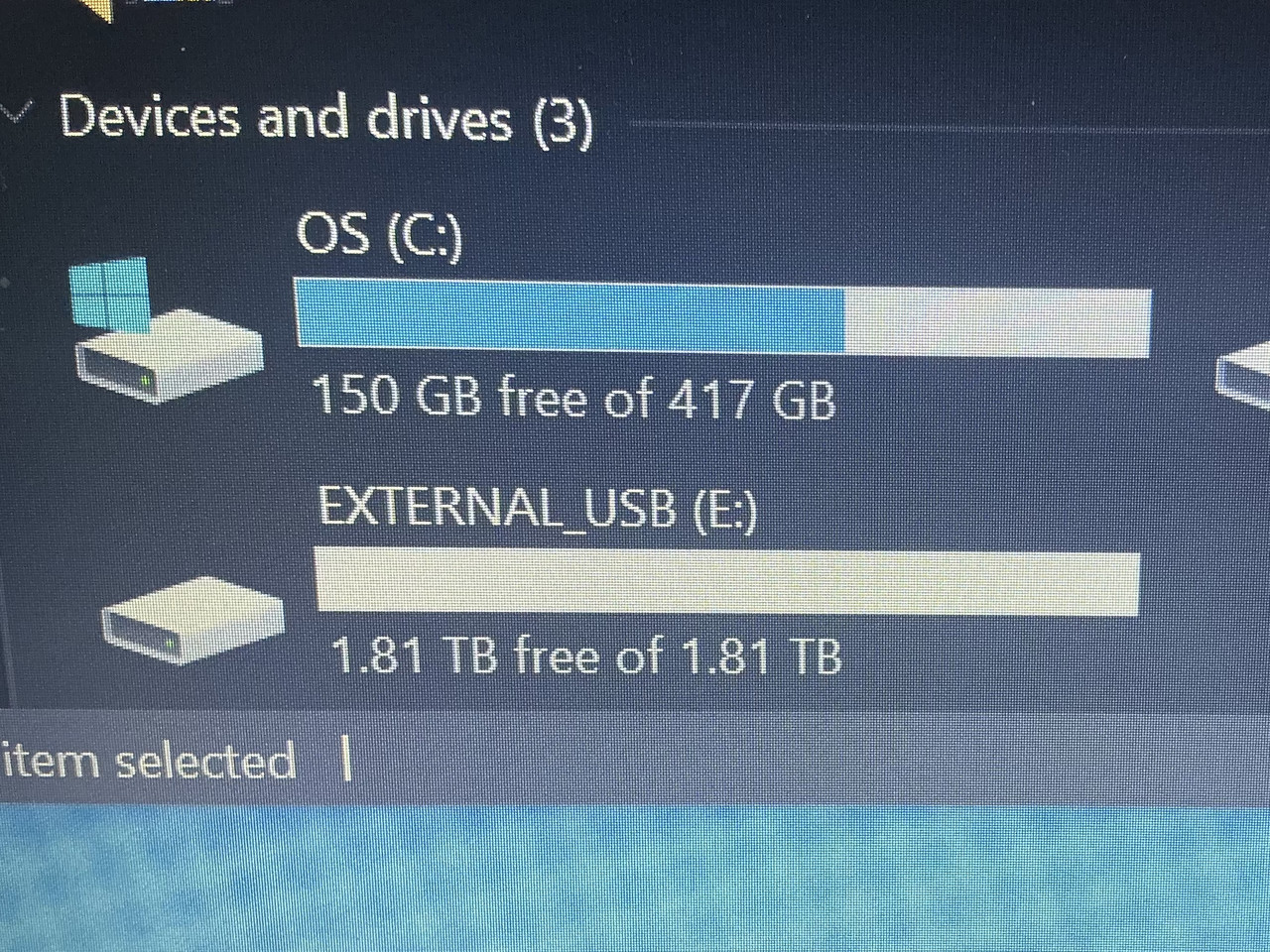

Have a look at this and this is why you think you don’t get the full amount of space.

 
I'm glad you understood, my parents still insist they have been scammed by big powerful tech companies despite me explaining many many times.
 
I'm glad you understood, my parents still insist they have been scammed by big powerful tech companies despite me explaining many many times.
That could be because they're right!

When I signed off my development terminal for the last time, in 2015, everyone was still using the definition that a kilobyte was 1024 bytes and I had never heard the word "kibibyte", nor I imagine had any of the eighty or so other developers on that floor. Apparently the IEC had invented the term in 1998 but they thought it unnecessary to mention it to anyone, especially those who might have asked awkward questions like "who are you trying to kid and why are you doing so"?

:tumbleweed:
 
Have a look at this and this is why you think you don’t get the full amount of space.
In fact, if you have a think there is a clear cognitive dissonance here.

Lets break it down.
So you are buying 2tb headline product. You expect 2.0 or 2.00tb, but instead 2 implies some possible generous (to them)/greedy rounding.
Anything over 1.5tb actually fits the description mathematically. Imagine 2kg beef or duck only weighs 1.51kg (in fact many supermarkets are using approximate weights but rarely as far, more within +-20%)
And then they have the audacity to explain in fine print you are only buying 2*10^12 bytes and that is equal to 1.8tb.
So compared to 2tb as marketed they effectively withheld 10% of bytes.

The only reason it is legal is the generous rounding allowance
 
What we used to refer to as "marketing megabytes" where instead of being 1048576 you lost a bit over 4% and it was declared as 1000000... Now we're playing about with gigabytes & terabytes you lose a further 2.4% per order of magnitude...

Memory was always in powers of 2 - disc space always in powers of 10 (plus losing some more for disc formatting overhead).
 
That's the problem when SI magnifiers are used for non decimal measurements/scales. Nearly as bad as mixing up M, m, μ etc.!
 
It all really comes down, yet again, to the assumption that the "consumer" is a farm animal, there only to be shorn and milked!

:tumbleweed:
 
RAM is sold on powers of two to this day, everything in low-level computing works in powers of two, it's only disks that are sold on powers of ten and that changed in the mid 1990s when manufacturers saw it as a free way to increase the headline size in their marketing.
 
This is a common misconception, lucky i studied A level computing and remembered it from way back.

Like a 2mb floppy disc formatted is 1.44mb. Look at the back of it.

That is even more complicated because the formatted capacity of that disk in the standard format understood by the BIOS of PCs and compatibles was 1,440 KB (where 1KB = 1,024 bytes), so 14747560 bytes, meaning quoting it as 1.44MB is wrong by any measure.

There is no rule to say that such a disk had to be formatted that way (18x512 byte sectors per track, 80 tracks), because as many as 21x512 byte sectors could be squeezed in per rotation and pretty much every disk would support using 82 tracks instead of just 80 as the magnetic media extended that far toward the centre. If you were really creative you could also use a mix of sector sizes to optimize use of each track as using larger sectors meant fewer inter-sector gaps so more data could be stored. Any variation from the standard meant you couldn't rely on the computer BIOS to read it and needed to write your own driver.

Yes, I spent a lot of time on this 30+ years ago and yes, I still have the manuals for the NEC PD765 and Intel 82072 floppy disk controller integrated circuits on the bookshelf behind my desk at work.:exit:
 
There is no rule to say that such a disk had to be formatted that way (18x512 byte sectors per track, 80 tracks), because as many as 21x512 byte sectors could be squeezed in per rotation...
Indeed.

At the beginning of the 1980s I was working with Pertec machines, using 8 inch floppies locally. At one time I was using three different operating systems on the same machine (BOS, CP/M, and MTX) and each had its own format, returning different availability counts. Mind you, none of this running more than one OS at the same time; you had to swap the boot disks and restart! :D
 
Back
Top
