

What part do I need to destroy?

Skyline

Emmet Brickowski
Suspended / Banned
Messages
4,497
Name
Dave
Edit My Images
No
Got a very cheap 56 quid from amazon just for my security cameras.
Long story short, total rubbish, completely froze dead. They said return. I said all my details passwords are on that. Two minutes later refunded and told to destroy it, give it to charity, eat it…
After much looking on this thing they call the internet it was in fact dead.
so, before I send it to the great gig in the sky, where’s the little box that keeps all my google, sign ins, passwords?
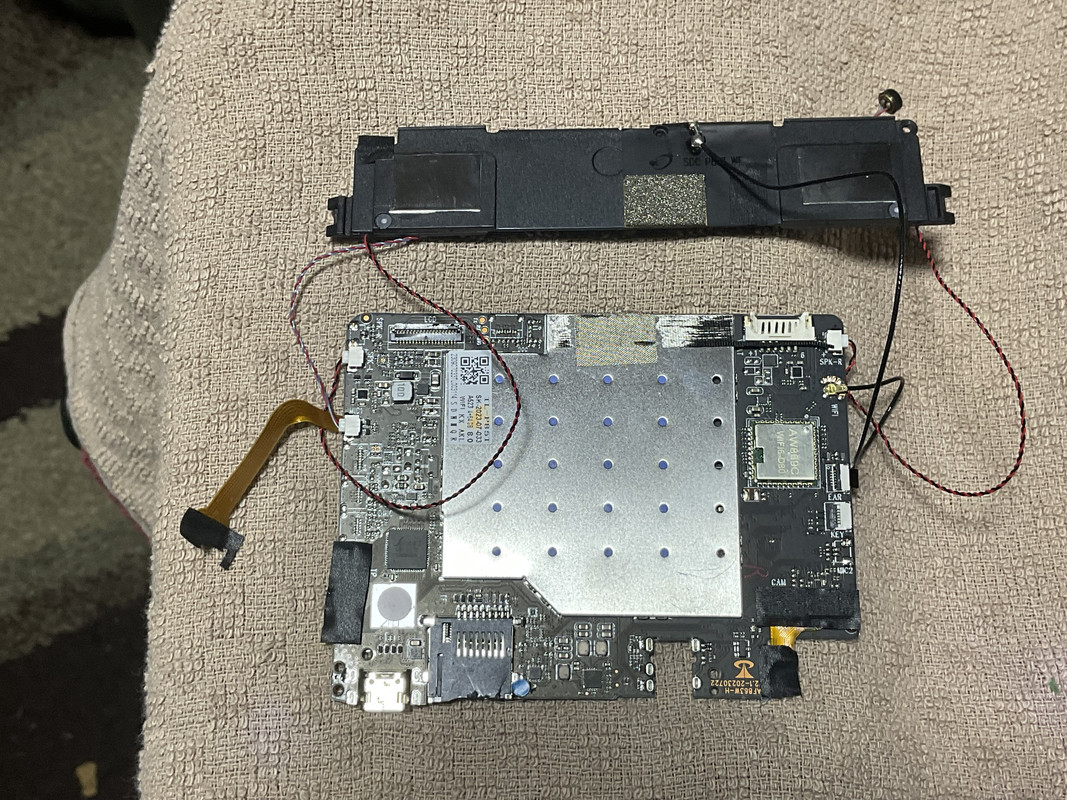

 
Just what was the original 'thing'?

As no sign of storage drive(?) though small solid state memory could be under that shield.... doesn't look like it from your photo!

Too little info to comment further other than put it in think poly bag and use a club hammer. Perhaps for good measure drill holes in the sliver & black square components first.

Once smashed up (good stress reliever) put into the electrical waste recycling.

The above are just my observations ;)
 
There is no 'box' or part that can be destroyed to eliiminate the possibility of Google-stored passwords being recoverable by some crook looking for opportunities to defraud.
Google keeps the password data in ancoded and password-protected file somewhere buried within the Google universe associated with your LoginID, so that the data can be passed on to another PC with the Google account holder's authorization....that is how you can buy a new PC and set it up for use of your Google account, and the passwords magically are synched from your existing PC to the new PC. Yes, you can log into Google account on your PC even if not connected to internet at the moment, and that would be kept somewhere undisclosed within the Google-PC universe, on some storage device like harddrive or solidstate non-volatile memory chip.

If logging into the PC simply under your PC user ID, that is kept somewhere not-disclosed by Microsoft or Apple on some storage device like harddrive or solidstate non-volatile memory chip.

If really worried, build a fire in a metal container and toss the whole thing in the fire until it is all well scorched.
 
Last edited:
Don't smash the big black bit with a hammer or drill holes in it. It looks very much like a lithium battery and while the risk of it catching fire and being very difficuly to extinguish is small, it's still a risk.
 
Don't smash the big black bit with a hammer or drill holes in it. It looks very much like a lithium battery and while the risk of it catching fire and being very difficuly to extinguish is small, it's still a risk.
The main battery is out and has been recycled
 
Under the metal plate will be a solid state memory chip(s). You could smash/drill those or if you have a powerful magnet, place that on top. Heating with a blow lamp should also be very effective, but don't do it indoors and don't heat capacitors because they can explode.
 
Last edited:
Google keeps the password data in ancoded and password-protected file somewhere buried within the Google universe associated with your LoginID, so that the data can be passed on to another PC with the Google account holder's authorization....that is how you can buy a new PC and set it up for use of your Google account, and the passwords magically are synched from your existing PC to the new PC. Yes, you can log into Google account on your PC even if not connected to internet at the moment, and that would be kept somewhere undisclosed within the Google-PC universe, on some storage device like harddrive or solidstate non-volatile memory chip.

If logging into the PC simply under your PC user ID, that is kept somewhere not-disclosed by Microsoft or Apple on some storage device like harddrive or solidstate non-volatile memory chip.
This

I remember when I first started working in IT for a Govt department, for security everyone had a physical device to access their IT, and many of them genuinely believed that this plastic card 'contained' the info they had access to, and not that it simply linked their ID to their account.
 
Please read - do not scroll past

I think what's troubling me here is all the well meaning 'advice' about how to destroy this device to keep yourself safe (bonkers) when what you're all genuinely at risk of someone phoning you up and convincing you to give them access to an account that enables them to empty your bank accounts.

The kicker being - these scams rely on your ignorance of how technology works and they rely on your fear of crime, and that ignorance and paranoia is evident throughout this thread.

IT IS IN YOUR INTEREST TO LEARN HOW THIS WORKS - stop and think
 
Last edited:
Please read - do not scroll past

I think what's troubling me here is all the well meaning 'advice' about how to destroy this device to keep yourself safe (bonkers) when what you're all genuinely at risk of someone phoning you up and convincing you to give them access to an account that enables them to empty your bank accounts.

The kicker being - these scams rely on your ignorance of how technology works and they rely on your fear of crime, and that ignorance and paranoia is evident throughout this thread.

IT IS IN YOUR INTEREST TO LEARN HOW THIS WORKS - stop and think

If you had that board I have pictured Phil, would you be able to access anything? Genuinely interested. I wouldn’t have a clue we’re to begin.
 
think what's troubling me here is all the well meaning 'advice' about how to destroy this device to keep yourself safe (bonkers)

Most of us are just trying to answer the OPs question.
 
Most of us are just trying to answer the OPs question.
And the question is based on a false assumption.

And giving someone some ‘reassurance’ that their assumption will keep them safe is not a ‘good’ thing to do IMHO.
 
If you had that board I have pictured Phil, would you be able to access anything? Genuinely interested. I wouldn’t have a clue we’re to begin.
Genuine answer is above. Your details aren’t in there, they’re stored on googles servers. And even in the off chance that something is accessible from there the amount of work required to get to it makes it futile.

OTOH phoning you up ‘from your bank’ and convincing you that some of your data has been compromised and that you need to download some ‘security’ software that’ll ’keep you safe’ that in reality enables someone to clear out multiple bank accounts is quite simple. And it’s done all the time.

And I’ll reiterate that is much more likely to happen than someone getting something off that device, and it feeds off your lack of understanding of where your data is held and accessed, and your fear that it’s not safe.
 
Just on a positive note... I bought a cheap tablet made or badged by that company and it's never missed a beat. I got it and a case for under £100.

Back when I worked in computers I had one customer who was paranoid about data on faulty devices, and very unnecessarily so, and it cost him a lot of money over the years. In the op's case and for reasons above I don't think it's an issue and I'd advise the op to put their mind at rest by having fun destroying it.
 
Genuine answer is above. Your details aren’t in there, they’re stored on googles servers. And even in the off chance that something is accessible from there the amount of work required to get to it makes it futile.

OTOH phoning you up ‘from your bank’ and convincing you that some of your data has been compromised and that you need to download some ‘security’ software that’ll ’keep you safe’ that in reality enables someone to clear out multiple bank accounts is quite simple. And it’s done all the time.

And I’ll reiterate that is much more likely to happen than someone getting something off that device, and it feeds off your lack of understanding of where your data is held and accessed, and your fear that it’s not safe.

So bank details, passwords to sites, photos are not kept on a device? (iPad, phone, that device). I‘m probably one of the people the it crowd roll their eyes at :D
I’m learning something new today
 
I think positive things to think about to easy your mind are...

Who is going to find this broken device in the landslide of rubbish?
Who is going to then have the technical expertise to do anything with it?
Who is going to bother?
 
If the thing is dead theres a fairly good chance that your average bloke couldnt recover anything. A computer expert may be able to remove the chip and fit if to a replacement back unit and recover the data, but it's a fair bit of effort when they could probably just get your data off the dark web anyway..
I'd take it outside and give it a bash or two (or twenty) till it's smashed to bits, then if the chip still survives cook it for a bit, blowlamp till it melts. Good luck anyone getting your data off that.
 
Just on a positive note... I bought a cheap tablet made or badged by that company and it's never missed a beat. I got it and a case for under £100.

Back when I worked in computers I had one customer who was paranoid about data on faulty devices, and very unnecessarily so, and it cost him a lot of money over the years. In the op's case and for reasons above I don't think it's an issue and I'd advise the op to put their mind at rest by having fun destroying it.
When you know you know. I guess it’s the same for skilled mechanics.
 
I don't mean to give offence here when I ask how important do you think you are that someone will want to go through your bin, dig out all the requisite parts of this device, reassemble and/or attach to another computer, recover any personal information and attempt to use it on the off-chance that you have a lot of money tied up in stocks and shares?

Just hit it with a club hammer and throw it in the bin.
 
When you know you know. I guess it’s the same for skilled mechanics.

Fiddle with it and destroy it as much as you want.
Put the bits in a bucket of water overnight.
Mix the bits with the most unpleasant things you can find.
Put all this in different disposal bags.
Dispose of them over a period of time over different bin collection days...

and no one will have even the remotest once in a universe chance of getting anything off it :D
 
I don't mean to give offence here when I ask how important do you think you are that someone will want to go through your bin, dig out all the requisite parts of this device, reassemble and/or attach to another computer, recover any personal information and attempt to use it on the off-chance that you have a lot of money tied up in stocks and shares?

Just hit it with a club hammer and throw it in the bin.
:)
 
Fiddle with it and destroy it as much as you want.
Put the bits in a bucket of water overnight.
Mix the bits with the most unpleasant things you can find.
Put all this in different disposal bags.
Dispose of them over a period of time over different bin collection days...

and no one will have even the remotest once in a universe chance of getting anything off it :D
Everyone know a 50 quid guy

I can do that for 50 quid :LOL:
 
I do some work with a charity that recycles electricals. Give it to us (or your local equivalent). After it's been chucked in a secure bin, it goes to a site in Sittingbourne. They let it sit in the rain for a day or three, scoop it up with a JCB and drop it onto a conveyor belt. Humans + cameras & AI find and remove all the batteries and may take off bits of circuit board (depends on how big/easy). Then it goes into what can best be described as a flail - it's a bunch of chains attached to a big wheel.

Plastic bits go one way and are sorted by colour for recycling. Electrical bits go another and are met by the circuit boards. These go into another smaller flail where the air is constantly filtered. They precipitate the gold back out of it and sort the rest into various metals to sell to recyclers.

Batteries take a different route to the lithium bins (which everybody is scared to go near) - they get taken off every month or two for specialist recycling.

Trust me: your passwords aren't coming back.

BTW whilst I have your attention.....if you're in Kent and have a device (laptop, tablet, phone etc) which could have passwords etc on it, call these guys


It ends up in exactly the same place but it goes in via their "secure" route - logged at ever stage until the hard drives are smashed. Then everything gets recycled.

And please, whatever you do don't "hit it with a club hammer and throw it in the bin". Bin lorries really do catch fire - and we could do with recycling all the plastic and metals we can.
 
Everyone know a 50 quid guy

I can do that for 50 quid :LOL:

They'll say they can do whatever you want but in reality they can't.

They might be able to reinstall windows on a pc at a pinch but anything beyond that will almost certainly be beyond them.
 
I do some work with a charity that recycles electricals. Give it to us (or your local equivalent).

This is a much better suggestion than putting it 'in the bin'.

Waste electrical equipment should never go with regular household refuse into landfill. The metals that are being recovered during recycling should not end up leeching into the ground, along with a host of other nasty chemicals and plastics.

Besides, your council is probably already paying fines for excess use use of landfill facilities for waste disposal, so don't add to the problem and ultimately your council tax bill.
 
We have recycling bins for everything around our local community centre. Glass, clothes, electronics.
Earth, rubble and tyres you have to pay for at the local recycling centre.
Yet we still get a lot of fly tipping going on in the country lanes around here.
 
Genuine answer is above. Your details aren’t in there, they’re stored on googles servers. And even in the off chance that something is accessible from there the amount of work required to get to it makes it futile.

OTOH phoning you up ‘from your bank’ and convincing you that some of your data has been compromised and that you need to download some ‘security’ software that’ll ’keep you safe’ that in reality enables someone to clear out multiple bank accounts is quite simple. And it’s done all the time.

And I’ll reiterate that is much more likely to happen than someone getting something off that device, and it feeds off your lack of understanding of where your data is held and accessed, and your fear that it’s not safe.
This. I work with enterprise level tech and the biggest security risks any organisation faces are on the human side. I think in popular culture people love to imagine a shady hacker in a basement rattling out lines of code to crack an unsuspecting person when in reality it’s someone who keeps their passwords on a Post It or falls for a scam that’ll bring down an organisation quicker than a hiccup.
 
If you had that board I have pictured Phil, would you be able to access anything? Genuinely interested. I wouldn’t have a clue we’re to begin.
IMHO there is nothing on that board that stores anything in a retrievable form...apart from the BIOS chip which is electrically programmed (or updated) with only the fundamental start-up programming that tells the processor to start loading the Operating System software from a certain location on harddrive or CD or USB or floppy.
Ordinarily, that start-up program looks for a harddrive controller which is plugged into the motherboard memory bus, or it goes to a SSD memory unit which is plugged into the motherboard memory bus...and a harddrive controller or SSD memory card plug into sockets that are physically accessible and not under a metal shielding. Memory under metal shielding typically was 'volatile' memory, many decades ago called 'core memory' because they were magnetic cores which had no storage capability when not energized with electricity.

But you mention this is from a security device, so under that cover just might be a memory 'cascade' of EEPROM that keeps the most recent half hour (or whatever length) of video recoding, and just maybe your password is stored with that memory, too. In any event it is highly unlikely that anyone would want to bother trying to decode the retrieval of such data, unless they thought it once belonged to a government agency or large value enterprise that they wanted to hack into...they would not bother with a security device from a home or small business...too much bother for almost no return!

You might peel back that top metal cover and take a photo so that we get some idea what is underneath that big heat sink.
 
Last edited:
But you mention this is from a security device

It's not that specialist. It's a cheap and generic tablet computer. It is probably used to run some Android-based applications for controlling or monitoring the security cameras.

The AW869C in the top right is an Allwinner A523 System on a Chip which contains a multi-core CPU with integrated memory, GPU and a bunch of controllers for various input/output devices.

Amongst other things, the SoC supports writing to encrypted storage, as does Android 14 that tablet ships with, and the tablet specs says it's equipped with 64GB of eMMC 5.1 storage,

Unless the OP went out of his way not activate encrypted storage, I'd expect any data is pretty safe from all but the most determined attackers who happened to have physical access to the device.
 
Last edited:
Back
Top