

You are using an out of date browser. It may not display this or other websites correctly.
You should upgrade or use an alternative browser.
You should upgrade or use an alternative browser.
What is your favourite creative tool for in camera compositions
- Thread starter Pavel M
- Start date


LeeRatters
Suspended / Banned
- Messages
- 7,354
- Name
- Lee
- Edit My Images
- Yes
To wide a question to answer.
D
Deleted member 34016
Guest
OP

Pavel M
Suspended / Banned
- Messages
- 152
- Name
- Pavel M
- Edit My Images
- Yes
You can narrow it downTo wide a question to answer.

ancient_mariner
Moderator
- Messages
- 27,780
- Name
- Toni
- Edit My Images
- No
Walking past a scene. When I'm walking, scenes I want to photograph appear in front of me, and if I stop to take a picture very often the best image is the first before I try to work the scene.
LeeRatters
Suspended / Banned
- Messages
- 7,354
- Name
- Lee
- Edit My Images
- Yes
You can narrow it down
Not really. The camera height and angle would depend on the subject and the background. The focal length would depend on the scene and background or sky or how close I can get to the subject. The aperture would depend on the scene, what I wanted in focus, how far from the camera the subject is, how light/dark the scene is for the idea iso or shutter speed. Shutter speed would depend on the conditions, the wind, the subject.....
AndrewFlannigan
Suspended / Banned
- Messages
- 11,977
- Edit My Images
- No
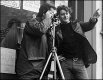
I find that looking through the viewfinder works surprisingly well. The mate pointing out the subject is optional...

hunnymonster
Suspended / Banned
- Messages
- 2,263
- Name
- Jason
- Edit My Images
- Yes
ancient_mariner
Moderator
- Messages
- 27,780
- Name
- Toni
- Edit My Images
- No


Bebop
Suspended / Banned
- Messages
- 7,318
- Edit My Images
- No
I don't think you can single one thing out because all of it is important. Your style may mean some things take precedence e.g. shallow depth of field, but if your exposure is wrong then that can wreck everything, and you cannot get the composition you want without having the right point of view.... which means tripod height etc.
What would you say your favourite tool for composition is @Pavel M ?
What would you say your favourite tool for composition is @Pavel M ?

Retune
Suspended / Banned
- Messages
- 7,701
- Edit My Images
- No
Food Mode.
 www.samsung.com
'Delicious Food Deserves Food Mode
www.samsung.com
'Delicious Food Deserves Food Mode
Don't hide a stunning dish from the camera. Give it the photographic justice it deserves!'
Phones | Samsung Support US
Samsung Care is here to help you with Phones. Get started, find helpful content and resources, and do more with your Samsung product.
www.samsung.com
Don't hide a stunning dish from the camera. Give it the photographic justice it deserves!'
Last edited:
OP
Pavel M
Suspended / Banned
- Messages
- 152
- Name
- Pavel M
- Edit My Images
- Yes
I often start with the focal length, because very short focal length (or a fisheye) requires a very radically different composition compared to a normal lens or a telephoto. On days with a directional light, accommodating light may be my first compositional decision. Usually selection of background is anywhere between first and third priority. Other factors are often less critical and I usually consider them a fine-tuning after the key decisions were made.I don't think you can single one thing out because all of it is important. Your style may mean some things take precedence e.g. shallow depth of field, but if your exposure is wrong then that can wreck everything, and you cannot get the composition you want without having the right point of view.... which means tripod height etc.
What would you say your favourite tool for composition is @Pavel M ?

john.margetts
Suspended / Banned
- Messages
- 2,996
- Name
- John
- Edit My Images
- Yes
For my cameras that will accept them, I like to use a waist-level viewfinder. The 450mm separation between image and eye helps with composition as does the rather strange way that the camera responds to camera movements. A very big advantage of my TLRs and my Bronica
Bebop
Suspended / Banned
- Messages
- 7,318
- Edit My Images
- No
I think it all starts with the light….. and then ‘seeing’ the lightI often start with the focal length, because very short focal length (or a fisheye) requires a very radically different composition compared to a normal lens or a telephoto. On days with a directional light, accommodating light may be my first compositional decision. Usually selection of background is anywhere between first and third priority. Other factors are often less critical and I usually consider them a fine-tuning after the key decisions were made.


Harlequin565
Suspended / Banned
- Messages
- 8,684
- Name
- Ian
- Edit My Images
- No
Film choice for me. That will dictate quite a bit how I approach my photographs for that roll.

- Messages
- 105,684
- Name
- The other Chris
- Edit My Images
- Yes
For me at least the question is entirely the wrong way around and I have no favourites, I have some dislikes e.g. ultra wide angle but I might even use those at times. I look at a scene, decide how I want to shoot it, find a good position from which to shoot and then choose the tools for the job. I don't choose a tool and then decide what to apply it to.
Karl.t1965
Suspended / Banned
- Messages
- 360
- Name
- Karl
- Edit My Images
- Yes
Film choice and front and rear movement
AndrewFlannigan
Suspended / Banned
- Messages
- 11,977
- Edit My Images
- No
...in which case your most important creative tool must be your dark cloth...Film choice and front and rear movement




CavGez
Suspended / Banned
- Messages
- 329
- Name
- Gez
- Edit My Images
- No
This is more of a process than a tool, but:
If I am just roaming with the camera, a sense that something is compositionally beautiful. Then...
'Is it interesting?'
'Why is it interesting?'
'What is it trying to say?'
'What are the colours saying?'
I think its just the lazy side of me trying to talk me out of getting out the camera
If I am just roaming with the camera, a sense that something is compositionally beautiful. Then...
'Is it interesting?'
'Why is it interesting?'
'What is it trying to say?'
'What are the colours saying?'
I think its just the lazy side of me trying to talk me out of getting out the camera
Last edited:
Bebop
Suspended / Banned
- Messages
- 7,318
- Edit My Images
- No
You don't use back button focusing then?My eyes, then my brain followed by my chosen lens and lastly my finger.
 ... actually even if you did - the finger would be the last thing
Last edited:

Sky
Suspended / Banned
- Messages
- 4,244
- Name
- Trevor
- Edit My Images
- No
Bebop
Suspended / Banned
- Messages
- 7,318
- Edit My Images
- No
Sorry - I just edited my post - you're too quickOf course - I forgot that.
You are right - the finger would be the last thing...
Terrywoodenpic
Suspended / Banned
- Messages
- 8,172
- Name
- Terry
- Edit My Images
- Yes
The most useful tool for any artist is learning to see.
A vast majority of people are not very observant at all.
Not only do they miss important compositions. but also details of any kind that will spoil an image.
The second most important tool is being able to select the best viewpoint. This has a profound effect on all images.
the Third Tool is about when you should capture the image, Timing is often critical.
A vast majority of people are not very observant at all.
Not only do they miss important compositions. but also details of any kind that will spoil an image.
The second most important tool is being able to select the best viewpoint. This has a profound effect on all images.
the Third Tool is about when you should capture the image, Timing is often critical.
Last edited:

- Messages
- 10,200
- Name
- Brian
- Edit My Images
- Yes
Although I like the viewfinder I find I am looking at the large display more and more. It seems to help me check composition as a whole. The viewfinder can trick you into looking at individual elements.

Compuwight
Suspended / Banned
- Messages
- 1,113
- Name
- Steve France
- Edit My Images
- Yes
My most useful tool is 'Time' and its becoming very limited in supply as COVID comes to a point whereby I have to work again. Whatever my subject I like to have the time to plan and execute my plan, equipment is a close second and with wildlife photography a subject that appears and stays long enough for that shot. Things like exposure, shutter speed, DOF, aperture, lens and iso are like all good plans - subject to adjustment to get the shot firstly.
CavGez
Suspended / Banned
- Messages
- 329
- Name
- Gez
- Edit My Images
- No
I think sometimes this thread has gone a bit off the OP's intended topic. I'll add to that 
I'm not sure these are creative tools, but more freedom from creative restrictions?
Tiltable viewfinders are fantastic as they free you from eye-level photography.
A camera interface that is easy to use so as to be invisible allow you to focus on the image.
And a high ISO range allows more aperture/speed combos if different light.
I'm not sure these are creative tools, but more freedom from creative restrictions?
Tiltable viewfinders are fantastic as they free you from eye-level photography.
A camera interface that is easy to use so as to be invisible allow you to focus on the image.
And a high ISO range allows more aperture/speed combos if different light.
Last edited:

TimHughes
Suspended / Banned
- Messages
- 3,655
- Name
- Tim
- Edit My Images
- Yes
I have no favorite physical tool. It all depends what sort of job is it, or what image I want to create. Then it's time to plan and select the gear needed for that. On the day, apart from the gear I need my eye, my feet, imagination and curiosity to try different things to get the best composition.
OP
Pavel M
Suspended / Banned
- Messages
- 152
- Name
- Pavel M
- Edit My Images
- Yes
How right you are. Sometimes I can barely notice a link between the question and the answer.I think sometimes this thread has gone a bit off the OP's intended topic. I'll add to that


ancient_mariner
Moderator
- Messages
- 27,780
- Name
- Toni
- Edit My Images
- No
How right you are. Sometimes I can barely notice a link between the question and the answer.
And welcome to Talk Photography.

myotis
Suspended / Banned
- Messages
- 4,503
- Name
- Graham
- Edit My Images
- No
No doubt you all use a mixture of many tools, but no doubt some are your favourites.
By tools I mean things like aperture, camera height and angle, background selection, focal length, exposure...
1. Camera height, angle, orientation and distance to the subject is my starting point, which will be driven by how the main subject elements visually interact, as well as the lighting patterns and the relationship between foreground and background elements.
2. I mainly only use 2 to 4 prime lenses, so at this stage I will select which lens to use. Choice of lens will depend on how I feel during the step above.
3. I tend to then revisit step 1, when I might change lens, but not often.
4. I then think about aperture and how different depths of "depth of field" will affect the image. I often use the stop down button, not to really judge depth of field but to check for elements in the background or foreground that might distract in the final image.
5. shutter speed is next and I think about how much subject movement I need to stop or maybe accentuate.
6. Exposure comes next and I try to work out the relative importance of highlight and shadow detail to the final image.
7. I then usually have a juggling act between aperture, shutter speed and ISO, to get the balance I think is right for the image I want to produce.
8, Before pressing the release I try to visualise the image as a finished print, which more often than I like to admit, will often send me back to step 1 ;-)
Edit: Mmm, I missed out what is probably step 2a. I normally compose square, but some where between steps 1 and 3, I may well revise this and switch to 3x4 or 2x1 (I dislike the 3x2 ratio, and only occasionally use it) I also very occasionally do a panorama.
Last edited:
OP
Pavel M
Suspended / Banned
- Messages
- 152
- Name
- Pavel M
- Edit My Images
- Yes
Jeremy, what you describe I would call "seeing" (Using Freeman Patterson term for it) or "noticing" which I prefer, because you may see things without noticing them as an interesting subject for photography. In my mind, you first notice something and only then you start thinking of composing. We agree that noticing is an incredibly important step in photography. If you did not read any of the Freeman Patterson's books I highly recommend them. (https://www.amazon.ca/Photography-A...7d62c&pd_rd_wg=0kaA3&pd_rd_i=1550130994&psc=1)This is more of a process than a tool, but:
If I am just roaming with the camera, a sense that something is compositionally beautiful. Then...
'Is it interesting?'
'Why is it interesting?'
'What is it trying to say?'
'What are the colours saying?'
I think its just the lazy side of me trying to talk me out of getting out the camera
AndrewFlannigan
Suspended / Banned
- Messages
- 11,977
- Edit My Images
- No
Golly gosh. I honestly don't think I'd get to step 2 on that list!1. Camera height... ...8

myotis
Suspended / Banned
- Messages
- 4,503
- Name
- Graham
- Edit My Images
- No
Are you sure? If you think about what goes through your head when taking a photograph doesn't it include most of what's on that list.Golly gosh. I honestly don't think I'd get to step 2 on that list!
I can see you not checking depth of field, for example, but I'm on a tripod taking landscapes and I enjoy the "ritual" of taking photographs, probably because of my history with 5x4, even though I'm now on digital. But at least once week I can hear my 5x4 pleading with me from the cupboard to be taken out.