

What does it mean to be a photographer these days?

Tom_Chettoe

Suspended / Banned
Messages
110
Name
Tom
Edit My Images
Yes
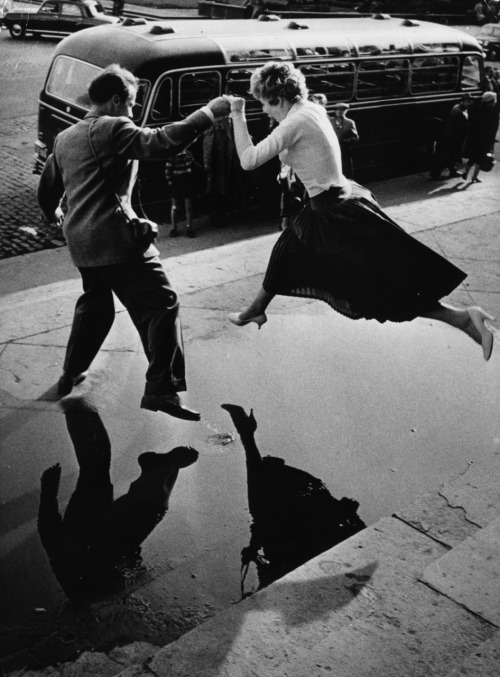
I find myself in a weird love hate relationship with photography, though it's probably more accurate to say photographers, as blaming an inanimate object isn't the most rational way to pass the time, but I digress, I was viewing my tumblr blog about 20 or more minutes ago and there was the usual pictures of this and that celebrity, screenshots from TV shows, over used photoshop filters combined with select quotes to imply that somebody is "deep", internet fads, and the wannabe-famous crowd, so I expect at this juncture you're probably thinking "Well if you will join a social-networking or blogging site, that is the kind of rubbish you'll encounter in between the genius moments." and that would be a very accurate and insightful way to be thinking because, somebody had posted this image:
tumblr_lupzjnGwB91qcmo9qo1_500.jpg


and it suddenly hit me, how cheapened photography has become these days, not just the price and easy accessibility of cameras, but the actual cheapening of an important art form, and whilst I'm part of one of first wave of generations you could blame for it, I'd say subsequent ones who grew up with camera phones, instead of the Nokia 3210, "wow it's got a game called snake on it", have done a lot more damage.

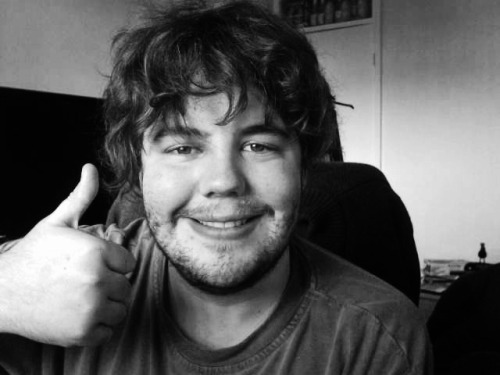
I discovered a new buzz phrase the other day which by virtue of it's existence to describe a style of social-networking photography, just serves to highlight how dire (perhaps that's a little OTT) the situation is, the phrase or rather initials which stand for the phrase are "GPOY" which stands for Gratuitous Pictures of Yourself.

This is me, being a hypocrite and conversely demonstrating what the average GPOY looks like:
tumblr_lv84wiLYna1qf5zsio1_500.jpg


Portraits and more so self portraits in other art forms were significant, spectacular, creative, vibrant, interesting and perhaps even really said something, about the person or time that they were from, these days they're a dime a dozen and mean a lot less, and are usually the result of "I'm bored" or boredom in general, that's a quite depressing degradation, that the MTV/YouTube generation has brought to the table, and whilst yes you could say, "but aren't these modern webcam/ point'n'laugh camera portraits just like the other art forms in that they too, say something about the time, and the person" and to an extent they do, they show clothing and hair styles of this day and age, I'd just hate for my generation and subsequent ones to pass down a tradition of photographing yourself because you're bored.

I don't know who took the image I posted first, it looks like a Cartier-Bresson but that might just be because it reminds me of this iconic shot of his:

H_CartierBresson-GareSt_Lazare-full.jpg


but even though it captures a fairly mundane act of kindness, it also reflects the time, you can see by the clothing and the cars that its probably early 1900s perhaps 30s or 40s, I'm no car expert I'm just assuming, but there is something about that image that just really appeals, the joy, the manners of the gent, the fun of jumping over a large puddle and knowing you're probably still going to miss the other side, there is a fun energy to it, even questioning, if you were to unpause the action would she then be held close by the man helping her in some sort of romantic embrace or would it be a friend or the kindness of a stranger helping her, so many more questions come to mind, when facing images like that.

I've rambled for perhaps too long and perhaps not fully explained my point but essentially what I'm getting at is that with the increased introduction of easier and easier to use, mainstream cameras, has the saturated market and the uses of photography by the 'everyman/woman' on the street, cheapened the efforts of the hobby togger / enthusiastic amateur, semi-pro and pro photographer out there trying to capture something to really interesting and impressive.

Feel free to comment & discuss.
 
Ever since the Box Brownie first democratised photography and (rightly) exposed its craft status as as sham people have decried the ease with which photographs can be made by 'non-photographers'..

The only difference I see between now and then is that now everyone gets to see all the photographs. In the days of prints millions of photographs were taken, looked at once, then hidden away in albums and shoeboxes never to be viewed again. Today they're all put on Facebook and Flickr.

Those who genuinely have a different vision are no rarer than they ever were.
 
Last edited:
Just because you can now see all this "new" photography doesn't mean it wasn't happening before. My parents have tonnes of folders of slides, prints and negatives that no one outside of immediate family knows anything about. My friends at school/college used to have prints pinned on their bedroom walls from nights out and holidays or photos on their phones and hard drives.
Now all this stuff would go on Facebook or Flickr making far more people aware it exists, but it hasn't only just begun to exist. Taking photos hasn't changed, it's just being shared in a different way.

And if you're going to arbitrarily draw a line and say cameras are so easy to use it's cheapening photography why do it now? Why not draw it when cameras became portable, or when cameras were fitted with shutters or adjustable apertures, or when labs appeared all over the high street? Why not say cameras cheapened painting?

Edit: Beaten to it by the previous poster.
 
Last edited:
if you were to unpause the action would she then be held close by the man helping her in some sort of romantic embrace or would it be a friend or the kindness of a stranger helping her, so many more questions come to mind, when facing images like that.

You young romantic ... broken heel, wet bum and big argument for pulling her off the step.
 
Been taking photos for a long time,it has been a big part of my life,the vision still out their,just take a bit more finding :)

The HCB photo is one of my all time great Photos,their is no reason why photos of the same quality,could not be taken today,have a look at the work of Trent Parke for one.

Sometime all you need is a camera,and the eye :)
 
this is the essence of where the line is... on one side you have a whole bunch of clones, believing the hype - living a "unique life" that is the same as everyone else's.. on the other side there are people with vision, artistic foresight, and a willingness to fail, to break the mould, to be different, to be rejected and misunderstood (in the hope to succeed)
 
I just don't give a flying **** what people think about my work these days; as long as my 'work' work satisfies the editors' needs, I'm cool.

Taking my grumpy git hat off, that image is a great shot. As you say, it addresses many things - social etiquette, manners, the relationship between men and women, styles of the times - and aside from the fun factor of 'will they, won't they?' make it over the puddle, it just captures a really nice moment.

The problem we now have is, as already mentioned, is that photographs are now too freely shared and that includes the ones that really don't make the grade. I don't mean the ones that just aren't to everyone's taste; I mean he ones that should never have been taken in the first place. The ones with naff exposure or focussing, or where the subject is so 'blah' (a technical term) that it matters not, you just don't care.

I still believe that very photograph I show should be something I'm A) proud of, and B) is the best I can produce. If I question its validity, especially where sharing it comes in, then it doens't get shown. I'm not on about those shots we are asking for help with - we all have to learn - but I see so many photographs these days that are just repeats or one of 'x' amount they took from a fixed position, that as you are bombarded with similarity and banality, the validity of the show becomes less and less.

I love the fact that here are lots of people taking photographs and that we have access to equipment at every price band. I also love the fact we have the likes of Flickr and 500pix (to name just two), websites where there are some truly astounding shots. I also love the fact I can be part of that sharing. But I wish more people wore their (photographic) hearts on their sleeves and really championed the best of themselves as a photographer, regardless of their experience, rather than just being one of many who can prove their ability to press a shutter button.

An image says a thousand words or so they say, but so few people actually want to inform the viewer and commit their mind to assessing their work and putting it in context. This really dissappoints me and unfortunately, with the 'facebook generation' growing in numbers (and in the size of their image libraries), I don't see thing moving in any other direction than just mindless image-taking for the sake of it....
 
I personally don't think the HCB picture above is anything special like mist of his work. In today's world it is a lot harder to gain the media hype required to become famous and photography is nothing new plus TV and the Internet means we have different mediums for the distribution of information. you can't equate todays world to 70-80 years ago.

however the Internet does allow people to gain somewhat of a celeb status.
 
What concerns me with digital photography is the longevity (or otherwise) of the images. Computer technology and the way we store images should be of concern, how many of us have images on a 3.5" disk but no longer have the technology to view those images. The same can be said of CD's and hard drives, ok today but maybe not in 10 years time?

I have negatives 50 years old, I can go in my darkroom and print an image as fresh as the day it was shot. There are still fields of photography that demand the use of the film process, and continue to be in demand because a digital image cannot come anywhere close to the quality of the film process.

What concerns me most is that we are in danger of losing a generation of photography, all those hard drives and cd's with millions of images will end up in land fill.
 
I completely agree with OP.
In my opinion photography is becoming devalued and the world is becoming less photogenic...because there are more pictures being taken and shared.
And frankly I don't care for any modern photograph, because almost every function on a camera these days is automated so anyone with an iota of knowledge and a bit of photoshop can make a shot that appeals to the masses. I'm a damn sight more impressed by a bad shot that was taken 50 years ago than a good shot taken these days. I've seen people that are doing degrees in photography, several years into their course, that have no idea how to take a decent shot. I could go on....

/grumble grumble
 
I completely agree with OP.
In my opinion photography is becoming devalued and the world is becoming less photogenic...because there are more pictures being taken and shared.
And frankly I don't care for any modern photograph, because almost every function on a camera these days is automated so anyone with an iota of knowledge and a bit of photoshop can make a shot that appeals to the masses. I'm a damn sight more impressed by a bad shot that was taken 50 years ago than a good shot taken these days. I've seen people that are doing degrees in photography, several years into their course, that have no idea how to take a decent shot. I could go on....

/grumble grumble

Totally agree!
 
if there has been a misunderstanding of what I meant, I can only imagine it came from a poor choice of words on my part in the first place to lead to any confusion or misinterpretation, I wasn't for a moment suggesting that the idea of people taking images of nights out or of themselves, or any sorts of personal or jokey images was by any stretch a new concept or a new development since the age of film or earlier forms of photography, far from it.

Calling the "craft" of photography a sham is to call any art expression a sham, which in turn is just a fatuous remark make, taking 999 bad pictures and then nailing that perfect shot on the 1000th shot (i don't mean 1000 consecutive shots of the same thing I mean shots over time) makes the moment of genius worth while, it is a craft and an art form because you do have to practice it, you do have to work at it to really perfect anything like a style or voice, depending on what subject or the way you like to shoot.

The only difference I see between now and then is that now everyone gets to see all the photographs. In the days of prints millions of photographs were taken, looked at once, then hidden away in albums and shoeboxes never to be viewed again. Today they're all put on Facebook and Flickr.

Those who genuinely have a different vision are no rarer than they ever were.

I'm sure there are still people who keep photos back and don't want to upload every moment of their life to the internet, social networking has just encouraged and is in the process of encouraging people into a culture of "show and tell" show the world you're not missing out on life, and tell everyone about what you're doing, all the time.

I suppose to an extent we should be thankful that the majority of them are confined to a box, or rather an album on Facebook, so we don't have to sift through all of those pictures, when we're looking for something that resembles quality or rather a quality shot of a subject matter we're personally interested in or curious about.

Perhaps there is a market for drunken photography? Maybe that is the gallery of tomorrow waiting to happen. I always feel sorry for night club photographers.


Just because you can now see all this "new" photography doesn't mean it wasn't happening before. My parents have tonnes of folders of slides, prints and negatives that no one outside of immediate family knows anything about. My friends at school/college used to have prints pinned on their bedroom walls from nights out and holidays or photos on their phones and hard drives.

Now all this stuff would go on Facebook or Flickr making far more people aware it exists, but it hasn't only just begun to exist. Taking photos hasn't changed, it's just being shared in a different way.
Edit: Beaten to it by the previous poster.

As above. I didn't say it had begun to exist now, I was talking about a type of photography, and again I agree that it's the introduction of photo sharing sites that makes them all more apparent to us all, but it isn't just the fact there are photo sharing sites, photography is hugely popular with younger and older people these days due to the ease of use of and accessibility of technology, far more so than years gone by, and this has been fostered by the inclusion of cameras imbedded into phones. So no it's not just the sites, far more people are taking pictures than ever before, and that is just how it is.


And if you're going to arbitrarily draw a line and say cameras are so easy to use it's cheapening photography why do it now? Why not draw it when cameras became portable, or when cameras were fitted with shutters or adjustable apertures, or when labs appeared all over the high street? Why not say cameras cheapened painting?

*sigh* I didn't mention anything about drawing lines I was simply offering my opinion, I do think that the ease of use of cameras has enabled the "show and tell" culture to thrive, and at times this can be a wonderful tool to show us about places and things we've never seen before, but the huge difference is that back with film, and even using film to this day, it was not a case of "snap snap snap snap snap snap… ah yes the 56th image of the church at dawn is just the right lighting and angle" it was careful precise and beautiful in its precision, these days you can just just retake over and over and over, or just snap a really quick and lazy shot which a camera phone and thats that on you go, there are remnants of the precision and skill in DSLR photography today and I'm not for a second saying there is no skill in DSLR photography far and away from it, I just think we have it a lot easier these days, and we take the fact we can re-take shots multiple times for granted. As I wasn't drawing lines the rest of the reply doesn't warrant further comment beyond saying that the comparison of mediums is moot, as people still paint today, thank you for you reply though I guess we'll have to agree to disagree on this one though.

You young romantic ... broken heel, wet bum and big argument for pulling her off the step.

Hahaha yes I am, though I still harbour the English cynicism that made me smile at that comment!

Been taking photos for a long time,it has been a big part of my life,the vision still out their,just take a bit more finding :)

The HCB photo is one of my all time great Photos,their is no reason why photos of the same quality,could not be taken today,have a look at the work of Trent Parke for one.

Sometime all you need is a camera,and the eye :)

Very true and a great many people take photos that are just incredible and inspire me every time I check out sections of this forum and visit websites like Flickr and others, the talent and passion is out there, it's the passionless "me me me" galleries that get my goat at times. Thank you for the recommendation I'll be sure to check out his work.

this is the essence of where the line is... on one side you have a whole bunch of clones, believing the hype - living a "unique life" that is the same as everyone else's.. on the other side there are people with vision, artistic foresight, and a willingness to fail, to break the mould, to be different, to be rejected and misunderstood (in the hope to succeed)

The "hipsters" adoption of photography definitely has a lot to answer for these days with regards to extreme "show and tell" moment sharing culture of social networking. I couldn't agree more with what you've said here "suffering for your art" is a phrase you don't hear very often these days, though I'm sure there are people to which this phrase holds true still, it isn't so much the case as it used to be, there seems to be an attitude of "well all the moulds are broken so lets just use what worked in the past and just call it retro because it would take a lot of effort to create something truly ground breaking and spectacular."

cracker of a photo too
in an attempt to save face and not appear both opinionated and arrogant in the same thread I'll assume you mean the classic film shots, definitely they're great !

An image says a thousand words or so they say, but so few people actually want to inform the viewer and commit their mind to assessing their work and putting it in context. This really dissappoints me and unfortunately, with the 'facebook generation' growing in numbers (and in the size of their image libraries), I don't see thing moving in any other direction than just mindless image-taking for the sake of it....

Exactly! and I suppose this thread is addressing that key division between those that take photography seriously, passionately, and the "mindless image-taking for the sake of it" combined with the obsessive need to document insignificant moments (though I'm sure the significance could be considered subjective) and again draws the line between polaroid / point and shoot and SLR/DSLR, the invention of bridge cameras though I think is fantastic, the stepping stone from mindless, to something a bit more functional, some flexibility and room for expression without having to jump into the deep end of SLR and DSLR photography, which as a step from point and shoot, was scary and exciting as hell for me as a photographer.

What concerns me with digital photography is the longevity (or otherwise) of the images. Computer technology and the way we store images should be of concern, how many of us have images on a 3.5" disk but no longer have the technology to view those images. The same can be said of CD's and hard drives, ok today but maybe not in 10 years time?

I have negatives 50 years old, I can go in my darkroom and print an image as fresh as the day it was shot. There are still fields of photography that demand the use of the film process, and continue to be in demand because a digital image cannot come anywhere close to the quality of the film process.

What concerns me most is that we are in danger of losing a generation of photography, all those hard drives and cd's with millions of images will end up in land fill.

One of the more reassuring things about the advancement of technology these days is the need or rather a demand for backwards compatible software and hardware, by which I mean a piece of software or hardware that recognises and works with both older and newer version of software and hardware, allowing the exchange of information with the option to upgrade to the newer format, I believe as time goes on features like this will be more common place. With regard to older tech, CDs these days are probably as you rightly say going to be clogging up landfill sites, I hope we don't lose those photographs, and currently CD drives are still in use, but who knows for how much longer as smaller and smaller USB and portable hard drives enter the market place, scary times!

I completely agree with OP.
In my opinion photography is becoming devalued and the world is becoming less photogenic...because there are more pictures being taken and shared.
And frankly I don't care for any modern photograph, because almost every function on a camera these days is automated so anyone with an iota of knowledge and a bit of photoshop can make a shot that appeals to the masses. I'm a damn sight more impressed by a bad shot that was taken 50 years ago than a good shot taken these days. I've seen people that are doing degrees in photography, several years into their course, that have no idea how to take a decent shot. I could go on....

/grumble grumble

Please by all means feel free to "go on" this is a discussion of thoughts, feelings, ideas and opinions and differing views are encouraged, I have to say in this case I completely agree !
 
Last edited:
Calling the "craft" of photography a sham is to call any art expression a sham, which in turn is just a fatuous remark make, taking 999 bad pictures and then nailing that perfect shot on the 1000th shot (i don't mean 1000 consecutive shots of the same thing I mean shots over time) makes the moment of genius worth while, it is a craft and an art form because you do have to practice it, you do have to work at it to really perfect anything like a style or voice, depending on what subject or the way you like to shoot.


You miss my point. There is no need to be skilled in the craft aspect of photograph making in order to make great photographs.

In the past this craft knowledge has been kept as sacred by 'professional photographers' as a means of preventing other people from doing what they do - something which is intrinsically easy. They baffled people with talk of apertures and shutter speeds and more. They still try, look at how newbies on here are treated to lectures about depth of field and exposure. None of it matters when it comes to seeing pictures - which is what I believe should come first.

This has been the case ever since photography was invented. Read some history and you'll see how the earliest pioneers tried to keep their techniques secret. History repeats itself in this instance, as each new development in photography has come along it has been esoteric and usually expensive. (My first digital camera had 1.3mp and cost £200 - a camera phone beats that today). The masses think they cannot understand it and certainly can't afford it.

Technology moves on, and moves down market as it does so. There is no difference between a photograph correctly exposed by the programmed chip in a camera and one correctly exposed by a human with a light meter. The exposure is just the same. The 'craft' of photography, like all creative crafts, is best learned to the point where it becomes instinct so it doesn't get in the way of the creativity. If you can use technology to eliminate that learning process, great. There is nothing precious about the 'craft' of photography. It is a sham that is created to make the photographer appear specially gifted and to exclude others from doing what he does. It's how religion has dominated societies down the ages - the high priests keep the sacred texts to themselves as a means of controlling the masses. And the photographers secrets are just as fictitious as those of the the priests!

This is not to suggest that anyone with a camera can make great photographs. It is to suggest that they should not feel excluded from the chance to try because they don't have the esoteric knowledge that the practitioners would like them to believe they must have before they can even start.

Photography is THE greatest democratic means of visual expression. To make out that one has to somehow serve an apprenticeship to be any good is condescending.

What all creative people need to do is stop being precious about how they pursue their chosen means of expression and get on with doing it their way and forget about how everyone else goes about it. As the pink bands used to say, "It's easy and cheap. Go and do it."
 
Yes, I was referring to how good the shot of the lady jumping over the puddle

I realised what it is that I like, after a answered a brides question about "posed bridal portraits" yesterday

I visualise the portrait, I position myself for the portrait, I anticipate the portrait and then I wait for the bride to find her own way to the place I guessed she would be in. I then shoot it properly, using the settings that match my visualisation. For me that is what a documentary phootgraph is about, you capture a honest naturalness, yet you bring artistic vision into the shot, and then use timing and skill to get the shot

In the 2 shots - the 60's one and the Bresson one - the shots were anticipated, awkward to shoot, and timed really well. The photographer is adding - vision - they have figured out the whole reflection thing. The photographers are clearly both very patient - the puddles are very still. The photographers seem to be unobserved, they are not influencing the scenes. Anticipation, timing, patience, being unobserved, adding artistic vision, and technically nailing the shot are really the magic 7 elements of documentary observational photography, on a good day, some of us hit 3-4 out of these, on a really really good day, some of us hit all seven, which is when a complete cracker is produced

These are some of the things that separate great photographers from everyone else. Whilst photography is very democratic - any Muppet can take a camera and shoot, it also is a fairly hard medium to be consistently good at without considerable effort and understanding
 
Richard King - that is a way of looking at things that sooo makes sense.

I'm crap at doing street shooting because I'm on information overoad, seeing too many things at once and mising all of them.

Get me out on an angling shoot and I totaly get your thinking; out there I know what's going to happen (to an extent) and I can visualise just how something will look. However, without the angler playing their role as the 'star', so to speak, then the shot doesn't fully work. That's why i tend to do a lot of long lens shooting because as soon as you move away, even the tensest subject relaxes and gets on with doing their thing.


..... it also is a fairly hard medium to be consistently good at without considerable effort and understanding

I really admire those photographers who can flit between jobs, shooting various subjects and always having plans A-to-Z so they come away with what they want, or what satisfies the brief. Editorial portraiture is probably the one area that interests me most because it's getting over the person and not just taking their picture that counts. Saw a few seminars at Focus 2011 and there were some really good editorial portrait photographers doing talks and that above everything else, captivated me because no job is the same.....
 
Last edited:
There's also a degree of romanticism with older photos which doesn't exist with current ones.

I'm sure Duffy also said anyone can take a great photo and he couldn't see what the fuss was about with him!

I bet the percentage of great to average to rubbish photos hasn't changed that much. We just see more of them as they're on facebook or flickr. Before they would have remained in people's albums (or print sleeves if they weren't much good) and we wouldn't have seen them at all.
 
What concerns me with digital photography is the longevity (or otherwise) of the images. Computer technology and the way we store images should be of concern, how many of us have images on a 3.5" disk but no longer have the technology to view those images. The same can be said of CD's and hard drives, ok today but maybe not in 10 years time?

I have negatives 50 years old, I can go in my darkroom and print an image as fresh as the day it was shot. There are still fields of photography that demand the use of the film process, and continue to be in demand because a digital image cannot come anywhere close to the quality of the film process.

What concerns me most is that we are in danger of losing a generation of photography, all those hard drives and cd's with millions of images will end up in land fill.

Technology will always move on but it isn't difficult to move with it. How many people had 3.5" floppies with photos on? By the time people were storing photos that way, that media was pretty much dead anyway but even so, when technology is replace, you just transfer your photos to the next.

When 8mm film died out, people transferred their home movies to VHS and, more recently to DVD. The same will apply to photos and the big advantage of course will be that they can be stored and backed up whereas your film negatives are at just as much, if different, risk and you'll only have the one set.

In short, there is no reason why we should lose a whole generation of photos.
 
There's also a degree of romanticism with older photos which doesn't exist with current ones.

I'm sure Duffy also said anyone can take a great photo and he couldn't see what the fuss was about with him!

I bet the percentage of great to average to rubbish photos hasn't changed that much. We just see more of them as they're on facebook or flickr. Before they would have remained in people's albums (or print sleeves if they weren't much good) and we wouldn't have seen them at all.

Would adgreed with you here,there is alway a degree of romanticism,of any age we did not live in.
Maybe in time people will look at our work and feel the same :)
 
Yes, I was referring to how good the shot of the lady jumping over the puddle

I realised what it is that I like, after a answered a brides question about "posed bridal portraits" yesterday

I visualise the portrait, I position myself for the portrait, I anticipate the portrait and then I wait for the bride to find her own way to the place I guessed she would be in. I then shoot it properly, using the settings that match my visualisation. For me that is what a documentary phootgraph is about, you capture a honest naturalness, yet you bring artistic vision into the shot, and then use timing and skill to get the shot

In the 2 shots - the 60's one and the Bresson one - the shots were anticipated, awkward to shoot, and timed really well. The photographer is adding - vision - they have figured out the whole reflection thing. The photographers are clearly both very patient - the puddles are very still. The photographers seem to be unobserved, they are not influencing the scenes. Anticipation, timing, patience, being unobserved, adding artistic vision, and technically nailing the shot are really the magic 7 elements of documentary observational photography, on a good day, some of us hit 3-4 out of these, on a really really good day, some of us hit all seven, which is when a complete cracker is produced

These are some of the things that separate great photographers from everyone else. Whilst photography is very democratic - any Muppet can take a camera and shoot, it also is a fairly hard medium to be consistently good at without considerable effort and understanding


:thumbs: Very well expressed. Personally I think the 1960's [I was going say late 50's until I read down the thread] is far superior in content and 'moment' to the HCB, but that simply shows how subjective photography is as an 'artform'. Technically, Richard has nailed the explanation much better than I could.

Modern photography, like modern anything, has expanded, developed and changed and we have to be prepared to accept that new 'genre' will emerge because of the technology [such as GPOY] and maybe look a little bit harder for those moments of inspiration, revelation and beauty. Oh, and of course also accept that one persons picasso is another persons kindergarten painting on the fridge door ;)
 
I completely agree with OP.
In my opinion photography is becoming devalued and the world is becoming less photogenic...because there are more pictures being taken and shared.
And frankly I don't care for any modern photograph, because almost every function on a camera these days is automated so anyone with an iota of knowledge and a bit of photoshop can make a shot that appeals to the masses. I'm a damn sight more impressed by a bad shot that was taken 50 years ago than a good shot taken these days. I've seen people that are doing degrees in photography, several years into their course, that have no idea how to take a decent shot. I could go on....

/grumble grumble

I think if you look deep enought,you will still find some good photography out their,just dont let all the new tec rule you,you can still be the master of your own work :)
 
:thumbs: Very well expressed. Personally I think the 1960's [I was going say late 50's until I read down the thread] is far superior in content and 'moment' to the HCB, but that simply shows how subjective photography is as an 'artform'. Technically, Richard has nailed the explanation much better than I could.

Modern photography, like modern anything, has expanded, developed and changed and we have to be prepared to accept that new 'genre' will emerge because of the technology [such as GPOY] and maybe look a little bit harder for those moments of inspiration, revelation and beauty. Oh, and of course also accept that one persons picasso is another persons kindergarten painting on the fridge door ;)

I love HCB work,and a lot of others to thought the 30 to now,i think because we maybe in our eyes we get to see more photos than ever,because of the internet that it is somehow devalue,a good photo is still a good photo.

You could also that about books & writing,just because every so called cleb,what to tell his or her crappy life story,and everybody feels he can write a book,but their are still great books out their,you just have to look a bit harder :)
 
Last edited:
It's threads like this that make me glad I joined this forum, bravo and most definitely encore.

As mentioned by an earlier caller it come down to romanticism in so many "good images", but it's more than that it's romanticism in a romantic style of picture or capturing the vital moment in that fast moving situation - this is the skill of the photographer for me and where the "art" of it all is. It's about understanding the moment either on the fly or in anticipation and making sure the ingredients support the intended message. most photographers understand the subjectivities in photography, the mass marketable images are rarely the best images from an art perspective.
 
Interesting thread and interesting replies.

Personally I feel there is maybe a bit too much romanticism and nostalgia attached to some of these old photos (not necessarily the ones posted by the OP). I was leafing through some books by some of the famous old photographers the other day in the library and was thinking to myself that a few of the shots some people rave about are really rather boring. When they are first produced however they the people viewing them might likely never have seen any photographs before and so I imagine much more praise was placed on these shots by default at the time. These days flickr and the likes are FULL of 1000s of pages on any given topic and going through them obviously uncovers some real rubbish. That's not to say that there aren't shots as good as Bresson and Adams etc in amongst them.


The thing that has really started to annoy me is the rise of (almost) celebrity status for some well known photographers who seem to be all over the net. I'm talking about people like Chase Jarvis, Scott Kelby, some of these weddings togs that seem to have reached Godlike status. Yeah their images are very very good on the whole but they seem to have created (to my mind at least) such an "arty" "culty" (I can't really think of a good word to describe it), image that seems to be required to be a "photographer" these days. But then you go to a cycle race, or see some news togs or whatever and well, they are just the average bloke on the whole.

The exact same thing happens in the video world. Ask a question about gear for example and there will doubtless be recommendations for gear in the £1000s that is quite often frankly unnecessary. Think of the more famous video shooters and producers with large web presence and you come up with the likes of Philip Bloom, Vincent Laforet and the like and well they may be decent blokes and certainly know how to make technically good videos but they are just as "arty" and often "poncey" as the photo lot mentioned above.

Sorry rant over and I hope I didn't offend anyone. If I did it wasn't my intention.
 
Last edited:
Really interesting thread.
I think laforet get so much mention because he recognised the possibilities of dslr video and pushed very hard in developing the skills, techniques and kit associated with this new way of video. Or I've fallen for the hype...
 
Really interesting thread.
I think laforet get so much mention because he recognised the possibilities of dslr video and pushed very hard in developing the skills, techniques and kit associated with this new way of video. Or I've fallen for the hype...
That's probably the reasons and I still think he is very talented. The thing is when I was asking for suggestions on a video forum 75% of the answers I got when I said I was looking at the Canon XF100 camcorder were "but you don't get very good shallow depth of field with that camcorder, get a DSLR" To which I had to reply that I wanted to shoot aviation and shallow dof was useless to me. I just thought that it summed up how indoctrinated people are with the whole DSLR/shallow dof/arty type videography these days. Almost nobody stopped to ask what I was shooting, they just assumed.
 
You mean you don't want to isolate those planes against the sky with a shallow depth of field :D
I think I'd have been asking about recording medium and editing options.
 
You mean you don't want to isolate those planes against the sky with a shallow depth of field :D
I think I'd have been asking about recording medium and editing options.
With some nice bokeh to blur the background even East Midlands Airport can look nice. :lol:
 
Ever since the Box Brownie first democratised photography and (rightly) exposed its craft status as as sham people have decried the ease with which photographs can be made by 'non-photographers'..

The only difference I see between now and then is that now everyone gets to see all the photographs. In the days of prints millions of photographs were taken, looked at once, then hidden away in albums and shoeboxes never to be viewed again. Today they're all put on Facebook and Flickr.

Those who genuinely have a different vision are no rarer than they ever were.

Spot on Ed and your expansion on this point later on in this thread is correct too!

I also dislike the hype applied to "old classic" photos. The only interest is in that they are old, not because they are neccessarily "better".

Photos, and indeed video, has gone beyond the ownership of the (very limited) media (books, films, TV, magazines) and into the hands of the proletariat not because we didn't own the means of production before, but because we now own the ability to *publish*.

"Publish" used to mean large print runs, expensive distribution and more... the preserve of the ultra-rich. Now, it doesn't mean that at all. We (TP'ers) all "publish" images - we do it here - this place is stuffed with images!

Does greater numbers reduce quality? No, not in itself. What it does do is to make it harder to find the "wow" stuff simply because the task is much larger (and cannot be automated in the same way as the publication itself has been automated!).

Maybe one day it will be possible for a machine to interpret Art automatically and send you a digest of only the best images published that day that fit your tastes (no, please don't tell me about "explores", please god no)... until then, you will continue to be drowned in photos and get the impression that the "good old days" were far better.

Alternatively, maybe in 100 years there will be books published of "classic photos from 2011" and you'll be able to look at 100 photos and go "wow, wasn't 2011 a real gem of a year of photography - look at those quaint old things... the cars! people drove cars! wow!"

:thumbs:
 
I also dislike the hype applied to "old classic" photos. The only interest is in that they are old, not because they are neccessarily "better".

I'm not sure if you were intentionally using sarcastic quote marks to reference everything in your post or not but on this point about only liking pictures because they are old, you seem to have either not read the OP or missed what some of the other posters here have said, it's quite frankly a little patronising to say (and i'll borrow your style) "you're only interested in it because it's old", there is a wealth of style and flare in older pictures and the moments captured, that is also present in modern day pictures, but I doubt you'd go up to a photographer or anybody viewing a picture in a gallery and criticise somebody for liking a picture (without asking them why) assuming that the only reason they like it is because its modern.
 
Ok Tom, I've been back to re-read both the OP and my post.

My opinion still stands, whether you like it or not is not my concern :thumbs: but am sorry that quotation marks seem to have "upset" you so much.
 
I love that photo, but all I can think when I see it is ...she's wearing heels, there is no way this is going to end well no matter where she lands.
 
Ok Tom, I've been back to re-read both the OP and my post.

My opinion still stands, whether you like it or not is not my concern :thumbs: but am sorry that quotation marks seem to have "upset" you so much.

I don't recall saying punctuation marks upset me, but your apology is very welcome. You're entitled to your opinion, I would never deny somebody that, where I do take issue however is your sweeping statement about other people's opinions, despite evidence to the contrary.

Anyway back to the thread...

I realised what it is that I like, after a answered a brides question about "posed bridal portraits" yesterday

I visualise the portrait, I position myself for the portrait, I anticipate the portrait and then I wait for the bride to find her own way to the place I guessed she would be in. I then shoot it properly, using the settings that match my visualisation. For me that is what a documentary phootgraph is about, you capture a honest naturalness, yet you bring artistic vision into the shot, and then use timing and skill to get the shot

In the 2 shots - the 60's one and the Bresson one - the shots were anticipated, awkward to shoot, and timed really well. The photographer is adding - vision - they have figured out the whole reflection thing. The photographers are clearly both very patient - the puddles are very still. The photographers seem to be unobserved, they are not influencing the scenes. Anticipation, timing, patience, being unobserved, adding artistic vision, and technically nailing the shot are really the magic 7 elements of documentary observational photography, on a good day, some of us hit 3-4 out of these, on a really really good day, some of us hit all seven, which is when a complete cracker is produced

These are some of the things that separate great photographers from everyone else. Whilst photography is very democratic - any Muppet can take a camera and shoot, it also is a fairly hard medium to be consistently good at without considerable effort and understanding

Exactly I think for a lot of people you're right on the money here Richard! the time taken, awkwardness, timing and vision, combined with the fact that as you rightly say it feels as if the photographer is unobserved having no influence on the scene, these factors are what makes this shot really interesting. The way you describe the composition of your portrait shots of the bride is exactly why we say (and rightly so) that photography is a craft and a skill and links hand in hand with the same skills we observe in the older pictures, not simply liking them for their age but because it was much harder to achieve a great shot with the infancy and limitations of technology on offer and we acknowledge them for being able to achieve it, conversly technology isn't what makes a picture great, as was stated earlier in this thread and in many places prior, "All you need is a camera and your eyes", but we can't deny that technology these days makes it a darn sight easier. However great the technology gets, until they can design cameras which take pictures by themselves independent of an operator on any level, great photos will still require at least some of the following: vision, timing, positioning (of subject or photographer), composition, not ruling out those accidentally great shots that occur as a result of 'right place, right time'.

I like photography that you can derrive a narrative from, or that makes me ask questions of the subject matter and the scene in general and this documents a time I know very little about, but the people and their actions in the picture are recogniseable this combined with people's responses here, really give you food for thought, or in some cases an apetite for destruction and now I can't help thinking after skips's post that the poor lady probably injuired her foot haha!
 
If there are two shots, an old one and one taken now, that both have the same essence as the shot in the first reply are they both equally good? The shot in the first post of the man and woman does tell a bit of a story and has something interesting about it. So do modern photographs. I really love photographs of places like North Korea and deepest rural China/SE Asia/Middle East etc that show every day events but not in a staged way. They show a story and give a glimpse of things most of us are unlikely to ever see or experience and I find that very interesting.
The differences between old and modern photos might be that the older ones were harder to take due to the equipment. I have never used a really really old camera but I am guessing it's much harder than using something like a 5DmkII. The man and woman shot could probably be taken with an iPhone if a similar "moment in time" presented itself to someone now.
I guess what I am trying to say is that in my opinion a photograph should really be taken as just that, a photograph. How it was acquired is interesting but should be the be all and end all.
 
ok my turn ..... i read an article recently by a retired pro tog, he said dont get tied up in the past with spectacular images as these will some times never be repeated. he had gone out to take a stunning image to prove his point and came home with................b****r all :eek: his point, you don,t always come home with the bacon just cos your a pig farmer. :lol:
 
Last edited:
ok my turn ..... i read an article recently by a retired pro tog, he said dont get tied up in the past with spectacular images as these will some times never be repeated. he had gone out to take a stunning image to prove his point and came home with................b****r all :eek: his point, you don,t always come home with the bacon just cos your a pig farmer. :lol:

Hahaha very true ! it would take somebody fairly exceptional or exceptionally good at lying to say they'd come home from a trip out or a shoot without a dozen or more blunders, over or underexposed, blury etc images :)
 
Back
Top