

What did it cost?

soupdragon

Suspended / Banned
Messages
2,644
Name
Tony
Edit My Images
Yes
Whilst having a house de-clutter I came across a copy of Amateur Photographer December 2000 Collectors edition.
Just for fun, and where I could find new, I looked up the price of my film gear to see if it had been an investment.

Anyway, if anyone would like me to look up the new (if it was still in production) cost of their film camera in 2000, I'll have a look for you.

You'll have to apply your own inflation calculations though.
 
I looked up the price of my film gear to see if it had been an investment.
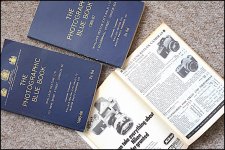
If you want to see how camera prices have dropped in real terms, a copy of the Wallace Heaton Blue Book from the late 1960s, plus the use of the Bank of England Inflation Calculator, can be very informative.

Nikon page Wallace Heaton Blue Book D600 D60_5020.jpg
 
Nikon F3 ?
 
Camera Weekly 23 Aug 1986
Capital Cameras Crawley
F3 body £526.95
F3T body £649.95
 
Staying with 3
  • Olympus OM-3 (produced 1983-1986)?
  • Olympus OM-3Ti (produced 1995-2002)?
 
Same source and dealer
OM3 body £299.95
 
Same source and dealer
OM3 body £299.95
Thanks Stephen.

That looks to be around £865 in today's money (Bank of England site gives £851 and the Inflationtool.com site gives £877).
 
The Bank of England seems to have an institutional bias to play down the true level of inflation. So, although I know its values from the 60s are too low, I thought I'd compare apples with apples, and get the 1986 price for FP4 to compare with the current price. In 1986, a 36 exp cassette cost £1.70; the current price at Speedgraphic is £7.95, a factor of 4.67 increase. That would put the Minolta 9000 at £1774.
 
The Bank of England seems to have an institutional bias to play down the true level of inflation. So, although I know its values from the 60s are too low, I thought I'd compare apples with apples, and get the 1986 price for FP4 to compare with the current price. In 1986, a 36 exp cassette cost £1.70; the current price at Speedgraphic is £7.95, a factor of 4.67 increase. That would put the Minolta 9000 at £1774.
I’m not sure you can judge inflation by reference to any one item (though I think comparing prices of film o cameras is interesting).

I bought that Nikkormat Ftn in the catalogue above around 1966/7 and the BoE says my £168 would be £2500+ today. OTOH the 3-bed flat I bought in S London around the same time for £6,250 the BoE says would be £95,000 today whereas it’s currently being offered for £300,000 (not by me I moved ages ago). Depressing thought for anyone currently in the housing market.

It’s also depressing if you care to compare the inflation from those days in UK with the much lower figure in USA :( .
 
The Bank of England seems to have an institutional bias to play down the true level of inflation.
Inflation isn't linear.

Food may inflate at one rate, energy costs (gas, oil, coal, etc.) at another and manufactured goods at yet another. Indeed, even within one sector there will be several different inflation rates. Wheat may increase by X% but rice increases by Y% over the same period. Some products will deflate over a given period, oil is particularly volatile.

All inflation figures are simplifications of a really complex underlying process and should be taken as indicative only. Does anyone think there's a genuine relationship between a brass and chrome camera from the 1960s and a plastic bodied, entirely digital camera today?
 
Does anyone think there's a genuine relationship between a brass and chrome camera from the 1960s and a plastic bodied, entirely digital camera today?
There is in terms of buying power I would say such as how much of my weekly wage would these cameras cost which i think is a better indicator of what things cost
 
There is in terms of buying power I would say such as how much of my weekly wage would these cameras cost which i think is a better indicator of what things cost
Agreed.

At the personal level, as you say, we can evaluate the difference in buying power.
 
Similar in that I compare todays prices with my state pension and sometimes think cor o_O that's half (or twice etc) my weekly pension.

When spending I tend to think about what things cost in terms of the minimum or living wage values - so a tank of petrol - how many hours - or a SD card or camera battery - how many hours.
 
Or, in my case, remembering that when I first started working, Computer Weekly advised against buying a pocket calculator until the price dropped below what was my then monthly salary before deductions. Or, putting it another way, the price of an annual season ticket (second class) from Brighton to London.
 
Well I have the blue books 1961/1962, 1962/1963, 1963/1964,1965/1966, 1966/1967..h'mm they started off at 2shillings and went up to 2s 6d well you could have had a slap up meal for 6d o_O ;)
 
Last edited:
... well you could have had a slap up meal for 6d o_O ;)
In 1968, a good helping of Spaghetti Bolognese at the Italian restaurant in Belsize Lane cost 1s 9d. I more or less lived on that at one point! :naughty:
 
Back
Top