

Well i got my 400D - i'm so upset !!!!

Well, if i'm shooting landscape I use manual focus in Av mode. Set aperture to F22, set the focus ring to infinity and shoot away making sure your shutter speed is high enough if you are hand holding. Always works for me.
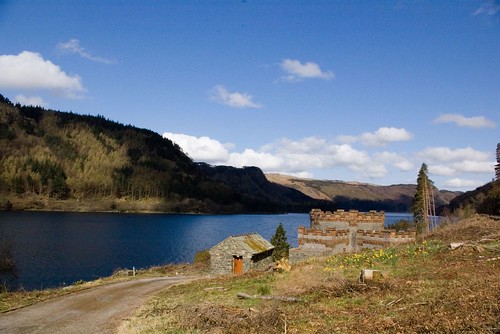
2422832709_fcb844cef2.jpg

Always f/22...crazy :bonk::bonk:
 
4 - and most importantly - NEVER use the default picture viewer that comes with the PC - it makes all images look AWFUL !!!!

hehe, yeah on my monitor windows picture viewer really makes them look quite nasty.

I use faststone picture viewer, and I use the reszier as well :)
http://www.faststone.org/

for the faststone viewer, press F12 (settings) and select the "smooth" tickbox and also select the "lanczos3" filter

now they look great :D
 
Well, if i'm shooting landscape I use manual focus in Av mode. Set aperture to F22, set the focus ring to infinity and shoot away making sure your shutter speed is high enough if you are hand holding. Always works for me.

Not necessarily the best advice if you want the sharpest photos possible. Once you go over a certain aperture you will start to loose sharpness due to diffraction, the aperture depends on the size of the pixel in the sensor, in general on a 10MP APS-C size sensor as in 400D this limit is f11, anything above this and you will start to loose sharpness.
 
The dioptre setting only affects what you see in the viewfinder so will only affect the picture if you are using manual focus.

As for stopping down 1/3, everywhere I read the lit lens under-exposes by about 1/3 so I have EV set to +1/3 - and the pics still come out dark!!

The diopter setting........Exactly Sometime like to have a little control.

Mine over exposes, images too light .'. stopping down 1/3 works for me.

I must admit I was expecting more in the way of quality images from Canon!

Paul
 
It's not landscape but I am finally getting a hold of how this camera works...and here is my best image yet....:-)...still a lot to learn! I used 4 second exposure, iso 100 and f/5.6...excuse the watermark its from my redbubble profile!!

1476648-1-water-fall.jpg
 
Not necessarily the best advice if you want the sharpest photos possible. Once you go over a certain aperture you will start to loose sharpness due to diffraction, the aperture depends on the size of the pixel in the sensor, in general on a 10MP APS-C size sensor as in 400D this limit is f11, anything above this and you will start to loose sharpness.

Is that limit of f/11 global, i.e. does it apply to any camera with an APS-C sized sensor, any focal length, etc.? or is it specific to the 400D and/or the 17-55mm kit lens?

Mine over exposes, images too light .'. stopping down 1/3 works for me.

:bang: :bang: that's the first time I've read of a 400D over-exposing :thinking:

I must admit I was expecting more in the way of quality images from Canon!

So was I, but it does seem to be down to the kit lens - I'm sure if I could afford a nice piece of L glass the quality would improve dramatically .... and if I ever become a half decent photographer it would improve even more ;)
 
I must admit I was expecting more in the way of quality images from Canon!
I think I once heard a saying somewhere about workmen and tools.

The camera doesn't make quality images. The photographer does, by knowing how to use the camera to best effect.

The camera doesn't over-expose or under-expose. How can it, when it doesn't know what it's pointed at? The photographer is responsible for exposure, by knowing how to use the camera to best effect.
 
i replaced mine with the Sigma 17-70mm lens.
Its not the fastest, but it is quite sharp through the zoom range.
 
I always found that the Canon kit lens was a bunch of poo.
But there are some good copies, if you're lucky enough to get one.

I also found that the 400D shots pretty much always needed some kind of PP.
One of the main reasons I sold mine.
I took a gamble on getting a Sony alpha, and it paid off. 9 times outta 10, shots right out of the camera are good enough not to have to PP.

(I'm certain I had a duff 400D btw.....!!)
 
I think I once heard a saying somewhere about workmen and tools.

The camera doesn't make quality images. The photographer does, by knowing how to use the camera to best effect.

The camera doesn't over-expose or under-expose. How can it, when it doesn't know what it's pointed at? The photographer is responsible for exposure, by knowing how to use the camera to best effect.


Totally agree, but a small part of it must be down to the quality of the kit lens. It isn't the best and is the kit lens for a reason...

I'd suggest better glass for sure but as Stewart says, it really is the photographer who makes the image, and to do that, a comprehensive understanding of what the camera can do is absolutely necessary. The only way you're gonna do that is by spending time in the field with it and reading books from experts in this field.

Cheers, Mark
 
I think I once heard a saying somewhere about workmen and tools.

The camera doesn't make quality images. The photographer does, by knowing how to use the camera to best effect.

The camera doesn't over-expose or under-expose. How can it, when it doesn't know what it's pointed at? The photographer is responsible for exposure, by knowing how to use the camera to best effect.

Absolutely spot on as I can ably evidence by the amout of crap I managed to produce from a 1Ds MKII. :D I got frustrated by that when I first picked it up but it takes time to learn a camera. Give yourself a month, shoot everything you can in all the different conditions that you can and you will start to really understand it.

I can appreciate that the kit lens is not the same as £1000 of L glass but it should be adequate to get started. And if you really can't put up with it, buy a nifty fifty. It's cheap but it's got f1.8 and is better glass for £60. I got mine for £20 off ebay and spent two weeks shooting with nothing but 50mm. It's a good lesson.
 
Always f/22...crazy :bonk::bonk:

No not always, does seem to work quite well for me though. Perhaps you could be a little more constructive in why its crazy?
 
No not always, does seem to work quite well for me though. Perhaps you could be a little more constructive in why its crazy?

On a camera with a crop sensor, and especially a high pixel density, f/22 will give you diffraction, which will soften the image throughout all focal points. You may get a greater depth of field but nothing will be truly sharp. I shot a few series of images with my 100-400 (L) lens and the softening is evident at f/16, worse at f/22 and appauling at f/32.

Album here - http://picasaweb.google.com/EezyTiger/POTNDiffractionTestWithFStop?authkey=zi1h_3k1k0s

These two were shot at f/8....

Focal length = 10mm
20071128_160025_0373_LR.jpg


Focal length = 17mm
20071202_153459_0616_LR.jpg


and this was shot at f/5.6 and 55mm. Perhaps f/8 would have been a better choice, or even f/11 at a pinch, but why use f/22 and soften the whole image? f/5.6 certainly didn't do a bad job and this is not even a wide angle shot.
20070715_143243_LR.jpg
 
On a camera with a crop sensor, and especially a high pixel density,
f/22 will give you diffraction, which will soften the image throughout all focal points. You may get a greater depth of field but nothing will be truly sharp. I shot a few series of images with my 100-400 (L) lens and the softening is evident at f/16, worse at f/22 and appauling at f/32.

Album here - http://picasaweb.google.com/EezyTiger/POTNDiffractionTestWithFStop?authkey=zi1h_3k1k0s

Thanks very much, that was really useful. I picked up the technique I mentioned from a book i read, maybe I shouldn't trust everything i read eh? :)

I don't do many scenic shots but will certainly take on board your advice, thanks. I don't mind being told I am wrong but a reason why is always nice, thanks for taking the time to explain.
 
Thanks for starting this thread Eseffpe. I've had my 400D about 2mths now and always have to do some PP on the images.

I'm not the quickest of learners but thought I had at least a basic grasp of photography. The majority of replies here have been very helpful.

Thanks to all.

Di
 
I think to get the best of this lens in particular, which isn't the best, you'd need to use it at anywhere between f8-11 (the sweetspot of most lenses). The results still won't be great, but anything narrower than f11 like f22, 32 etc will rapidly show the lens for what it is.

It's a good starter lens though but I'd definately recommending upgrading asap.

Sorry if I wasn't much help in my previous post...
 
FWIW here is an analysis of the apertures I use over almost 2,800 shots taken with my DSLRs...

MWSnap%202008-08-04%2C%2010_56_57.jpg


As you can see, I rarely go beyond f/8. It's a fair bet that most of the shots beyond f/8 were probably because I let the camera do the thinking for me. I find f/8 to be ample for landscapes and will perhaps go to f/16 for close up work like product photography. f/22 would be an absolute exception, if I had to try to slow down the shutter, say for creamy water(fall) effects. The massive peak at f/5.6 is because that is the wide open limit for my 17-85 (used as my only lens for a year) and my 100-400, which is my most used lens.

EDIT : By the way, the further you stop down the lens the more likely you are to see dust bunnies on your sensor. Try pointing the camera at a clear blue sky or sheet of white paper and take a shot. Try one at, say f/5.6 and another at f/22 or f/32. Do you see any blotches or marks at f/32? If so, you have a dirty sensor, but if those marks don't show up at, say f/11 or f16 then you needn't worry too much. Personally, if I see any crap then I clean it. Cloning out marks in a sky, for example, or something more complex in texture really is no fun.
 
I think to get the best of this lens in particular, which isn't the best, you'd need to use it at anywhere between f8-11 (the sweetspot of most lenses). The results still won't be great, but anything narrower than f11 like f22, 32 etc will rapidly show the lens for what it is.
The problems at f/22, f/32 are typically nothing whatsoever to do with lens quality but are simply a matter of physics. Diffraction occurs when light passes through a small hole. The smaller the hole (aperture) the more pronounced the effect. Diffraction causes the light to be focused less precisely. On a camera body with a small sensor and lots of megapixels that diffraction softening spreads over more than one pixel and the effect shows up more.

You'll find that point and shoot cameras, with their miniscule sensors and absurd quantities of megapixels probably offer an aperture range of something like f/2.8 to no more than f/11. There is no point at all in having f/16 or f/22 or f/32 on such cameras as the image would be mush. My ageing 7.2MP Sony digicam goes from f/2.8 (at the wide end and wide open) to f/10 (at the telephoto end and stopped right down).

In contrast, large format cameras will have lenses that can go to f/90, because the huge sensor/film can handle the diffraction effects better as there will be less image magnification required to get from the captured image to the final print and thus the softness will be less magnified.
 
The MTF (Resolution/sharpness if you like) figures for the 18-55 kit lens can be found here....

http://www.photozone.de/canon-eos/180-canon-ef-s-18-55mm-f35-56-ii-test-report--review?start=1

At the 18mm wide end it looks like f/11 will give the best overall sharpness across the image frame, while f/8 will actually give the best centre sharpness. So for a landscape f/11 may well be the best choice for various reasons.

At 35mm, the sweet spot all round seems to be at f/8, just, but there is little to choose between f/8 and anything else between f/4.5 and f/11, so pick the aperture that is "right" for the subject/scene rather than striving for maximum sharpness, unless you want to..

At 55mm, f/11 just takes the lead, but there isn't enough in it between f/5.6, f/8 or f/11 to use the "wrong" aperture in pursuit of maximum sharpness.
 
Surely another consideration is that f/22, particularly on landscapes, is going to show up every bit of dust on the sensor.

Unless you've just cleaned the sensor, I'd stick to larger apertures.

A.
 
I think I once heard a saying somewhere about workmen and tools.

Very true, but personally, I'm not blaming the camera and I'm well aware that the weakest part of any camera is the fool looking through the viewfinder, which is why i'm here on TP trying to learn and become a better photographer :thumbs:

That said, I am disappointed with my 400D in as much as I would have expected that pointing and shooting in Auto mode would have produced noticeably better pictures than I got with my A70 compact but this doesn't seem to be the case - maybe I was expecting too much? - but at the same time appreciating that getting the absolute best out of it requires me to become more skilled.

The camera doesn't over-expose or under-expose. How can it, when it doesn't know what it's pointed at? The photographer is responsible for exposure, by knowing how to use the camera to best effect.

I understand what you are saying, but nearly every review - and comments on various websites - I read when I was researching which dSLR to buy - and I did an awful lot of reading - said the same, that the 400D tended to under-expose. What I suppose would have been more accurate would have been to say that it under-exposed relative to the other cameras on test?

Of course, there is also an element of subjectivity in these things; I see it here on TP when people post pictures for C+C; someone will say that a shot is a tad over-/under-exposed but someone else will say it's fine.
 
I read a comment somewhere recently and in my advancing dotage, I can't remember where!

The gist of it was that as the camera in your hand became more professional you needed to become more skilled to get the best out of it.

I suppose when you look at the Canon range that may have an element of truth in it. The 1Ds has no automatic or P modes on it. The most you get is Av or Tv. Everything needs to be set manually with the exception of white balance which has AWB. No sports mode, no portrait mode.........

The thing to remember about P mode is that it averages just about everything, so why expect anything other than an average pic? :shrug:

Your compact would have been sharpening and saturating colours all over the place and that's what your eye has now developed as being "good" or "right" Now you are working with a dslr that expects you to call the shots. :rules:
 
The thing to remember about P mode is that it averages just about everything, so why expect anything other than an average pic? :shrug:

Your compact would have been sharpening and saturating colours all over the place and that's what your eye has now developed as being "good" or "right" Now you are working with a dslr that expects you to call the shots. :rules:

Ah, I hadn't thought about it like that :bonk:

I've just looked at the preset Picture Styles and the Standard (default) is set to

Sharpness: 3 (max 7); Contrast, Saturation, and Tone are all set to 0 (mid-point, goes from -4 to +4)

Faithful and Neutral has everything set to 0, Landscape has Saturation set to 4, and Portrait has Saturation set to 2.

I'll have to try taking the same shot in each of the Styles and see for myself what the difference is.

There is a mountain of useful information in this thread, thanks to everyone who is contributing. You might make a photographer out of me yet :lol:
 
If you shoot in raw and use DPP (or Raw Image Task within Zoombrowser) to process your file(s) you can play around with picture styles and the other settings after taking the shot and output the resulting image to jpeg with no loss of quality, exactly as though you had shot it that way in the first place. It will be an easier way to compare the effects of each setting, as you'll be working with an identical file with identical composition/focus/lighting etc.. You can even download and apply additional picture styles from Canon's website.

Some info on picture styles here - http://www.canon.co.jp/imaging/picturestyle/index.html.

Info on using DPP here - http://www.usa.canon.com/dlc/controller?act=GetArticleAct&articleID=1228&fromTips=1.
 
Thanks for all the coments and information in this thread. For one such as myself, who's a total novice where SLRs are concerned, this has been invaluable for me when choosing my next upgrade :)
 
I have a 350d and the kit lens is just poor in my opinion. Or at the very least I got a bum one (rumour has it that Canon have issues with their quality control standards).

I tried everything, including using the kit lens from my old 35mm EOS 300; only marginally better. In the end, the only solution I could find was to sharpen them to buggery in photoshop, which isn't really a solution at all considering the loss of quality in doing so.

Just last week I got the Canon 50mm MkII prime lens and besides the distinct lack of focal flexibility, the kit lens will only be going back on in rare occasions.
 
Back
Top