
Washing machine plug - fuse holder melted?

Marcel

Kim Jong Bod
Admin
Messages
29,411
Name
Marcel
Edit My Images
Yes
Washer died midcycle today. Power went. Didn't trip any circuits. Just the machine died.
First port of call, inline fuse in the moulded plug. Aha!

Found this
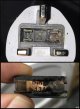
IMG_7167.jpg


Now, I can cut the plug off, replace with a fresh one with a nice shiny new 13A plug.
Before I do that, I want to figure out why this has happened, because it shouldn't have!

It's plugged into a below counter double socket, but it has a fused switch above-counter to isolate the socket.
It used to be a single socket, but it was replaced with a double to accommodate the tumble dryer too but they are never used together. (Doing so used to blow the fused switch). Electrician replaced the fused switch and told us not to use them both together. As far as I know they haven't been.

The double socket still looks fine, and operates fine.

Rather than there being a fault with the socket itself, or the washing mashine plug..... could it be that both sockets were used by one of the kids at some point, leading to overheating within the plug socket and the heat travelling through the pins?
 
Not sure that children are qualified to use washing machine or tumble dryers on their own ... let alone both together! ;)
 
I wonder if the fuse holder & fuse were a loose fit in the plug, causing arcing over a period of time?
 
Not sure that children are qualified to use washing machine or tumble dryers on their own ... let alone both together! ;)

All children are qualified. Some just actively refuse this qualification until it's forced upon them by circumstance or defiant parents!
(They're 16 and 21 ;)

I wonder if the fuse holder & fuse were a loose fit in the plug, causing arcing over a period of time?

Possibly. It's a 7 year old washing machine. I'm wondering if there has been excess moisture at some time and caused the corrosion in the fuse contacts, this would certainly increase the resistance at that point and generate heat.
Could have happened at any point over the past 7 years though!

My query now, is would it be OK to assume this is a fuse/plug problem, and replace the moulded plug with a new fused plug.
 
Think @broc has a plausible explanation there...

Only times I've seen that sort of blackening : arcing due to loose contact; corrosion due to moisture ingress followed by arcing over around the corroded part.

Chop it off, new decent quality rubberised plug. (Wired correctly obvs)
 
Last edited:
Looks like corrosion in there to me (the green areas on the contacts) and there's been some arcing/heating leading up to the failure - I can see a waterstain leading from the cooked area of the fuse down and to the left of the pin below. There's also light staining in the indented section that says 13A/250V.

OTOH I can see that there's not been any serious heating of the plug pins because the plastic of the plug where they enter is not deformed.

My diagnosis is that this been wet, and that has caused the failure.
 
I would be more concerned that the electrician left your wiring in a risky condition :(
 
Think @broc has a plausible explanation there...

Only times I've seen that sort of blackening : arcing due to loose contact; corrosion due to moisture ingress followed by arcing over around the corroded part.

Chop it off, new decent quality rubberised plug. (Wired correctly obvs)
Thanks, that's my plan tomorrow.

Looks like corrosion in there to me (the green areas on the contacts) and there's been some arcing/heating leading up to the failure - I can see a waterstain leading from the cooked area of the fuse down and to the left of the pin below. There's also light staining in the indented section that says 13A/250V.

OTOH I can see that there's not been any serious heating of the plug pins because the plastic of the plug where they enter is not deformed.

My diagnosis is that this been wet, and that has caused the failure.
That's the current line of thinking now, thanks :)

I would be more concerned that the electrician left your wiring in a risky condition :(

I can see how it looks like that. He's a good guy, and I really do trust him. It's a friend's dad (Fully qualified, it's his full time job)
He didn't do the original plug swap, we called him in afterwards when the fused switch kept blowing.
Actually IIRC it wasn't just the fuse blowing, the whole switch was going.

If my memory does serve me correctly (it does so less and less these days!), I think that the socket is a fused spur, hence when he said it shouldn't have been changed to a double. It was our choice to leave it as it is, but on the proviso that we're not going to use both at the same time. (Convenience because it's behind the washer and dryer so not easy to keep swapping over if it was a single).


Thanks again for all your replies. It confirms what me and a friend have been thinking (He mentioned about the water marks too), and if I think back there was an issue with a damp patch on the wall a few years ago.
 
If dampness around the socket is an issue, could you replace it with one of those IP66-rated outdoor ones?
 
Washing machines & tumble dryers generate quite a lot of humid warm air, if this is escaping round the back of the appliances and the wall surface is very cold you may get condensation which could form on the wall, socket & plug? Just a thought.....
 
More likely the fuse did its job, but was slow to blow so got excessively hot. There is probably a short in the washing machine somewhere.
 
It's not uncommon for 'arcing and sparking' like that to cause the fuse to overheat its holder.

If there was a 'short', then a replacement fuse would blow again straight away. A fuse can't just be 'slow to blow' it will always blow if the current limit is exceeded. There have been known exceptions in the past with some early anti-surge fuse designs, but these have never been used in mains leads.

The purpose of a fuse in a mains lead (for those that don't know) is to stop the cable from melting or catching fire.
 
It's not uncommon for 'arcing and sparking' like that to cause the fuse to overheat its holder.

If there was a 'short', then a replacement fuse would blow again straight away. A fuse can't just be 'slow to blow' it will always blow if the current limit is exceeded. There have been known exceptions in the past with some early anti-surge fuse designs, but these have never been used in mains leads.

The purpose of a fuse in a mains lead (for those that don't know) is to stop the cable from melting or catching fire.
Yup. The fuse in the spur would’ve blown too if there was a short in the appliance and it’s own fuse didn’t blow first. Also it would’ve tripped the mcb or rcd back at the box. That’s just localised overheating in the appliance plug.
 
  • Like
Reactions: Sky
It is likely a loose connection somewhere in the circuit. It will probably be one of:

1) The fuse and it’s holder.
2) inside the formed plug where the live cable joins the fuse holder.
3) an aged loose spring inside the socket(there are springs that hold the plug pin tight to avoid arching.

The loose connection then vibrates under the 50hz of your supply, that causes heat and causes this burn out. I have seen similar a few times on kilns plugged into older sockets, but normally where the live pin meets the socket.

Given that it is on the far side of the fuse from the live pin, I would suspect it is 1 or 2 and replacing the plug should be enough.
 
Another point to check is what is the state of the Plug Top pins if they are badly burnt then a change of Socket is called for.
 
Thanks every one. The socket looked completely fine, as did the plug for the dryer.
I replaced the plug with a new, heavy duty one and everything is back to working as it should.

It's only now I realised how old the washing machine is ..... 7 years! Here's me thinking it was 2 years old, tops!
 
Thanks every one. The socket looked completely fine, as did the plug for the dryer.
I replaced the plug with a new, heavy duty one and everything is back to working as it should.

It's only now I realised how old the washing machine is ..... 7 years! Here's me thinking it was 2 years old, tops!
It is lasting better than our last two washing machines did, the first (with a 5 year warranty) was replaced at 3 years under warranty as the drum bearings failed; the second was replaced at 3 years( by us as warranty expired) because guess what... the drum bearings failed:mad:
 
It is lasting better than our last two washing machines did, the first (with a 5 year warranty) was replaced at 3 years under warranty as the drum bearings failed; the second was replaced at 3 years( by us as warranty expired) because guess what... the drum bearings failed:mad:
You need to stop washing all those loads of house bricks. ;)
 
We usually buy Meile now - last one lasted 12-14 years (can't quite remember) and we're on number 2, having replaced them every 3-5 years previously.
 
It is lasting better than our last two washing machines did, the first (with a 5 year warranty) was replaced at 3 years under warranty as the drum bearings failed; the second was replaced at 3 years( by us as warranty expired) because guess what... the drum bearings failed:mad:
That is normally down to spinning too heavy a load or having not having the machine on a solid surface so that it vibrates too much. The excess load can be due to having a blocked outlet pipe so that the water does not drain away quickly during the slow spin and you end up with heavy waterlogged stuff on the fast spin.
 
That is normally down to spinning too heavy a load or having not having the machine on a solid surface so that it vibrates too much. The excess load can be due to having a blocked outlet pipe so that the water does not drain away quickly during the slow spin and you end up with heavy waterlogged stuff on the fast spin.
The machines were both levelled & sitting on solid concrete floors covered in laminate, so I can rule that out. The outlet pipe should be ok as it is plumbed into the utility room sink waste & that drains freely. As for excessive loads, I would have to defer to the laundry maid (aka Mrs Broc) as she 'drives' the washing machine. She does have 40 years experience of using automatic washers though, having graduated from twin tubs when we were first married.

Interesting to note however the manufacturer of the failing machines (Panasonic) no longer appear to sell washing machines in the UK........
 
Back
Top