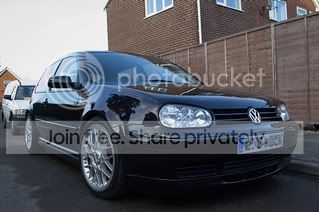
washed out skys/whites

evilian

Suspended / Banned
Messages
40
Edit My Images
Yes
hi all.
im just getting into this togging abd loving it at the mo.

seem to be strugling with my skys ***.
this is a bit of a snap shot i took earlier.
notice how the sky and the white in the van seem washed out.
is it just a case of sutter speed to low and letting to much light in?
or should i be looking at other things
sorry for the noob Q but you were like me at one point :thumbs:
thanks in advance
ian

IMG_0183.jpg
 
Firstly welcome to the forum....As most of my shots include lots of sky can I ask what camera/lens and settings you are using

Pete
 
hi pete
im using a 400D with the 18-55 kit lens.
was at F4 and 1/50s.
sorry the pic is pretty bad looking at it again but its good for the point im trying to get across.
just my skys and whites seem pretty washed out
thanlks
ian
 
what metering were you using?

You have a predominantly dark object in the photo so the camera is probably trying to expose this correctly and in doing so is blowing your highlights
 
yes good shout, never thought of that.
was done with evaluative metering.
400D had partial and centre weighted adverage.
would one of these maybe been a better choice?
thanks
ian
 
Best option there would be to meter off the grey tarmac road to the left of the car, then using the exposure it indicates pointing there use manual.
Would give a better overall exposure as camera meters will always struggle with dark against light.
 
The sky is not blown and there is quite a bit of safety margin before it would be blown. It just looks like it was a miserable grey day. There are a few clipped pixels on the white downpipe on the house, the window ledge and some speckles in the headlights. All things considered I'd say this is a very well exposed photograph. You just have a grim day to deal with, with a flat, grey, featureless sky. Here's your histogram - barely anything blown, certainly not the sky or the van....

MWSnap%202009-03-06%2C%2018_13_13.jpg


Of course, on a day such as this, the whole sky is your light source - it's one giant softbox, diffusing the sun. Ordinarily you would not take a photograph which included your lighting within the composition. The best thing would be to attempt a composition that excludes the sky completely, or minimises its significance in the photo. If you do blow the sky it's not like there would have been much there to see in any case.

EDIT : Things could "look" washed out if your monitor is not very good, or is not calibrated properly. My main laptop is calibrated and your iage looks fine to me and the supporting histogram confirms it. However, I do have another laptop that completely crushes the highlights, making things look blown when actually they are not. I've just come to accept that I can't judge the image based on what I see on that screen.
 
what metering were you using?

You have a predominantly dark object in the photo so the camera is probably trying to expose this correctly and in doing so is blowing your highlights

Spot on.

Only resolution I can see without trying out HDR which I personally do not like on cars it go for a filter set. Neutral Density Grad filter to darken up the sky and save it blowing out.
 
thanks Tdodd
what is ment when you say clipped pixles?
ian

In a JPEG file each pixel is made up of three sub-pixels - one red, one green and one blue. The values of each sub-pixel can range from 0 to 255. If the RGB values for one pixel were 0,0,0 you would have pure black. If the RGB values were 255,255,255 you would have pure white.

Clipping is when one or more of the sub-pixels has a value of 255. Basically, because 255 is the maximum value you don't know whether 255 is the correct value or if it should have been 256 or 270 or 290 or anything else brighter than 255. If the sky was blown/clipped/overexposed then the pixels would be an expanse of featureless pure white with all the pixel values at 255,255,255. By examining the sub-pixels in Lightroom (which uses a percentage scale, with 100% representing 255) it is clear that the pixels in the sky are only at around 92% of maximum brightness, with some small variances as you move around the sky, so quite some way off being overexposed/clipped/blown and still containing detail.

Here is the picture complete with histogram and the clipping indicators turned on (red for clipped highlights, blue for clipped shadows). As you will note, hardly any pixels are clipped at either end of the scale. If they sky or the van was blown out (clipped) then they would be bathed in a sea of red. They are not. If you look underneath the histogram you will see three numbers showing the RGB values for the pixel beneath the mouse cursor. Unfortunately the cursor is not showing up but it was positioned on the sky. Note that the RGB values are each 91.9% - nowhere near 100% - nowhere near clipping.

You can just make out a few red blobs on the guttering downpipe, the window frame and the headlamps. These are clipped highlights, and so small in number and so insignificant with respect to the subject that they really do not matter on jot. There are some clipped shadows but only a handful of pixels are affected and it is almost impossible to spot the blue indicators which would show shadow clipping.

As I said before, it is a good exposure. It's just a grungy day.

Car.jpg
 
If we now lower the exposure and apply some highlight recovery we see that the sky does indeed contain some detail, further indicating that it was not blown out when the picture was taken...

MWSnap%202009-03-06%2C%2022_23_42.jpg


Results would probably be better with the original file, possibly much better if it was shot in raw.
 
The sky is not blown and there is quite a bit of safety margin before it would be blown. It just looks like it was a miserable grey day.

Have to agree with this... sometimes the light - and especially in this country - can be so flat it's not even worth going out with your camera. Consider the light of the day and how the sky looks ... we all know a grey day ... just something to think about, especially if you want sky with at least some definition.

:)
 
I personally use an ND grad when I'm shooting with the sky in the frame. Even an overcast day can still have some wonderful detail in the sky, and using an ND grad to stop down just the sky can pull the detail out.
 
tahnsk alot all

and thanks tdodd for that. very wel explained, i now understand it a whole lot more:thumbs:
i have the original raw file so i might try what you said to see if it help bring some sky detail back
ian
 
Back
Top