Understanding the difference between aperture and f/stop at different focal lengths

Tom Pinchenzo

Suspended / Banned
Messages
1,025
Name
Tom
Edit My Images
Yes
So I’ve been thinking about the effect of focal length on f/stop. I understand that aperture refers to the size of the hole and f/stop is a measure of light getting through, which is why we use f/stop - f/4 f/2.8 etc for exposure because amount of light is the important thing. So presumable f/4 at 85mm is a bigger hole than f/4 at 24mm. Also, presumable this is why we have variable aperture lenses - when you zoom from say, 28mm to 80mm maximum aperture goes from 3.5 to 5.6 but the hole stays the same size?

But how does this work with the old lenses with an aperture ring on the lens? They’re not variable aperture - you set the aperture to say, f/4 and zoom away and presumable the actual aperture size doesn’t change nor does the f/stop on the lens. How does this work??

Lockdown is leaving me with too much time to think about silly things like this... maybe I need second hobby...
 
Have a look through one of your zoom lenses as you change the focal length and watch the aperture change.
 
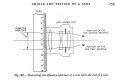
I have a 1970s lens - a Tefnon by Kobori - before as I type. it is a 35 - 200 mm zoom At 35 mm, the maximum aperture is ƒ/3.8 but if I zoom to 200 mm, the maximum aperture is ƒ/4.8. The physical aperture is not changing but the relative aperture (the ƒ/stop) is. When you set the aperture on the lens barrel, the physical aperture is set. The thing is, it is not physical aperture changing that causes the ƒ/stop to change. The ƒ/stop is defined as the entrance pupil divided by the focal length. The entrance pupil is not the same as the physical aperture - here is a diagram to show the difference:

aperturejpg.jpg
The physical aperture is inside the lens where the thick black lines are - the entrance pupil (called the effective aperture in this diagram) is outside the lens at the front. As you zoom the lens, the physical aperture as set by the aperture ring does not change, but the entrance pupil/effective aperture does. It is this change that alters the ƒ/stop as you zoom.

Diagram courtesy of the Ilford manual of Photography, 5th edition, 1958
 
Last edited:
I have a 1970s lens - a Tefnon by Kobori - before as I type. it is a 35 - 200 mm zoom At 35 mm, the maximum aperture is ƒ/3.8 but if I zoom to 200 mm, the maximum aperture is ƒ/4.8. The physical aperture is not changing but the relative aperture (the ƒ/stop) is. When you set the aperture on the lens barrel, the physical aperture is set. The thing is, it is not physical aperture changing that causes the ƒ/stop to change. The ƒ/stop is defined as the entrance pupil divided by the focal length. The entrance pupil is not the same as the physical aperture - here is a diagram to show the difference:

View attachment 277514
The physical aperture is inside the lens where the thick black lines are - the entrance pupil (called the effective aperture in this diagram) is outside the lens at the front. As you zoom the lens, the physical aperture as set by the aperture ring does not change, but the entrance pupil/effective aperture does. It is this change that alters the ƒ/stop as you zoom.

Diagram courtesy of the Ilford manual of Photography, 5th edition, 1958

This is what I don’t understand - if you’re at 35mm f/3.8 and you zoom to 200mm the aperture ring doesn’t automatically click up to 4.8 - or does it? It would make more sense for the actual aperture size to change like Suvv suggested. I don’t think I’ve ever used a lens with manual aperture ring and variable max aperture.
 
This is what I don’t understand - if you’re at 35mm f/3.8 and you zoom to 200mm the aperture ring doesn’t automatically click up to 4.8 - or does it? It would make more sense for the actual aperture size to change like Suvv suggested. I don’t think I’ve ever used a lens with manual aperture ring and variable max aperture.
No, the aperture ring does not change. The actual, physical aperture does not change. But the diameter of the light entering the lens does. Study the diagram in my post above carefully - it shows the difference between the physical aperture inside the lens and the effective aperture in front of the lens. It is this effective aperture in front of the lens that gets bigger as you zoom.

What Suvv is suggesting is that you look at the effective aperture by looking into the front of the lens - you can clearly see this moving with most lenses as you zoom.
 
Last edited:
I have a 1970s lens - a Tefnon by Kobori - before as I type. it is a 35 - 200 mm zoom At 35 mm, the maximum aperture is ƒ/3.8 but if I zoom to 200 mm, the maximum aperture is ƒ/4.8. The physical aperture is not changing but the relative aperture (the ƒ/stop) is. When you set the aperture on the lens barrel, the physical aperture is set. The thing is, it is not physical aperture changing that causes the ƒ/stop to change. The ƒ/stop is defined as the entrance pupil divided by the focal length. The entrance pupil is not the same as the physical aperture - here is a diagram to show the difference:

View attachment 277514
The physical aperture is inside the lens where the thick black lines are - the entrance pupil (called the effective aperture in this diagram) is outside the lens at the front. As you zoom the lens, the physical aperture as set by the aperture ring does not change, but the entrance pupil/effective aperture does. It is this change that alters the ƒ/stop as you zoom.

Diagram courtesy of the Ilford manual of Photography, 5th edition, 1958
This.
F is the focal length of the lens, let's call it 100 mm as an example, so F100
f/ isn't a fixed unit of measurement, it's just F divided by the effective aperture, which is the actual hole that lets the light through.
So, with our example 100mm lens, if the f number is 11 (f/11) then the effective aperture is 9mm, and if we set the camera to f/9 then the effective aperture is 11mm.
Now, if we change to say a 50mm lens, if the f number is 11 (f/11) then the effective aperture is 4.5mm and if we set the camera to f/4.5 then the effective aperture is f/11.

Going off at a bit of a tangent, it's important to understand this because depth of field (DOF) isn't affected by either F or f/, contrary to what a lot of people think. It's controlled by the effective aperture.

So, although at any given f/ number the DOF will be much less with a telephoto lens than with a wideangle lens, that happens only because the effective aperture will be very different. If you want to get the same, known DOF with every lens you use, just do a bit of mental arithmetic, set the effective aperture to the same figure on every lens and you'll get exactly the same DOF every time. That may not always be practical, because a 20mm effective aperture on a 400mm lens will be f/20, but a 20mm effective aperture on a 20mm lens will be f/1, which is only available on a tiny number of very expensive lenses.
 
Back
Top