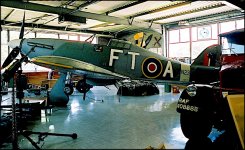
The Spitfire experience

andya700

Suspended / Banned
Messages
6,071
Name
Andy
Edit My Images
No
Living in Kent, I quite often see these aircraft over the house, twin seat Spitfires, which are the backbone of the "Spitfire Experience" based at Biggin Hill. The three aircraft most commonly used are G-AWGB, G-BMSB and G-AIDN. Well yesterday the experience became a bit too real and G-BMSB was forced to do a wheels up landing, after engine failure (which he performed flawlessly) in a field near Lydd. It does make you wonder, when you consider these aircraft were active in WW2. Both the pilot and the passenger were uninjured. Makes you wonder if the pilot had forgotten the advice - "Beware the Hun in the sun"

 
I believe that "Beware the Hun in the sun" refers to the (early) German fighter practice of escorting the bombers from a high rear position, and diving down to attack the British planes, not relevant to this.

I read an excellent book on the Spitfire by Leo McKinstry, and from memory he said that the landing gear was foot-operated, so if that's right I'm not sure that engine failure could cause that problem. But what matters is that nobody was hurt and the plane doesn't seem to be too badly damaged.
 
I believe that "Beware the Hun in the sun" refers to the (early) German fighter practice of escorting the bombers from a high rear position, and diving down to attack the British planes,
The RAF had many advantages over the Luftwaffe, during the Battle of Britain but one major disadvantage.

The Messerschmitt Bf 109 had a fuel injector whereas the Spitfire and Hurricane used carburettors. This meant that the German aircraft could perform negative G maneuvers, which would cause the carburettors of the RAF aircraft to flood, stalling the engines. The astonishingly simple solution was invented by Beatrice Shilling, an engineer working at the Royal Aircraft Establishment. It was a piece of metal with a tiny hole in it, which prevented too much fuel flooding the chamber. This allowed the RAF aircraft to play the same game as the Luftwaffe's star performer and gave the German pilots a very nasty surprise.

As was the way of such things, in those days, the device was given the double entendre nickname of "Miss Shilling's Orifice".

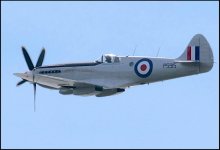
Spitfire at Weston Super Mare Air Show P1010751 2.JPG
 
The RAF had many advantages over the Luftwaffe, during the Battle of Britain but one major disadvantage.

The Messerschmitt Bf 109 had a fuel injector whereas the Spitfire and Hurricane used carburettors. This meant that the German aircraft could perform negative G maneuvers, which would cause the carburettors of the RAF aircraft to flood, stalling the engines. The astonishingly simple solution was invented by Beatrice Shilling, an engineer working at the Royal Aircraft Establishment. It was a piece of metal with a tiny hole in it, which prevented too much fuel flooding the chamber. This allowed the RAF aircraft to play the same game as the Luftwaffe's star performer and gave the German pilots a very nasty surprise.

As was the way of such things, in those days, the device was given the double entendre nickname of "Miss Shilling's Orifice".

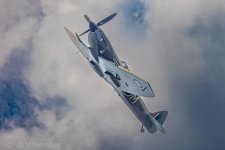
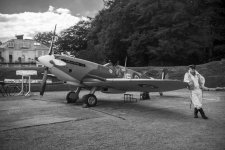
View attachment 452470
Yes, I believe that Beatrice Shilling's Orifice lasted until 1942, when a new carb from Bendix-Stromberg replaced the old carb. My book, BTW, is "Portrait of a Legend"
 
That's a cracking shot:)

This weekend I'll be at the Bronte Village Gathering https://brontegathering.co.uk/ which raises money for our local hospice, one of the clay pigeon shooting clubs that I belong to puts on an event there, where the public can try out clay pigeon shooting.

A Spitfire always flies over the site, always very popular. There's something unique about the sound of that Merlin engine.
 
A Spitfire always flies over the site, always very popular. There's something unique about the sound of that Merlin engine.
Other sources of that sound are also available... ;)

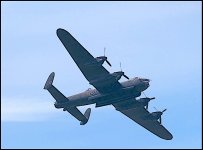
Lancaster at Weston Super Mare Air Show P1010782.JPG
 
Yes, I also have a pic of a Lancaster on my wall, 2 mpg at cruising speed . . .
 
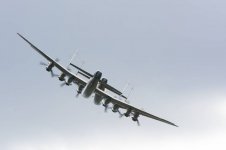
Occasionally there are 8 Merlins together. (I'll have to dig out the full res version)

lancasters.jpg
 
Occasionally there are 8 Merlins together. (I'll have to dig out the full res version)

View attachment 452522


Not very often! We were lucky enough to see them both at the (now defunct) Dawlish Air Show some years back, alongside 2 more V12s in the accompanying fighters.

Didn't catch them as well as the shot above though!
 
I just found this video, about 103 year old ex Luftwaffe ace Hugo Broch getting a flight in the Spitfire and taking the controls. Afterwards, he meets ex RAF pilot 104 year old Colin Bell, who flew Mosquito bombers during WW2. There is such a similarity between the two guys and their cognitive skills are all there, as sharp as a pin. The Spifire which Hugo flew in, is G-AIDN, which went over my house about half an hour ago.

View: https://www.youtube.com/watch?v=Lm9Qx1A3U6s
 
Just like to say, that I was wrong. The Spitfire in that film, is in fact MJ627 - G-BMSB, the one which came down in Kent a few days ago.
 
Not very often! We were lucky enough to see them both at the (now defunct) Dawlish Air Show some years back, alongside 2 more V12s in the accompanying fighters.

Didn't catch them as well as the shot above though!
I think there are only 2 flying Lancasters, the first is in the BBMF, and the second one is in Canada. It came over and did a series of shows, which is how I saw the pair of them. As I understand it, they won't ever fly together again.
 
That's my understanding too. It's possible that another might be restored to airworthiness but I'm not holding my breath and am just glad I got to see the 2 that one time!
 
I wish they could get the Halifax up in Leeds flying again. My Dad flew Halifax's, I'd love to see one in the air...
 
I wish they could get the Halifax up in Leeds flying again. My Dad flew Halifax's, I'd love to see one in the air...
Are you thinking of the one that's in the Yorkshire Air museum?

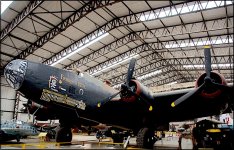
Handley Page Halifax at Yorkshire Air Museum A65 DSC02649.JPG
 
I used to work with a guy who had been a tail gunner in Lancasters, 60 years ago now but I remember our conversations as if they were yesterday.
Tail gunner was the worst role, freezing cold, no room to move at all, couldn't fire the gun with gloves on and lost all feeling in his hands if he had to take them off, parachute had to be left further forward, good luck having time to put it on if anything went wrong.

The main job wasn't as a gunner at all, it was spotting enemy fighters and telling the pilot to "Corkscrew left" or "Corkscrew right", which he would do instantly and dramatically.

The most dangerous part was landing, no lights, no navigational aids, relied entirely on the skill of the pilot and the navigator, and luck. Nobody ever knew for sure that the plane wasn't damaged, they'd find out after they'd landed. They were based in Lincolnshire but occasionally had to land elsewhere because of damage, and the "favourite" was RAF Manston, the nearest to the coast. No concrete runway there, but the grass was more or less OK because it was on chalk.
 
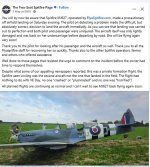
Fakebook post
spit.jpg
 
I used to work with a guy who had been a tail gunner in Lancasters, 60 years ago now but I remember our conversations as if they were yesterday.
Tail gunner was the worst role, freezing cold, no room to move at all, couldn't fire the gun with gloves on and lost all feeling in his hands if he had to take them off, parachute had to be left further forward, good luck having time to put it on if anything went wrong.

The main job wasn't as a gunner at all, it was spotting enemy fighters and telling the pilot to "Corkscrew left" or "Corkscrew right", which he would do instantly and dramatically.

The most dangerous part was landing, no lights, no navigational aids, relied entirely on the skill of the pilot and the navigator, and luck. Nobody ever knew for sure that the plane wasn't damaged, they'd find out after they'd landed. They were based in Lincolnshire but occasionally had to land elsewhere because of damage, and the "favourite" was RAF Manston, the nearest to the coast. No concrete runway there, but the grass was more or less OK because it was on chalk.

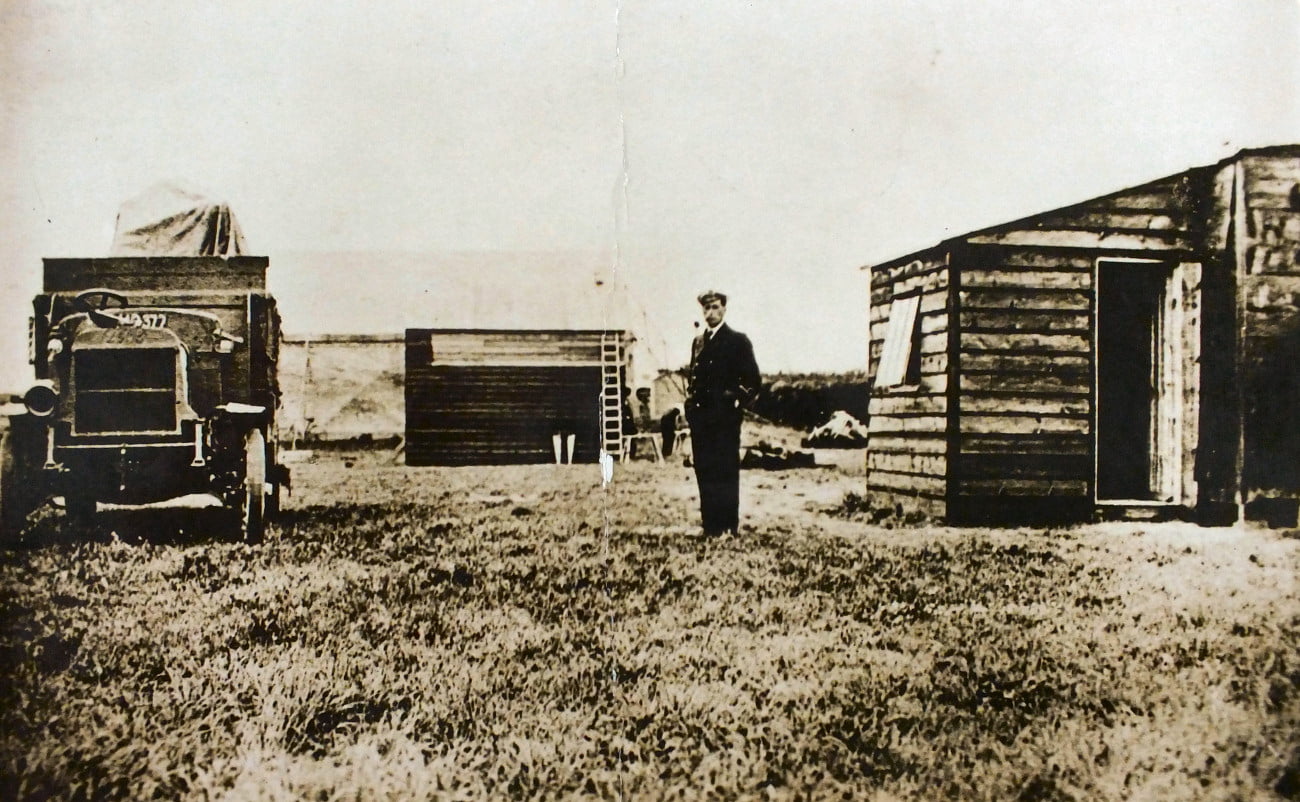
Here is a bit of history of Manston.

 
Here is a bit of history of Manston.

Fascinating, but very incomplete. I happen to know a bit about it because a close relative works there in a senior position, but he or she can't tell me anything that isn't in the public domain because the site has secret classification (but not top secret, which would make life easier for the people who work there). S/he visited me recently, and as always started the conversation by checking that I didn't have Alexa or any other listening devices, just in case s/he happened to mention where they worked (which I already knew).

It's very widely known, for example, that there are extensive underground buildings and a huge number of underground tunnels, dating back to its RAF days, but there are no plans of any of them and the tunnels have a nasty habit of collapsing, so nothing new can be built there.

It's currently owned and used by the Home Office, for short-term processing of people who arrive here by boat.

The quote below refers to my statement that, during the war, it was widely used for emergency landings because there were no other options. Allegedly, in the early days of the war, pilots were warned that if they landed anywhere except at their home base, they were at risk of courts martial, because they would get a few days off, away from the war, because both they and their aircraft would be in the wrong place.

"28th August 1942​

Fifty six emergency landings on the night of 28th August 1942 left devastation that would lead to the approval for the new runway to be built. The Station Commander had already seen the increasing numbers of emergency landings increasing, with damaged aircraft of Bomber Command trying to make it to Manston in every kind on imaginable trouble. At the time, the airfield was comparatively limited for such landings, with many aircraft overshooting, adding to the damage to them, increasing casualties and also damaging the airfield and buildings. The undulating surface made matters worse, although Wing Commander Gleave had already pleaded for the construction of a really large runway with “lead in” lights, so far he had not been successful. The scene of carnage eventually led to the approval of the new runway. https://www.manstonhistory.org.uk/on-this-day-28th-august-1942/"

We can only guess at how dangerous it must have been for those crews, with no lights, no navigational aids, aircraft either out of fuel or damaged, having to land there at night, and on grass. 56 emergency landings in a single night . . .

 
We live near Headcorn Aerodrome in Kent, which used to be RAF Lashenden in WW2. A company called Aerolegends fly a two seater spitfire (Elizabeth) out of there over most of the spring and summer. It goes right over our house… lovely sounding thing. You hear it coming ages before you actually see it. Still never managed to get a decent shot of it so far!
 
Last edited:
... pilots were warned that if they landed anywhere except at their home base, they were at risk of courts martial, because they would get a few days off, away from the war, because both they and their aircraft would be in the wrong place.
A one time colleague, who was an ex-RAF fast jet pilot, told us that his father, who flew Wellingtons through most of the war, claimed that "training flights" were often organised to fly over the expected return paths for missions.

The entire crew, apart from the pilots, would be looking at the terrain below, spotting places where a substantial, twin engined bomber, could make a more or less safe emergency landing. These were marked on maps and once back at base, collated by the navigators and shared around the squadron. It seems that, at one briefing, the commanding officer made a reference to "sundry bits of paper that might aid the enemy, in the event of capture". If any such documents were found to have been "accidentally" carried onto the aircraft, they should be stored in a bag, along with officially secure information. A flare, should be added to the bag, for safe disposal in an emergency, when over enemy territory.

This was apparently taken to be tacit approval of the practice, provided it didn't come to official notice.
 
Last edited:
Did a flight in 2023 in a Spitfire at Duxford - most amazing experience of my life. It was soooo responsive, you felt part of the aircraft. Simply amazing!
 
An actual combat Spit, complete with gun cover patches, which prove that the gun hasn't been fired and so doesn't need reloading:)
 
I don't understand your question. The early spits were fitted with 8x Browning belt-fed machine guns, with enough ammo to fire 3 5-second bursts.
When a spit landed it was vital for the ground crew to know whether the guns had been fired or not, if they had been fired then of course they needed to be reloaded immediately, which was a difficult access job. So, someone had the bright idea of sticking a bit of cloth over each gun opening, this would confirm whether the guns had been fired or not, and also stopped water ingress (or at least until the guns had been fired).

Does that make things clearer?
 
I don't understand your question. The early spits were fitted with 8x Browning belt-fed machine guns, with enough ammo to fire 3 5-second bursts.
When a spit landed it was vital for the ground crew to know whether the guns had been fired or not, if they had been fired then of course they needed to be reloaded immediately, which was a difficult access job. So, someone had the bright idea of sticking a bit of cloth over each gun opening, this would confirm whether the guns had been fired or not, and also stopped water ingress (or at least until the guns had been fired).

Does that make things clearer?

I think he meant the guns being taken out now (save weight)
 
The Spitfire gets all the glory but it seems to me that it was the tough, plodding Hurricane that was the backbone of the RAF in 1940.

During the main battle, from July to October, there were twice as many Hurricanes in the air as Spitfires and German losses reflected this, the plodding, tough Hurricane making its fair share of kills, allbeit more bombers than fighters. My opinion is that the Spitfire was the MGB of the sky but the Hurricane was the all terrain Landrover!

Hurricane in hanger Nikon F CNV00014.jpg
 
Yes, it was a numbers game, the Spitfire was late to the party and nearly didn't get to it at all, and the Hurricanes, which were a solid, dependable aircraft that had plenty of speed when going after bombers, were well-established. As the war progressed, Spitfires were made in ever-increasing numbers and were constantly improved. As a matter of possible interest, Roald Dahl was a Hurricane pilot, and was very nearly killed due to an admin error, sent off on the wrong course to join his squadron.

I met him once, and very interesting he was too.
 
I don't understand your question. The early spits were fitted with 8x Browning belt-fed machine guns, with enough ammo to fire 3 5-second bursts.
When a spit landed it was vital for the ground crew to know whether the guns had been fired or not, if they had been fired then of course they needed to be reloaded immediately, which was a difficult access job. So, someone had the bright idea of sticking a bit of cloth over each gun opening, this would confirm whether the guns had been fired or not, and also stopped water ingress (or at least until the guns had been fired).

Does that make things clearer?
Thanks, I meant did you think the guns on the plane I photographed were not real guns? since you said this " I'd be amazed if they were still there but deactivated " maybe just metal tubes for effect?
 
Ahh...
The machine guns were completely enclosed inside the wings.
The bits sticking out in that photo were the 20mm canons fitted to later models, known as brass knuckles. Again, they were inside the wing, what you can see in the pic is basically the tube that the barrel fitted into (I think)

Different models had different weapons, starting with the 8 Browning .303 machine guns, not really up to the job but we didn't have the much larger .5 calibre at the time, and then later still the canons became available.
 
The Spitfire gets all the glory but it seems to me that it was the tough, plodding Hurricane that was the backbone of the RAF in 1940.

During the main battle, from July to October, there were twice as many Hurricanes in the air as Spitfires and German losses reflected this, the plodding, tough Hurricane making its fair share of kills, allbeit more bombers than fighters. My opinion is that the Spitfire was the MGB of the sky but the Hurricane was the all terrain Landrover!

I would put the hurribus in second place and spitfire third place!

First? Radar/Dowding system!
 
Yes, it was a numbers game, the Spitfire was late to the party and nearly didn't get to it at all, and the Hurricanes, which were a solid, dependable aircraft that had plenty of speed when going after bombers, were well-established. As the war progressed, Spitfires were made in ever-increasing numbers and were constantly improved. As a matter of possible interest, Roald Dahl was a Hurricane pilot, and was very nearly killed due to an admin error, sent off on the wrong course to join his squadron.

I met him once, and very interesting he was too.
Yes he crashed. Glos gladiator in the desert! Loved that book!!!
 
Back
Top