Telephoto vs wide angle never believe the media....

I saw that article. It reminded me of a similar bit I saw in a documentary once about a protest. The way it was shot it looked like a large protest with lots of pushing and shoving and lots of jostling of the camera etc but viewed from a few yards away we could see it was a dozen people at the most and no one on the street was taking any notice of them at all.

It's a sad case of affairs and journalists and the wider media should be telling the truth not pushing an agenda and stretching misrepresentation to the point of lying but here we are. Shock. Horror. Surprise. Surprise.
 
Last edited:
Trumps favourite article, make out there are a million people at your inauguration when there are actually only 10.
 
Trumps favourite article, make out there are a million people at your inauguration when there are actually only 10.

Hmmm. I know you're tongue in cheek but fighting one lie with another isn't really the way forward and I do wonder how many supporters Obama (or Hillarly Clinton) would have had at an inauguration in the rust belt instead of an area of traditional good support and within easy transport of more supporters.
 
Last edited:
They've been doing this for weeks. Every shot of beach, park etc. Telephoto and shot from low down.
 
Hmmm. I know you're tongue in cheek but fighting one lie with another isn't really the way forward and I do wonder how many supporters Obama (or Hillarly Clinton) would have had at an inauguration in the rust belt instead of an area of traditional good support and within easy transport of more supporters.


He isn't lying. That was shown to be happening repeatedly, which is why Trump disliked having non-partisan press at his rallies.

The same happens at every political husting in the UK.
 
As for the thread title - it has nothing to do with whether a lens is wide angle or a telephoto.

Perspective is a feature of angle and distance, not focal length.

I would have expected a photographer to understand that.
 
As for the thread title - it has nothing to do with whether a lens is wide angle or a telephoto.

Perspective is a feature of angle and distance, not focal length.

I would have expected a photographer to understand that.

So a photographer uses a long lens to get a different perspective to the story than they would using a wide angle, what's wrong with the title ? its relevant to the link and the story.

So to your other comment, Why? are you suggesting that to be a photographer you have to have some level of theory? if also what level ? Personally I know what I need to know, when I need to know it, and so far its working out just fine.
 
He isn't lying. That was shown to be happening repeatedly, which is why Trump disliked having non-partisan press at his rallies.

The same happens at every political husting in the UK.

What are you talking about?

Lying for political reasons or to push an agenda is clearly wrong.
 
What are you talking about?

Lying for political reasons or to push an agenda is clearly wrong.

I would have thought it was obvious what I was talking about. Trump used PR techniques to make it look as though there were more people at several of his rallies than there actually were.

You implied that TCR was lying, which he wasn't.
 
So a photographer uses a long lens to get a different perspective to the story than they would using a wide angle, what's wrong with the title ? its relevant to the link and the story.

So to your other comment, Why? are you suggesting that to be a photographer you have to have some level of theory? if also what level ? Personally I know what I need to know, when I need to know it, and so far its working out just fine.


Yes. That's exactly what I'm suggesting. If you work as a photographer then you should have at least a grasp of the basic physics involved.
 
Hmmm. I know you're tongue in cheek but fighting one lie with another isn't really the way forward and I do wonder how many supporters Obama (or Hillarly Clinton) would have had at an inauguration in the rust belt instead of an area of traditional good support and within easy transport of more supporters.

This is the second time I've read you challenge any criticism of Trump. But if you want the facts, there are plenty of pics of both Trump's and Obama's inaugurations, and it's obvious the crowds for Trump were far smaller...
 
This is the second time I've read you challenge any criticism of Trump. But if you want the facts, there are plenty of pics of both Trump's and Obama's inaugurations, and it's obvious the crowds for Trump were far smaller...
He did get more votes though.
 
He did get more votes though.

:thinking: as I understood it, he did get the higher number of 'electoral' votes but I think I read that he was behind in the, I think it was called, popular vote i.e. the total citizen votes per candidate.
 
Yes. That's exactly what I'm suggesting. If you work as a photographer then you should have at least a grasp of the basic physics involved.

Thats your opinion and your entitled to it, I never really got into the whole theorysnide of things, just got way to busy just doing the stuff.
 
Last edited:
Thats your opinion and your entitled to it, I never really got into the whole theorysnide of things, just got way to busy just doing the stuff.
You can use photographic equipment without understanding how it works, and you don't need to understand the basic physics either.

But cameras have become a bit like cars, you don't need to know how they work to drive them, and the very clever built in technology makes it pretty difficult to do something so badly that the car crashes, just as modern cameras can do all the thinking for you and Photoshop can correct nearly all mistakes, up to a point. But a driver who does understand how the machine works and who understands the basic physics involved will always do much better than a driver that doesn't, and I'm willing to bet that you'd struggle to find a successful rally driver who doesn't have a deep understanding of his/her machine and how it works, and if the driver doesn't understand the physics then s/he won't know the point at which it will slide, and can't drive it to the limit without knowing where the limit is.

In the same way, there are a lot of good pool and snooker players who can't spell physics, but unless they understand the physics involved all that they can do is to move the balls around the table..


Competence? Knowledge of your trade? Expansion of your ability? Continued professional development?

You know. The little things that you do when you are actual proud of being decent at your job.


Sadly all the things that are ignored by those that just pick up a camera and decide to call themselves a 'professional' photographer.

It's the sort of basic stuff that you'd learn in an apprenticeship before even being allowed to pick up a camera.
 
Competence? Knowledge of your trade? Expansion of your ability? Continued professional development?

You know. The little things that you do when you are actual proud of being decent at your job.


Sadly all the things that are ignored by those that just pick up a camera and decide to call themselves a 'professional' photographer.

It's the sort of basic stuff that you'd learn in an apprenticeship before even being allowed to pick up a camera.

Maybe 50 years ago, however we have moved on a bit, There also nothing wrong with people just picking up a camera and having a go, technology makes it easy now,
 
Last edited:
I think the point is, that having an understanding of photographic processes, can make someone a better photographer. Just pressing a button and relying on the camera's technology could indeed give great results, but knowing how it works, enables someone to get such great results consistently.
 
I think the point is, that having an understanding of photographic processes, can make someone a better photographer. Just pressing a button and relying on the camera's technology could indeed give great results, but knowing how it works, enables someone to get such great results consistently.

I get that, and through experience and practice comes some knowledge, and that should lead to better results, but there is nothing stopping anyone picking up a modern camera and taking great images, you absolutely do not need to know the theory of photography to be a great photographer.

The original point to the whole thread, was photographers are using long lenses to distort the real picture, we can debate if the perspective has changed, or if lens compression is a real thing all day, its not relevant to the original thread.
 
Having used this technique myself to show how crowded central London is (or, rather, was) at times, it occurs to me that people who don't live in cities or large towns might not be as conscious of this flattening effect with long telephoto lenses as, say the country landscape photographer. I remember how looking through a 300mm lens down Oxford Street had such an effect on me that I spent a fair bit of time looking for other ways to use the technique. And I found them, with lamp posts, house fronts, traffic, and other urban features. It's striking in a way that you don't get with landscapes.

It occurred to me at first that the use of this technique by a newspaper to 'prove' that people are defying the lockdown rules might be the fault of the editing staff rather than the photographer, but on reflection it seems obvious that the latter must share some of the blame.

I can see how the technique is likely to prove useful to TV, video, and film production companies wanting to shoot the likes of Eastenders. Move the camera back, shoot long, and two characters are having a cosy chat while the actors remain ten feet apart. At first, some viewers will write in complaining that the actors are at risk, but soon the majority will know how the trick works. Even if they don't know the science.

 
The original point to the whole thread, was photographers are using long lenses to distort the real picture, we can debate if the perspective has changed, or if lens compression is a real thing all day, its not relevant to the original thread.


....and there is the problem. Because you don't understand the physics, you don't understand how an image is being created.

It isn't a 'long lens'. It is the perspective of the image; ie the distance away from the subject and the angle.

If I banged a 24mm lens on a camera and shot the same framing as if I'd used a 200mm and then cropped in to give the same FOV as if I'd used that 200mm
I would get the same image - albeit with much less definition and probably grainier.
 
....and there is the problem. Because you don't understand the physics, you don't understand how an image is being created.

It isn't a 'long lens'. It is the perspective of the image; ie the distance away from the subject and the angle.

If I banged a 24mm lens on a camera and shot the same framing as if I'd used a 200mm and then cropped in to give the same FOV as if I'd used that 200mm
I would get the same image - albeit with much less definition and probably grainier.
Why is it a problem though?

No one is saying you can't create a similar effect using a wider angled lens.
The photographers in the original article used a telephoto lens to create a different perspective from the wide angle lens.
 
Last edited:
[QUOTE Lying for political reasons or to push an agenda is clearly wrong. QUOTE]

I agree, but I have never known an instance where politicians or any other person/organisation having a particular, often hidden, agenda has not done that.

For a long time now I have followed a simple principle. If I see a bird which to me looks like a duck, walks like a duck and quacks like a duck and someone tries to tell me it isn't a duck, I ignore them and trust my own judgement.
 
Last edited:
Why is it a problem though?

No one is saying you can't create a similar effect using a wider angled lens.
The photographers in the original article used a telephoto lens to create a different perspective from the wide angle lens.

It is a problem because press photographers are being physically and verbally assaulted in public for the use of 'long lenses'.

And the differences in the photographs in the article are created by angle, not by the lens used.
 
That duck was a canard

Like it!.:D However in this case surely the person telling me that the canard was not a canard was uttering the canard?
 
It is a problem because press photographers are being physically and verbally assaulted in public for the use of 'long lenses'.

And the differences in the photographs in the article are created by angle, not by the lens used.

seriously, you think the same lens but a different angle was used to create the images In the article? You should write to petapixel and all the other articles about lens compression and the like and tell them they have it all wrong.
 
seriously, you think the same lens but a different angle was used to create the images In the article? You should write to petapixel and all the other articles about lens compression and the like and tell them they have it all wrong.


It doesn't matter what the lens was. Why is that so hard for you to understand?

Shoot the 'closer' image on a wide angle, crop in and you will have the same image.
 
F79A33B3-FE62-46D2-8D01-DC73B4AEE173.jpeg
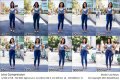
the 600 mm lens has in effect brought the background closer, the tree and dustbin behind the girl are a long way away from her, the lens is doing this nothing else, and you cannot achieve this with a shorter lens unless you move the subject closer to the background object.
 
View attachment 277632
the 600 mm lens has in effect brought the background closer, the tree and dustbin behind the girl are a long way away from her, the lens is doing this nothing else, and you cannot achieve this with a shorter lens unless you move the subject closer to the background object.
No. It's clear that those "tests" were carried out with the lens at different distances, in each case the photographer changed position to fill the frame with the model.

It is, and only can be, the distance from lens to subject that changes apparent perspective. Physics is a strange branch of science, but its great quality is that its rules are immutable.
 
View attachment 277632
the 600 mm lens has in effect brought the background closer, the tree and dustbin behind the girl are a long way away from her, the lens is doing this nothing else, and you cannot achieve this with a shorter lens unless you move the subject closer to the background object.
The photographer has had to move further away to get the same subject size in the frame as focal length increased. Hence the change in perspective (compression) - which is all about viewpoint.

Stand in one place and zoom in or out and subject size alters, but not the perspective.
 
View attachment 277632
the 600 mm lens has in effect brought the background closer, the tree and dustbin behind the girl are a long way away from her, the lens is doing this nothing else, and you cannot achieve this with a shorter lens unless you move the subject closer to the background object.


Please, for the love of all that is holy, learn some basic photography.
 
The photographer has had to move further away to get the same subject size in the frame as focal length increased. Hence the change in perspective (compression) - which is all about viewpoint.

Stand in one place and zoom in or out and subject size alters, but not the perspective.
Ok,
So looking at the above examples, how would you create the 600mm effect with the 24mm lens?
 
Ok,
So looking at the above examples, how would you create the 600mm effect with the 24mm lens?
Simply crop it to show the amount of scene contained in the shot taken with the 600mm lens.
It won't be the same in terms of image quality (which is why long lenses are typically used instead of cropping the image) but the perspective will be identical.
 
One of these was shot at the compact's widest and the other at its longest, cropped to about the same framing. The perspective is the same.

DSCF5449.JPGDSCF5450.JPG
 
Back
Top