

You are using an out of date browser. It may not display this or other websites correctly.
You should upgrade or use an alternative browser.
You should upgrade or use an alternative browser.
Taking full moon shots
- Thread starter gromit99
- Start date
 lease could I have some hints on taking moon shots what settings I
badboy1984
Suspended / Banned
- Messages
- 2,529
- Edit My Images
- No
This may not be the best advice but i will have a bash. This is what i took last week.
 [/url] Moon 01/11/2011 by badboy250984, on Flickr[/IMG]
I set my camera to "Manual Mode" and also use "Manual Focus" on the lens as well.
1) Place your camera on a Tri-pod and put it to the moon.
2) I set my ISO as low as possible, i use iso 200 for my nikon D7000
3) Set aperture to around f8 to start off and adjust when needed after taken your first shot
4) Set shutter speed to 1/250 second to start off with
5) I set my metering to spot metering since everything is gonna be black except for the moon.
6) Set your focus to "Infinity"
7) use remote, shutter release or timer
After all that you can fire your first shot. If the depth of field is not enough for you you can go up to f9 ..... etc
After photo is too bright then dail in a faster shutter speed and vice visa if too dark.
BTW: Same principal when taking full moon, the moon may be very very bright so adjust shutter speed will help .....
Hope this help you and enjoy.
I set my camera to "Manual Mode" and also use "Manual Focus" on the lens as well.
1) Place your camera on a Tri-pod and put it to the moon.
2) I set my ISO as low as possible, i use iso 200 for my nikon D7000
3) Set aperture to around f8 to start off and adjust when needed after taken your first shot
4) Set shutter speed to 1/250 second to start off with
5) I set my metering to spot metering since everything is gonna be black except for the moon.
6) Set your focus to "Infinity"
7) use remote, shutter release or timer
After all that you can fire your first shot. If the depth of field is not enough for you you can go up to f9 ..... etc
After photo is too bright then dail in a faster shutter speed and vice visa if too dark.
BTW: Same principal when taking full moon, the moon may be very very bright so adjust shutter speed will help .....
Hope this help you and enjoy.
Last edited:

Scarecrow
Suspended / Banned
- Messages
- 1,662
- Name
- Derek
- Edit My Images
- Yes
Most of Badboy's advice is good, except for the bit about depth of field. At that distance, changing between wide open, and fully shut down will have no effect. If you are in manual mode, metering mode is also irrelavent.
The key point to remember is that the moon is in full sunlight, and can be exposed for accordingly, which is why you can use a low ISO, an aperture that sits in the sweet spot of your lens, and a relatively fast shutter speed.
If your camera has live view that allows you to zoom in, that is a useful tool to use for manually focussing on the moon. Arbitrarily just setting your lens to infinity may or may not hit the exact focus point your lens needs to be set to, especially as a lot of lenses can actually focus beyond infinity, so you would be relying on the accuracy of the mark on your lens being correct.
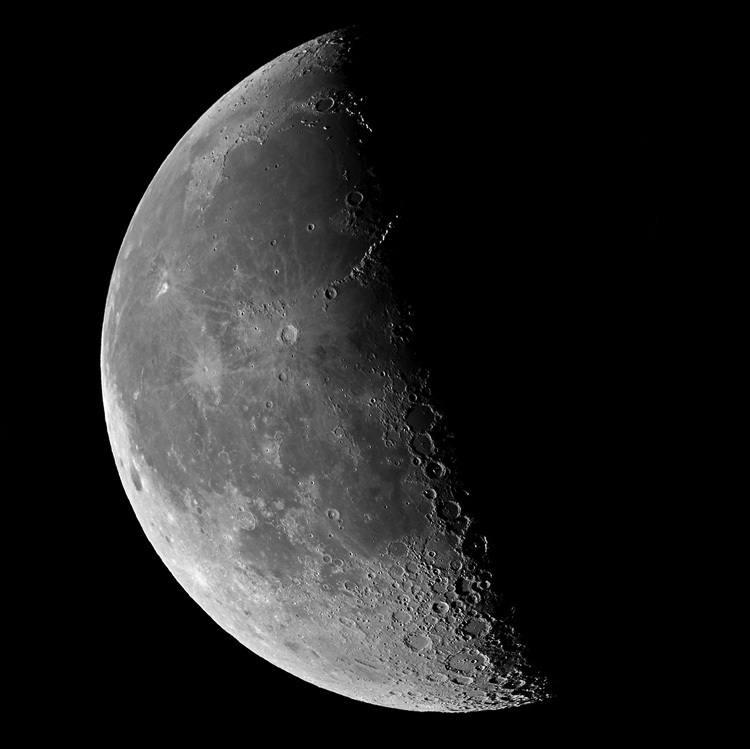
Finally, everyone usually makes their first attempt at capturing a full moon, but this isn't necessarily the best phase to go for. Many images of a full moon can appear flat due to the full on lighting that gives no shadows. When the moon is less than full, the terminator (the line between the lit and unlit parts of the moon) can bring out some great detail due to the shadows being cast by the mountains and craters.
The key point to remember is that the moon is in full sunlight, and can be exposed for accordingly, which is why you can use a low ISO, an aperture that sits in the sweet spot of your lens, and a relatively fast shutter speed.
If your camera has live view that allows you to zoom in, that is a useful tool to use for manually focussing on the moon. Arbitrarily just setting your lens to infinity may or may not hit the exact focus point your lens needs to be set to, especially as a lot of lenses can actually focus beyond infinity, so you would be relying on the accuracy of the mark on your lens being correct.
Finally, everyone usually makes their first attempt at capturing a full moon, but this isn't necessarily the best phase to go for. Many images of a full moon can appear flat due to the full on lighting that gives no shadows. When the moon is less than full, the terminator (the line between the lit and unlit parts of the moon) can bring out some great detail due to the shadows being cast by the mountains and craters.
badboy1984
Suspended / Banned
- Messages
- 2,529
- Edit My Images
- No
thanks Derek for the explaining as well, i got to admit i dunno some of the point as well about the aperture and metering in manual mode. thanks for the advice too, i learn something new again.
Yeah i got to admit the full moon part, i took a full moon pic recently but it didn't look good at all compare to the half moon etc.
Yeah i got to admit the full moon part, i took a full moon pic recently but it didn't look good at all compare to the half moon etc.

gad-westy
Suspended / Banned
- Messages
- 6,527
- Name
- Graham
- Edit My Images
- No
Assuming you have a fairly long lens (300mm +) As a fairly easy option to get a clear shot. Try aperture priority, f8, about iso 800 if you're shooting handheld and use spot metering with the centre on the moon itself. There are better ways of doing it but this should get you pretty good results to start with. Try to ensure your hands are as steady as possible.
Scarecrow
Suspended / Banned
- Messages
- 1,662
- Name
- Derek
- Edit My Images
- Yes
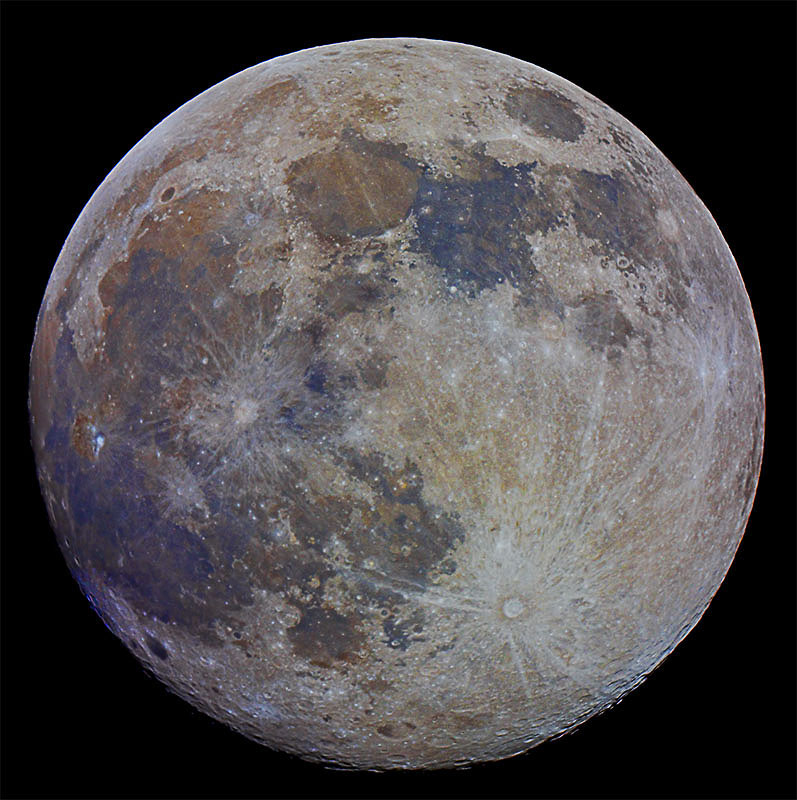
If you want to make an image of the full moon a little more interesting, if you get a well focussed and sharp one, you could always try and bring out the colours with a bit of judicial post processing. Most people think the colours are false when they first see such an image, but if you compare any coloured moon image, you will see that the colours are the same and always in the same place, proving that they are genuine. Just because we can't see them with the naked eye, or even through a telescope, it doesn't mean that they are not there.

Funkey Jaybee
Suspended / Banned
- Messages
- 26
- Name
- John
- Edit My Images
- Yes
What type of lens are you using Scarecrow? Those images are fantastic.
If you want to make an image of the full moon a little more interesting, if you get a well focussed and sharp one, you could always try and bring out the colours with a bit of judicial post processing. Most people think the colours are false when they first see such an image, but if you compare any coloured moon image, you will see that the colours are the same and always in the same place, proving that they are genuine. Just because we can't see them with the naked eye, or even through a telescope, it doesn't mean that they are not there.
So you are now telling all of us that in fact the moon have water on it in blue colour? and the moon is colourful than gray? i thought the moon is only gray colour when did it change colour in space:bonk:
And i still can't see the stars around the moon? Again also i don't see the moon landing in this picture so it can't be a good zoom lens. another fake picture made by Photoshop.
Last edited:

Splog
Suspended / Banned
- Messages
- 6,257
- Name
- Steve
- Edit My Images
- No
So you are now telling all of us that in fact the moon have water on it in blue colour? and the moon is colourful than gray? i thought the moon is only gray colour when did it change colour in space:bonk:
And i still can't see the stars around the moon? Again also i don't see the moon landing in this picture so it can't be a good zoom lens. another fake picture made by Photoshop.
It changed about a month ago....... It's in its winter colour phase at the moment. Watch out towards the end of March when it goes back to grey for summer, that's why many centuries ago they started altering the clocks.
Scarecrow
Suspended / Banned
- Messages
- 1,662
- Name
- Derek
- Edit My Images
- Yes
Thank you Splog for explaining how it's possible to get colourful shots of the moon without resorting to trickery. Any fool knows that there is no water on the moon, as CanonEos seems to think I am implying.
As you have such a wonderful grasp of the subject, perhaps you'd explain to him why there are no stars in the background either.
p.s. Canon, just so that you are not confused any further than is absolutely necessary, I didn't use a zoom lens, and even if I had access to the hubble space telescope, you still wouldn't see the remnants of the moon landings - they were all faked in a studio.
As you have such a wonderful grasp of the subject, perhaps you'd explain to him why there are no stars in the background either.
p.s. Canon, just so that you are not confused any further than is absolutely necessary, I didn't use a zoom lens, and even if I had access to the hubble space telescope, you still wouldn't see the remnants of the moon landings - they were all faked in a studio.
Last edited:
Splog
Suspended / Banned
- Messages
- 6,257
- Name
- Steve
- Edit My Images
- No
Any fool knows that there is no water on the moon, as CanonEos seems to think I am implying.
 ..... 'Significant' Water found on Moon
 As you have such a wonderful grasp of the subject, perhaps you'd explain to him why there are no stars in the background either.
My pleasure

CanonEOS.... There are no stars in Dereks Moon shot... Because......
He cloned them out in PhotoShop....

Splog
Suspended / Banned
- Messages
- 6,257
- Name
- Steve
- Edit My Images
- No
Actually the truth is rather more mundane. I forgot to cut some holes in the backdrop to let them shine through. My bad.
Having said that, I see Badboy made the same mistake with his shot, so I'm not alone.


even if I had access to the hubble space telescope, you still wouldn't see the remnants of the moon landings - they were all faked in a studio.
They had to do it in a studio because acording to this even the moon is fake
http://www.revisionism.nl/Moon/Moon3.htm

RKC
Suspended / Banned
- Messages
- 4,399
- Name
- Bob
- Edit My Images
- Yes
If you want to make an image of the full moon a little more interesting, if you get a well focussed and sharp one, you could always try and bring out the colours with a bit of judicial post processing. Most people think the colours are false when they first see such an image, but if you compare any coloured moon image, you will see that the colours are the same and always in the same place, proving that they are genuine. Just because we can't see them with the naked eye, or even through a telescope, it doesn't mean that they are not there.
Fascinating, I never knew the moon was coloured.
Simple search provides for those that might be interested
http://www.mikeoates.org/mas/projects/mooncolour/home.htm
A link from the same site
http://www.colormoon.pt.to/

