

You are using an out of date browser. It may not display this or other websites correctly.
You should upgrade or use an alternative browser.
You should upgrade or use an alternative browser.
Stupid question about TLR's. Apologies in advance.
- Thread starter MindofMel
- Start date

- Messages
- 11,274
- Name
- Asha
- Edit My Images
- Yes
Parallax issue I believe but iirc only arises with close up shots.
A bit of info:
http://www.blackandwhitefineart.net/2011/02/closeup-with-tlr/
A bit of info:
http://www.blackandwhitefineart.net/2011/02/closeup-with-tlr/
OP

MindofMel
Suspended / Banned
- Messages
- 1,586
- Name
- Mel
- Edit My Images
- Yes
Great link Asha. Follow timothy layton on facebook!
So why is this not an issue when say just taking a normal photograph. Obviously it's more apparent the closer you are to a subject but when shooting 'normally' the issue still exists?
Not terribly scientific, and probably not representative of how it works, but cupping my hands one above the other and looking through top and bottom. Even with massive 'circles'.. the images are just composed and include different things...
As said, I'm probably missing something obvious. Having a dumb day maybe
So why is this not an issue when say just taking a normal photograph. Obviously it's more apparent the closer you are to a subject but when shooting 'normally' the issue still exists?
Not terribly scientific, and probably not representative of how it works, but cupping my hands one above the other and looking through top and bottom. Even with massive 'circles'.. the images are just composed and include different things...
As said, I'm probably missing something obvious. Having a dumb day maybe
OP
MindofMel
Suspended / Banned
- Messages
- 1,586
- Name
- Mel
- Edit My Images
- Yes
Ok, so in practice isnt that a bit of a massive flaw? At least with a rangefinder you have frame lines/ mounted viewfinders etc
This chap has a go at explaining what I'm having a problem wrapping my head around:
http://youtu.be/LOl5HM5v0fA?t=2m42s (should hopefully start at right part, 2:42)
Focus I get.. sort of.. though at f2.8 on MF i reckon you must get more OOF shots with a TLR? What I am still not understanding is composition.. as you essentially never see the image you are taking?
I feel dumb as obviously people use these day in and out without issue. I am just trying to figure out the workflow of taking a frame in my head.
Sold my hasselblad and looking at maybe trying another system TLR / MF rangefinder/ mamiya 6or7's etc hence the inquisition.
This chap has a go at explaining what I'm having a problem wrapping my head around:
http://youtu.be/LOl5HM5v0fA?t=2m42s (should hopefully start at right part, 2:42)
Focus I get.. sort of.. though at f2.8 on MF i reckon you must get more OOF shots with a TLR? What I am still not understanding is composition.. as you essentially never see the image you are taking?
I feel dumb as obviously people use these day in and out without issue. I am just trying to figure out the workflow of taking a frame in my head.
Sold my hasselblad and looking at maybe trying another system TLR / MF rangefinder/ mamiya 6or7's etc hence the inquisition.
Last edited:

freecom2
Suspended / Banned
- Messages
- 5,326
- Edit My Images
- No
The viewing lens is matched and on the same plane as the taking lens. So when I focus the viewing lens, the taking lens is looking at exactly the same thing - albeit it, a couple of centimetres lower down.
The higher end TLRs have the equivalent of frame lines - my Rolleiflex has parallax compensation, it moves in the finder as you focus.
In practice its essentially a non issue - for close up shots, the closest you can shoot is roughly 1m anyway. Any closer, and the Rolleinar close up lenses also came with an attachment for the viewing lens which continues to compensate for parallax.
The higher end TLRs have the equivalent of frame lines - my Rolleiflex has parallax compensation, it moves in the finder as you focus.
In practice its essentially a non issue - for close up shots, the closest you can shoot is roughly 1m anyway. Any closer, and the Rolleinar close up lenses also came with an attachment for the viewing lens which continues to compensate for parallax.

wickerman
Suspended / Banned
- Messages
- 809
- Name
- David
- Edit My Images
- No
The maths behind the degree of the error can be found here http://duo-tlr.blogspot.co.uk/2013/01/editorial-parallax-correction.html
Last edited:

john-oh
Suspended / Banned
- Messages
- 1,195
- Name
- John
- Edit My Images
- Yes
For Mamiyas see : http://www.gapatterson.com/grahamp/
To quote : "
5.3 Parallax compensation
To quote : "
5.3 Parallax compensation
A distinction must be drawn between parallax compensation, and parallax correction. The Mamiya lenses have the viewing and taking lenses displaced by 50mm. This means that they see slightly different views. In practice this means that the top of the frame of the viewing lens is also 50mm higher than the top of the taking frame. At distances over a metre or so, this has negligible effect. At closer distances, where the field of view may be as little as 65mm across, a 50mm discrepancy is over half a frame.
Parallax compensation demands that the image is framed, and then the alignment of the camera is adjusted by tilting the camera upwards. In the case of the cameras with viewfinder scales, the scale line determined by the exposure compensation should be aligned with that portion of the image which lay at the top of the screen during framing. With the C33 etc. this is the moving bar, on other models it is the line representing the 1.5x and 2x exposure compensation.
Because the taking lens was not on the same axis as the viewing lens, the spatial relationship of elements in a three dimensional subject will change. If precise control over this alignment within the subject is required, parallax correction is required.
5.4 Parallax correctionThe aim of parallax correction is simple. Move the camera until the taking lens is in the position occupied by the viewing lens without changing the angle of the camera. This can be done using a tripod with an adjustable centre column, though you are limited to keeping the camera back parallel to the column axis. Failing to do this means that the taking lens does not obtain the same angle and distance from the subject. Tripods with an angled column (such as the Benbo) will eliminate this problem.
The Paramender (See 6.1) provides the precise 50mm displacement required.
"
Paramenders :http://grahampatterson.home.comcast.net/~grahampatterson/grahamp/mfaq/jpg/paramender1.jpg
"
Paramenders :http://grahampatterson.home.comcast.net/~grahampatterson/grahamp/mfaq/jpg/paramender1.jpg


RaglanSurf
Suspended / Banned
- Messages
- 11,477
- Name
- Nick
- Edit My Images
- Yes
I've seen somewhere a device that moves the TLR up (on a tripod) by the distance between the lenses after the shot has been framed and focused. Problem solved!
The Mamiya Paramender I think for the C220/330 and the Voigtlander Superb has built in paralax correction by the use of the viewing lens swivelling downwards via a skewed thread on close focus.

srichards
Suspended / Banned
- Messages
- 10,968
- Name
- Suz
- Edit My Images
- Yes
Not sure why anyone wants to use a tlr when an slr avoids all the parallax issues. Whole concept seems a weird idea to me.
Was article in recent amateur photographer recommending some minolta one as being a good choice. Think that had parallax correction on some models.
Was article in recent amateur photographer recommending some minolta one as being a good choice. Think that had parallax correction on some models.
RaglanSurf
Suspended / Banned
- Messages
- 11,477
- Name
- Nick
- Edit My Images
- Yes
Don't knock it til you've tried it Suz, it certainley makes it a different picture taking experience and you're less conspicuous in the street as you're not raising a bloomin' great SLR to your face so can be more discreet.
As said before parallax only comes into play on close-up work so really isn't an issue for me.
As said before parallax only comes into play on close-up work so really isn't an issue for me.
freecom2
Suspended / Banned
- Messages
- 5,326
- Edit My Images
- No
Not sure why anyone wants to use a tlr when an slr avoids all the parallax issues. Whole concept seems a weird idea to me.
Have you ever shot with one? Parallax is not the be all and end all when it comes to camera decisions (and as I said, it's hardly a big deal - the press photos of the 50s and 60s certainly didn't seem to suffer for it).
srichards
Suspended / Banned
- Messages
- 10,968
- Name
- Suz
- Edit My Images
- Yes
Have you ever shot with one? Parallax is not the be all and end all when it comes to camera decisions (and as I said, it's hardly a big deal - the press photos of the 50s and 60s certainly didn't seem to suffer for it).
It's not just that. It's the whole idea of having 2 lenses and not having different focal lengths on each. That's why tlrs sort of disappoint.
I used to get parallax with my old Fuji film compact

freecom2
Suspended / Banned
- Messages
- 5,326
- Edit My Images
- No
It's not just that. It's the whole idea of having 2 lenses and not having different focal lengths on each. That's why tlrs sort of disappoint.
I used to get parallax with my old Fuji film compact
David Bailey and Vivian Maier didn't seem to mind too much! One lens is merely a viewing lens, it's only the taking lens that is a proper camera lens in that sense really. That could be one of the most bizarre critiques of TLRs that I've ever heard!

- Messages
- 12,294
- Name
- Brian
- Edit My Images
- Yes
It's not just that. It's the whole idea of having 2 lenses and not having different focal lengths on each. That's why tlrs sort of disappoint.
I used to get parallax with my old Fuji film compact
Well 30 years ago I thought a twin Rolleiflex was a daft idea as if you went out for a general shoot i.e. you don't know what the subject would be......you had to take three Rolleiflexes with you, one for wide angle, one for normal, and one for tele.....and people saying "use your feet"? Well quite a few times you can't do that unless you want to be on tv, falling into a river or ending up under a car.

freecom2
Suspended / Banned
- Messages
- 5,326
- Edit My Images
- No
Well 30 years ago I thought a twin Rolleiflex was a daft idea as if you went out for a general shoot i.e. you don't know what the subject would be......you had to take three Rolleiflexes with you, one for wide angle, one for normal, and one for tele.....and people saying "use your feet"? Well quite a few times you can't do that unless you want to be on tv, falling into a river or ending up under a car.
As the Mamiya TLRs show, interchangeable lenses is feasible but comes at the expense of weight - like all fixed lens vs. interchangeable lens systems.
- Messages
- 12,294
- Name
- Brian
- Edit My Images
- Yes
As the Mamiya TLRs show, interchangeable lenses is feasible but comes at the expense of weight - like all fixed lens vs. interchangeable lens systems.
.....well I like "what you see is what you get" from SLRs
 well OK many\quite a few....viewfinders are about 95%. H'mm never bothered to find out why they can't all be 100% :shrug:
freecom2
Suspended / Banned
- Messages
- 5,326
- Edit My Images
- No
.....well I like "what you see is what you get" from SLRs
What you see is what you get is overrated
- Messages
- 12,294
- Name
- Brian
- Edit My Images
- Yes
What you see is what you get is overrated
Well it helps being younger and having decent eyesight

FruitFlakes
Suspended / Banned
- Messages
- 1,735
- Name
- Lloyd
- Edit My Images
- Yes
Not sure why anyone wants to use a tlr when an slr avoids all the parallax issues. Whole concept seems a weird idea to me.
Was article in recent amateur photographer recommending some minolta one as being a good choice. Think that had parallax correction on some models.
They're quieter, have no mirror slap, and they're pretty light compared to other 6x6 alternatives bar the Mamiya 6 rangefinder. They're also very good looking.
 Parallax isn't much of an issue, I've shot about 100 rolls over the last year or so through my Rolleis and never had any surprise results.
G.K.Jnr.
Suspended / Banned
- Messages
- 34,213
- Name
- George.
- Edit My Images
- No
Not sure why anyone wants to use a tlr when an slr avoids all the parallax issues. Whole concept seems a weird idea to me.
Was article in recent amateur photographer recommending some minolta one as being a good choice. Think that had parallax correction on some models.
Hi, You should try one. In my opinion and that of many pro togs these were the best tools ever for wedding/people photography. Whisper quiet to use with no mirror flapping about, perfect for use with fill in flash as they synced at all shutter speeds, medium format giving superb image quality, and at the point of taking the shot you could actually see the subject which is unlike any SLR.
- Messages
- 12,294
- Name
- Brian
- Edit My Images
- Yes
Hi, You should try one. In my opinion and that of many pro togs these were the best tools ever for wedding/people photography. Whisper quiet to use with no mirror flapping about, perfect for use with fill in flash as they synced at all shutter speeds, medium format giving superb image quality, and at the point of taking the shot you could actually see the subject which is unlike any SLR.
It you wanted larger negs for quality, there wasn't much else to conveniently use at least up till about 1970.
They have had their day so RIP.... better systems, probably invented by the Japanese who weren't stuck in a time warp.
- Messages
- 12,294
- Name
- Brian
- Edit My Images
- Yes
He talks about things that have had their day... In the Film & Conventional forum :lol :bonk:
D'oh....is there a TLR digital camera :shrug:
For quiet, unobtrusive street work, it's still an incredible tool.
Well I suppose the TLR can still be used in a crowd when you can hold it above your head to get a shot
freecom2
Suspended / Banned
- Messages
- 5,326
- Edit My Images
- No
D'oh....is there a TLR digital camera :shrug:
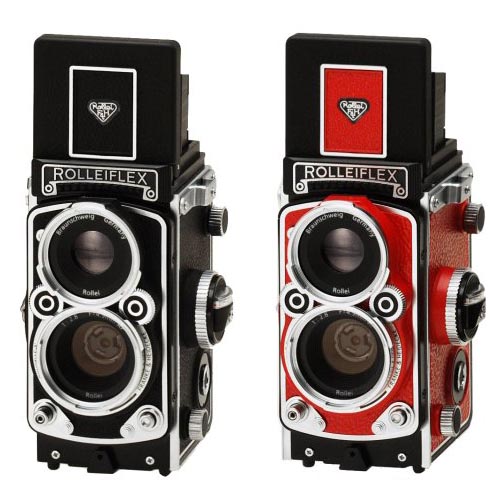

It's more of a toy though, obviously not a serious photographic tool like the Rolleiflex is.
Well I suppose the TLR can still be used in a crowd when you can hold it above your head to get a shot
I've read this countless times and tried it myself - it's a lot harder than people make it sound. I've also tried 90 degrees, as in pointing the lenses 90 degrees to myself, that's a little bit easier but still tricky.

Andysnap
Suspended / Banned
- Messages
- 16,322
- Name
- Andy Grant
- Edit My Images
- Yes
Sometimes Brian.......:bang:
Just because there isn't a digital version of a TLR doesn't make it dead in the water. They are a joy to use, they take superb pictures and they can be picked up for a song. Yes they have their faults, but as FC2 says, all camera systems have faults, there isn't a perfect camera system.
Andy
No piccy FC.
Just because there isn't a digital version of a TLR doesn't make it dead in the water. They are a joy to use, they take superb pictures and they can be picked up for a song. Yes they have their faults, but as FC2 says, all camera systems have faults, there isn't a perfect camera system.
Andy
No piccy FC.
- Messages
- 12,294
- Name
- Brian
- Edit My Images
- Yes
I've read this countless times and tried it myself - it's a lot harder than people make it sound. I've also tried 90 degrees, as in pointing the lenses 90 degrees to myself, that's a little bit easier but still tricky.
Well I first saw\heard about it in the AP when the newspaper photographers used this method.....probably plenty of old photos showing this.
freecom2
Suspended / Banned
- Messages
- 5,326
- Edit My Images
- No
Well I first saw\heard about it in the AP when the newspaper photographers used this method.....probably plenty of old photos showing this.
Oh, I don't doubt it can be done, especially if you use it as a daily professional tool. Just personally, it's harder than it sounds...

- Messages
- 4,158
- Name
- Rob
- Edit My Images
- Yes
There's only one way to settle this argument...

srichards
Suspended / Banned
- Messages
- 10,968
- Name
- Suz
- Edit My Images
- Yes
I'm sure there were slrs with 100% viewfinder coverage...minolta dynax 9, nikon f5 are two.
http://www.luminous-landscape.com/tutorials/understanding-series/viewfinders.shtml
http://www.luminous-landscape.com/tutorials/understanding-series/viewfinders.shtml
freecom2
Suspended / Banned
- Messages
- 5,326
- Edit My Images
- No
I'm sure there were slrs with 100% viewfinder coverage...minolta dynax 9, nikon f5 are two.
http://www.luminous-landscape.com/tutorials/understanding-series/viewfinders.shtml
All Nikon F models were 100%.
Re parallax, the distance between the lenses is probably less that that between your left and right eyes, so to find out what sort of effect it'll have why not try comparing the view through both eyes. Over just a few feet the difference is tiny but if you think it is significant then move the camera an inch or two

Steve
Suspended / Banned
- Messages
- 1,685
- Name
- .... Steve
- Edit My Images
- Yes
I never got on with a TLR... but that's just me.
Having said that...the results I see from TLR users are stunning.... and parallax doesn't seem to be an issue really.
And wow... they truly are beautiful looking cameras. Also a great talking point when using as lots of people havent seen one before.
Damn... maybe it's time for another try with one
Having said that...the results I see from TLR users are stunning.... and parallax doesn't seem to be an issue really.
And wow... they truly are beautiful looking cameras. Also a great talking point when using as lots of people havent seen one before.
Damn... maybe it's time for another try with one
freecom2
Suspended / Banned
- Messages
- 5,326
- Edit My Images
- No
And wow... they truly are beautiful looking cameras. Also a great talking point when using as lots of people havent seen one before.
I'll never forget the joy on a woman's face at seeing my Rolleiflex 3.5F, "is that a Rolleiflex?!", and she told me it reminded her of her father (who was a professional photographer), and brought back the smell of the chemicals he used to process the film.

AJQS
Suspended / Banned
- Messages
- 7,314
- Name
- Alan
- Edit My Images
- No
If the viewing lens is on top of the taking lens and the viewing lens is the image displayed in the viewfinder...
Surely you are not looking at the image that the actual taking lens is snapping?

correct, that's why the SLR was invented

- Messages
- 12,294
- Name
- Brian
- Edit My Images
- Yes
I'll never forget the joy on a woman's face at seeing my Rolleiflex 3.5F, "is that a Rolleiflex?!", and she told me it reminded her of her father (who was a professional photographer), and brought back the smell of the chemicals he used to process the film.
...and the dismay on a womans face (all dressed up) with my Tele Rollei for some shots.......and the film wound all the way through i.e. it didn't stop at the first frame

Lucky I bought it from Fox Talbot, anyway took it back to them and the same thing happened, so it was sent off for repair, so got a call that the camera was ready and told the assistant "better check it"........and the film wound through :thumbsdown:...... in the shop I immediately changed it for a RB67 with 180mm lens.
The camera wasn't that old as this all happened in about 1980 ( I have the receipt somewhere).