Should I take a tripod on safari for photographing the stars?

  • Thread starter Thread starter CJR
  • Start date Start date

CJR

Suspended / Banned
Messages
408
Name
Cathy
Edit My Images
Yes
Should I or shouldn't I?

On my last trip to Namibia, we spent some nights in the desert sleeping out under the stars, and I will never forget those amazing skies. But, no tripod, so no photographs.

Do I take a tripod this time, so I can try and photograph those skies? Have any of you other experienced safari photographers taken a tripod?

I know ultimately only I can make that decision. It's not a lightweight tripod (Manfrotto 190XProB), so it would be quite a tradeoff in terms of other stuff I couldn't pack, but ....

I'll be taking a beanbag, and I have a monopod (which I have never used yet).

What advice can anyone give - either about the kit to take, or (assuming I take the tripod), how best to photograph the stars. I have found some helpful link on the Juza nature photography website, but any more advice is always appreciated.

Many thanks.
Cathy
 
Beanbag. Take it empty. Buy rice in the supermarket when you get there. With a remote, they are as good as the strongest tripod.
 
Unless you are packing a motor-driven telescope, just enjoy the view!
 
Should I or shouldn't I?

On my last trip to Namibia, we spent some nights in the desert sleeping out under the stars, and I will never forget those amazing skies. But, no tripod, so no photographs.

Do I take a tripod this time, so I can try and photograph those skies? Have any of you other experienced safari photographers taken a tripod?

I know ultimately only I can make that decision. It's not a lightweight tripod (Manfrotto 190XProB), so it would be quite a tradeoff in terms of other stuff I couldn't pack, but ....

I'll be taking a beanbag, and I have a monopod (which I have never used yet).

What advice can anyone give - either about the kit to take, or (assuming I take the tripod), how best to photograph the stars. I have found some helpful link on the Juza nature photography website, but any more advice is always appreciated.

Many thanks.
Cathy

Hi Cathy
What camera and lenses are you taking with you? as this will help with the advice :D
 
Hi everyone, thanks very much for your thoughts. :thumbs: I have a cable release, so could use that with the rice-filled beanbag on some sort of suitable natural or available support, I guess.

I'll be taking a 30D, 24-105f4LIS, 100-400f4L IS, and Sigma 10-20. I guess the wide angle will probably be the one for night skies.

Has anyone taken photos of stars?

Cathy
 
Hi everyone, thanks very much for your thoughts. :thumbs: I have a cable release, so could use that with the rice-filled beanbag on some sort of suitable natural or available support, I guess.

I'll be taking a 30D, 24-105f4LIS, 100-400f4L IS, and Sigma 10-20. I guess the wide angle will probably be the one for night skies.

Has anyone taken photos of stars?

Cathy

Yeah and they're not as easy as you think! A bright moon (especially if full) is going to cause it's own 'light pollution' in it's own way, which will unfortunately hide a lot of stars. Plus, anything past a 15-20 second esposure is going to cause trails because of the earths rotation. This may be a good thing if you like them, put personally I'm not a fan. Try some 'bulb' shots for some interesting results. Star scenes are also a big tester for the high ISO performance of your body, but with a 30D I imagine you'll be fine.

(Or you could shoot at 24000 ISO with no NR and pretend the noise is a new collection of galaxies!)
 
Cathy
I would set ISO between 400 & 800 use the wide end of the Sigma 10-20, focused to infinity on something bright enough and far enough away, put the camera on the bean bag and point as close to straight up as possible I would imagine you will get up to about 30 seconds but it depends where about in the sky you are imaging, if you get star trailing reduce exp. time. Use the cable release to fire the shutter, you could also use the mirror lock up function to reduce vibration.

Steve
 
thanks kalibre and splog(!? :thinking:).

Easy - no I didn't think it would be that!!

Hmmm. Having been before and regretted the lack of a tripod, that persuades me towards taking it. Having been before with my husband who is not a photographer, that persuades me not to! Havign said that, if I took it and got some even half decent shots, he'd be well pleased!

Ho hum.

Cathy
 
I've seen some pretty impressive night skies in the deserts of the USA, but they paled in comparison to what I saw in New Zealand in a remote coastal area. On a cloudless night the clouds I saw in this sky were the gaseous stuff commonly seen in Hubble type photos. I also saw a couple of galaxies too. The pictures below were taken with a Canon 5D and Sigma 12-24 set at 12mm. Exposures were 91secs at f4.5 ISO800 and 74secs f4.5 ISO1600. Focus set manual at infinity

20081104_094_2.jpg


In the above picture there is a near horizontal smudge to the right of the main gaseous cloud. This is a spiral galaxy looking almost edge on.


20081104_110_2.jpg


In this picture it is the same gas cloud but with the camera rotated. The galaxy is again to the right and up towards the top right corner. Below it and slightly right, near the silhouetted building and very faint is another galaxy. It shows up better in other pictures with longer exposure but these have star trails. These two pictures are a good compromise of exposure for the clouds and reducing the star trails, out of the many I took.

I'm no expert on this sort of photography, and haven't done very much although I've studied it and some astronomy. These and the many others I took were taken using guesswork, changing exposures and iso in a sequence. I did have a tripod which helped, but with such a wide angle lens on a full frame camera it was a case of pointing it upwards without much aiming and using a cable release. I don't believe that mirror lockup is beneficial when using exposure times in this region. Mine ranged mostly from 60s to 190s.

If you don't want to take a tripod then laying the camera flat on its back and using a cable release will work. And I know it's obvious, but a couple of torches are essential. A normal size (mini maglite or whatever) for general feeling around, and a tiny led keyring type to read time on the camera display without getting light through the lens or viewfinder. Use fingers to minimise the light output.
 
The pictures below were taken with a Canon 5D and Sigma 12-24 set at 12mm. Exposures were 91secs at f4.5 ISO800 and 74secs f4.5 ISO1600. Focus set manual at infinity

I'm no expert on this sort of photography, and haven't done very much although I've studied it and some astronomy. These and the many others I took were taken using guesswork, changing exposures and iso in a sequence. I did have a tripod which helped, but with such a wide angle lens on a full frame camera it was a case of pointing it upwards without much aiming and using a cable release. I don't believe that mirror lockup is beneficial when using exposure times in this region. Mine ranged mostly from 60s to 190s.

If you don't want to take a tripod then laying the camera flat on its back and using a cable release will work. And I know it's obvious, but a couple of torches are essential. A normal size (mini maglite or whatever) for general feeling around, and a tiny led keyring type to read time on the camera display without getting light through the lens or viewfinder. Use fingers to minimise the light output.

Wow, these are great. :thumbs: Thanks so much for taking the time to post all this info. And no, it wasn't obvious about the torches - at least, not about the tiny LED one for the camera display. I hadn't thought of that!!

I can see the tripod decision is increasingly likely to be ... take it!!

Cathy
 
Yeah and they're not as easy as you think! A bright moon (especially if full) is going to cause it's own 'light pollution' in it's own way, which will unfortunately hide a lot of stars. Plus, anything past a 15-20 second esposure is going to cause trails because of the earths rotation. This may be a good thing if you like them, put personally I'm not a fan. Try some 'bulb' shots for some interesting results. Star scenes are also a big tester for the high ISO performance of your body, but with a 30D I imagine you'll be fine.

(Or you could shoot at 24000 ISO with no NR and pretend the noise is a new collection of galaxies!)

Don't knock the moon, although it can cause light pollution and dull stars it can also be of great use if you want foreground in your shot (I find just star shots a bit boring tbh but stick a foreground in and wow!). If you have ever tried to shoot with a foreground somewhere really dark you will realise even with 5+mins of exposure that the foreground will be just a black blob. Stick some moonlight in and voila, that black blob becomes a mountain, savanah or tree.

I've started looking at where in the sky the moon will be not whether it is there or not, I think shooting with a good moon behind you is the way to go if you want any foreground in.
 
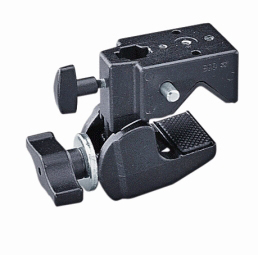
If you're going on Safari, how about a Manfrotto Super Clamp instead of a tripod?

super-Clamp-701989.jpg


It is lighter/takes up less room,than a tripod and is far sturdie than a GorillaPod, but costs about half as much. Add either a monopod head or a small ball head (about £25 each) and you have full adjustment.
 
I think deciding whether to take a tripod depends on what sort of traveler you are.....

If you are good at travelling light then yes, but if you are a traveler who always struggles to keep luggage below the limit then take the beanbag route.

From your description of your previous trip it sounds as though you wished you had one with you then.

It sounds as though you would prefer to take the tripod if you can ;)

Neil
 
It sounds as though you would prefer to take the tripod if you can ;)

Correct - altho I am not good at travelling light, at least I'm prepared to carry it myself! I'm hoping that with only us and our friends (another couple) on the safari, plus our guide, I will be able to indulge in some tripod photography in the evenings without arousing too much irritation! As long as I do my share of tent pitching and washing up, and don't ask them to pose, I'm sure they won't mind .... :D

Cathy
 
If you're going on Safari, how about a Manfrotto Super Clamp instead of a tripod?

Thanks for this. I think for non-tripod use, I'll stick to the beanbag I already have, though, as I think it's probably more versatile. :)

Cathy
 
Hi Jerry

Yes, I'm sure there will be some low light shots to be had as well, for which additional camera support will be required. (I have never got to grips really with using tripod for landscapes, tbh). I'm now considering my Manfrotto 680B monopod, and purchasing the folding tripod base to go with it. Also considering what sort of head for the monopod, whether my 486RC2 will work, or weather the 432(?) monopod head would be ok, altho that only allows a choice between portrait/landscape, no change in elevation ....

Cathy
 
Back
Top