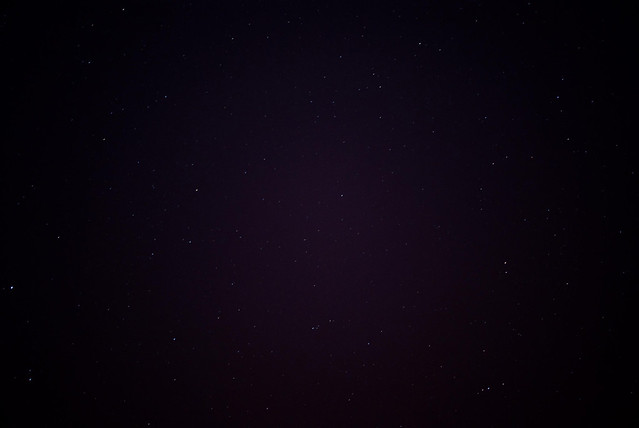
Shooting images of the night sky/stars

blade_922

Suspended / Banned
Messages
244
Name
Omar
Edit My Images
Yes
Posted this earlier in the wrong forum, im new to photograpy and still learning

Hey,

First time shooting stars(only had DSLR a few days, then found a very old canon tripod in the attic that fits my canon 550d)

I have 3 lenses

18-55mm kit lens
50-250mm 4.5-5.6 lens
50mm 1.8 lens

So i "thought" the 50mm 1.8 would be best for taking shots of stars out the three, am i right?

I set aperature to 1.8, shutter speed to 15s and ISO to auto

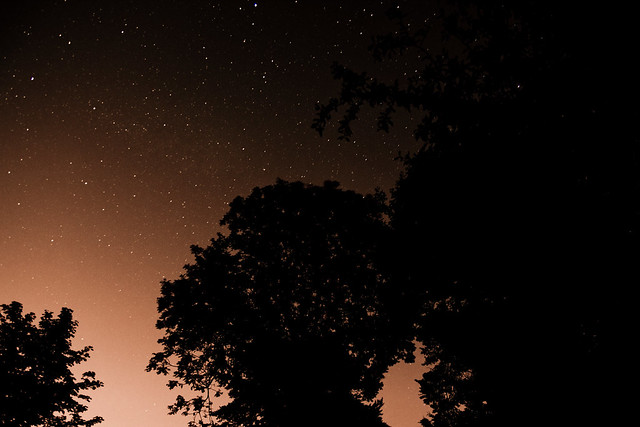
I'll upload the image i got, wasnt amazing, but was okay.

Can anyone give me advice on what lens and settings would be the best. I have a fantastic view of the night sky through quite a few windows in the house.

Was out in the garden with the tripod. Can i ask would taking a picture of the night sky indoors through a window be pointless?
 
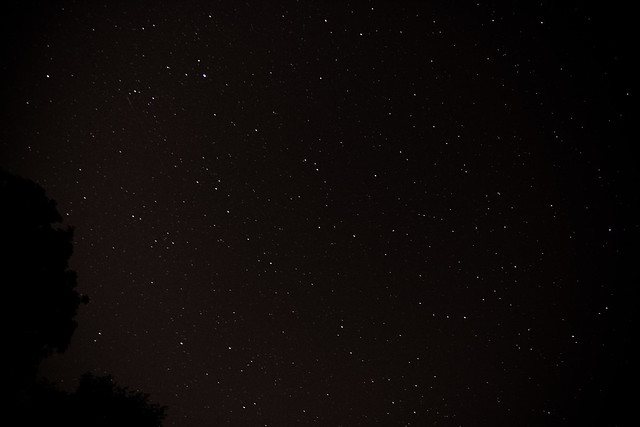
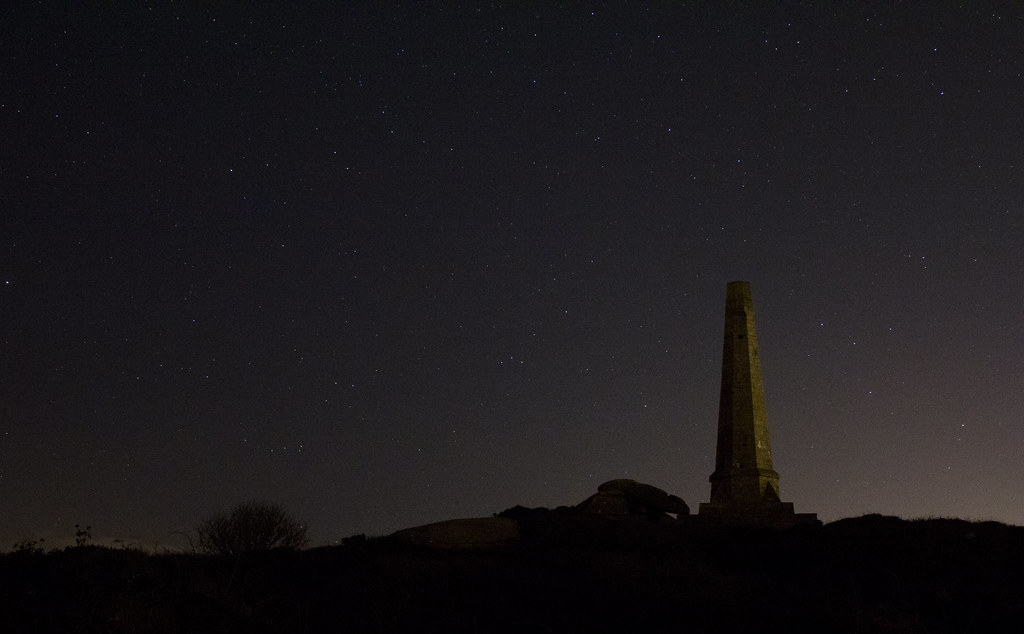
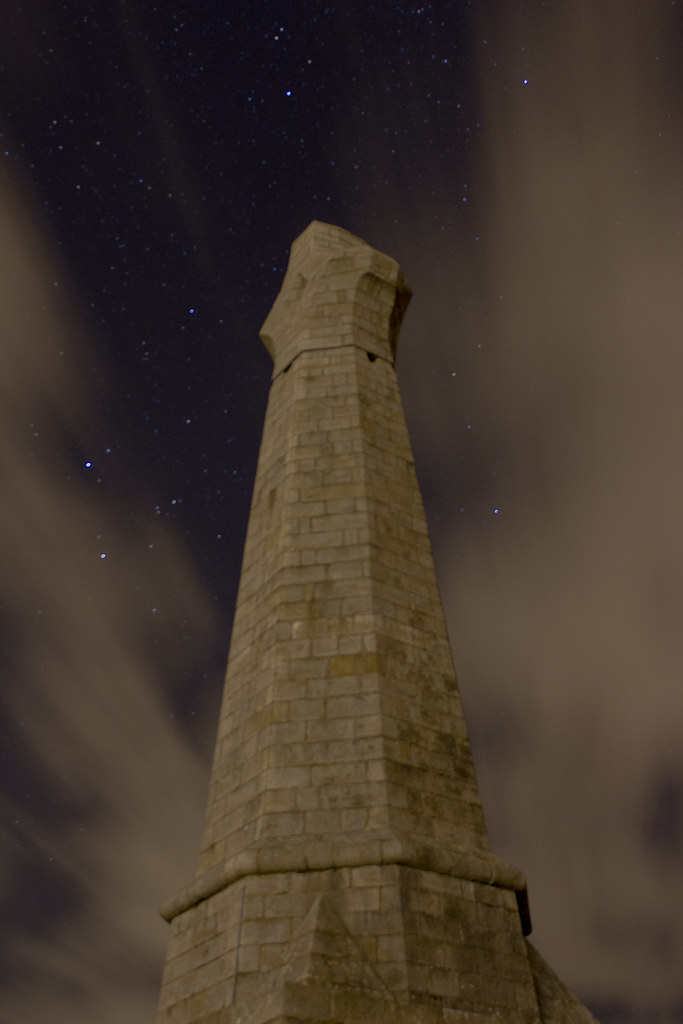
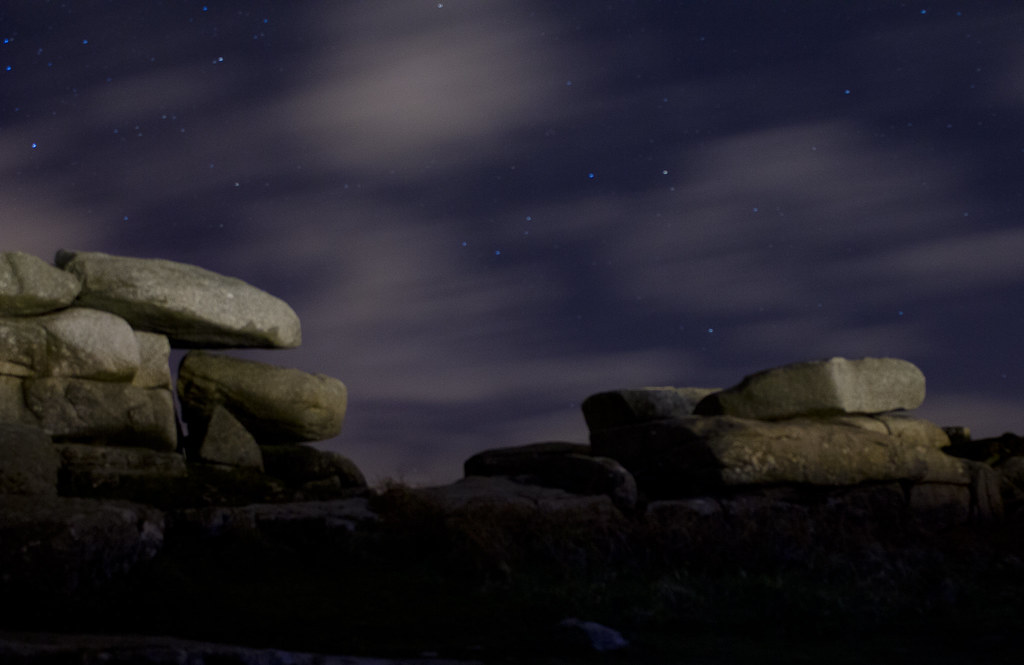
Here are the two images i managed. One came out okay, the other trailing light of the stars.

111111ha.jpg


22222lt.jpg
 
Yes, the 50/1.8 is your best bet. Shoot wide open at f/1.8 as you did. Do not use Auto ISO, instead set it manually to something "high enough", 550D should do fine with ISO 1600 maybe 3200. Experiment with shutter time..

Use the self timer on the camera or a remote shutter release to cut down on shake. You can even enable mirror lockup or use live view to get rid of mirror slap.

And stay in the garden, photographing through windows.. meh :)
 
I would go the exact opposite, shoot with the 50mm yes but you might find the width of the 18mm gets a better effect.

fully manual
tripod mount
ISO 100
around f22
shutter anything from 2 seconds to bulb depending on what you want.

if you dont have a shutter cable then set the self timer on camera to 2secs so you are not touching the camera when it fires..

experiment is the key but if I was out to get the night sky I would start off at those settings.


Yes, the 50/1.8 is your best bet. Shoot wide open at f/1.8 as you did. Do not use Auto ISO, instead set it manually to something "high enough", 550D should do fine with ISO 1600 maybe 3200. Experiment with shutter time..

Use the self timer on the camera or a remote shutter release to cut down on shake. You can even enable mirror lockup or use live view to get rid of mirror slap.

And stay in the garden, photographing through windows.. meh :)
 
The majority of stars are really faint, and if you use f/22 and 100 ISO as suggested by Strum, you are going to need quite a long exposure to gather any meaningful light, which will inevitably lead to star trailing.

I'd start with ISO 800, f/4 or f/5.6 and expose for 30secs, which you should be able to do without resorting to bulb setting. If too light/dark, adjust ISO and or aperture accordingly. If star trailing is evident, just use a slightly shorter shutter speed.
 
Yup, you want to get as much light in there as possible - which means wide aperture, high ISO and long exposure times. You're also probably going to want to shoot very wide at first. It means you can have longer exposures without noticeable trailing due to the stars (well, the Earth) moving.

I'd use the 18-55, wide open - everything else as Derek suggests.

This was 10mm, f/4.5, ISO800, 30s. But you'll need some very dark skies to get something like that.

MilkyWay%20and%20Coalsack.jpg


Trying it through a window will almost certainly give lousy results. A good, stable tripod and remote shutter release are essential.
 
Thanks everybody, and Frank nice shot! Will try the 18-55mm would you believe that's the only lens i didn't try last night. Too cloudy tonight, alot of clouds and mist. Typical Glasgow weather.
 
This was 10mm, f/4.5, ISO800, 30s. But you'll need some very dark skies to get something like that.


10mm! Wow!! I'd never think of trying my 10mm to get something like this. Great shot.

I will now! :D
 
Still cloudy tonight, going to be some breaks in the clouds tonight as BBC forecasts, but looking outside, this looks very unlikely.

Can some more people give their views on this. Would i get better results using a lens with lower aperature ie f1.8 or would a lens with lower focal length like a 18mm lens instead of a 50mm lens be better also?
 
Yup, you want to get as much light in there as possible - which means wide aperture, high ISO and long exposure times. You're also probably going to want to shoot very wide at first. It means you can have longer exposures without noticeable trailing due to the stars (well, the Earth) moving.

I'd use the 18-55, wide open - everything else as Derek suggests.

This was 10mm, f/4.5, ISO800, 30s. But you'll need some very dark skies to get something like that.


Trying it through a window will almost certainly give lousy results. A good, stable tripod and remote shutter release are essential.

That's a very cool shot!! Were you somewhere with almost no light pollution?!?
 
That's a very cool shot!! Were you somewhere with almost no light pollution?!?

I was indeed. It was in Botswana, about 30 miles from the nearest large town, Maun - pop. 44,000. It shows the bit of the Milky Way you can't see from the Northern Hemisphere, including the Coalsack Nebula.
 
I just logged on to ask the exact same question, but saw this thread and it's answered it I think :)


I was trying in my garden last night with these settings:

250mm
ISO400
15 seconds exposure
f5.6


No wonder I wasn't getting anything. Looks like I need to at least go up to ISO800, and double the exposure time. Also looks like I need to pack up the 55-250 and get out my 18-55.

This is the reason I love this site. Virtually anything you want to know, you can find out!
 
Gareth, dont use the 55-250mm i used that for the first pic in the 2nd post. You'll get alot better results on the 18-55mm lens at 18mm.
 
I was indeed. It was in Botswana, about 30 miles from the nearest large town, Maun - pop. 44,000. It shows the bit of the Milky Way you can't see from the Northern Hemisphere, including the Coalsack Nebula.

That explains it! Thanks!
 
I favour these settings for stars shots;

Wide as possible on the lens, 18mm is good, but wider the better.
ISO200
f/8
Shutter speed depending on what you are after. I think 30-60 seconds is good, although you'll start to get visible trails at 15 seconds plus.
 
I always stick with the widest aperture the lens has got, and quite a high ISO (800-2000 or so). It stands to reason really. The idea is to get the maximum amount of light hitting the sensor in the shortest time possible. Doing it that way means the sensor will pick up the weakest stars, unlike at f8 or f22. I'm surprised you can see any stars at f22. :D

You can also stack a series of images to bring the stars out even more. This was five or six 30sec exposures at f4.5, ISO2000. (Not taken in Botswana ;))


Deep Sky by S_M_Photography, on Flickr
 
Wish I had read this thread earlier...just got back from "trying" to shoot sky lanterns that were released in memory of a friend. Decided to change lens to 50mm 1.4 at the very last min...and they were slightly better
 
Hi all, I'm a newb to the forum. Just joined up to participate in this discussion, as I am just learning to take some night sky shots with my 550D. Ultimately, I want to mount my camera on a track and produce some short HD clips composited from a series of time lapse shots.

I have always been interesting in astrophotography and astronomy. Hence, I have owned a telescope with a motor drive (to track stars) for some years now - I also plan to mount the camera to the telescope and use the tracking motor to resolve the issue of stars "streaking" during long exposures. I will attempt to provide some updates re all this as time allows.

Cheers,
 
I was indeed. It was in Botswana, about 30 miles from the nearest large town, Maun - pop. 44,000. It shows the bit of the Milky Way you can't see from the Northern Hemisphere, including the Coalsack Nebula.

You just cant beat Africa for star shots. I have never seen so many stars in the night sky. Just a shame you have to go so far and makes you understand just how much we miss out on in the city.

I tried to count them but fell asleep .... not before I got to 73 though :lol:
 
I took these recently from my back garden in Surrey, quite a lot of light pollution from London. I did these with my 550d, Tamron 17-50 f/2.8 and tripod. Also used a remote shutter release or timer to avoid disturbing the camera. Exif can be viewed on flickr as well as more night shots.


Sky 4 by MrPeriPeri, on Flickr


Sky 12 by MrPeriPeri, on Flickr

I was going to post this link of star gazing spots in the UK by the national trust, but realised that you are in Glasgow so probably of no use. Maybe it will be useful to someone else though:

http://www.nationaltrust.org.uk/main/w-vh/w-visits/w-visits-walks/w-visits-dark_skies/w-visits-star_gazing_spots.htm
 
I am new to night time photography, but i really enjoy it.

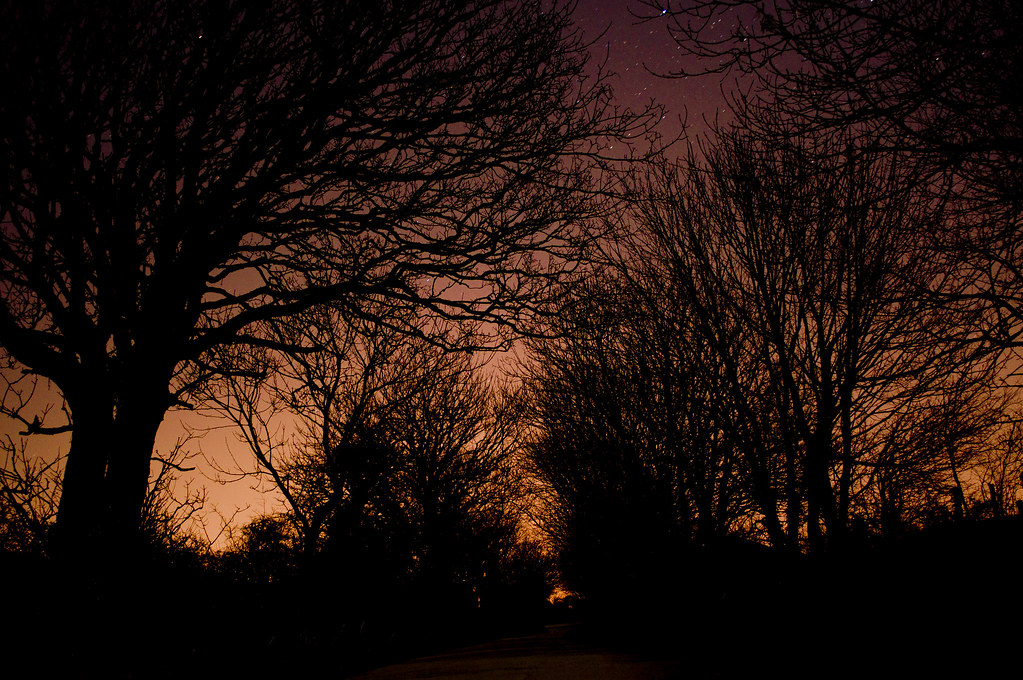
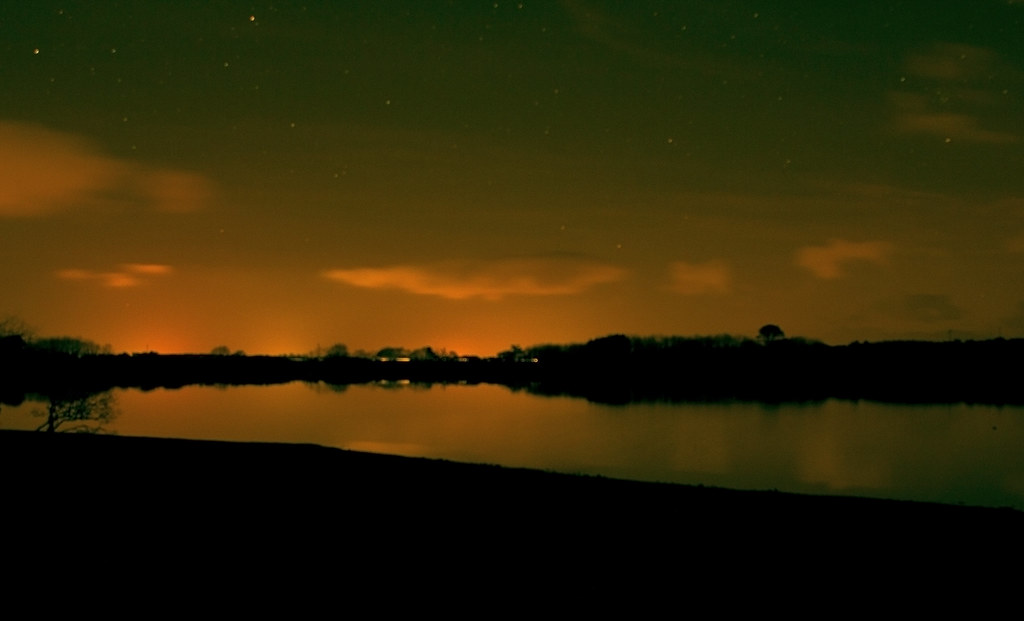
Here a few efforts.

6808941815_8bb99c0065_b.jpg


6808999447_bfde05d82a_b.jpg


6809031049_6c66632cef_b.jpg


6809047111_7fdbbefa86_b.jpg


6809058871_4bea1d36d1_b.jpg
 
Id suggest as wide as possible and wide open. A long lens like a 50mm is going to produce trailing at relatively short shutter speeds (roughly 7 seconds using the 600/length guesstimate). Even with the extra few stops i doubt you'll get a decent exposure using that especially if you want fainter stars.
50mm is also only going to cover a small bit of the sky so not too many stars. Id say for the 18-55 wide open, try for 20 second exposures and adjust ISO to suit.
 
Wish I had read this thread earlier...just got back from "trying" to shoot sky lanterns that were released in memory of a friend. Decided to change lens to 50mm 1.4 at the very last min...and they were slightly better

Sky lanterns are easiest at the point of launch, the further they move away from you the weaker they are as a light source. And the more difficult it is to get them looking like a sky lantern rather than a slightly orange star.


85mm, 1/50, f/5.6, ISO400
 
A recent thread on star photography is here -

http://www.talkphotography.co.uk/forums/showthread.php?t=383227

The maximum exposure to get stars as points rather than trails with an 18mm lens on a camera with a crop factor of 1.5 is a little over 22s. However this is a rough calculation which depends on latitude and what you are photographing, but it is a good starting point.

Your second shot Omar shows some light pollution which is inevitable near towns and the theoretical maximum exposure doesn't apply then. Light pollution really messes up star shots and cameras are many times better at picking up pollution that the eye. If you can get to somewhere with a dark sky it will make a huge difference.

Dave
 
I had a quick go last light as the skies were clear, but I think there is muchos light pollution where I live as it was really hard to get a decent shot

6816671691_5bb02956fd_z.jpg


thats is with a 50mm with f2.2 10 sec exposure on an A200, I think ISO was 400 or I may have changed it to 100 as I took lots of shots with different settings trying to get something decent. This was the best of a bad bunch TBH
 
Did a quick one last night. Left the camera in the garden (-8) for 3hrs. Sadly it clouded over after 45 minutes so ive ive got 2 1/4 hours photos of clouds moving over :(. On the plus side i might make a time lapse video of moving cloud.

Composition isnt anything at all as this was purely a test of noise at iso400 and StarTrax.

Below is 92 photos (46 minutes) of 10mm f/3.5, ISO 400, 30 second exposures, WB set to Tungsten stacked:


Star trails over Rassau by WhitcombeRD, on Flickr

RAWs exported as TIFF via ACR then my first attempt using StarTrax software as recommended above. The software seems fine, whether its any better than Startrails.DE i need more testing but its quick and simple.
 
QUOTE This was 10mm, f/4.5, ISO800, 30s. But you'll need some very dark skies to get something like that.

Very nice shot .
Did you use a equatirial motor driven telescope mount or just a std tripod?
I would have thought at 30sec there would have been a slight trail.

Think I might try this if you used a std tripod .
 
Here is a simple tip if you do not have a cable release......hold a piece of dark card or a cloth in front of the lens then press the shutter then remove the card /cloth. This is so the pressing of the shutter button and the inevitable camera shake from touching the camera does not get recorded on the image.
 
QUOTE This was 10mm, f/4.5, ISO800, 30s. But you'll need some very dark skies to get something like that.

Very nice shot .
Did you use a equatirial motor driven telescope mount or just a std tripod?
I would have thought at 30sec there would have been a slight trail.

Think I might try this if you used a std tripod .

The wider you go the less chance there is of star trailing with long exposures.
At 10mm, 30 seconds will not show any trailing.
That is based on numerous shots I have seen taken with a sigma 10-20mm at roughly that exposure time.
Trailing and when it starts to show becomes more of a consideration the further you zoom in (something to do with magnification and other relative aspects).
 
Here is a simple tip if you do not have a cable release......hold a piece of dark card or a cloth in front of the lens then press the shutter then remove the card /cloth. This is so the pressing of the shutter button and the inevitable camera shake from touching the camera does not get recorded on the image.

Or alternatively use the self timer :cool:
 
Thanks for the reply, I have always wanted to try this but thought a motor drive would be needed and stupidly Ive never tried to do it to find out.
Now I live in the countryside away from city lights I will give it a go.
 
Or alternatively use the self timer :cool:

Of course but maybe even with that the camera will shake a tiny bit as the shutter opens ( even with mirror lock up ) and Id imagine would still blur the stars a tiny amount, the card eliminates any wobble being recorded totally.

Im not being clever here by the way I saw this tip on "The sky at night " last month, I have yet to try this myself but it sounds good to me.
 
QUOTE This was 10mm, f/4.5, ISO800, 30s. But you'll need some very dark skies to get something like that.

Very nice shot .
Did you use a equatirial motor driven telescope mount or just a std tripod?
I would have thought at 30sec there would have been a slight trail.

Think I might try this if you used a std tripod .

As Stuart says, at 10mm any trails over 30s will be barely visible.

And my shot wasn't done with a good tripod - not even a standard tripod. It was done with a little table-top tripod balanced on a fence-post!
 
Excellent ! Well that just goes to show that superb images can be done with a fence post as a support .
Mind you carrying a fence post around and presumably a big sledge hammer to knock it in the ground with is heavier than a tripod !!!!!! lol Sorry I couldnt resist that , just my warped mind.
 
This thread has been so helpful!

I've been trying to get some good star time lapse results from out here in the Oxford countryside. The image below is the best I've come out with so far. This was with Canon 550D, 15-55mm, 800 ISO, F3.5.

I'm completely new to photography so any tips and tricks for this lens are more than welcome. I can't afford any other lenses at the moment!

Can I also ask how it is you stack your images? I imagine it's through photoshop by changing the opacity of each image?

Emma x

549577_4560898743304_382989033_n.jpg
 
hi and welcome to the forums! first post?
I'm trying this too, although all I've gotten so far is clouds!
I'd like to try taking multiple photographs at long exposure and overlaying them in PS

all I've gotten so far is :(
556580_10151041536462993_1001258352_n.jpg
 
Last edited:
Back
Top