Sanity check, small modifiers from long distances... I don't get it.

sk66

Suspended / Banned
Messages
9,557
Name
Steven
Edit My Images
Yes
I would like a sanity check. I see a lot of discussions/articles/etc on lighting (particularly event/location work) where they use smaller modifiers from longer distances, and I just don't get it. It's like bare bulb has somehow become "terrible" and something that is/should never be used. Yet I see ~ zero benefit to using the modifiers in most of these cases.

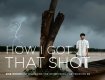
Here is a recent example from Rangefinder Magazine (the image is a composite).Screen Shot 2016-02-21 at 10.57.51 AM.jpg

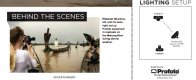
And the BTS info for the shot:
Screen Shot 2016-02-21 at 10.58.20 AM.jpg

Looking at the two images I would say the B2 was used to bring up the levels by ~ .5 stop (pre-edits). And based on the perspective/relative sizes I would guess the light was ~ 20ft away. And the result is, as expected, hard lighting (which is fine).

So, why use the modifier at all? IMO, the only thing it is doing is eating power.


I'm thinking the answer is right there on the page... "ADVERTISEMENT."
 
There is an effect with the light.

It looks overall as if there is no direct light, probably overcast- no distinct shadows.
If you look at the top of the T in 'SHOT' you can see a distinct shadow cast by the model's hand.
The model's face has also been lit by the strobe.

The 'how' pic was staged to show the set up and probably doesn't show the actual taking distances.

But having said that, it's not the best advertisement for the product.
 
You're not wrong. You get this sort of thing all the time, and especially from "celebrity" photographers who don't even understand the basics of lighting.

You understand how the inverse square law affects the amount of light that reaches the subject? Every time the distance from light to subject is doubled, 3/4 of the light is lost. Well, exactly the same thing happens to relative size, double the distance and the modifier effectively becomes 1/4 of the size that it would be at half the distance.

Take the sun as an example, The Sun is 864,400 miles across. This is about 109 times the diameter of Earth. It is was fairly close to us then it would cast a very soft light, but because it's so far away the light is extremely harsh. Over distance, it loses relative size as well as heat, and each of these losses follows the inverse square law. So, I can't see how far away that softbox is, but I can say that there is no point in it being there, if the flashgun had been used barebulb then it would have created an almost identical result.
 
There is an effect with the light.
I see the distinct/hard shadows... that's my point, the modifier didn't do anything of significance.
I also think the image has a lot of post to create/finish "the lighting" (i.e. dodge/burn)... There is no real evidence of the lighting on the boat/tree and there would be. And the shadows on/in the clothing are not indicative of the contrast elsewhere in the image. Based on the clothing, I don't really think much light was added with the flash.

If the lighting were close enough to create that level of spread control and falloff (as it appears), it would have been in the image (easily removed) and the lighting would not have been as hard.
 
Bear in mind, it does look like the BTS was taken with a very wide angle lens. The perceived distances may well have been a great deal less than they appear here
I tried to take the perspective into account... But even w/o the "behind the scenes" image I would guess the (2x3) modifier was ~10-15ft away. W/in ~5x you start to see "some effect" from a modifier. But it's not until w/in ~2x that it really starts to become "soft." and w/in ~1x when you can really start to manipulate/control the lighting to greater effect.
 
Bear in mind, it does look like the BTS was taken with a very wide angle lens. The perceived distances may well have been a great deal less than they appear here
Except that....
The softbox measures 2' x 3', it would struggle to create the lighting effect on the face from a distance greater than 3' (even if it was at the right height, which it clearly isn't)
So, at a distance of 6' the effective size of the softbox would be 6" x 9", or about the same area as a standard reflector.

And although we don't know exactly how far away it is, it is obviously much further than 6' away, so the softbox is clearly doing nothing to soften the light and create the (photoshopped) lighting.
 
It's only that distance in the 'how to' shot. (I reckoned anyone answering this thread question knows inverse square law etc, so didn't see much point in raising it :) )
There's no saying where it was in the actual shot, though I suspect just out of shot.
 
So, at a distance of 6' the effective size of the softbox would be 6" x 9", or about the same area as a standard reflector.
And a bare bulb/reflector would be proportionally smaller...
I think the part most miss is that, once a light has become "hard" you can't really make it "harder." The only control you are really left with is intensity/ratio.
 
I have to agree with @kendo1 regarding the accuracy of the BTS, particularly as the actual shot doesn't bear the same results I would have expected from the BTS, even taking into account the use of the wide angle lens
 
The photographer has uploaded a video to his site, http://robwoodcox.com/behindthescenes/ and the very little info that he gives about this particular shot starts at 6:30. The video is all about Profoto lights, and his work is all about PP, not lighting
 
It's only that distance in the 'how to' shot. (I reckoned anyone answering this thread question knows inverse square law etc, so didn't see much point in raising it :) )
There's no saying where it was in the actual shot, though I suspect just out of shot.
In the BTS image the photographer (Woodcox) is on the left reviewing an image just taken... why do you think it's staged?
 
I have to agree with @kendo1 regarding the accuracy of the BTS, particularly as the actual shot doesn't bear the same results I would have expected from the BTS, even taking into account the use of the wide angle lens
The light on him looks exactly like what I would expect from the BTS.
The scene overall, not so much... that's how I know it's rather heavily edited.
 
In the BTS image the photographer (Woodcox) is on the left reviewing an image just taken... why do you think it's staged?

Because it's an advert :)

It would be pretty daft to take a shot with a blank screen...

But there again, it would be easy to add in post.
 
Last edited:
The light on him looks exactly like what I would expect from the BTS.
The scene overall, not so much... that's how I know it's rather heavily edited.
Definitely.

Which makes it rather odd as a promo for Profoto, to say the least

It would be far better for a SOC image to be shown, to show what their lights are capable of, rather than what the post workflow is capable of.

A bit of an own goal, TBH
 
I think it's pretty daft showing him reviewing an image on the little LCD... maybe he's taking the images using live view. ;)

But is he reviewing? It looks like he's taking!

Who are these lights aimed at? Professionals?

:eek:
 
Top pro's and rich hobbyists

In which case, I hope he's reviewing!
It looks set up - Look! I'm a professional. This is how I take pictures looking at the screen. Or , I'm reviewing!

Which doesn't make sense. Maybe, as above, he is using Live View.
 
In which case, I hope he's reviewing!
It looks set up - Look! I'm a professional. This is how I take pictures looking at the screen. Or , I'm reviewing!

Which doesn't make sense. Maybe, as above, he is using Live View.
Or maybe he's just set up/made a significant change and he's checking the "blinkies"... I would do that.
 
The sad thing is, this use of small modifiers from long distances is so prevalent now that it honestly had me questioning my own experience/knowledge...

I'm not following, if they'd use a standard reflector the light would have been even harder, why are we assuming that's not what they wanted?
 
The sad thing is, this use of small modifiers from long distances is so prevalent now that it honestly had me questioning my own experience/knowledge...
This is probably due to ignorance, nothing more. Relatively few photographers today know anything whatever about lighting, most would rather learn PS, which is very forgiving of mistakes.
I'm not following, if they'd use a standard reflector the light would have been even harder, why are we assuming that's not what they wanted?
No, it wouldn't have been harder, it would have been the same at that distance.

If I was the cynical type I might think that including the sofbox was done to promote the brand name, because the name is bigger on the sofbox than on the flash head.
As for "viewing" the shot on the camera screen, my guess is that this too was just done for effect - I know from my own experience that it's easy to forget to do step back shots, quite often they're done later.

To summarise: It's an advert - if anything at all can be learned from it, it's how to create adverts. If the flashhead is doing anything at all, which I doubt, it would make the same contribution with or without the softbox fitted to it. All of the so-called lighting is in fact created in PP. We know this because the softbox is at the wrong height for the lighting effect that it appears to create, as well as being far too small at the distance it's placed.
 
Last edited:
I'm not following, if they'd use a standard reflector the light would have been even harder, why are we assuming that's not what they wanted?
Once a light is hard, you can make it smaller (which will show in specular highlights). But you can't really make it "harder." The only thing you have left is power (ratios/contrast).
I wasn't concerned with the result being as desired... it's hard but I think it's fine.

I studied the ProPhoto add (how I got that shot) in the January Rangefinder issue this morning and it's even worse. It's a full length scenic of a couple in hard mid-day backlight on a hilltop, supposedly lit with a B2 & 2x3 OCF softbox... I see zero evidence of the lighting in that one even though everything they say about it tells me that it should be apparent. IMO, you cannot "fill in" a shot like that of two people using a 2x3 softbox and it not be apparent that lighting was used. It just looks like a composite or shadow recovery to me.
 
Last edited:
Here's another one... (February Rangefinder issue)

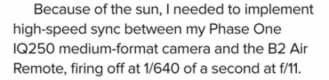
Shot with a PhaseOne at 1/640 f/11 and a B2 w/ a 45" bounce umbrella from the front (diffused, @ ~10ft I would guess). I see no evidence that the B2 contributed to the image at all. I would normally say that means they did an excellent job with the lighting if that was the goal... but I think this is just misleading at best. I would be happy if someone could convince me that I'm wrong, but the BG (trees) and the guy back there tell me there's no added light in this image (it should have dropped hard IMO).

Screen Shot 2016-02-22 at 9.03.49 AM.jpg
Screen Shot 2016-02-22 at 9.04.19 AM.jpg

I made sure to include the "advertisement"... I had honestly missed that the first few I saw.
 
Last edited:
Here's another one... (February Rangefinder issue)

Shot with a PhaseOne at 1/640 f/11 and a B2 w/ a 45" bounce umbrella from the front (diffused, @ ~10ft I would guess). I see no evidence that the B2 contributed to the image at all. I would normally say that means they did an excellent job with the lighting if that was the goal... but I think this is just misleading at best. I would be happy if someone could convince me that I'm wrong, but the BG (trees) and the guy back there tell me there's no added light in this image (it should have dropped hard IMO).

View attachment 57477
View attachment 57478

I made sure to include the "advertisement"... I had honestly missed that the first few I saw.
The first one is questionable at best, this one is hilarious.

You're right, there's no sign at all that the octa in the BTS has had anything to do with that image.
 
The first one is questionable at best, this one is hilarious.

You're right, there's no sign at all that the octa in the BTS has had anything to do with that image.
It may be hilarious, but IMO it's also deceptive.

Here we have a very well-known lighting company that makes perfectly good equipment, and they then produce finished images that masquerade as shots which were produced using that equipment, when in fact they were not.
I don't have any inside knowledge of what's going on here but my guess is that they employ lighting experts who are either not consulted about the adverts or whose input is ignored, which if I was them would seriously embarrass me...
And they market to high end professionals who honestly believe that there is something special about their products, and who presumably can see at a glance that their advertising shots are fake - what's that about?
And they aren't alone either, about 3 years ago, whilst trying to get ideas for our own catalogue, I looked at a catalogue from another well known lighting maker (not Bron or Elinchrom) and nearly all of their photos were fakes too. Most of them were composites, so badly done that my cat could have done better (even though I don't have a cat) and yet they were passing these images off as genuine shots produced with their equipment. I will, when necessary, comp images, but I will never do it to deceive people that they were lit differently. Phil V was with me on a shoot where we wanted a goose to pose in a shot, the bloody geese wouldn't cooperate so we comped in a goose, I think that's OK because a genuine goose could have been in the shot if I'd waited long enough and if I'd had something better to offer than supermarket bread:) But, in that shot, we used lighting to turn a brilliant summer day into a rainy day, and that was all done honestly, in camera.

Don't misunderstand me, I am 100% in favour of using PP to turn excellent photos into outstanding ones, and I never hesitate to use PP to carry out enhancements that can't be done in camera. And, with our videos, we've got a clever guy who does wonders in after effects, it's necessary.
BUT I would never use PP to "create" lighting - why would I when I have the lighting tools, and the skills, to get it right in camera in a fraction of the time that it takes in PP? Lighting is real time, in real space, with 3 dimensions.
And every single shot that I produce in our Learning Centre Tutorials is totally unretouched, because people can't learn lighting from looking at shots that have been "repaired" or enhanced.

OK, I'm an old man who was formally trained in the skills that are now dying out, back in the day when computer retouching didn't exist, maybe I'm totally out of step with reality and maybe we can all throw our lights away, shoot on our camera phones, rely on PP and call ourselves professionals, but maybe there's a little bit of sense to what I say. Even if I have got it totally wrong, at least my approach is ethical and my work is real.

Photographers, wake up! Increasingly we are selling lighting to trade customers who are now doing their own product photography, not because it saves them money but because so many photographers simply aren't capable of producing the quality and consistency that they need.7 complete kits went outy to these customers just today. And, even more worryingly, more and more companies are ditching photography altogether and are turning to images that are entirely rendered on computer - again because there are so few skilled photographers out there. It has nothing to do with money, because 3D rendering is a slow and therefore expensive process.

 
Thing is that the B2 has a guide number of 32 2/10 @ 2 m but that is with the magnum reflector which on the B1 doubles the Guide number so no reason to expect different here so more likely a guide number of about 32, so at 10 feet (3 metres) we would expect f10 at ISO 100 but wait that box spreads the light so much that you could be looking at 3 or 4 stops less, so about f2.8 or 4 stops below what they quote (assuming ISO 100), now last time I looked a 1:16 lighting ratio had no real effect

When you look at his blog you get the feeling that the lights were there as set dressing in many of the images

Mike
 
It may be hilarious, but IMO it's also deceptive.
Very.
I don't even know where to start... it's no wonder there is such a huge market of gimmicks/junk and such huge confusion about lighting/modifiers. There's almost no "truth" to be found.

The first one caught my attention because it was (supposedly) a pro using pro equipment with a writeup in a respected (?) industry magazine for a respected company... and it was portraying something I've seen many many times which I didn't get/agree with.

Then I started looking at other writeups closer and now I'm kind of offended.
 
Thing is that the B2 has a guide number of 32 2/10 @ 2 m but that is with the magnum reflector which on the B1 doubles the Guide number so no reason to expect different here so more likely a guide number of about 32, so at 10 feet (3 metres) we would expect f10 at ISO 100 but wait that box spreads the light so much that you could be looking at 3 or 4 stops less, so about f2.8 or 4 stops below what they quote (assuming ISO 100), now last time I looked a 1:16 lighting ratio had no real effect

When you look at his blog you get the feeling that the lights were there as set dressing in many of the images

Mike
You left out the part where the camera/B2 were in high speed sync... so you can take another 2 stops at least.
 
Medium format camera? No HSS needed for a leaf shutter

Mike
True, but it makes no difference. If that light was actually switched on, it achieved nothing at all.
And it's very clear that if the light was switched on, and if it had been several times more powerful, it would have lit the subject very differently to the lighting that's showing on the finished image, which is positioned from above/front, not from front.
 
If it looks like b******t and smells like b******t, I ain't doing the taste test, that combination has flash sync up to 1/1600s

True HSS does not cost 2 stops, it actually costs a stop plus how many stops you are above flash sync (for B1, Godox AD360 & AD600, not tested my SB800s or V860s, yet) - think of HSS as constant light, each stop in shutter i.e. from 1/500 to 1/1000 is a stop less HSS light - My Nikon goes HSS above 1/250 so at 1/500 I have 1 stop HSS loss and 1 stop shutter speed loss i.e. 2 stops, at 1/320 I have 1 1/3 loss and at 1/8000 I have 5 + 1 stop loss (6 stops)

So 1/640 for me would be 2 1/3 stops loss

Mike
 
Back
Top