Rembrandt or not?

Hanley

Suspended / Banned
Messages
1,667
Name
Paul
Edit My Images
No
When it comes to lighting, I'm happy to say I'm a complete novice, and I'm trying to learn more and get better.
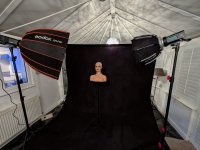
My father-in-law has allowed me to empty his large conservatory and turn it into a small studio, so today I had my first attempt at achieving the Rembrandt look.

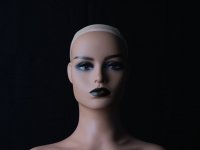
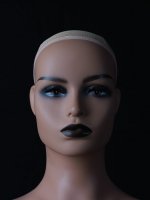
So to the peeps on here who know a hell of a lot more than I do, are these good or bad examples?

I used 2 Godox AD400 Pros triggered on camera with a Godox X3 Pro.
EXIF is ISO 50, F11, 1/250 and 90mm
Camera was Halsselblad X2D II and 90V lens.
2025-12-11 19.50.22.jpg2025-12-11 19.57.00.jpg

2025-12-11 19.33.34.jpg
 
I think it's almost there, I feel your key light needs to be a tad higher so the nose shadow cuts down and across the cheek. May be a little farther round toward the back to (or turn the model away slightly)
 
I'm not commenting on your photo. If you like it then it's good, if you don't then it's bad.
Rembrandt lighting is more of a style than an actual formulae, basically he just used a single light at an almost invariable position, 45 degrees high and to the side, and that light was a window (which can be replaced by a single softbox), so no, it isn't the Rembrandt look.

That's a bit simplistic, because painters can fill in shadows as they wish, photographers need a reflector or a low-powered on axis fill light to achieve similar effects, but Rembrandt lighting is still a single light, in the sense that one light does nearly all of the work and it (should) take an experienced photographer to even spot that a second light has been used.

Please take a look at this existing thread, which should be helpful https://www.talkphotography.co.uk/threads/creating-rembrandt-lighting-look-in-portraitiure.763231/
 
I'm not commenting on your photo. If you like it then it's good, if you don't then it's bad.
Rembrandt lighting is more of a style than an actual formulae, basically he just used a single light at an almost invariable position, 45 degrees high and to the side, and that light was a window (which can be replaced by a single softbox), so no, it isn't the Rembrandt look.

That's a bit simplistic, because painters can fill in shadows as they wish, photographers need a reflector or a low-powered on axis fill light to achieve similar effects, but Rembrandt lighting is still a single light, in the sense that one light does nearly all of the work and it (should) take an experienced photographer to even spot that a second light has been used.

Please take a look at this existing thread, which should be helpful https://www.talkphotography.co.uk/threads/creating-rembrandt-lighting-look-in-portraitiure.763231/
Thank you, and to just make a quick correction, going back and looking through the images, the first picture I posted was just with the key light. The second one I'd introduced the second light.
 
I'm not commenting on your photo. If you like it then it's good, if you don't then it's bad.
Rembrandt lighting is more of a style than an actual formulae, basically he just used a single light at an almost invariable position, 45 degrees high and to the side, and that light was a window (which can be replaced by a single softbox), so no, it isn't the Rembrandt look.

That's a bit simplistic, because painters can fill in shadows as they wish, photographers need a reflector or a low-powered on axis fill light to achieve similar effects, but Rembrandt lighting is still a single light, in the sense that one light does nearly all of the work and it (should) take an experienced photographer to even spot that a second light has been used.

Please take a look at this existing thread, which should be helpful https://www.talkphotography.co.uk/threads/creating-rembrandt-lighting-look-in-portraitiure.763231/
I'll give this a good read :)
Screenshot 2025-12-11 at 20.48.46.png
 
Thank you, and to just make a quick correction, going back and looking through the images, the first picture I posted was just with the key light. The second one I'd introduced the second light.
I know, but the light was far too far back and far too low to produce the Rembrandt effect.

Also, although mannequin heads are useful, the shiny smooth "skin" and youthful look doesn't make it easy for the photographer
 
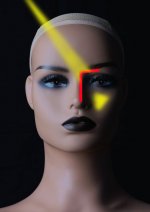
With Rembrandt lighting one light is placed high and at an angle so that the opposite side of the face is entirely in shadow; except for a small triangle of light which breaks over the bridge of the nose. Use the modeling light to previsualize. Typically you would control the depth/darkness of the shadow with the ambient exposure and not a fill light.

Untitled.jpg Untitled.jpg

You could use a fill light, but that will add a secondary catchlight in human eyes.
 
Last edited:
I know, but the light was far too far back and far too low to produce the Rembrandt effect.

Also, although mannequin heads are useful, the shiny smooth "skin" and youthful look doesn't make it easy for the photographer
It does when your wife doesn't want to stand there forever while you mess with lights :ROFLMAO:
I explained myself badly, sorry.
Mannequin heads are a useful tool in terms of shadows, but are pretty useless at reproducing highlights accurately, because of the very smooth, shiny surface, also the eyes typically have painted catchlights, which don't help either.

Now, if used to practice typical "beauty" portraits, we can pretty much equalise things by using foundation makeup, but Rembrandt lighting is far from being beauty lighting and a subject such as a rugby ball or even a coconut might be better subject. So, by all means use the mannequin, and take note of the shadow creation (as explained very well by @sk66 above), but take no notice of the highlights.
 
Back
Top