

You are using an out of date browser. It may not display this or other websites correctly.
You should upgrade or use an alternative browser.
You should upgrade or use an alternative browser.
Recommend Various M42 Lenses
- Thread starter paulkane1
- Start date

Alastair
Suspended / Banned
- Messages
- 9,818
- Edit My Images
- No
Nikon is awkward for m42 as you need an optic adaptor to correct the register distance and that creates the weakest link in the imaging chain.
The m42 lens I'd recommend above all others is the CZJ Flektogon 35/2.4 - great colours, bokeh, contrast and sharpness, a very useful focal length, and good close focus. Of all my vintage/manual focus lenses it's the one I'd be most loathe to give up.
The m42 lens I'd recommend above all others is the CZJ Flektogon 35/2.4 - great colours, bokeh, contrast and sharpness, a very useful focal length, and good close focus. Of all my vintage/manual focus lenses it's the one I'd be most loathe to give up.

Cagey75
Suspended / Banned
- Messages
- 17,146
- Name
- Keith
- Edit My Images
- No
Nikon is awkward for m42 as you need an optic adaptor to correct the register distance and that creates the weakest link in the imaging chain.
The m42 lens I'd recommend above all others is the CZJ Flektogon 35/2.4 - great colours, bokeh, contrast and sharpness, a very useful focal length, and good close focus. Of all my vintage/manual focus lenses it's the one I'd be most loathe to give up.
Thoughts on the one I mentioned above? as I haven't ordered it yet
Alastair
Suspended / Banned
- Messages
- 9,818
- Edit My Images
- No
I've got a copy of the Helios, note it's the US export version hence the Auto Cosmogon branding..Thoughts on the one I mentioned above? as I haven't ordered it yet

It's cheap and fun, but for some reason it's not one I reach for very often. I've got a couple of dozen vintage lenses to choose from and somehow it loses out - it's not a natural focal length for my style, and around and either side of that focal length I've more interesting/characterful choices (although in other mounts, not m42).
Cagey75
Suspended / Banned
- Messages
- 17,146
- Name
- Keith
- Edit My Images
- No
I've got a copy of the Helios, note it's the US export version hence the Auto Cosmogon branding..
It's cheap and fun, but for some reason it's not one I reach for very often. I've got a couple of dozen vintage lenses to choose from and somehow it loses out - it's not a natural focal length for my style, and around and either side of that focal length I've more interesting/characterful choices (although in other mounts, not m42).
Cheers, is that the 44-2 version? I've seen comparisons, and besides the swirly bokeh - that I'm only vaguely interested in - it seems to be the better of the bunch in terms of contrast and sharpness. What lenses in or around the 35 - 50mm mark would you best recommend? I have a Nikon and M42 adapter, might consider something longer too if it's exceptional
I have a few M42 lenses I use with my DSLRs, and the one which is an absolute standout is my Pentacon 50mm 1.8 Auto - must be a good copy as it's almost painfully sharp at anything even barely stopped down. 1.8 is a bit on the fuzzy side, but that's to be expected.
Liked it so much that I bought the matching 29mm Pentacon, which was... terrible.
Liked it so much that I bought the matching 29mm Pentacon, which was... terrible.

rjbell
Suspended / Banned
- Messages
- 4,421
- Name
- Robert
- Edit My Images
- Yes
I find they often go for cheaper with the cameras than they do on their own so search both while on fleebay.Thoughts on the one I mentioned above? as I haven't ordered it yet
Last edited:
Alastair
Suspended / Banned
- Messages
- 9,818
- Edit My Images
- No
For a Nikon? Can't really recommend the performance of any m42 lens as I've no idea just how much the result will be mullered by the optic adaptor.What lenses in or around the 35 - 50mm mark would you best recommend? I have a Nikon and M42 adapter, might consider something longer too if it's exceptional
The Pentacon 50/1.8 already mentioned is a good lens, as well as easy to find and cheap. The CZJ S 135/3.5 is another popular lens that performs well, is easy to find and inexpensive. At the cheap end of the m42 market you'll tend to find a lot of 50mm and 135mm lenses around, a few 35mm and 28mm but very few 85mm. The Helios is a bit of an oddball at 58mm.
This thread on AP is a good read..
http://www.amateurphotographer.co.uk/forums/threads/the-nicks-lens-comparison-thread.94391/
Cagey75
Suspended / Banned
- Messages
- 17,146
- Name
- Keith
- Edit My Images
- No
For Fuji, I have a Nikon adapter and an M42 one on the way. No elements, so no effect on image quality. I have tested my Nikon fit macro lens on it so far, image quality is as good as it was on the D800, but it's a beast to try MF with. Thinking on something lighter for a bit of fun, like a Helios 44-2, but will look up the others too
Cagey75
Suspended / Banned
- Messages
- 17,146
- Name
- Keith
- Edit My Images
- No
Well, shooting vintage lenses on Fuji's a different thing altogether.. but maybe not relevant to gate-crashing someone else's Nikon thread and failing to mention your specific Fuji angle..
You what? how is this gate crashing? For a start I was first to make a valid suggestion to the OP. And when talking adapters it could be relevant to ANY mount. My questions were completely lens based, anyone would think it was your thread. I didn't feel any need to mention what i use, as it isn't my thread, YOU asked *sigh*
Last edited:

BacktotheFuji
Suspended / Banned
- Messages
- 4,918
- Name
- Graham
- Edit My Images
- No
For portraits I'd recommend the Pentacon 135/2.8 preset and Carl Zeiss Jena Sonnar 135/3.5. Both are stunners, if a bit long.
I think with M42 lenses, they're generally so cheap (and the quality so variable) that half the fun is just picking up a few and seeing what works and what doesn't, then selling on the ones you don't like at usually zero loss - I have an old Hanimex 135mm/3.5 (which cost all of £5) that really should not be good, but is absolutely superb, I would never have gone anywhere near it had I actually done any kind of research beforehand.
I have, however, learned that 'excellent condition' on eBay can quite often be translated as 'contains a nice breeding colony of fungus and is so hazy it doubles as a fog simulator' in the process.
I have, however, learned that 'excellent condition' on eBay can quite often be translated as 'contains a nice breeding colony of fungus and is so hazy it doubles as a fog simulator' in the process.

LeeRatters
Suspended / Banned
- Messages
- 7,354
- Name
- Lee
- Edit My Images
- Yes
Helios 44-2 ~ ugly but reasonably sharp and lots of that swirl in the right conditions. A keeper I think.
Helios 77m4 ~ Better looking than the 44-2 and a more common 50mm focal length and f/1.8. Very well built. Might be tempted to part with this one though as well duplicated focal length!
Helios 135 2.8 ~ Not a bad lens, light, compact, pretty sharp. Sold simply to thin the collection down.
Pentacon 50/1.8 ~ Nice looking, reasonably well built lens. Couldn't use it wide open, ok stopped down a little. Sold a while ago as too many 50's
All of the above were mainly on A7 and a little experience on the 5D2.
Helios 77m4 ~ Better looking than the 44-2 and a more common 50mm focal length and f/1.8. Very well built. Might be tempted to part with this one though as well duplicated focal length!
Helios 135 2.8 ~ Not a bad lens, light, compact, pretty sharp. Sold simply to thin the collection down.
Pentacon 50/1.8 ~ Nice looking, reasonably well built lens. Couldn't use it wide open, ok stopped down a little. Sold a while ago as too many 50's
All of the above were mainly on A7 and a little experience on the 5D2.

Harlequin565
Suspended / Banned
- Messages
- 8,684
- Name
- Ian
- Edit My Images
- No
I really enjoy my Carl Zeiss Jena Pancolar 50mm f1.8 as a portrait lens on my cropped fuji. Although some might say it was a bit too short, I like the focal length for portraits (and even use my 35 for head & shoulders which might make it practical on your 35mm too). There's a Flickr group here if you want to check out the quality : https://www.flickr.com/groups/1057570@N21/
BacktotheFuji
Suspended / Banned
- Messages
- 4,918
- Name
- Graham
- Edit My Images
- No
The Asahi Super/S-M-C/SMC Takumar range are all good as well.
My favourite long lens is my Tamron Nestar 400/6.9 from the 60s, see below with Kenko 1.4x TC...
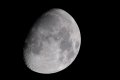
My favourite long lens is my Tamron Nestar 400/6.9 from the 60s, see below with Kenko 1.4x TC...
BacktotheFuji
Suspended / Banned
- Messages
- 4,918
- Name
- Graham
- Edit My Images
- No
I have a few M42 lenses I use with my DSLRs, and the one which is an absolute standout is my Pentacon 50mm 1.8 Auto - must be a good copy as it's almost painfully sharp at anything even barely stopped down. 1.8 is a bit on the fuzzy side, but that's to be expected.
Liked it so much that I bought the matching 29mm Pentacon, which was... terrible.
The 29/2.8 can be decent, but QC was appalling! It took me 7 attempts to get a good copy, and even then the corners were soft

Teflon-Mike
Suspended / Banned
- Messages
- 1,076
- Name
- Mike
- Edit My Images
- Yes
Using M42 primes on adapter on the D3200; first the camera wont operate in any but full manual mode; and even there it wont meter with the M42 lens. You will have to assess exposure by eye, chimping, hand held meter or an AF lens that will activate the camera's electrickery. Can make it a bit of an 'involved' process to use.
Next up, the 'crop factor'. The D3200 has a 16x24mm frame sensor, which effectively magnifies the lens length by 1.5, compared to it's native 24x36mm frame on 35mm film camera, and quite markedly narrows tha angle of view.
My 29mm M42 Pentacon 'wide angle', on 35mm film, has the same effective field of view, on the Nikon as my 50mm Ziess does on the Sigma 35mm film camera, so using 'legacy' 35mm film lenses on Crop-Sensor widgetal, you effectively loose all the wide angles, for the gain in 'telephoto', which can make the practice somewhat restrictive.
The Good-News... IF you can put up with the added 'faff' of loosing nie on all the cameras electronic functionality, and manually metering, manually making settngs and manually focusing; as well as the field of view 'shift' from the crop factor....
Almost ANY M42 lens you fit to the D3200, even with a correction element adapter potentially effecting it's possible 'performance', IS likely to be far 'sharper' and deliver better IQ than you get with Auto-Focus DX lenses.
Reason for that is the crop factor; on 35mm full-frame, the M42 lenses are 'optimized' to provide an image 'circle' that cover's the entire 24x36mm frame of the film. he DSLR's 16x24mm sensor is only taking the middle 16x24mm from the middle of that image area, so it's 'cropping' about 4mm off the top, bottom and sides of the frame the lens is designed to deliver; which conveniently, is where, if you were lookig at lab comparisons, the sort of 'edge aberrations' that usually display the dfference between lenses, tend to apear.
The 'legacy' lenses aren't necessarily any 'better' than the AF-DX lenses (though many are), but, the crop-factor is throwing away the bit of the image where they aren't so great; and only delivering you the 'sweet spot' from the middle, 'flattering' whatever performance they do offer.
So, down to the nitty gritty, and as we have covered bits of this before; I bought my D3200 about four years ago, and bought an 'infinity correction element' M42 adapter for it shortly after I got it, so that I could mount my M42 primes to it for a little extra 'reach', whilst I saved up to buy AF lenses to suit the camera that covered the range of lenses I have for 35mm film.
First niggle I had was that none of my M42 primes, gave me anything on the D3200 in the 'wide angle' range; as said, my 29mm Pentacon 'wide angle' gives the same field of view on APS-C sensor as a 50 on film, and my 12mm fishe eye wont physically mount on the DSLR due to the rear element protrusion.
The 135 and 300's, gave me 'reach' in the 55-300mm range I was saving up to get in an AF lens, and whilst they both did give results that were far 'nicer' than the Nik 55-300 delivered when I got it, the 'faff' of using them, only pushed that acquesition further up the priority list! And since then, the M42's have seldom been used on the Nikon.
It's nice to be 'able' to mount them, and going out with my daughter for her O&A level photo assignments, 'we' have used them a few times, usually the 50 or 135, BUT, conclusion has essentially been to use the lenses native to a camera, which has meant AF-DX on the Digital, and M42 on the 35mm film camera.
To wit; conclusion is, IF you want more M42 lenses, pick them primarily to use on the Practika, dont presume any added value 'doubling up' to use on digital.. IF you can make use of them on Digtal & adapter, great, that's bonus, and as far as 'qualty' goes, if they are good enough on film, they are almost certainly more than good enough on crop-sensor digital.
So, back to the topic of your foray into film; AFAIR you have so far a Helios 44 and Practika MTL5; it's a useful starter outfit, but, as far as worrying about image quality and all that goes, your lens choice is unlikely to be the 'weak link' in the subject right now.
Remember, Film cameras take film; a fresh sensor every frame. The 'camera' is little more than a light tight box to hold the film behind the lens. It's not like a digital camera where the camera IS in effect the 'film' as well, and more, the chemists who develop the film for you!
Only added bit of functionality you have in the camera, is its 'non-coupled' Through-The-Lens light meter; that doesn't even try and make shutter speed settings for you, and is reletively unsophisticated (By DSLR standards) and offers only one 'Centre-Weighted-Average' metering 'mode'.
Chasing 'quality', and working backwards down the chain, here and now, your exposure assessment, and settings are more likely to be more detrimental to a picture, than your lens grade; then your film choice; then the processing, and THEN the scanning or printing.
In prioritizing 'spend' for best results, you will likely do mor to up your odds of gettig better ones by buying 'better' film, and paying for 'better' processing of it, than you will find chasing 'better' lenses.....
BUT, most will likely be 'found' in your technique, getting the best from whatever 'kit' you have; and most still, NOT in the camera, but in assessing your scene, the lighting, your composition, framing, focus, Depth of Field, and diligence in 'metering' and making settings... WHICH to a larger or lesser degree, is what a 'Foray into Film' is likely to best offer by way of a learning experience.
On which basis, as far as lens choices go, I REALLY wouldn't worry about to none too much, and I'd pick pretty much by focal length and price alone, maybe fastest f-stop, and not be too much worried about brand name, or what, twenty, thirty or even forty years ago, its performance might have been like compared to others! More that it still actually just 'works'!
1.Portrait Lens - pretty much anything in the 90 to 135mm range aught to 'do' good enough.
2. Macro Lens. - I'll come back to.. but reversing ring, extension tubes or bellows & your Helios 44 for starters.
3.Telephoto Lens - How long do you want to go? 135 is useful and doubles up. 'something' in the 180-250 range 'Might' be useful,
4.Wide AngleYou didn't mention BUT I suspect you are likely to be more frustrated by lack of 'wide' than you are lack of 'long'.. (I certainly have been)
Mentioned in other post, long primes can be rather tricky and frustrating to use, and more so the longer they are, mainly doe to the very narrow angle of view, and 'scaning' to find your subject, and then hold it in frame, especially if its moving, where with a 'zoom' lens, you can go wide to 'target' and then 'zoom in' to frame. Add that extra involvement to the rest of using a manual focus, manual setting film camera, and it can get very frustrating 'missing' so many shots.
This 'type' of photography is slow and considered, and you are likely to discover, those situations you expect a long tele to be 'useful', aren't a good fit with this sort of 'approach'. You will likely rue lack of zoom, and then lack of automatic exposure, and having to take time to manually advance 'film'.. and the train of logic takes you away from primes, to zooms, to more sophisticated Program AE cameras, winders, and 'stuff it, might as well go all the way and shoot Widgetal'.
Meanwhile, where you might still employ it, applying that 'considered' approach, you can get the framing you want, with MUCH less 'reach' as they say, 'zooming with your feet' and getting closer to your subject. Which is a suggestion likely to get fingers wagging, as it's not 'just' about the framing, but the perspective control, BUT, principle holds, certainly for the level you are at, exploring the world of film and primes.
BUT, the flip side to that is 'Wides', where the station is reversed, and sort of situations you'll likely want to go wide are more frequent, and likely more conducive to this slow considered 'approach' and you can't as easily 'back up' to frame with your feet, and it's a whole new ball game, getting up close and getting the exaggerated perspective effects that wides offer.
I have mentioned my 12mm fish, which is something of a tangential topic, but I acquired that lens, twenty odd years ago, 'hunting' for M42 wides. It was neither wide, nor M42! Hence it's been re-mounted from OM to M42. But, very slim pickings in the arena of wide primes, and while e-bay had brought so much more out of the cupboards, thanks to MFT brigade, not 'much' better! So, the 12mm fish was an experiment in 'wide', as well as drastically altered 'perspective' that lead me down that peculiar path, frustrated trying to find anything much wider than 28mm in M42 fit.
However, If hunting for M42 lenses, I would suggest you keep your eyes open, and an open mind about wides, it IS likely that you would get more use from a 28ish mm lens than a 280mmish one.
But, I'd suggest, for now, a 135, is probably 'enough' to be getting on with. It is a useful portrait lens, and does double up as a useful general purpose tele, so fills 2/3 of your suggested 'wants', whilst you probably dont need (if you could even find) a dedicated 'macro' lens, and extension tubes are probably, your better bet for that one.
Addendum; Coming back to 'Macro'; because this is something of a can of worms. Strictly a 'Macro' lens is one that produces an image 'in camera' that is as or larger than the subject.
The frame of an APS-C digital 'sensor' is merely 16x24mm square, a British 2p coin is 1" or (25mm) in diameter, so any lens that let you fit an image of one in the frame, would have to 'reduce' the scale from 'real life'. Even on a 'full-frame' 24x36mm sensor, you would crop the edges off the coin at 1:1 reproduction 'in camera'. It's not until you get to 'Medium Format' cameras with film frames 4cm wide, you could actually put an image of a 2p coin onto the negative at 1:1 or larger scale, 'in camera'.
However we dont usually view the image 'in camera', we take the captured image and 'enlarge' it, in a print, or on a screen, where our 1" diameter penny, might be displayed 8" or more wide, much larger than in real life. Hence the term 'Macro-Photography' and in consequence 'Macro-Lenses' has been distorted in common usage somewhat from ts original and strict definition, where it was first used in association with medium format or large format cameras, where photographing small objects, 'Macro-Lenses' could provide scale enlargement at source.
Now, the term is more generically used in relation to close up and small object photography, where the enlargement is obtained not 'in camera' but in reproduction, and a 'Macro' lens is usually not a genuine 'enlarging' lens, merely one with an 'extended close focus' capability for capturing small objects. Bit of semantics, but worth noting.
So, 'reversing rings', extension tubes or bellows.
A 'reversing ring'. It's an adapter mount that screws into the filter ring on the front of your lens, and allows you to mount to 'back to front' on the camera body. This CAN offer genuine 'macro' 1:1 or greater reproduction 'in camera'. Think about it, your standard 58mm Helios, mounted the right way round will 'reduce' the image of a man that's maybe 2 meters tall, and squash it onto a little bit of film 24mm tall. Turn that around, and it has the 'magnification' is 'reversed' and now you can 'enlarge' a Lego man that's 24mm tall, and make it stretch to the full 36mm height of a film frame. This CAN endow a lens with 'genuine' macro capability then, and was a common way into 'macro' photography in the film only era.
'extension tubes, another adapter mount 'ish'. Basically they are a tube that has a camera mount one end and a lens mount the other, and simply pushed the lens further from the film. By shifting the film plane further back from the lens, its essentially increasing the focal length. If you used a longer lens, that would give less 'reduction' between subject and film-plane, so an extension tube basically does the same thing, to some degree, but more usefully, it shifts the focus calibration, and will reduce the near focus distance. And they tend to be relatively cheap, and come in a variety of lengths for different reproduction ratios.
This is essentially the principle that many, usually 'zoom', lenses sold as 'Macro-Focusing' use, often internally, locking or shifting an element to move the close focus distance, rather than actually increasing the reproduction ratio.
'Bellows'. Basically a variable length extension tube. Lens is mounted on one end, camera on the other, front and back separated by slide rails (usually incorporating a tripod mount), bellows forming the 'tube' to exclude non-mage forming light and let the camera or lens be slid closer together or further apart to get more of less enlargement and close focus.
More sophisticated and intricate and convoluted to use, but more versatile and precise, these tend to be more expensive, but many serious macro buffs find them the more useful tool for the job.
Next up, the 'crop factor'. The D3200 has a 16x24mm frame sensor, which effectively magnifies the lens length by 1.5, compared to it's native 24x36mm frame on 35mm film camera, and quite markedly narrows tha angle of view.
My 29mm M42 Pentacon 'wide angle', on 35mm film, has the same effective field of view, on the Nikon as my 50mm Ziess does on the Sigma 35mm film camera, so using 'legacy' 35mm film lenses on Crop-Sensor widgetal, you effectively loose all the wide angles, for the gain in 'telephoto', which can make the practice somewhat restrictive.
The Good-News... IF you can put up with the added 'faff' of loosing nie on all the cameras electronic functionality, and manually metering, manually making settngs and manually focusing; as well as the field of view 'shift' from the crop factor....
Almost ANY M42 lens you fit to the D3200, even with a correction element adapter potentially effecting it's possible 'performance', IS likely to be far 'sharper' and deliver better IQ than you get with Auto-Focus DX lenses.
Reason for that is the crop factor; on 35mm full-frame, the M42 lenses are 'optimized' to provide an image 'circle' that cover's the entire 24x36mm frame of the film. he DSLR's 16x24mm sensor is only taking the middle 16x24mm from the middle of that image area, so it's 'cropping' about 4mm off the top, bottom and sides of the frame the lens is designed to deliver; which conveniently, is where, if you were lookig at lab comparisons, the sort of 'edge aberrations' that usually display the dfference between lenses, tend to apear.
The 'legacy' lenses aren't necessarily any 'better' than the AF-DX lenses (though many are), but, the crop-factor is throwing away the bit of the image where they aren't so great; and only delivering you the 'sweet spot' from the middle, 'flattering' whatever performance they do offer.
So, down to the nitty gritty, and as we have covered bits of this before; I bought my D3200 about four years ago, and bought an 'infinity correction element' M42 adapter for it shortly after I got it, so that I could mount my M42 primes to it for a little extra 'reach', whilst I saved up to buy AF lenses to suit the camera that covered the range of lenses I have for 35mm film.
First niggle I had was that none of my M42 primes, gave me anything on the D3200 in the 'wide angle' range; as said, my 29mm Pentacon 'wide angle' gives the same field of view on APS-C sensor as a 50 on film, and my 12mm fishe eye wont physically mount on the DSLR due to the rear element protrusion.
The 135 and 300's, gave me 'reach' in the 55-300mm range I was saving up to get in an AF lens, and whilst they both did give results that were far 'nicer' than the Nik 55-300 delivered when I got it, the 'faff' of using them, only pushed that acquesition further up the priority list! And since then, the M42's have seldom been used on the Nikon.
It's nice to be 'able' to mount them, and going out with my daughter for her O&A level photo assignments, 'we' have used them a few times, usually the 50 or 135, BUT, conclusion has essentially been to use the lenses native to a camera, which has meant AF-DX on the Digital, and M42 on the 35mm film camera.
To wit; conclusion is, IF you want more M42 lenses, pick them primarily to use on the Practika, dont presume any added value 'doubling up' to use on digital.. IF you can make use of them on Digtal & adapter, great, that's bonus, and as far as 'qualty' goes, if they are good enough on film, they are almost certainly more than good enough on crop-sensor digital.
So, back to the topic of your foray into film; AFAIR you have so far a Helios 44 and Practika MTL5; it's a useful starter outfit, but, as far as worrying about image quality and all that goes, your lens choice is unlikely to be the 'weak link' in the subject right now.
Remember, Film cameras take film; a fresh sensor every frame. The 'camera' is little more than a light tight box to hold the film behind the lens. It's not like a digital camera where the camera IS in effect the 'film' as well, and more, the chemists who develop the film for you!
Only added bit of functionality you have in the camera, is its 'non-coupled' Through-The-Lens light meter; that doesn't even try and make shutter speed settings for you, and is reletively unsophisticated (By DSLR standards) and offers only one 'Centre-Weighted-Average' metering 'mode'.
Chasing 'quality', and working backwards down the chain, here and now, your exposure assessment, and settings are more likely to be more detrimental to a picture, than your lens grade; then your film choice; then the processing, and THEN the scanning or printing.
In prioritizing 'spend' for best results, you will likely do mor to up your odds of gettig better ones by buying 'better' film, and paying for 'better' processing of it, than you will find chasing 'better' lenses.....
BUT, most will likely be 'found' in your technique, getting the best from whatever 'kit' you have; and most still, NOT in the camera, but in assessing your scene, the lighting, your composition, framing, focus, Depth of Field, and diligence in 'metering' and making settings... WHICH to a larger or lesser degree, is what a 'Foray into Film' is likely to best offer by way of a learning experience.
On which basis, as far as lens choices go, I REALLY wouldn't worry about to none too much, and I'd pick pretty much by focal length and price alone, maybe fastest f-stop, and not be too much worried about brand name, or what, twenty, thirty or even forty years ago, its performance might have been like compared to others! More that it still actually just 'works'!
1.Portrait Lens - pretty much anything in the 90 to 135mm range aught to 'do' good enough.
2. Macro Lens. - I'll come back to.. but reversing ring, extension tubes or bellows & your Helios 44 for starters.
3.Telephoto Lens - How long do you want to go? 135 is useful and doubles up. 'something' in the 180-250 range 'Might' be useful,
4.Wide AngleYou didn't mention BUT I suspect you are likely to be more frustrated by lack of 'wide' than you are lack of 'long'.. (I certainly have been)
Mentioned in other post, long primes can be rather tricky and frustrating to use, and more so the longer they are, mainly doe to the very narrow angle of view, and 'scaning' to find your subject, and then hold it in frame, especially if its moving, where with a 'zoom' lens, you can go wide to 'target' and then 'zoom in' to frame. Add that extra involvement to the rest of using a manual focus, manual setting film camera, and it can get very frustrating 'missing' so many shots.
This 'type' of photography is slow and considered, and you are likely to discover, those situations you expect a long tele to be 'useful', aren't a good fit with this sort of 'approach'. You will likely rue lack of zoom, and then lack of automatic exposure, and having to take time to manually advance 'film'.. and the train of logic takes you away from primes, to zooms, to more sophisticated Program AE cameras, winders, and 'stuff it, might as well go all the way and shoot Widgetal'.
Meanwhile, where you might still employ it, applying that 'considered' approach, you can get the framing you want, with MUCH less 'reach' as they say, 'zooming with your feet' and getting closer to your subject. Which is a suggestion likely to get fingers wagging, as it's not 'just' about the framing, but the perspective control, BUT, principle holds, certainly for the level you are at, exploring the world of film and primes.
BUT, the flip side to that is 'Wides', where the station is reversed, and sort of situations you'll likely want to go wide are more frequent, and likely more conducive to this slow considered 'approach' and you can't as easily 'back up' to frame with your feet, and it's a whole new ball game, getting up close and getting the exaggerated perspective effects that wides offer.
I have mentioned my 12mm fish, which is something of a tangential topic, but I acquired that lens, twenty odd years ago, 'hunting' for M42 wides. It was neither wide, nor M42! Hence it's been re-mounted from OM to M42. But, very slim pickings in the arena of wide primes, and while e-bay had brought so much more out of the cupboards, thanks to MFT brigade, not 'much' better! So, the 12mm fish was an experiment in 'wide', as well as drastically altered 'perspective' that lead me down that peculiar path, frustrated trying to find anything much wider than 28mm in M42 fit.
However, If hunting for M42 lenses, I would suggest you keep your eyes open, and an open mind about wides, it IS likely that you would get more use from a 28ish mm lens than a 280mmish one.
But, I'd suggest, for now, a 135, is probably 'enough' to be getting on with. It is a useful portrait lens, and does double up as a useful general purpose tele, so fills 2/3 of your suggested 'wants', whilst you probably dont need (if you could even find) a dedicated 'macro' lens, and extension tubes are probably, your better bet for that one.
Addendum; Coming back to 'Macro'; because this is something of a can of worms. Strictly a 'Macro' lens is one that produces an image 'in camera' that is as or larger than the subject.
The frame of an APS-C digital 'sensor' is merely 16x24mm square, a British 2p coin is 1" or (25mm) in diameter, so any lens that let you fit an image of one in the frame, would have to 'reduce' the scale from 'real life'. Even on a 'full-frame' 24x36mm sensor, you would crop the edges off the coin at 1:1 reproduction 'in camera'. It's not until you get to 'Medium Format' cameras with film frames 4cm wide, you could actually put an image of a 2p coin onto the negative at 1:1 or larger scale, 'in camera'.
However we dont usually view the image 'in camera', we take the captured image and 'enlarge' it, in a print, or on a screen, where our 1" diameter penny, might be displayed 8" or more wide, much larger than in real life. Hence the term 'Macro-Photography' and in consequence 'Macro-Lenses' has been distorted in common usage somewhat from ts original and strict definition, where it was first used in association with medium format or large format cameras, where photographing small objects, 'Macro-Lenses' could provide scale enlargement at source.
Now, the term is more generically used in relation to close up and small object photography, where the enlargement is obtained not 'in camera' but in reproduction, and a 'Macro' lens is usually not a genuine 'enlarging' lens, merely one with an 'extended close focus' capability for capturing small objects. Bit of semantics, but worth noting.
So, 'reversing rings', extension tubes or bellows.
A 'reversing ring'. It's an adapter mount that screws into the filter ring on the front of your lens, and allows you to mount to 'back to front' on the camera body. This CAN offer genuine 'macro' 1:1 or greater reproduction 'in camera'. Think about it, your standard 58mm Helios, mounted the right way round will 'reduce' the image of a man that's maybe 2 meters tall, and squash it onto a little bit of film 24mm tall. Turn that around, and it has the 'magnification' is 'reversed' and now you can 'enlarge' a Lego man that's 24mm tall, and make it stretch to the full 36mm height of a film frame. This CAN endow a lens with 'genuine' macro capability then, and was a common way into 'macro' photography in the film only era.
'extension tubes, another adapter mount 'ish'. Basically they are a tube that has a camera mount one end and a lens mount the other, and simply pushed the lens further from the film. By shifting the film plane further back from the lens, its essentially increasing the focal length. If you used a longer lens, that would give less 'reduction' between subject and film-plane, so an extension tube basically does the same thing, to some degree, but more usefully, it shifts the focus calibration, and will reduce the near focus distance. And they tend to be relatively cheap, and come in a variety of lengths for different reproduction ratios.
This is essentially the principle that many, usually 'zoom', lenses sold as 'Macro-Focusing' use, often internally, locking or shifting an element to move the close focus distance, rather than actually increasing the reproduction ratio.
'Bellows'. Basically a variable length extension tube. Lens is mounted on one end, camera on the other, front and back separated by slide rails (usually incorporating a tripod mount), bellows forming the 'tube' to exclude non-mage forming light and let the camera or lens be slid closer together or further apart to get more of less enlargement and close focus.
More sophisticated and intricate and convoluted to use, but more versatile and precise, these tend to be more expensive, but many serious macro buffs find them the more useful tool for the job.
Thanks Kindly for your comprehensive replye,I always go over your responses,because,there is a lot to take in,The only way ,I can learn ,is to listen to people like yourself,who have a lot of knowledge.Using M42 primes on adapter on the D3200; first the camera wont operate in any but full manual mode; and even there it wont meter with the M42 lens. You will have to assess exposure by eye, chimping, hand held meter or an AF lens that will activate the camera's electrickery. Can make it a bit of an 'involved' process to use.
Next up, the 'crop factor'. The D3200 has a 16x24mm frame sensor, which effectively magnifies the lens length by 1.5, compared to it's native 24x36mm frame on 35mm film camera, and quite markedly narrows tha angle of view.
My 29mm M42 Pentacon 'wide angle', on 35mm film, has the same effective field of view, on the Nikon as my 50mm Ziess does on the Sigma 35mm film camera, so using 'legacy' 35mm film lenses on Crop-Sensor widgetal, you effectively loose all the wide angles, for the gain in 'telephoto', which can make the practice somewhat restrictive.
The Good-News... IF you can put up with the added 'faff' of loosing nie on all the cameras electronic functionality, and manually metering, manually making settngs and manually focusing; as well as the field of view 'shift' from the crop factor....
Almost ANY M42 lens you fit to the D3200, even with a correction element adapter potentially effecting it's possible 'performance', IS likely to be far 'sharper' and deliver better IQ than you get with Auto-Focus DX lenses.
Reason for that is the crop factor; on 35mm full-frame, the M42 lenses are 'optimized' to provide an image 'circle' that cover's the entire 24x36mm frame of the film. he DSLR's 16x24mm sensor is only taking the middle 16x24mm from the middle of that image area, so it's 'cropping' about 4mm off the top, bottom and sides of the frame the lens is designed to deliver; which conveniently, is where, if you were lookig at lab comparisons, the sort of 'edge aberrations' that usually display the dfference between lenses, tend to apear.
The 'legacy' lenses aren't necessarily any 'better' than the AF-DX lenses (though many are), but, the crop-factor is throwing away the bit of the image where they aren't so great; and only delivering you the 'sweet spot' from the middle, 'flattering' whatever performance they do offer.
So, down to the nitty gritty, and as we have covered bits of this before; I bought my D3200 about four years ago, and bought an 'infinity correction element' M42 adapter for it shortly after I got it, so that I could mount my M42 primes to it for a little extra 'reach', whilst I saved up to buy AF lenses to suit the camera that covered the range of lenses I have for 35mm film.
First niggle I had was that none of my M42 primes, gave me anything on the D3200 in the 'wide angle' range; as said, my 29mm Pentacon 'wide angle' gives the same field of view on APS-C sensor as a 50 on film, and my 12mm fishe eye wont physically mount on the DSLR due to the rear element protrusion.
The 135 and 300's, gave me 'reach' in the 55-300mm range I was saving up to get in an AF lens, and whilst they both did give results that were far 'nicer' than the Nik 55-300 delivered when I got it, the 'faff' of using them, only pushed that acquesition further up the priority list! And since then, the M42's have seldom been used on the Nikon.
It's nice to be 'able' to mount them, and going out with my daughter for her O&A level photo assignments, 'we' have used them a few times, usually the 50 or 135, BUT, conclusion has essentially been to use the lenses native to a camera, which has meant AF-DX on the Digital, and M42 on the 35mm film camera.
To wit; conclusion is, IF you want more M42 lenses, pick them primarily to use on the Practika, dont presume any added value 'doubling up' to use on digital.. IF you can make use of them on Digtal & adapter, great, that's bonus, and as far as 'qualty' goes, if they are good enough on film, they are almost certainly more than good enough on crop-sensor digital.
So, back to the topic of your foray into film; AFAIR you have so far a Helios 44 and Practika MTL5; it's a useful starter outfit, but, as far as worrying about image quality and all that goes, your lens choice is unlikely to be the 'weak link' in the subject right now.
Remember, Film cameras take film; a fresh sensor every frame. The 'camera' is little more than a light tight box to hold the film behind the lens. It's not like a digital camera where the camera IS in effect the 'film' as well, and more, the chemists who develop the film for you!
Only added bit of functionality you have in the camera, is its 'non-coupled' Through-The-Lens light meter; that doesn't even try and make shutter speed settings for you, and is reletively unsophisticated (By DSLR standards) and offers only one 'Centre-Weighted-Average' metering 'mode'.
Chasing 'quality', and working backwards down the chain, here and now, your exposure assessment, and settings are more likely to be more detrimental to a picture, than your lens grade; then your film choice; then the processing, and THEN the scanning or printing.
In prioritizing 'spend' for best results, you will likely do mor to up your odds of gettig better ones by buying 'better' film, and paying for 'better' processing of it, than you will find chasing 'better' lenses.....
BUT, most will likely be 'found' in your technique, getting the best from whatever 'kit' you have; and most still, NOT in the camera, but in assessing your scene, the lighting, your composition, framing, focus, Depth of Field, and diligence in 'metering' and making settings... WHICH to a larger or lesser degree, is what a 'Foray into Film' is likely to best offer by way of a learning experience.
On which basis, as far as lens choices go, I REALLY wouldn't worry about to none too much, and I'd pick pretty much by focal length and price alone, maybe fastest f-stop, and not be too much worried about brand name, or what, twenty, thirty or even forty years ago, its performance might have been like compared to others! More that it still actually just 'works'!
1.Portrait Lens - pretty much anything in the 90 to 135mm range aught to 'do' good enough.
2. Macro Lens. - I'll come back to.. but reversing ring, extension tubes or bellows & your Helios 44 for starters.
3.Telephoto Lens - How long do you want to go? 135 is useful and doubles up. 'something' in the 180-250 range 'Might' be useful,
4.Wide AngleYou didn't mention BUT I suspect you are likely to be more frustrated by lack of 'wide' than you are lack of 'long'.. (I certainly have been)
Mentioned in other post, long primes can be rather tricky and frustrating to use, and more so the longer they are, mainly doe to the very narrow angle of view, and 'scaning' to find your subject, and then hold it in frame, especially if its moving, where with a 'zoom' lens, you can go wide to 'target' and then 'zoom in' to frame. Add that extra involvement to the rest of using a manual focus, manual setting film camera, and it can get very frustrating 'missing' so many shots.
This 'type' of photography is slow and considered, and you are likely to discover, those situations you expect a long tele to be 'useful', aren't a good fit with this sort of 'approach'. You will likely rue lack of zoom, and then lack of automatic exposure, and having to take time to manually advance 'film'.. and the train of logic takes you away from primes, to zooms, to more sophisticated Program AE cameras, winders, and 'stuff it, might as well go all the way and shoot Widgetal'.
Meanwhile, where you might still employ it, applying that 'considered' approach, you can get the framing you want, with MUCH less 'reach' as they say, 'zooming with your feet' and getting closer to your subject. Which is a suggestion likely to get fingers wagging, as it's not 'just' about the framing, but the perspective control, BUT, principle holds, certainly for the level you are at, exploring the world of film and primes.
BUT, the flip side to that is 'Wides', where the station is reversed, and sort of situations you'll likely want to go wide are more frequent, and likely more conducive to this slow considered 'approach' and you can't as easily 'back up' to frame with your feet, and it's a whole new ball game, getting up close and getting the exaggerated perspective effects that wides offer.
I have mentioned my 12mm fish, which is something of a tangential topic, but I acquired that lens, twenty odd years ago, 'hunting' for M42 wides. It was neither wide, nor M42! Hence it's been re-mounted from OM to M42. But, very slim pickings in the arena of wide primes, and while e-bay had brought so much more out of the cupboards, thanks to MFT brigade, not 'much' better! So, the 12mm fish was an experiment in 'wide', as well as drastically altered 'perspective' that lead me down that peculiar path, frustrated trying to find anything much wider than 28mm in M42 fit.
However, If hunting for M42 lenses, I would suggest you keep your eyes open, and an open mind about wides, it IS likely that you would get more use from a 28ish mm lens than a 280mmish one.
But, I'd suggest, for now, a 135, is probably 'enough' to be getting on with. It is a useful portrait lens, and does double up as a useful general purpose tele, so fills 2/3 of your suggested 'wants', whilst you probably dont need (if you could even find) a dedicated 'macro' lens, and extension tubes are probably, your better bet for that one.
Addendum; Coming back to 'Macro'; because this is something of a can of worms. Strictly a 'Macro' lens is one that produces an image 'in camera' that is as or larger than the subject.
The frame of an APS-C digital 'sensor' is merely 16x24mm square, a British 2p coin is 1" or (25mm) in diameter, so any lens that let you fit an image of one in the frame, would have to 'reduce' the scale from 'real life'. Even on a 'full-frame' 24x36mm sensor, you would crop the edges off the coin at 1:1 reproduction 'in camera'. It's not until you get to 'Medium Format' cameras with film frames 4cm wide, you could actually put an image of a 2p coin onto the negative at 1:1 or larger scale, 'in camera'.
However we dont usually view the image 'in camera', we take the captured image and 'enlarge' it, in a print, or on a screen, where our 1" diameter penny, might be displayed 8" or more wide, much larger than in real life. Hence the term 'Macro-Photography' and in consequence 'Macro-Lenses' has been distorted in common usage somewhat from ts original and strict definition, where it was first used in association with medium format or large format cameras, where photographing small objects, 'Macro-Lenses' could provide scale enlargement at source.
Now, the term is more generically used in relation to close up and small object photography, where the enlargement is obtained not 'in camera' but in reproduction, and a 'Macro' lens is usually not a genuine 'enlarging' lens, merely one with an 'extended close focus' capability for capturing small objects. Bit of semantics, but worth noting.
So, 'reversing rings', extension tubes or bellows.
A 'reversing ring'. It's an adapter mount that screws into the filter ring on the front of your lens, and allows you to mount to 'back to front' on the camera body. This CAN offer genuine 'macro' 1:1 or greater reproduction 'in camera'. Think about it, your standard 58mm Helios, mounted the right way round will 'reduce' the image of a man that's maybe 2 meters tall, and squash it onto a little bit of film 24mm tall. Turn that around, and it has the 'magnification' is 'reversed' and now you can 'enlarge' a Lego man that's 24mm tall, and make it stretch to the full 36mm height of a film frame. This CAN endow a lens with 'genuine' macro capability then, and was a common way into 'macro' photography in the film only era.
'extension tubes, another adapter mount 'ish'. Basically they are a tube that has a camera mount one end and a lens mount the other, and simply pushed the lens further from the film. By shifting the film plane further back from the lens, its essentially increasing the focal length. If you used a longer lens, that would give less 'reduction' between subject and film-plane, so an extension tube basically does the same thing, to some degree, but more usefully, it shifts the focus calibration, and will reduce the near focus distance. And they tend to be relatively cheap, and come in a variety of lengths for different reproduction ratios.
This is essentially the principle that many, usually 'zoom', lenses sold as 'Macro-Focusing' use, often internally, locking or shifting an element to move the close focus distance, rather than actually increasing the reproduction ratio.
'Bellows'. Basically a variable length extension tube. Lens is mounted on one end, camera on the other, front and back separated by slide rails (usually incorporating a tripod mount), bellows forming the 'tube' to exclude non-mage forming light and let the camera or lens be slid closer together or further apart to get more of less enlargement and close focus.
More sophisticated and intricate and convoluted to use, but more versatile and precise, these tend to be more expensive, but many serious macro buffs find them the more useful tool for the job.

Hugh Jarse
Suspended / Banned
- Messages
- 4,968
- Name
- Steve
- Edit My Images
- Yes
The Takumar range is generally top notch. I have a fair bit of Pentax kit and have great fun mounting the lenses (42mm and PK on my Canon kit. I have both the Helios 44-2 and 44-4. I cannot see any difference when I mount them on a Canon DSLR but on a Pentax Spotmatic shooting with TriX, the 44-4 produces noticeably sharper shots.The Asahi Super/S-M-C/SMC Takumar range are all good as well.
My favourite long lens is my Tamron Nestar 400/6.9 from the 60s, see below with Kenko 1.4x TC...
View attachment 90287
On my EOS 3 it's the other way round.