Re-thinking about new camera

raven4ns

Suspended / Banned
Messages
19
Name
Tim
Edit My Images
No
I was thinking about the R6 mdii as my next camera but it has a lot of bells and whistles that I won't use. Shooting 40 frames a second is of little use in shooting abstracts, having high burst numbers, again of little use to me.What is important is low light capabilities. I saw some shots that were shot at ISO 10000 and 12500 and they were great.
What I am looking for is a camera that can shoot at these high ISO levels and still give quality shots. There is no reason to pay for these bells and whistles when they are of little use to me. Even video is of no interest to me but it is included with most high end cameras.
If any of you shoot at the higher ISO's I would like to see some of your raw images. It's not that I will be shooting at these higher ISO levels it's nice to know I can if need be. Thank you.
 
It's the modern way. Cameras have to be all singing and all dancing. It's rubbish really. I could quite happily live without video, and twenty k, or whatever they are up to now.
 
doesn’t DXO mark or similar give you this information about high ISO performance? If it’s something “just in case in need it” I wouldn’t worry much as denoising tools are getting better and better for cameras with poorer high iso performance.

I agree - if you don’t need the bells and whistles then go for something that’s a better fit and likely easier on the budget
 
I find it funny that photographers get annoyed about being forced to ‘buy’ video capability.

It’s free - as soon as we had live view, adding software to record that screens feed was a no brainer.

So to focus on the actual question: clean high iso images.
Obviously there’s some technical issues that lend themselves to that.
1: the newer the better - clean images get easier with each generation
2: lower pixel density; so higher sensor size lower pixel count.

But in reality; I don’t actually think you know that you need that.

So - what do you need? There’s dozens of great cameras, the only way to pick the right one is to look at what you need; rather than focussing on what you don’t need.
 
I'd suggest taking a look on DPreview which gives terrific comparisons of all cameras out there; Compares in JPEG, RAW, All ISOs etc - it's great.

I find it interesting as it shows that sometimes there is so little in it when testing.. for example, I compared my R5 vs my Z7 vs my RP vs Lumix FZ2500 and it wasn't immediately clear that the Z2500 is THAT bad.. sure not as great but not THAT bad, if that makes sense? We really are spoiled with all this tech now
 
What do you want to take photos of?
under what lighting conditions?
All you mentioned in your OP was abstracts
 
I think it's worth thinking about how big a picture you want to produce and/or how close you want to look and these things will affect how noticeable noise is. Other things to consider could include processing and the software you use.
 
For those who may be interested as to what I shoot, there is an address for Flickr that has a few of my images. I like shooting abstracts of nature plus other nature images. Thank you for asking.
 
I find it funny that photographers get annoyed about being forced to ‘buy’ video capability.

It’s free - as soon as we had live view, adding software to record that screens feed was a no brainer.

So to focus on the actual question: clean high iso images.
Obviously there’s some technical issues that lend themselves to that.
1: the newer the better - clean images get easier with each generation
2: lower pixel density; so higher sensor size lower pixel count.

But in reality; I don’t actually think you know that you need that.

So - what do you need? There’s dozens of great cameras, the only way to pick the right one is to look at what you need; rather than focussing on what you don’t need.

Are you sure that the cost of video isn't factored into the cost of the camera?
 
If anything goes on a new camera you can bet there is a cost recapture. That is one thing I have learned over my 76 years on this earth.
 
If anything goes on a new camera you can bet there is a cost recapture. That is one thing I have learned over my 76 years on this earth.
Sorry to sound thick, but what is that?
To me is is similar to clawback, but I don't see how it applies to a camera.
 
Are you sure that the cost of video isn't factored into the cost of the camera?
The ‘cost’ is minimal was my point. Once the consumer demanded live view, the hardware required to capture video was part of the camera. So the only additional ‘cost’ was a software change and an extra function on some existing controls. Then sometimes one extra dedicated button*.

*but if we’re only talking ‘high end’ cameras, then that dedicated button is just a part of the set of programmable input devices.

And I’m definitely in the ‘don’t use video; coulda lived without live view’ camp. But getting annoyed that it exists is like barking at the moon.
 
If anything goes on a new camera you can bet there is a cost recapture. That is one thing I have learned over my 76 years on this earth.
As per my first post on the subject; the whole of the hardware required to add ‘live view’ (which many didn’t need) meant the only additional cost to record video was the software.

But that’s a moot point now as mirrorless cameras require that ‘live view’ technology.

As for the ‘cost’ existing and being passed onto the consumer? Of course it is. But the reality of where we are now is that there’d be a bigger cost involved in stripping out that capability for a niche market.
 
For those who may be interested as to what I shoot, there is an address for Flickr that has a few of my images. I like shooting abstracts of nature plus other nature images. Thank you for asking.
Interesting work but not really any clues as to your priorities.
Your current camera delivers for you; why change?
 
A priority in your original post was the ability to shoot at ISO10000+.
I don’t see anything you’ve published on Flickr that required, or would have benefitted from, such high ISOs.
 
I don't see anywhere what camera you have, unless I missed it.

I just tried the G9 at 10000, 12800, 20000 and 26500, and it still gives quality shots at 10000 and 12800 and very good at 20000 and 26500, all with very quick processing with Affinity.
But, quality and good compared to what?
If I printed them A4 they would be great, and 4'X3' they would be great from 10' away

It would certainly be good for conditions that needed that ISO, but I feel certain an S1 would be better.
 
I'd suggest taking a look on DPreview which gives terrific comparisons of all cameras out there; Compares in JPEG, RAW, All ISOs etc - it's great.
You have to be a bit careful with it... they vary the SS in order to use differing ISO's; and the result of that is generally about 2 stops better performance than having to increase the ISO due to light levels actually decreasing.

They do have a low light mode for the tool, but it is uneven illumination and also at a fixed brightness; not very useful IMO.

 
Last edited:
I was thinking about the R6 mdii as my next camera but it has a lot of bells and whistles that I won't use. Shooting 40 frames a second is of little use in shooting abstracts, having high burst numbers, again of little use to me.What is important is low light capabilities. I saw some shots that were shot at ISO 10000 and 12500 and they were great.
Any modern FF camera will be a significant improvement over your 1Ds MK2.
 
I was thinking about the R6 mdii as my next camera but it has a lot of bells and whistles that I won't use. Shooting 40 frames a second is of little use in shooting abstracts, having high burst numbers, again of little use to me.What is important is low light capabilities. I saw some shots that were shot at ISO 10000 and 12500 and they were great.
What I am looking for is a camera that can shoot at these high ISO levels and still give quality shots. There is no reason to pay for these bells and whistles when they are of little use to me. Even video is of no interest to me but it is included with most high end cameras.
If any of you shoot at the higher ISO's I would like to see some of your raw images. It's not that I will be shooting at these higher ISO levels it's nice to know I can if need be. Thank you.
You can't really separate one from the other. My camera can shoot up to 15FPS mechanical, and up to 30FPS with the electronic shutter. But if I put the drive selector switch to 'S', it shoots one shot at a time. Just because it has these features doesn't mean you have to use them. Cameras have to try and be all things to all people. If your primary drive is image quality and high ISO performance, then go for the camera that gives you that. If it happens to shoot at 40FPS as well then fine, but you don't have to use that feature.

Almost all modern cameras have great high ISO performance, so it really comes down to personal brand preference, or what system gives you the lenses you need to shoot what you want to shoot within your budget.
 
For those who may be interested as to what I shoot, there is an address for Flickr that has a few of my images. I like shooting abstracts of nature plus other nature images. Thank you for asking.
I’m struggling to see from your images why you need high ISO? Most of the ones I’ve seen could likely be shot at base ISO :thinking:

But in answer to your question you’re not going to find many if any digital cameras without the bells and whistles you mention, maybe some Leica and Hasselblads would suit you.

As for more affordable cameras just look at photons to photos charts, or DXO ratings. If it’s purely noise you’re worried about maybe invest in Topaz Denoise instead.
 
Sorry to sound thick, but what is that?
To me is is similar to clawback, but I don't see how it applies to a camera.
It just means that if the manufacturer puts something new on a camera they will get their cost back plus a profit.
 
Hello everyone,
I can't thank you enough for all your help, ideas, suggestions and recommendations. With all the cameras available I needed some help from many of you that have gone through a similar process. I need to check out which cameras have the IBIS as a possible adjunct to or instead of going with a high ISO to increase my shutter speed.
All of you have been more than generous with your knowledge and I am very grateful. Thank you again.
 
Hello everyone,
I can't thank you enough for all your help, ideas, suggestions and recommendations. With all the cameras available I needed some help from many of you that have gone through a similar process. I need to check out which cameras have the IBIS as a possible adjunct to or instead of going with a high ISO to increase my shutter speed.
All of you have been more than generous with your knowledge and I am very grateful. Thank you again.
I think you mean lower your shutter speed (y) Most of the bodies discussed have IBIS. Also some of the cameras such as the Sonys and I believe some Canons have a dual gain sensor meaning you can shoot at ISO 640 (on Sonys) and have no real penalty in noise or dynamic range vs shooting at ISO 100.

Out of interest what do you class as high ISO as looking at the few images of yours that have EXIF data the highest ISO setting is 800 which isn’t that high?
 
Another vote for Topaz DeNoise AI

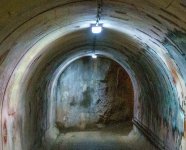
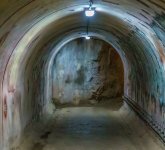
Wookey Hole Tunnel 1 (2).jpg

Wookey Hole Tunnel 1 DN (2).jpg


Shot at ISO 25,600

These are crops of the original image as below

Shot on A7R2 with kit 28-70 lens


Wookey Hole Tunnel 1SM.jpg
 
So basically if you need to shoot at high ISO's any camera will work for you.

I've just gone back from the FF Sony to M4/3 Olympus.

If I need to use Topaz DeNoise AI to save or improve a shot I know it'll work fine
 
I think you mean lower your shutter speed (y) Most of the bodies discussed have IBIS. Also some of the cameras such as the Sonys and I believe some Canons have a dual gain sensor meaning you can shoot at ISO 640 (on Sonys) and have no real penalty in noise or dynamic range vs shooting at ISO 100.
Out of interest what do you class as high ISO as looking at the few images of yours that have EXIF data the highest ISO setting is 800 which isn’t that high?
In low light I have had to ignore some possible shots because the shutter speed was too low to hand hold and expect a usable image. Most of the time I had a Manfrotto 055 with a pro pan/tilt head. That ia a very steady tripod but also quite heavy and why I want to avoid a tripod. I may never need to go above ISO 3200 which is still much better than ISO 800.
My lenses are generally slow because of my interest in shooting abstracts and nature, I had no need of fast lenses. High ISO numbers would be 6400 and above. None of my cameras gave me that ability which is why I would enjoy leaving the tripod home and hand-holding my shots. Thank you.
 
Also some of the cameras such as the Sonys and I believe some Canons have a dual gain sensor meaning you can shoot at ISO 640 (on Sonys) and have no real penalty in noise or dynamic range vs shooting at ISO 100.
That is not the case... in terms of strictly sensor performance (sensitivity/read noise) maybe; but that is only one aspect of total sensor performance/image quality. E.g. the major factor of image noise in modern sensors is shot noise, not read noise; and DR capability is necessarily decreased as ISO is increased.
 
That is not the case... in terms of strictly sensor performance (sensitivity/read noise) maybe; but that is only one aspect of total sensor performance/image quality. E.g. the major factor of image noise in modern sensors is shot noise, not read noise; and DR capability is necessarily decreased as ISO is increased.
Thanks, I've clearly been misinformed. I've just looked at photons to photos and it does appear that DR does get a boost at certain ISO (640 on Sony) but not quite back to base DR.

I'd never heard of shot noise before so have just done a bit of reading. If shot noise is the more dominant noise we see in images why do charts only show read noise?
 
Thanks, I've clearly been misinformed. I've just looked at photons to photos and it does appear that DR does get a boost at certain ISO (640 on Sony) but not quite back to base DR.
Using higher ISO's also reduces color accuracy/bit depth. Switching to the low (conversion) gain state effectively makes the photosite smaller and actually more sensitive to light, but it cannot entirely make up for the lack of light.

I'd never heard of shot noise before so have just done a bit of reading. If shot noise is the more dominant noise we see in images why do charts only show read noise?
Because read noise is a characteristic of the camera. Shot noise is a characteristic of the scene/light.

Basically, a dark scene has low levels of light; it's a weak signal with a low signal to noise ratio (SNR). As the light becomes stronger it's inherent noise also increases, but it increases much more slowly... i.e. the SNR improves. That's why the darker regions of an image have more noise than brighter areas.

Most are familiar with the "buckets collecting rain" analogy. You can extend that as low light being equivalent to a light sprinkle... if you stand out in it long enough you will eventually get completely soaked; but until that point there will spots that remain dryer (lacking enough light/information resulting in errors/noise). And bright light is like a downpour... no matter how fast you run to your car you get soaked. That's why you can use a higher ISO in brighter light scenarios with a lower noise result; you just don't normally need to do that.

It's what makes a lot of "high ISO comparisons" somewhat misleading, (almost?) none of them reduce the actual light levels.


FWIW, the very low levels of read noise (front & back end) in modern sensors is what makes them usefully ISO invariant.
 
Last edited:
Using higher ISO's also reduces color accuracy/bit depth. Switching to the low (conversion) gain state effectively makes the photosite smaller and actually more sensitive to light, but it cannot entirely make up for the lack of light.


Because read noise is a characteristic of the camera. Shot noise is a characteristic of the scene/light.

Basically, a dark scene has low levels of light; it's a weak signal with a low signal to noise ratio (SNR). As the light becomes stronger it's inherent noise also increases, but it increases much more slowly... i.e. the SNR improves. That's why the darker regions of an image have more noise than brighter areas.

Most are familiar with the pixels collecting rain analogy. You can extend that as low light being equivalent to a light sprinkle... if you stand out in it long enough you will eventually get completely soaked; but until that point there will spots that remain dryer (lacking enough light/information resulting in errors/noise). And bright light is like a downpour... no matter how fast you run to your car you get soaked. That's why you can use a higher ISO in brighter light scenarios with a lower noise result; you just don't normally need to do that.

It's what makes a lot of "high ISO comparisons" somewhat misleading, (almost?) none of them reduce the actual light levels.
Thanks for explaining that, makes complete sense (y) For ISO comparisons I find this site better for comparing noise levels rather then seeing scores and points plotted on a graph. It does allow you to choose between good light and low light too (y)

 
For ISO comparisons I find this site better for comparing noise levels rather then seeing scores and points plotted on a graph. It does allow you to choose between good light and low light too (y)
Yes, but both levels are fixed; and the low light scene is lit unevenly, which makes it hard to compare between the two scenes.
 
Thank you sk66 for your explanation even though I didn't understand it. It's amazing at the depth of knowledge people have on sites like this. Being an amateur and shooting just for my pleasure I only have to please myself, thank goodness.
 
Back
Top