

Printing Photos on Wood: The Bodgett And Scarper Guide
There are some excellent online guides on how to transfer your photographs to wood: I was inspired by the one on DIY Photography to try. But many of them rely on materials that people might not have hanging around like gloss medium. I determined to find another way. A cheap way. A fast way.
To do this, you will need:
The picture I chose for this demonstration was this one:
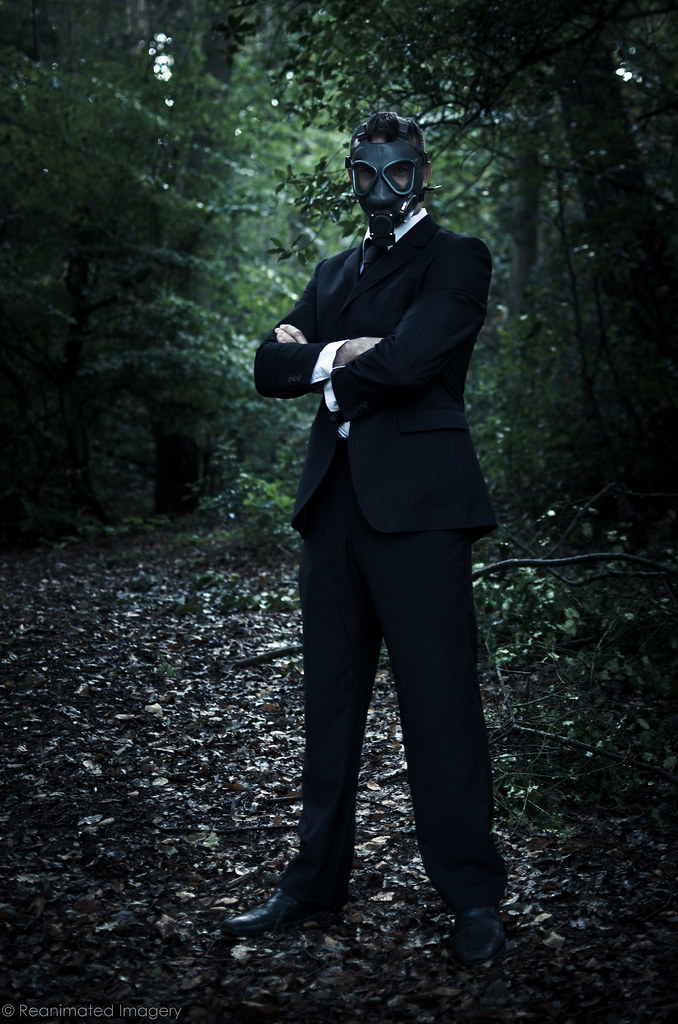
A Colder War by DrHWest, on Flickr
The first thing I did was a quick mono conversion, like so:
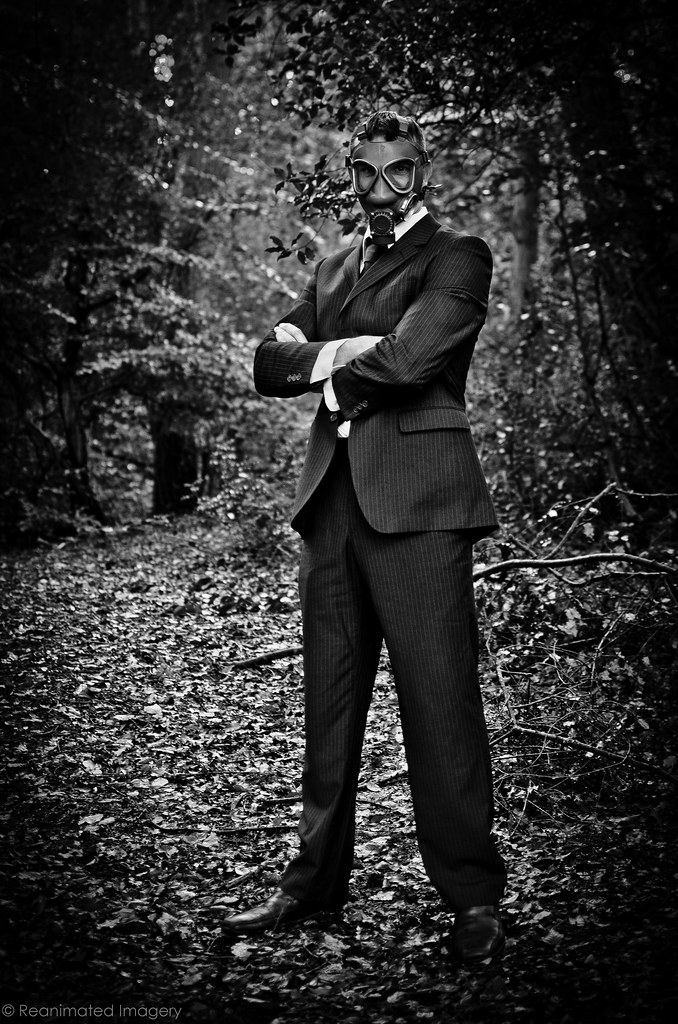
A Colder War by DrHWest, on Flickr
be aware that this process will mirror your image - I wasnt bothered for this piece, but it might be something to think about if your picture involves a lot of text. To see what I mean, keep your eye on the (C) notice at the bottom.
1. Print the picture.
Next, grab your piece of wood.
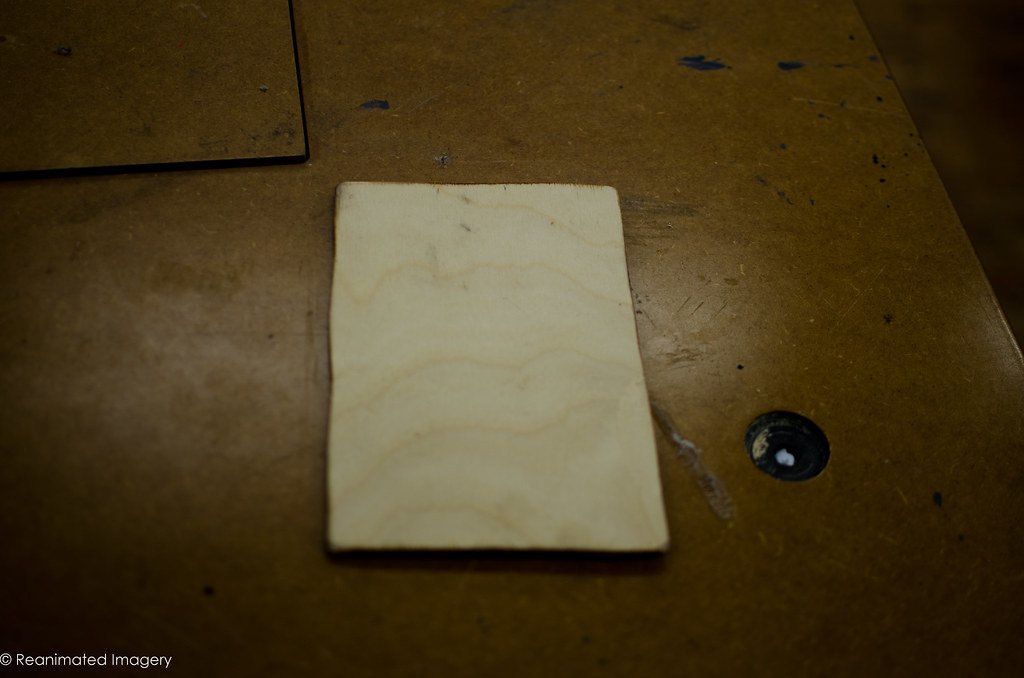
Got wood? by DrHWest, on Flickr
As you can see here, Ive cut and sanded the edges to give an uneven look - what one of mcolleagues who is a joiner insists on calling rustic.
2. Next, apply a liberal coat of the varnish to the wood. Then place the picture face down on to the wet surface.
3. Smooth down with the steel ruler or other implement. Do not leave any bubbles.
4. Leave to dry - about three-four minutes is enough. The longer you leave it to dry, the worse your final picture will look. Anything over about nine minutes will look fine until you reach the end of the process at which point it will become garbage.
What has happened as the varnish dries is that it has basically acted as glue, sticking the ink layer on to itself. Because youve only left it a few minutes, it hasnt as yet soaked in to the paper, and so the paper is not stuck to the wood.
5. So all we have to do is destroy the paper. Do not try and peel it off. Get a tap running, wet your hands and gently scrub the paper off. You may have to be quite forceful in places, but be careful not to scrape off the ink layer; its waterproof - especially now its stuck in varnish - but it will scrub off if youre not careful.
Remove all the tiny white bits of paper. If you dont, when the water dries, your picture will end up covered in fuzz. You might think youve got them all; trust me, you havent. If you left the paper on the varnish too long, this is where you'll suffer. You'll never get all of it off without ripping the print layer off the varnish as well.
Then, if youre after a beaten up look, stain the wood and photo with a rag. I tend to put it on thicker round the edges to create a vignette effect.
I also use an old model-makers weathering trick: sand down a pastel and dab the resultant powder on to the edges of the wood to darken it.
et voila:
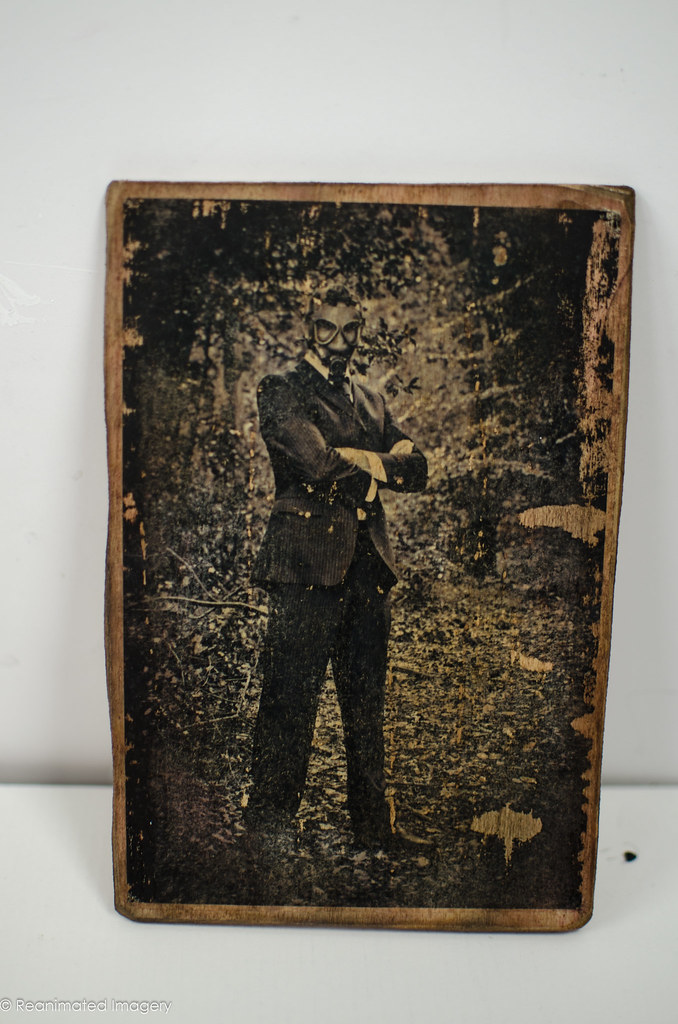
Printed on Wood by DrHWest, on Flickr
As you can see, I scrubbed off some parts of the image for aesthetic reasons - and the mirrors copyright notice for practical reasons.
I hope this shows you how easy it is to print your pictures to wood: its incredibly simple, takes about half an hour and you can use it for anything - game boards and playing pieces, tabletops, placemats, snowboards, doorplates or just as an alternative display method that just hanging a print.
There are some excellent online guides on how to transfer your photographs to wood: I was inspired by the one on DIY Photography to try. But many of them rely on materials that people might not have hanging around like gloss medium. I determined to find another way. A cheap way. A fast way.
To do this, you will need:
- a photograph - this must be laser printed, not inkjet, for reasons that will shortly become apparent
- quick drying varnish - I used Ronseal 20 minute, but other makes are available.
- A brush
- A steel ruler or something similar
- Some wood - Im using simply ply here, but experimentation by mcolleagues and I have shown that the same technique can be used on fresh cut wood, MDF or even driftwood.
- Woodstain and a pastel for finishing, if youre feeling arty
- First, the photograph. It can be colour or black and white - but if youre printing colour, bear in mind that anything white on the picture will become the colour of the wood youre using; this will take the colour temperature of most shots up significantly.
The picture I chose for this demonstration was this one:
A Colder War by DrHWest, on Flickr
The first thing I did was a quick mono conversion, like so:
A Colder War by DrHWest, on Flickr
be aware that this process will mirror your image - I wasnt bothered for this piece, but it might be something to think about if your picture involves a lot of text. To see what I mean, keep your eye on the (C) notice at the bottom.
1. Print the picture.
Next, grab your piece of wood.
Got wood? by DrHWest, on Flickr
As you can see here, Ive cut and sanded the edges to give an uneven look - what one of mcolleagues who is a joiner insists on calling rustic.
2. Next, apply a liberal coat of the varnish to the wood. Then place the picture face down on to the wet surface.
3. Smooth down with the steel ruler or other implement. Do not leave any bubbles.
4. Leave to dry - about three-four minutes is enough. The longer you leave it to dry, the worse your final picture will look. Anything over about nine minutes will look fine until you reach the end of the process at which point it will become garbage.
What has happened as the varnish dries is that it has basically acted as glue, sticking the ink layer on to itself. Because youve only left it a few minutes, it hasnt as yet soaked in to the paper, and so the paper is not stuck to the wood.
5. So all we have to do is destroy the paper. Do not try and peel it off. Get a tap running, wet your hands and gently scrub the paper off. You may have to be quite forceful in places, but be careful not to scrape off the ink layer; its waterproof - especially now its stuck in varnish - but it will scrub off if youre not careful.
Remove all the tiny white bits of paper. If you dont, when the water dries, your picture will end up covered in fuzz. You might think youve got them all; trust me, you havent. If you left the paper on the varnish too long, this is where you'll suffer. You'll never get all of it off without ripping the print layer off the varnish as well.
Then, if youre after a beaten up look, stain the wood and photo with a rag. I tend to put it on thicker round the edges to create a vignette effect.
I also use an old model-makers weathering trick: sand down a pastel and dab the resultant powder on to the edges of the wood to darken it.
et voila:
Printed on Wood by DrHWest, on Flickr
As you can see, I scrubbed off some parts of the image for aesthetic reasons - and the mirrors copyright notice for practical reasons.
I hope this shows you how easy it is to print your pictures to wood: its incredibly simple, takes about half an hour and you can use it for anything - game boards and playing pieces, tabletops, placemats, snowboards, doorplates or just as an alternative display method that just hanging a print.


