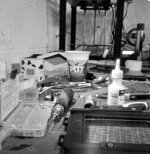
The darkroom is only a part of the facility that is now available, there are also several 3d printers in separate workshop and another woodworking shop with a flatbed CNC router for wood. Need get my g code up to scratch.
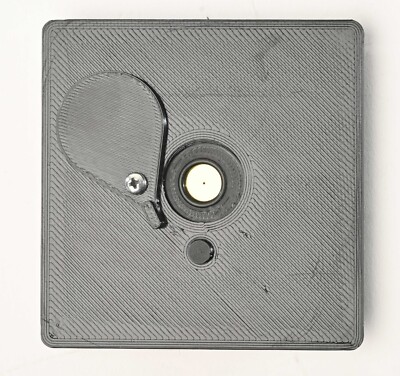
My plan is to draught the box in wood and 3d print the paper negative holders, sell thousands of them and make a million, Ha Ha.
I am very impressed by the facilities you have available, although I wouldn't have a clue how to use them so they would be wasted on me.
I have an 8*10 pinhole. In case you haven't seen this before, here's what I wrote about it:
https://kevinthephotographer.wordpress.com/2025/02/11/going-larger-with-pinholes/
Some key points to consider are:
- you might end up with a very small f stop. Mine is f/375 and that requires some
very long exposures with paper negatives. Think 10-20 minutes in bright light and 30 minutes in dull conditions. Interior shots are a non-starter.
- portability - my 8*10 pinhole camera doesn't fit into any bag I have so it's worth fitting a handle and be prepared to carry an unwieldy object around (although I think I did manage to take it on the bus once)
-very worth while having multiple pinholes, for use when photographing tall buildings.
-before I purchased my camera I made an 8*10 camera out of a cardboard box. It was a one-shot camera as it had to be opened up in the darkroom after each shot. It wasn't very sturdy and didn't last long; but it might be worth doing this to try out ideas about overall size, pinhole diameter, and pinhole position, before committing to a design in wood. Also to see some results with minimum effort.
- are you sure that you really need to go to 8*10 ? A 4x5 pinhole camera can give results which are good quality but still look like we expect a pinhole image to look. An 8*10 pinhole can give results which don't immediately look like pinhole images, even with paper negatives.
It sounds attractive to produce film holders using 3d printing, but I wonder why there aren't many on the market already, if it's easy?