
Beginner Photographing the Moon

Ronnie Mutch

Suspended / Banned
Messages
113
Name
Ronnie
Edit My Images
Yes
Heading to bed last night, I looked out the window and saw the most stunning moon. It was blood red, low in the sky and conveniently positioned next to a church spire. So, I grabbed my camera and not expecting much I took a couple of snaps. On auto mode first of all, the sky looked blue and the moon looked white. I switched to manual and managed to get something, but nothing like what I saw. I was using my Sony a5000 with 210mm lens, ISO 3200, 1/80 sec and f6.3 I took this (SOOC), which I am reasonably happy with, but I would have loved more detail in it.
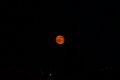
DSC00759_1 (2).JPG

I have over-lightened it to give you an idea of what I was actually looking at and hoped to capture.
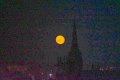
DSC00759_1.JPG

How would you go about taking this and capturing the spire and the deep red colour of the moon? I imagine I could get a much slower shutter speed if I had a tripod or a wider aperture if I had a more expensive lens.
 
The moon actually moves surprisingly quickly so slower shutter speeds are difficult but a wider aperture could help.
I'd do this with two exposures and merge them in photoshop - one for the moon and one for the spire.

To get the colour 'right' you'll need to set the white balance manually. If you shoot raw then you can do it post-capture.
 
As Simon says - to get both moon and spire nicely exposed, you'd really need to shoot two photos and merge them.
Shooting RAW for both of these would also help get your colours correct too - especially as I'm guessing there's a bit of light pollution there giving the night sky an orange glow?

Possibly, with a fast long lens (300 f/2.8) and shooting RAW you could capture this in a single exposure and lots of PP, but it's a tricky shot to do in one
 
Thanks. Skills I am sure I will pick up over time, but a bit beyond me at the moment.
 
Thanks. Skills I am sure I will pick up over time, but a bit beyond me at the moment.

There's a great shot to be had there, and you already know how to get it - tripod, and longer shutter speed. Not sure what your ISO was, but it needs to be lower to reduce noise. The moon certainly moves, but at that magnification it's like a snail moving across the frame, and a slow one at that. Even at one second or so the movement there would be the least of your worries, compared to wind buffet on the tripod, or careless focusing.

The moon usually looks best when it's big and full of detail, with a much longer lens, but if you can include something else in the frame, as you have done with the spire, or maybe clouds etc, good pictures are not difficult. And with that red moon and a dark blue sky behind... :thumbs:

Edit: The moon will only be in just the right position for a few minutes. Get your tripod ready!
 
Last edited:
There's a great shot to be had there, and you already know how to get it - tripod, and longer shutter speed. Not sure what your ISO was, but it needs to be lower to reduce noise. The moon certainly moves, but at that magnification it's like a snail moving across the frame, and a slow one at that. Even at one second or so the movement there would be the least of your worries, compared to wind buffet on the tripod, or careless focusing.

The moon usually looks best when it's big and full of detail, with a much longer lens, but if you can include something else in the frame, as you have done with the spire, or maybe clouds etc, good pictures are not difficult. And with that red moon and a dark blue sky behind... (y)

Edit: The moon will only be in just the right position for a few minutes. Get your tripod ready!

I would add that a full moon isn't the best to photograph, even though it can look spectacular on occasion. I'd recommend a half-moon because the angled light makes great shadows as the terminator between light and dark.

As a space-nerd I can report that these were the lighting conditions that the Apollo launches were timed for, so that the astronauts could pick out craters more easily. Also, the Sea of Tranquility is the slightly hexagonal/darker area in the upper middle of the photo. Apollo 11 landed at around the 7 o'clock position at the edge of that area. Finally, before I switch off nerd-mode, the smallest craters you can see here are around 25 meters across, which isn't bad from 220,000 miles away.

moon.jpg
 
Back
Top