Origin of standard focal lengths

gad-westy

Suspended / Banned
Messages
6,527
Name
Graham
Edit My Images
No
Something I've been wondering. There is a fair bit of standardisation of focal lengths and I wondered where it all started.

We have 24mm, 28mm, 35mm, 50mm, 85mm, 135mm. Then there's the zooms, 24-70 and 70-200 being very common. I realise there are many exceptions but I just wondered if there was any particular reason why we've generally stuck to some of the common ones. Why always 28mm and never 27mm or 29mm for example?
 
I suspect it's mostly marketing, and actual focal lengths are a little adrift of the claimed lengths, plus don't forget about focus breathing.
 
My understanding was that certain focal lengths "drop out" naturally from a simple lens design. The early standard f/2 lenses tended to be longer than 50mm (58mm normally), and the early f/1.2 lenses were usually 55mm not 50mm. I did read years ago that the 135mm focal length came about as being the longest that could be accurately focused on a Leica, given the length of its rangefinder base. Newer optical glasses, manufacturing methods and (dare I say it?) computer aided design changed things a little.
 
Related to the question ... I was just reading this from http://www.dslrbodies.com/lenses/lens-articles/choosing-lenses/choosing-a-simple-prime-kit.html (the bold is mine)
The traditional route would have been to carry a 35mm and 50mm prime. A moderate wide angle and normal lens, basically. These are historically-motivated choices. In ye olden dayes of photography, prime lens designs basically all revolved around 35mm, 50mm, and 85mm due to what was then known about optical characteristics, and the way lenses were created and polished. We didn’t yet have modern computer designs to simulate optical rays, we didn’t have aspherical lens designs, and for the most part designers were just beginning to experiment with groups of elements as opposed to individual elements. We didn’t have sophisticated coatings, either, which tended to be a problem with some big glass and highly curved glass. The mid-range primes were easier and less expensive to create, and thus became the norm.

But that also established the “look” of most photography through much of the 20th Century. If we make an assumption—and we should—that there are visually useful places to crop subjects such as the human body, and there are also visually problematic places to do so, we quickly discover that 50mm lenses were used at particular distances from human subjects, establishing a perspective. We grew up—at least us older folk—looking at image after image taken within a fairly short range of perspective. Ditto for 35mm, though there the motivation was capturing the entire human body or multiple humans in the frame. Still, perspectives tended to get established that we’re visually used to.​
so... at least according to Thom Hogan, its a combination of mechanical / engineering limitations in the first place, and tradition.
 
This is making for interesting reading. Thank folks.
 
In the days of film and 50mm "standard" lenses, 35mm was usually considered the first "wide angle" lens followed by 28mm, which was considered to be very wide.
Personally, when I was shooting film I never had 35mm or 28mm but went straight for 24mm, which in the day was considered "ultra-wide."
How times change.
These days 24mm (on a full frame) is almost considered to be a "standard" lens, not even a wide angle!
Ultra-Wide seems to start at 20mm (or equivalent) and go down from there.
Back in the days of film, although Ultra-Wide focal lengths were available, they were generally so expensive that they were out of the price range of most amateurs.
 
Back in the days of film, although Ultra-Wide focal lengths were available, they were generally so expensive that they were out of the price range of most amateurs.

I couldn't afford even a 24mm. :(
 
I couldn't afford even a 24mm. :(
It was a real squeeze for me too, but I managed it by not having the 35mm and 28mm!
As focal lengths decrease the price seems to go up exponentially!
These days it seems the more I pay for a lens, the less I actually use it!
 
Last edited:
Back in the days of film, although Ultra-Wide focal lengths were available, they were generally so expensive that they were out of the price range of most amateurs.
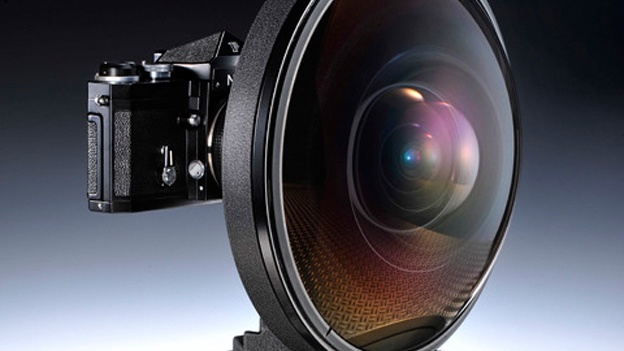
Something like
Nikkor13mm_6164.jpg

then?

Amazing what you pay for a 12mm these days in comparison!
 
Add into the mix - in ye olde days, most photographs were either Portraits or Landscapes.

For portraits it needs a lens which would give the right perspective relative to studio size - too wide and too close you would lose ears!

Then there is the simplicity of design and manufacture (profitable), So, where does that bring us.

Somebody 'discovered' that the most useful focal length generally was nearly always the distance of the diagonal of the final negative image and that has stuck for years.

If you use Lghtroom it's a good exercise to look at the number of shots you have and at which focal length.... that would show the F/L that is your standard :)
 
Last edited:
It was a real squeeze for me too, but I managed it by not having the 35mm and 28mm!
As focal lengths decrease the price seems to go up exponentially!
These days it seems the more I pay for a lens, the less I actually use it!
I saved for a 28mm and that plus a 50mm is still my favourite set up. I probably just got accustomed to it!
 
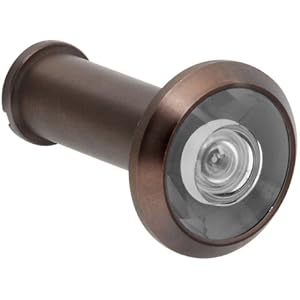
Back then I made a fish eye lens from a door lens (like below) and a lens cap. And it fitted on the front of my 50mm standard lens. It gave a circular image with a black surround, but yielded a lot of fun images as slides.
41J-sFEGxHL._SL500_AA300_.jpg
 
Last edited:
Back
Top