Not sure if this belongs here or in lighting, but ... white balance

Kell

Suspended / Banned
Messages
5,130
Name
Kell
Edit My Images
Yes
For the most part, whenever I've shot anything I've put WB on auto.

As it seems easy enough to correct in LR with literally a click, I never saw the need.

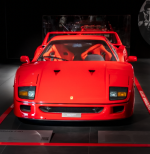
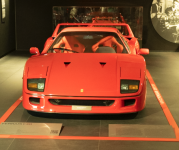
But on a recent trip to Italy, we visited the Ferrari factories - and the auto WB was making all the cars come out orange.

Half way through, I messed about with white balance in the camera to try and make it 'see' what I was seeing, but on return, I don't see any real difference in the PP'd versions of the shots where I left it on auto and those where I attempted to to dial in a custom figure.

My question, I suppose, is: Is it pointless doing it without a grey card to measure off?

As a for instance, here's a couple of screen grabs where I think it was on Auto.

Before:
1757672990609.png
After:

1757672902209.png
 
Last edited:
White balance is by far my biggest problem with my Fuji X-T5. I'm not saying thatit's a problem with the camera; rather that the problem is likely with me. I really find that it has such a massive impact on the about that I feel that it is beyond my control. It acts as an impediment to my more frequent use of the camera, which is something I want to address. In the meantime, I still lean on film.

I'd love to understand this matter fully as I am aware of the massive capabilities of the camera, but I feel the need to master this aspect of its use - at least to the point where I feel that I have enough control of it to be more intentional in my shooting (and, yes, I know that I have an EVF). I just want to "see" the picture before I've even flicked the power switch.

I'm really interested in seeing how it is correctly handled.
 
If you are PP raw files then you can freely adjust the WB in post, so getting it 'right' in camera is more of a convenience than a requirement - it can be handy to have a shot with a grey card to make figuring out what the neutral WB should be.
Note that some LED lighting systems do not output a full spectrum of light, which can make photos look wrong even after WB adjustment (your eyes/brain will to some extent correct this when you are viewing in person, making it difficult to spot at the time) - using something like a ColorChecker Passport to create a custom profile can help in these situations (and where you have mixed light sources with different colour temps).
 
White balance is by far my biggest problem with my Fuji X-T5. I'm not saying thatit's a problem with the camera; rather that the problem is likely with me. I really find that it has such a massive impact on the about that I feel that it is beyond my control. It acts as an impediment to my more frequent use of the camera, which is something I want to address. In the meantime, I still lean on film.

I'd love to understand this matter fully as I am aware of the massive capabilities of the camera, but I feel the need to master this aspect of its use - at least to the point where I feel that I have enough control of it to be more intentional in my shooting (and, yes, I know that I have an EVF). I just want to "see" the picture before I've even flicked the power switch.

I'm really interested in seeing how it is correctly handled.
That's where I'm at. Wondering if I'm doing more harm than good trying to correct it 'in camera' when I don't really know what I'm doing.
 
FWIW
I keep my WhiBal card in the camera bag.
Though it has been years since I used it. Last time was on the Hindhead Tunnel walk and it was a godsend in post to one click correct each image as I got to it. No faffing in camera ;)
 
My WB is set to auto all the time, unless I'm shooting with flash. If I'm outdoors then I use the WB dropper tool in LrC on an area of mid-tone to correct the image and do that to every image independently. If I'm shooting indoors I take a shot with the inside of my camera bag included - the bag has a grey insides - and then use the dropper tool on that and synchronise the resulting WB across all the images.
 
Was the room lighting a different WB to the lighting for the cars? That could throw off your auto WB in camera. Before reaching for the grey card, try some of the other presets - e.g. tungsten is popular for spot lights maybe that produces the correct red?
 
Was the room lighting a different WB to the lighting for the cars? That could throw off your auto WB in camera. Before reaching for the grey card, try some of the other presets - e.g. tungsten is popular for spot lights maybe that produces the correct red?

It kind of depended on where you were. The light was quite yellow in places, blue/white in others,

I did try the various presets, but nothing really worked as far as I could see.

You can sort of see it here - much whiter towards the camera, but yellow on the far side.


Ferrari 308 GTB
by Kell, on Flickr
 
Last edited:
I don't see any real difference in the PP'd versions of the shots where I left it on auto and those where I attempted to to dial in a custom figure.

My question, I suppose, is: Is it pointless doing it without a grey card to measure off?
Seems to me like you've answered your own question...

No, it's not pointless; because you've eliminated a requirement to edit the WB in post. And just as/more importantly, it can create consistency in WB/color throughout the shoot, which can wander around with auto WB (but the opposite is also true). It's also more useful if you are recording jpegs and editing in 8 bit; which is much less forgiving of changes to WB in post.
 
Back
Top