Non-fungible token

jonbeeza

Suspended / Banned
Messages
9,388
Name
Jon
Edit My Images
Yes
Not sure if this has already been discussed, could not find anything in the search tab...

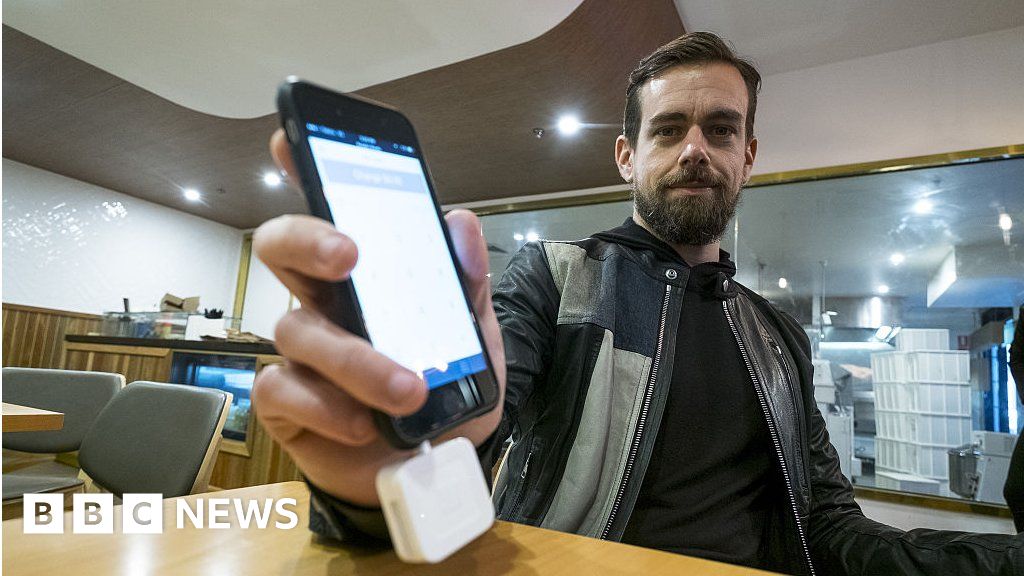
Twitter co founder Jack Dorsey is selling his first ever tweet. It will be as an NFTs.

This is after Digital online art by Beeple sold for 50 million.

Is this the way collecting art is going, something you can't physically hold?

Anyone can see this digital art online, and for free also.
 
When I first heard of such a sale......it reminded me of the bitcoin guy who had scrapped his hard drive.

Setting aside risk of irrevocable loss just how do you keep such a digital file as unique and all display copies as, just that, copies???
 
When I first heard of such a sale......it reminded me of the bitcoin guy who had scrapped his hard drive.

Setting aside risk of irrevocable loss just how do you keep such a digital file as unique and all display copies as, just that, copies???

If I had of bought something like that, I would feel I had of been taken for a fool.

I was thinking how can you own something that only exists virtually, like art?

I can't see it being the same as a website for example, as a website exists virtually, but you can own one. It just seems different with art.
 
Setting aside risk of irrevocable loss just how do you keep such a digital file as unique and all display copies as, just that, copies???

You don't.

So, for example, somebody owns the Mona Lisa. They can't stop people making copies (there were great copies made shortly after it was painted and when the Louvre is open people make hundreds of copies a day) but....they "own" it. And one of the things they could do with it is sell it. In a way, NFTs are exactly like bitcoins - they are "worth" what people will pay for them so as long as somebody is prepared to pay more than you are the value goes up. Think of it like buying a work of art too valuable to display - you keep it in a bank vault and look at a copy. The "N" is where they differ from bitcoin - it essentially means they are unique which has a value all of its own.

Almost like Once upon a time in Shaolin - nobody has ever heard it but somebody paid $2M for it mostly to say he had. Fortunately, by the time he bought it, everybody hated him anyway. The Wu-Tang Clan's Secret Album (forbes.com) Is it really that different from buying a baseball card because nobody else has one? 100 Most Valuable Baseball Cards: The All-Time Dream List | Old Sports Cards

I mean, that's the theory. Actually they are the latest emperor's new clothes. It's staggering that the art world has taken so long to sell the art equivalent of some French bread that Justin Timberlake didn't eat for serious money. Remember that time when somebody sold squares on a website for a million dollars? The Million Dollar Homepage - Own a piece of internet history! Meanwhile, people pay money for stuff that doesn't exist all the time - from music (I rent all of Spotify) to software (Office 365 or whatever it's called this week) to a planet that only exists in a game that nobody plays. 15 Most Expensive In-Game Items Ever Sold For Real Money | Notilizer

Meanwhile each time they are sold they use more power than a US household - Ethereum Plans to Cut Its Absurd Energy Consumption by 99 Percent - IEEE Spectrum . Here's a really good summary of this nonsense and the damage it does. How I Sold a Tweet About My Cat as an NFT for $50 (gizmodo.com)
 
Reminds me of a project I did a little while ago, this was part of a course I was doing. We all had to do a mood board, of a visual presentation (collage) consisting of images, text, and samples of objects etc. We also had to do a little talk about our project, and how we did it.

There were ten of us in the group, myself and one female in the group the same age as me, while the rest of the group were in their twenties and thirties.
Myself and the other oldest person made our mood boards of hardboard/wood and pictures attached. While the others did theirs via computer software, and they showed theirs on the computer desktops.

Both mine and the other physical mood boards were appreciated by the rest of the group, the computer generated boards felt a bit of a cop out really.
 
Back
Top