Night time, Low Light Photography

Jack Schmitt

Suspended / Banned
Messages
16
Edit My Images
No
I am interested in low light and maybe a little Night time Photography, Landscapes, Buildings, the sky etc....

Can anyone help me with what would be the best type of Lens to go with or any other tips for this kind of Photography, I did look at purchasing the Nikkon 50mm 1.4G would this be any good for this type of thing. 50mm seemed a good starting point.

Thanks
 
Tripod first.

Actually, for what you say you want to do a tripod is all you really need assuming your camera came with a kit lens.
 
There's absolutely no need for a fast lens, as others have said in here... UNLESS... you want to shoot actual action... people, etc.. then yes, a very fast lens is helpful indeed. If you want buildings, places... night time scenes, then a sturdy tripod, and a decent trigger or remote release is where you should be putting your money... not a lens.
 
I feel the need to ask what camera your going to be using as for is your shooting stars for example your likely want a combination of decent ISO and/or a faster than kit lens however for general night time stuff that I've written about in my guides pretty much all can happily be done with your kit lens as suggested...

Tripod is a must and you should be able to get a decent tripod for around £100 honestly I'd in general avoid the cheapest of tripods as they really are generally not fit for purpose..you'll only end up disappointed and end up spending more hard earned money on a replacement

When it comes to picking your tripod you have three factors to consider...Weight...Price...Functionality you'll generally only ever be able to satisfy two out of the three....eg you'll get a low weight and incredible functional tripod but it will be really expensive or a cheap tripod that is low weight but it will barely support itself let alone your camera...

Trigger...this is one of those areas where you can go very expensive but more often or not there is no value to this...I have a bit of trigger/release addition and generally have a few around at any one time...most of my triggers are cheap generic on/off locking triggers and the the majority of tasks that is all you'll ever need, however if you think that you might want to do more or may wish to drop a little more money in a programable release...what I will say is familiarise your self with it in daylight if this is a route you choose as its s real PITA to try an figure out a trigger in the dark...personally my more complex trigger is a wireless (NOT INFRA RED) Hahnel GigaT 2 I've got a replacement to the one Ive had for the last couple of years because I broke the last one...not a fault of the trigger I'll add...this is a great trigger by vertue of being able to operate the camera remotely...this is only needed a small amount of the time however..

IR Triggers are IMO a waste of space for anything other self portraits/group shots where the photography needs to be in shot I've found them to be incredibly un reliable when I've seen people using the infernal things
 
I use a Yongnuo MC36R timer release. It was £20, and it's brilliant! It's a timer/intervalometer, and radio release trigger all in one.
 
Thanks for the help I was nearly about to order the 50mm 1.4 thinking I needed that but thanks for the advice, I have three Tripods none of which were too expensive so a decent tripod will be my next purchase, any ideas of a good make?

I have a number of triggers which I have bought from Ebay over the last couple of years, I did purchase a wireless trigger last year which apparently has a 100metre range used with a receiver in the hotshoe never got to use it thought due to ill health, thankfully its another year and hopefully I can get out and about and give it all a go.
 
If you already have a tripod (or three) then go out and shoot, you'll soon find out what you really need.

Sounds to me like you just want to spend some money...
 
The wife just thinks i'm mad for wanting to go out taking Photo's at night anyway so that's not a problem, money does tend to burn a hole in my pocket and when I get a new idea I always end up spending a fortune, Motorbikes, cars, boats, cameras and lots of other stuff stowed away in the Garage or loft!!
 
The wife just thinks i'm mad for wanting to go out taking Photo's at night anyway so that's not a problem, money does tend to burn a hole in my pocket and when I get a new idea I always end up spending a fortune, Motorbikes, cars, boats, cameras and lots of other stuff stowed away in the Garage or loft!!

So what's the first type of night time photos you'd like to have a go at as it sounds like your good to go for now :thumbs: time to spend some money on a photography trip :D...if you've not got them a good torch and head torch both make great additions
 
Got a decent enough Torch and a couple of Headlights from fishing, I'm heading to Bath in March and wanted to start there with a few night shots of the Bridge, Baths and city centre.
 
Got a decent enough Torch and a couple of Headlights from fishing, I'm heading to Bath in March and wanted to start there with a few night shots of the Bridge, Baths and city centre.

and you presume there will be no floodlighting and no cars passing by... The torch only comes useful in pretty remote locations or dark tunnels. If you are about to do city architectural photography get something wider and shoot at the blue hour. You won't see many stars in the city
 
Got a decent enough Torch and a couple of Headlights from fishing, I'm heading to Bath in March and wanted to start there with a few night shots of the Bridge, Baths and city centre.

I'd say your good to go for a little bit of urban work, my suggestion would be to be working in bulb likely a medium aperture your starting point will be around f/8 down to as small f/16, shooting at base ISO so 100-200 usually, within the first few exposures you'll soon start to get an idea of the exposure time you'll need but generally at blue hour you'll be at approx 30 seconds, obviously all this relative to the local lighting

If your shooting in RAW which I'll be honest is the best IMO way to be doing this type of scene I tend to over expose the highlights a very small amount, if you go to far you'll loose all the detail but generally a small degree of over exposure in the highlight areas approx 1/2 a stop will aid you in getting as much out of the shadows but also keep the detail in the highlights...

Matt
 
Some good advice so I won't repeat....I would say, as an aside, find some decent locations. Seems obvious, but I've seen some technically great nightime photographs of very mundane, IMO, locations.

Cheers and don't forget to post some photographs once you've been out...in the cold and dark nights :)
 
Some good advice so I won't repeat....I would say, as an aside, find some decent locations. Seems obvious, but I've seen some technically great nightime photographs of very mundane, IMO, locations.

Cheers and don't forget to post some photographs once you've been out...in the cold and dark nights :)


Agreed. Practice technique wherever you like, but once mastered, it has to have the same narrative and emotional interest as any other photograph. Just being a technically well exposed shot at night won;t make it any more interesting in itself.
 
Thanks very much for all the advice, some great stuff here thanks.

Matt do you have a guide on this type of Photography?
 
Thanks very much for all the advice, some great stuff here thanks.

Matt do you have a guide on this type of Photography?

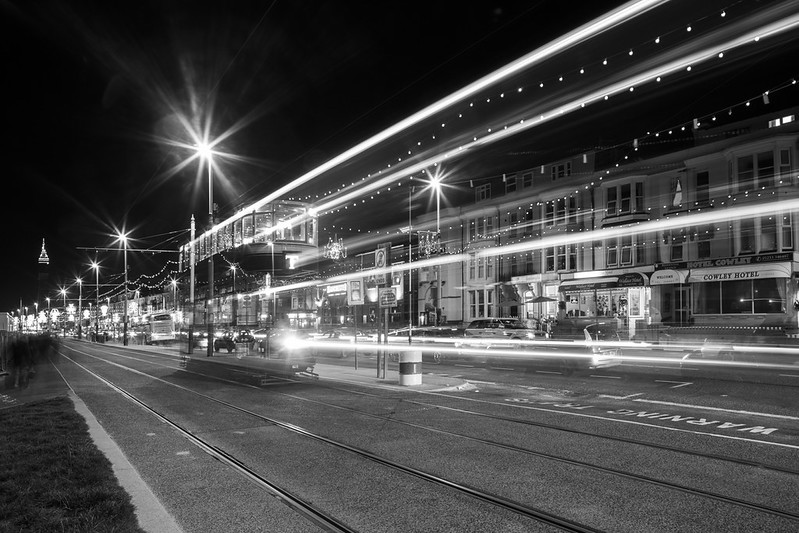
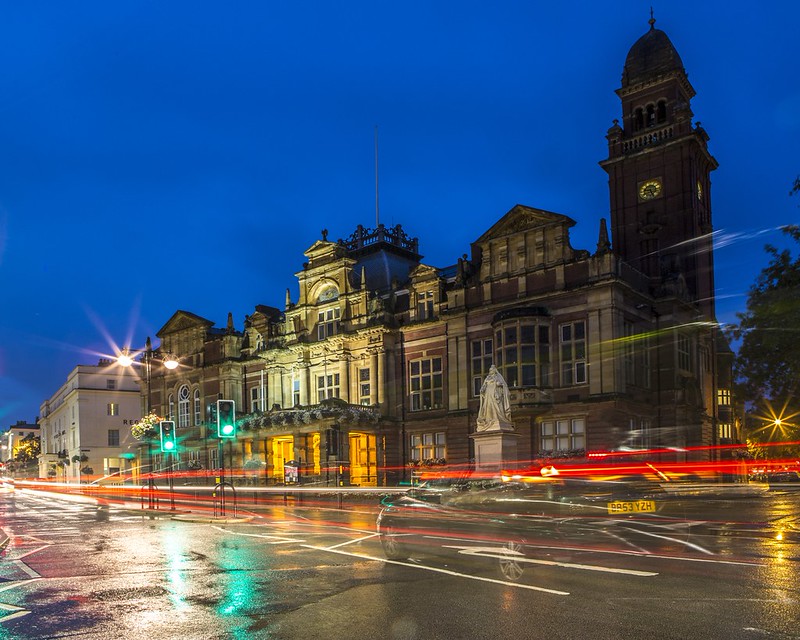
Well urban light trails is not that different from shooting light trails I'm assuming your after photos like:


295/366 (660)
by mwhcvt, on Flickr

Or


214/366 (579)
by mwhcvt, on Flickr

The biggest key to urban is composition IMO closely followed by time of day and exposure...out towns and cities are full of street furniture just looking to kill your image by getting in the way or distracting so try as hard as you can to avoid signs/lamp posts/bollards etc from obstructing your main subject in frame..the ideal time for shooting colour image has to be the blue hour so for about an hour after sunset, after then generally light pollution starts to take over the sky, you can of course kill that off with a conversion to B&W :D this is also useful for when you've got mixed lighting temperatures/colours...

Exposure wise I tent to marginally over expose highlights and then pull them back a touch in PP as this slight over exposure can be reversed without damage to the file/look but also means its easier to get the detail from the shadows/darker sections of the scene :thumbs:

So as to guides, probably the most applicable to what you'll be looking at is my guide to light trails there's a link to that in my signature :thumbs:
 
Back
Top