

Hi. This is my first post here. I tend to try quite alot of different gear, particularly unusual stuff.
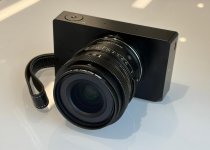
The Sigma BF is my latest squeeze, and I am enjoying it ..
I mostly have shot Leica M equipment, but have been moving more towards SL AF.
In the past I have shot alot of Sony equipment and some Nikon and Fuji.
As everyone here knows, today most cameras produce great photographs, the equipment is more due to taste.
For me, as an amateur, its the camera I want to carry around with me all day that wins.
As someone who shoots alot of film, I laugh at OSS, dual card slots and ISO performance. Not really but everything in context. And its the result that counts ?
I took a leap of faith and bought the Sigma BF recently, like when I bought an EV. Will I miss something ? how will I cope ? is it from the upside down world ?. Ok, alot was to do with the looks
 but also it allows the reuse of my L lenses. Although to be honest, I have subsequently purchased the Sigma 24mm f3.5 and TTartisan 50mm f2 to have some smaller options. Sigma please bring out some flatter f2.8 primes!!

Upfront, I can say that this is not only a beautiful camera to look at, it is a beautiful camera to use, and, most importantly, gets beautiful results.
You have to buy it in the mindset of understanding. An M series camera sounds very attractive as a compact luxury FF camera, but fall out with range finder focusing and it is really not going to work. I love rangefinder focusing. I think it is the best way to manually focus a camera, and for street and travel, I much prefer it to AF, but it is also a leap of faith for a newbie.

Lets start at an unusual place, with the sensor. The speculation is a Sony manufacturer sensor, based either on the IMX410 or 453 design, but customised for Sigma (e.g. ADC, masking, CFA spectral, Readout, not to mention colour science), similar to the path Sigma took for the FP. The bottom line is that the results are gorgeous. Sigma colours are like a warmer version of Leica. The specs have deep dynamic range and bags of colour depth, despite Sigma setting the sensor at 12bit recording for speed delivered in a 14bit raw wrapper (unlike the FP, the BF does not currently have an option to change to 14bit). There is no low pass filter – thank goodness! as it is the one feature I won’t accept in any camera I buy.
Readout speed is around 20ms, a bit slower than the A7V at 13.5ms, the A1 at 3.8ms and the A9iii at zero! This is good enough for most environments, and at the top of non-stacked sensors, but will still produce banding under certain conditions. It is wonderful to not have a mechanical shutter, for noise and any conceivable shutter shock, and at least the perceived longevity of the camera. One of the reasons cameras like the Q3, X100VI and RX1R iii are so appealing to me is due to the quietness of their leaf shutter. No shutter is even better.

The control environment is minimalistic but very useable. It reminds me more of Hasselblad then Leica. Interestingly it is an environment IMHO is worth whilst getting used to before using the camera. I don’t bother with manuals any more in the mirrorless world, as I can navigate the complex menus, but because the BF has fewer menus and more control sequences, they are worth remembering for speed.
I’ll give an example. When face recognition is on in the AF system, press and hold the OK button at the centre of the circular joystick at the back, after pressing and holding the shutter button. This switches to spot or point focus just whilst the OK button is held down. This careful workflow design works very well for me, as I prefer to keep large area & face detect on all the time, whilst switching to spot focus as and when I need.

I use cameras on aperture priority all the time. The fact my Sigma primes have an aperture ring compliments the control interface nicely.
You can set the ISO range for auto ISO (by default it is 100 – 104900) but it is worth knowing that the base ISO of this sensor design is 320. Whilst the camera will go down to 100 depending on the conditions, it seems happiest to start from ISO 400 as its ideal, and range up and down as needed.
How about the functionality ? We have all seen many complaints about this camera, folk wanting an EVF, IBIS, Wifi, etc, but basically, put all these together and you have the sony A7C ii – which is a great camera, but is not the Sigma BF.
The Sigma BF works because it is enjoyable to use. The things it doesn’t have aren’t needed if you are prepared to accept the lifestyle. I use an EVF/OVF about 50% of the time (although it is compulsory on the M, if you don’t range focus), and when I started shooting with the BF I often raised to my head to look at an EVF that didn’t exist. Although I am starting to think that you could have a mini-picture on the top left of the display to raise your eye to. The screen is great for framing, but needs to have the brightness turned up full for sun, and still you are seeing an outline at best. For me this is fine, as VFs are for framing, not for exposure check. Still it could always be brighter.

The inbuilt SSD takes away the angst and decisions about card usage and the sole USD port about decisions. I love the oled update dispaly on the back. It is small, but it displays useful infomration, such as the %age of battery charge - no having to decode flashing or still green or orange lights any more. Talking about the battery, it is not great. A second or third battery is useful. A dual charger is extra. The good news is that when charging through the camera, or in the external charger, it is very rapid. Perhaps 30mins for 50%. Because the battery is new and unique, there is nothing I can see for third party batteries at the moment (although I only use original ones).
Lastly, the looks! Well, but the silver is one to park in a display cabinet at night, instead of hidden away in the camera cupboard. I can see the design museum displaying them in 100 years time. Its that good. I bought the black, for more stealth but it is still nice, more industrial then art. I find it ok to carry around for longish periods, but hand swapping occurs unless you get a grip. There are some nice grips around, and I use the small rig one, although not all the time, just when I am taking the camera into a more hostile and longer term environment. The switch gear is also premium to use, all metal and firm. Nothing wobbling or loose.

I would boil my development points to Sigma down to just two. 1. Get a grip! Camera folk love to fiddle, and the more accessories the more revenue. A grip will help most people keep this single handheld all day. 2. In a future version, it would be nice to have wifi and wireless charge (although retain the USB socket) – just because I think that eliminating everything mechanical is the ultimate march to bauhaus. And perhaps even having Bluetooth, for things like Bluetooth microphones and headsets.
It would also be great if Sigma developed some smaller lenses, perhaps a 28, 35 and/or 50mm f2.8. I am currently using the Sigma 35mm and 50mm f2 DG DN. they are both super sharp, but the 50mm is exceptional, being in spitting distance at f2 to the Sony 35mm f1.4 GM and the Sigma 35mm f1.4. Nevertheless, having some smaller pocket size options would be great.
This camera won't appeal to everyone, but those looking for a beautiful premium experience with minimal effort, still manual if needed for those vintage lenses, and sharp beautiful results, might just love the enigmatic Sigma BF. Others can always put it on their Louis XIII mantelpiece

The Sigma BF is my latest squeeze, and I am enjoying it ..
I mostly have shot Leica M equipment, but have been moving more towards SL AF.
In the past I have shot alot of Sony equipment and some Nikon and Fuji.
As everyone here knows, today most cameras produce great photographs, the equipment is more due to taste.
For me, as an amateur, its the camera I want to carry around with me all day that wins.
As someone who shoots alot of film, I laugh at OSS, dual card slots and ISO performance. Not really but everything in context. And its the result that counts ?
I took a leap of faith and bought the Sigma BF recently, like when I bought an EV. Will I miss something ? how will I cope ? is it from the upside down world ?. Ok, alot was to do with the looks
Upfront, I can say that this is not only a beautiful camera to look at, it is a beautiful camera to use, and, most importantly, gets beautiful results.
You have to buy it in the mindset of understanding. An M series camera sounds very attractive as a compact luxury FF camera, but fall out with range finder focusing and it is really not going to work. I love rangefinder focusing. I think it is the best way to manually focus a camera, and for street and travel, I much prefer it to AF, but it is also a leap of faith for a newbie.
Lets start at an unusual place, with the sensor. The speculation is a Sony manufacturer sensor, based either on the IMX410 or 453 design, but customised for Sigma (e.g. ADC, masking, CFA spectral, Readout, not to mention colour science), similar to the path Sigma took for the FP. The bottom line is that the results are gorgeous. Sigma colours are like a warmer version of Leica. The specs have deep dynamic range and bags of colour depth, despite Sigma setting the sensor at 12bit recording for speed delivered in a 14bit raw wrapper (unlike the FP, the BF does not currently have an option to change to 14bit). There is no low pass filter – thank goodness! as it is the one feature I won’t accept in any camera I buy.
Readout speed is around 20ms, a bit slower than the A7V at 13.5ms, the A1 at 3.8ms and the A9iii at zero! This is good enough for most environments, and at the top of non-stacked sensors, but will still produce banding under certain conditions. It is wonderful to not have a mechanical shutter, for noise and any conceivable shutter shock, and at least the perceived longevity of the camera. One of the reasons cameras like the Q3, X100VI and RX1R iii are so appealing to me is due to the quietness of their leaf shutter. No shutter is even better.
The control environment is minimalistic but very useable. It reminds me more of Hasselblad then Leica. Interestingly it is an environment IMHO is worth whilst getting used to before using the camera. I don’t bother with manuals any more in the mirrorless world, as I can navigate the complex menus, but because the BF has fewer menus and more control sequences, they are worth remembering for speed.
I’ll give an example. When face recognition is on in the AF system, press and hold the OK button at the centre of the circular joystick at the back, after pressing and holding the shutter button. This switches to spot or point focus just whilst the OK button is held down. This careful workflow design works very well for me, as I prefer to keep large area & face detect on all the time, whilst switching to spot focus as and when I need.
I use cameras on aperture priority all the time. The fact my Sigma primes have an aperture ring compliments the control interface nicely.
You can set the ISO range for auto ISO (by default it is 100 – 104900) but it is worth knowing that the base ISO of this sensor design is 320. Whilst the camera will go down to 100 depending on the conditions, it seems happiest to start from ISO 400 as its ideal, and range up and down as needed.
How about the functionality ? We have all seen many complaints about this camera, folk wanting an EVF, IBIS, Wifi, etc, but basically, put all these together and you have the sony A7C ii – which is a great camera, but is not the Sigma BF.
The Sigma BF works because it is enjoyable to use. The things it doesn’t have aren’t needed if you are prepared to accept the lifestyle. I use an EVF/OVF about 50% of the time (although it is compulsory on the M, if you don’t range focus), and when I started shooting with the BF I often raised to my head to look at an EVF that didn’t exist. Although I am starting to think that you could have a mini-picture on the top left of the display to raise your eye to. The screen is great for framing, but needs to have the brightness turned up full for sun, and still you are seeing an outline at best. For me this is fine, as VFs are for framing, not for exposure check. Still it could always be brighter.
The inbuilt SSD takes away the angst and decisions about card usage and the sole USD port about decisions. I love the oled update dispaly on the back. It is small, but it displays useful infomration, such as the %age of battery charge - no having to decode flashing or still green or orange lights any more. Talking about the battery, it is not great. A second or third battery is useful. A dual charger is extra. The good news is that when charging through the camera, or in the external charger, it is very rapid. Perhaps 30mins for 50%. Because the battery is new and unique, there is nothing I can see for third party batteries at the moment (although I only use original ones).
Lastly, the looks! Well, but the silver is one to park in a display cabinet at night, instead of hidden away in the camera cupboard. I can see the design museum displaying them in 100 years time. Its that good. I bought the black, for more stealth but it is still nice, more industrial then art. I find it ok to carry around for longish periods, but hand swapping occurs unless you get a grip. There are some nice grips around, and I use the small rig one, although not all the time, just when I am taking the camera into a more hostile and longer term environment. The switch gear is also premium to use, all metal and firm. Nothing wobbling or loose.
I would boil my development points to Sigma down to just two. 1. Get a grip! Camera folk love to fiddle, and the more accessories the more revenue. A grip will help most people keep this single handheld all day. 2. In a future version, it would be nice to have wifi and wireless charge (although retain the USB socket) – just because I think that eliminating everything mechanical is the ultimate march to bauhaus. And perhaps even having Bluetooth, for things like Bluetooth microphones and headsets.
It would also be great if Sigma developed some smaller lenses, perhaps a 28, 35 and/or 50mm f2.8. I am currently using the Sigma 35mm and 50mm f2 DG DN. they are both super sharp, but the 50mm is exceptional, being in spitting distance at f2 to the Sony 35mm f1.4 GM and the Sigma 35mm f1.4. Nevertheless, having some smaller pocket size options would be great.
This camera won't appeal to everyone, but those looking for a beautiful premium experience with minimal effort, still manual if needed for those vintage lenses, and sharp beautiful results, might just love the enigmatic Sigma BF. Others can always put it on their Louis XIII mantelpiece


