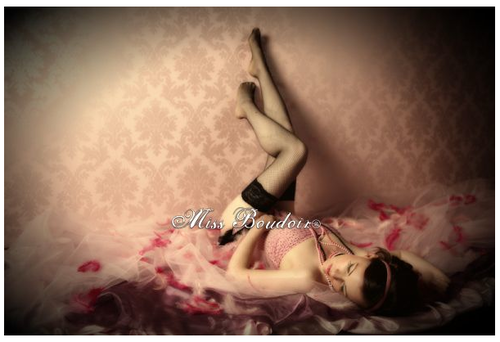
Model shoot lighting

Shooboo

Suspended / Banned
Messages
182
Name
Mark
Edit My Images
Yes
I'm planning on doing my first model shoot next month with a model friend in a light airy room with white walls (trying to use as much natural light as possible). I have a Canon 5D II with 580exII and I was wondering what lighting kit people use when photographing models or boudoir shots.

Many thanks for you help

:)
 
I use the old adage - there's only one sun...
One main light (maybe with softbox to simulate a window-light) and either reflectors or fill lights to lift the shadows...
If it's a beauty-shot then a hair-light to give that nice halo effect...

You shouldn't need more than three lights at the very most...
Start with one, then 'build' your lighting as required...
 
2-3 lights is usually more than enough for me.

Keylight
Fill
Hair/rim light(s)

maybe add another if I want an effect on the BG.
 
I work on the KISS principle. (Keep it simple stupid!)

The last Boudoir shoots I've done have been with one light. Either a large softbox or a beauty dish. Mounted on a studio head. Studio heads are better because you can either turn them down lower than speedlights or you can shoot using just the modelling lamp. Especially with the high ISO of your 5DII.

If you have to use your speedlight then get it off camera and you can go two ways, either harden the lighting using grids or soften it using a diffuser.

The other thing you could try is just using what is available, by that I mean lamps, torches etc. Get some ambient in there. I love using video light on things like this for that very reason, as Rob says there is only one sun so one main light is sometimes all you need.
 
Oh gosh. Some of the terms here, I have no idea about. Reflectors, studio heads, hairlights, keylights softboxes, fill.

I guess I was undersestimating trying to play it easy by using a bright white room and my flash for the general posing/beauty shots and then use a softer light in a dark room/bed for the boudoir shots, but I’m very much an amateur when it comes to lighting. I’ve got about 5 weeks to get up to speed on the very basics on the various techniques of lighting.

Luckily my model is a semi-professional (all 5’11 of her with the longest legs I’ve ever seen – perfect for heels and stockings ) and she’s helping me learn by posing for me. Good learning curve instead of looking useless in front a pro.
 
5 weeks is enough don't worry. I do suggest getting SOME gear as it will make so much more possible easily. Here's a first suggestion with some prices seen on the forum.

- Radio triggers. RF-602 for example, £46 for transmitter + 2 receivers

- A second flashgun: YN-460-II flashguns are only £40 each. Yes £40, not £300 like the 580exII. Of course this is a fully MANUAL flash. But it's still great controllable light where you want it.

- 2 lightstands (tripods are too short for model shoot), let's say £30 total for 2.

- 2 foldable softboxes to put on the stands to diffuse the light, Flash In The Pan sells one with all the bits and bobs for £42 each, just put your radio trigger + flash on it and you're set

So that's about an even £200 for a 2 light set (your 580exII and the YN). This will allow you to do wonders especially if there's a good window in the room for a third light.

If you want to cut down on cost, the lightboxes can be replaced with umbrella adapters + umbrellas to shave off £50 or so and it will work in a white room where it doesn't matter that the light gets reflected by random surfaces.

If you cut it down to just your 580exII flash on a stand with an umbrella and ball adapter and the basic 1+1 wireless trigger set it'll be just £65 or so for the whole thing. Less than a nifty fifty ;)

What you can do today is to learn how to use M (manual) mode on your camera. At some point in your flash learning, you'll want to go there anyway. Don't be afraid, it's fun. I just started with this stuff a week ago ;) If you want a specific effect, give us a URL and we'll tell you how it's done.

 
If you have great natural light, I would attempt using that and a reflector. Otherwise, you can achieve quite a lot with just one light and a reflector.
 
If you have lots of nice natural light in the room, then use that. You can see where it is and the effect it's having on your model as she moves around the room.

Use curtains as cutters and diffusers, white walls or bed sheets as reflectors.

Have a look at this guy:
http://www.prabuddhadasgupta.com/comissioned/comissioned.html

He's one of the leading photographers in India, shooting for Vogue and the rest. Apparently he never uses lights. Everything is natural / available light with the odd reflector on occasion.
 
There's really no restrictions on what you can do with models in a studio or a fixed room location. I use anywhere between 1-6 speedlights (three SB-900s, an SB-600 and two YN460-II flashes), with bounce & shoot through brollies, bounce brolly boxes, softboxes, reflectors, and I've even used a 7ft highlight to simulate a massive window light with a couple of speedlights inside it. I've got half a dozen light stands (some Konig, some of those Nano copies from FiTP) with various brolly adapters, Strobies XS bracket, bunch of RF-602 triggers & receivers.

Even in a studio that's equipped with studio strobes I generally tend to use my speedlights for most of it, as it's the equipment I normally use on a location.

Like Vaizki says though, RF-602 triggers, a YN460-II or two to add to your current light, couple of cheap light stands, and a couple of 24" softboxes or brollies, etc. and you'll be good to go.

Have a read of the Strobist blog, as well as Joe McNally's blog and videos darted about youtube. :)
 
This is very helpful information on this subject and I extend my thanks to each and everyone of you who has suggested some relevant equipment.

I will certainly take up offers of posting pics on here that I like to try and get the desired effect.

Many thanks for the link to the Indian photographer. In many respects, shooting only with available light is something that I’d like to achieve for general body/beauty shots . I’m not ruling out using lighting and I know it’s essential in some shoots (and of course it’s essential in low light when I want to create a sexy picture on a bed when my model is dressed in lingerie) which is where the help and suggestions on lighting come in very useful.

I’m going to have an indepth look at the equipment mentioned here and see what I can afford/learn more about the techniques (and thanks for the link to the strobist!)

Many thanks to all of you.
 
I'd start off simple with a single light and take a couple of test shots. Critically review the shots - are the shadows falling in the right place, if not move your light. Shadows in the right place but too dark, start thinking of adding either a reflector, or a lower powered light to lift them.

Shadows looking okay, but need to seperate model from background. Possibly think of lighting the background itself, or maybe a light positioned to give rim lighting to your model to seperate her.

Just take it one step at a time, review your pictures to see if anything is not quite right, and take steps to remedy problem.
 
Golden rule in lighting is start with one light then build on that one by one. It really is an art form and takes time to really master it. But it's great fun and you have total control with lighting where as with natural light, you are in the lap of the gods.
 
Thanks for your responses :) I have reviewed this and decided to buy an umbrella (or a softbox, unsure yet?), light stand and also thinking about wireless connection between my flash and my camera, but is there a way I can get a cheaper wire that goes from cam to flash?

Also at this stage I think I would prefer one flash rather than complicating things with another flash at this stage.

Watched the strobist tutorial and I think that with some basic equipment like above as well as a reflector I might be able to do something once we set move away from natural light shooting.

Below are some images that I would like to emulate. are there any specific lighting techniques I could use to achieve these effects?

HEAD/BODY SHOTS


1.
010_LIV_TYLER.jpg


2.
017_***_HERZIGOVA.jpg


3.
028_MARY-KATE_OLSEN.jpg


4.
030_EMMA_WATSON.jpg


5.
081_IAN%20BROWN.jpg


6.
120_KIRSTEN_DUNST.jpg
 
I know a posted a lot of examples but I'm interested in this kind of pic too:

how is this really shadowy look achieved?

resize_chargesheimer01_01.jpg
 
Most of those Rankin shots were taken with a fresnel spot, you'll need studio flash for that.
The one posted by Shooboo was also taken with a fresnel spot, a beauty dish or a honeycombed light - not easy to tell from the photo but certainly one of them and probably the fresnel, which from the style I would say was probably a tungsten version (the old movie fresnel) but of course flash ones produce a very similar effect.
 
Just a side note...

You could at least leave the link to other people work if you are "borrowing" it to explain your goals.

imo... it is not cool.

My tip - go and buy softbox and you will be able take lots of different shots with just one light.
If you don't have experience - you will quickly get lost with three or more light - or you will think more about technical part of the shoot - rather then model and pictures...

Keep it simple and you will get there.

Moth
 
5 weeks is enough don't worry. I do suggest getting SOME gear as it will make so much more possible easily. Here's a first suggestion with some prices seen on the forum.

- Radio triggers. RF-602 for example, £46 for transmitter + 2 receivers

- A second flashgun: YN-460-II flashguns are only £40 each. Yes £40, not £300 like the 580exII. Of course this is a fully MANUAL flash. But it's still great controllable light where you want it.

- 2 lightstands (tripods are too short for model shoot), let's say £30 total for 2.

- 2 foldable softboxes to put on the stands to diffuse the light, Flash In The Pan sells one with all the bits and bobs for £42 each, just put your radio trigger + flash on it and you're set

So that's about an even £200 for a 2 light set (your 580exII and the YN). This will allow you to do wonders especially if there's a good window in the room for a third light.

If you want to cut down on cost, the lightboxes can be replaced with umbrella adapters + umbrellas to shave off £50 or so and it will work in a white room where it doesn't matter that the light gets reflected by random surfaces.

If you cut it down to just your 580exII flash on a stand with an umbrella and ball adapter and the basic 1+1 wireless trigger set it'll be just £65 or so for the whole thing. Less than a nifty fifty ;)

What you can do today is to learn how to use M (manual) mode on your camera. At some point in your flash learning, you'll want to go there anyway. Don't be afraid, it's fun. I just started with this stuff a week ago ;) If you want a specific effect, give us a URL and we'll tell you how it's done.

Where can you get the RF-602 transmitters? :thinking:
 
Cheers Garry, thanks for your input. I suppose it’s a case of buying the equipment and then seeing what I can come up with. I’d love to emulate those above shots though 

To reply to Mothman, I was grappling with the idea of putting in the URL but then figured the picture would be easier – I’ll remember this for next time.

In respect of suggestions for equipment, I think I’m going to go with Veizki’s suggestions for equipment to supplement my the primary natural light I want to work with. I’m thinking of getting cords rather than wireless triggers though because they are cheaper…? I’m also considering the second flashgun but I would definitely need wireless if I’m going to go with two flashguns? In addition I will def buy a lightstand and umbrella and maybe a softbox too. I don’r want to limit my creativity due to lack of lights with my model because her time is at a premium and I want the bst results possible from the shoot.
 
My advise is to go wireless straight away, cords are cheap but not free and once you have your adapters etc it'll suddenly be the same cost as a wireless rf 602 set.

Did you already learn manual mode with flash or are you still equipment speccing full time? ;)
 
Vaizki - I have to say, I’m struggling with the flash on manual.

In both low and normal light, without flash, I’m used to exposing fairly correctly for any given situation in terms of ISO, aperture and shutter speed but integrating all of this when shooting with flash is quite tricky. How did you learn/what types of shots did you take to practice? I’ve been taking shots using plain bounce flash and reflectors but getting the right quality of light (due to my lack of understanding of the 580EXII) is proving tricky. Certainly need to improve before my shoot which I’m afraid I will have to postpone at this rate!
 
Vaizki - I have to say, I’m struggling with the flash on manual.

In both low and normal light, without flash, I’m used to exposing fairly correctly for any given situation in terms of ISO, aperture and shutter speed but integrating all of this when shooting with flash is quite tricky.

Throw out everything you learned about correct exposure. It's a different set of rules with flash.

ISO still does the same function of controlling the sensitivity of the sensor.
Shutter speed, now controls your flash exposure. That's why you can't just go off merrily shooting at 1/8000 sec, you are now limited to the range of your flash synch speed (Yes I know you CAN go above it but for studio lets keep it simple) The rule is that the longer the shutter is open the more of your flash light gets in so it will appear brighter. The faster the shutter the less light gets it and that's how to make backgrounds disappear.

The aperture now controls your ambient. If you are in a lit room then the bigger the hole the more light will get in so at f2.8 you have more ambient mixed with your flash than at f16.

The best thing to do is to find a decent book on studio lighting and get that 580 out and play about lighting an apple. Once you can light an apple to give you the light you want in terms of direction, power and effect then you will have a degree of confidence with a model.
 
Ok brilliant advice  What aperture and shutter speed do you recommend first if I get the apple, place it on a table with a white background, bounce flash to the left off a white wall and reflector on the right side, and shoot at 24mm (on a 24-105L) ? Thanks for your input – much appreciated.

Throw out everything you learned about correct exposure. It's a different set of rules with flash.

ISO still does the same function of controlling the sensitivity of the sensor.
Shutter speed, now controls your flash exposure. That's why you can't just go off merrily shooting at 1/8000 sec, you are now limited to the range of your flash synch speed (Yes I know you CAN go above it but for studio lets keep it simple) The rule is that the longer the shutter is open the more of your flash light gets in so it will appear brighter. The faster the shutter the less light gets it and that's how to make backgrounds disappear.

The aperture now controls your ambient. If you are in a lit room then the bigger the hole the more light will get in so at f2.8 you have more ambient mixed with your flash than at f16.

The best thing to do is to find a decent book on studio lighting and get that 580 out and play about lighting an apple. Once you can light an apple to give you the light you want in terms of direction, power and effect then you will have a degree of confidence with a model.
 
well sync is reliable at 1/160

say iso 100 f8 1/160th should be black, then turn on the flash at dial the power up/down until the apple looks good
 
Cheers David, will try that when I get home - at least if I have a starting point I can work from there. Trying to introduce flash into my exposure triangle when I don’t fully understand how the 580EXII fully interacts with my camera is proving to be very tricky, and selecting the right elements all together is the mountain I must climb! And must avoid the temptation to just switch the dial to AUTO when using flash!!!!

well sync is reliable at 1/160

say iso 100 f8 1/160th should be black, then turn on the flash at dial the power up/down until the apple looks good
 
Quick question – how does one manually turn the power of the flash up or down on the flash, really basic question I know 
 
Throw out everything you learned about correct exposure. It's a different set of rules with flash.

ISO still does the same function of controlling the sensitivity of the sensor.
Shutter speed, now controls your flash exposure. That's why you can't just go off merrily shooting at 1/8000 sec, you are now limited to the range of your flash synch speed (Yes I know you CAN go above it but for studio lets keep it simple) The rule is that the longer the shutter is open the more of your flash light gets in so it will appear brighter. The faster the shutter the less light gets it and that's how to make backgrounds disappear.

The aperture now controls your ambient. If you are in a lit room then the bigger the hole the more light will get in so at f2.8 you have more ambient mixed with your flash than at f16.

The best thing to do is to find a decent book on studio lighting and get that 580 out and play about lighting an apple. Once you can light an apple to give you the light you want in terms of direction, power and effect then you will have a degree of confidence with a model.

Ali, have you made a mistake here? Surely - and this is just a general guideline - aperture controls flash exposure and ambient and shutter speed controls ambient. Shutter speed has no effect on flash exposure as long as you're shooting within your sync speed.
 
Shutter speed, now controls your flash exposure.
Shutter speed controls your AMBIENT exposure, aperture controls your flash exposure.

The rule is that the longer the shutter is open the more of your flash light gets in so it will appear brighter. The faster the shutter the less light gets it and that's how to make backgrounds disappear.
Uhhh...

Ok, I'm shooting a studio strobe that has a flash duration of 1/800th of a second. How is me shooting my camera at 1/250th of a second any different than shooting at 1/60th of a second for FLASH exposure? :)

The aperture now controls your ambient. If you are in a lit room then the bigger the hole the more light will get in so at f2.8 you have more ambient mixed with your flash than at f16.
You got it backwards. :)
 
Shutter speed controls your AMBIENT exposure, aperture controls your flash exposure.


Uhhh...

Ok, I'm shooting a studio strobe that has a flash duration of 1/800th of a second. How is me shooting my camera at 1/250th of a second any different than shooting at 1/60th of a second for FLASH exposure? :)


You got it backwards. :)

Glad it wasn't just me.
 
switch the flash to manual by pressing the mode button then use the scrolly wheel to set power (from what I remember - I use a 430ex)
 
Throw out everything you learned about correct exposure. It's a different set of rules with flash.

ISO still does the same function of controlling the sensitivity of the sensor.
Shutter speed, now controls your flash exposure. That's why you can't just go off merrily shooting at 1/8000 sec, you are now limited to the range of your flash synch speed (Yes I know you CAN go above it but for studio lets keep it simple) The rule is that the longer the shutter is open the more of your flash light gets in so it will appear brighter. The faster the shutter the less light gets it and that's how to make backgrounds disappear.

The aperture now controls your ambient. If you are in a lit room then the bigger the hole the more light will get in so at f2.8 you have more ambient mixed with your flash than at f16.

The best thing to do is to find a decent book on studio lighting and get that 580 out and play about lighting an apple. Once you can light an apple to give you the light you want in terms of direction, power and effect then you will have a degree of confidence with a model.
Actually, it's the other way round. Shutter speed controls the contribution of the ambient light, the aperture controls the contribution of the flash.

Edit, sorry just noticed that other people had already addressed this
 
Gosh, to say I'm lost to what's gone on in this thread would be an understatement!
 
Gosh, to say I'm lost to what's gone on in this thread would be an understatement!

From David Hobby -

Controlling Your Light from the Camera

Assuming just one flash and ambient light, there are only three combinations with which to control the two variables.


1. To alter flash and ambient levels together:

Remember, flash cares about the aperture and ambient cares about both the aperture and the shutter speed. So to lighten or darken both at once, we adjust the aperture.

If, for instance, our whole scene (flash and ambient) is too dark at f/8, we could move to f/5.6. This would lighten everything by a stop -- flash and ambient alike. Conversely, we could darken the entire scene by going from f/8 to f/11.

2. To alter the ambient level but not the flash:

As we said, flash cares about aperture and ambient cares about both aperture and shutter. So to control the ambient only, we will adjust the shutter but leave the aperture as is. Assuming you are within your sync speed, this will alter only the ambient-lit portions of your photo, as in our coffee table camera shots.

3. To alter the flash-lit area but not the ambient:

This is the most complicated of the three, but only as much as "chocolate/vanilla twist" ice cream is more complicated than either of its components.

Flash cares about aperture, and ambient cares about both aperture and shutter speed. So to alter flash only, we are going to adjust the aperture (which alters both) and compensate for the ambient by adjusting the shutter the other way.

(Sound of 2,000 heads exploding.)

This is not hard at all. Say our ambient is fine, but our flash is not bright enough. Aperture is at f/8 and shutter is at 1/60th, for the sake of argument.

So we open the flash up to f/5.6, which brightens the flash-lit area -- and the ambient, too -- by one stop. Then we close down the shutter to 1/125th, which brings the ambient exposure back to its original exposure value. (1/125 @ f/5.6 = 1/60 @ f/8, right?)

Piece of cake.

To darken only the flash but preserve the ambient exposure component, we would close down the aperture and open the shutter speed by the equal amount.


Now to this all I'd really add is the other simple way to control flash exposure is to change the power on the flash. :)
 
Dean's quote from David Hobby is right. It's not that hard, but it can take some ticking over in your head before it clicks, so to speak. But once it does, you'll do it without even thinking about it.
 
That Hobby quote is marvellous - I'm off to go and practice with some apples to see if this sinks in!

Thanks guys!
 
Back
Top