Beginner Macro Advise

Ardoyne1

Suspended / Banned
Messages
3
Edit My Images
No
I’ve a Nikon D5200 camera,I want to reverse lens for Macro shooting,I’ve a set of extensions tubes,and a set of up/down rings?I believe a good lens is the old F3.5, 28mm wide angle lens,for reversing,can you still get this lens?What other connections do I need for this set up,What True Macro lens ,would you recommend?1:1,All help appreciated,

Paul
 
The old MF Nikkor 55mm f/3.5 is a good macro lens for a few £'s,(but just checked they seem to be getting expensive0
 
Depends on your budget but an excellent macro lens is the Sigma 105 mm
 
I’ve a Nikon D5200 camera,I want to reverse lens for Macro shooting,I’ve a set of extensions tubes,and a set of up/down rings?I believe a good lens is the old F3.5, 28mm wide angle lens,for reversing,can you still get this lens?What other connections do I need for this set up,What True Macro lens ,would you recommend?1:1,All help appreciated,

Paul
Depends on what do you want to photograph? A reversed 28mm is going to give you x2 to x3 magnification with your extension tubes and a workinging distance around 40mm, maybe less.

These numbers may not be exactly correct, as I am plucking them from memory. but this is a tricky set up to use and a bit specialist. Fine if you are trying to photograph a dragonflies head, but not that useful for general flower/insect photography.

What lenses do you already have. The big benefit of "macro" lenses is that they are convenient to use (because the focus close without needing any accessories) and they give a "flat field" when focussing at close distances. That means if you are photographing paintings or stamps, the edges of the photograph will be as sharp as the centre.

The latter often not that important for close up photography, which is what most people mean when they refer to macro-photography.

So it would be useful to know a bit more about what you want to photograph.
 
Depends on your budget but an excellent macro lens is the Sigma 105 mm
I am a nikon shooter and can recommend thin lens also. I also had the D5400 many moons ago, just be aware to bump up your shutterspeed [auto iso] as these older cameras had no IBIS.
 
As mentioned above, what you want to shoot would guide a recommendation.
If you are on a budget and not worried about AF ( I very rarely use AF at or near 1:1) a Vivitar 55mm or 90mm are very sharp lenses that can be had for fairly low prices. The 55mm doesn't give much working distance @1:1 and is good for static subjects, the 90mm gives you a bit more space between you and the subject.

If you have a bit more budget and want AF every Sigma EX DG macro I have used has been very good (Tried the 50mm and 105mm, I own the 70mm and 150mm) The 150mm is almost glued to my camera during the summer when out shooting macro.

If you just want a decent close up (1:2 ) lens a 52b or 52bb Tamron Adaptall2 SP 90mm macro is also a very capable lens that can be had for around £60-£80. Later versions like the 72b go down to 1:1 but I have never shot with one of those so can't give a direct recommendation.
 
As mentioned above, what you want to shoot would guide a recommendation.
If you are on a budget and not worried about AF ( I very rarely use AF at or near 1:1) a Vivitar 55mm or 90mm are very sharp lenses that can be had for fairly low prices. The 55mm doesn't give much working distance @1:1 and is good for static subjects, the 90mm gives you a bit more space between you and the subject.

If you have a bit more budget and want AF every Sigma EX DG macro I have used has been very good (Tried the 50mm and 105mm, I own the 70mm and 150mm) The 150mm is almost glued to my camera during the summer when out shooting macro.

If you just want a decent close up (1:2 ) lens a 52b or 52bb Tamron Adaptall2 SP 90mm macro is also a very capable lens that can be had for around £60-£80. Later versions like the 72b go down to 1:1 but I have never shot with one of those so can't give a direct recommendation.
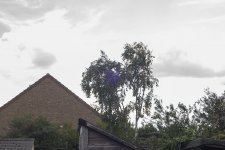
I found the Tamron 52b doesn't work well on digital. It causes a bright spot in the middle of the image. Something to do with reflections off the sensor I think. I imagine the 52bb would be the same.
 
There are several different ways of getting "macro" shot. A lot depends of what sort of thing your after, flowers, bugs or tiny parts of small things like spiders face etc.

One is close up filters, these are more or less a magnifing glass that screws onto your existing lens. These are small, cheap and work pretty well for close up stuff like flowers. They let the camera focus closer to the subject. The higher the number, the closer you get.

Then theres a macro lens, these let you get high quality close up of things, parts of flowers, bees, as well as flowers. These are fairly expensive, and often heavy-ish. (my favorite choice) Both Sigma and Tamron as well as Canon and Nikon all make macro lens.

Extension tubes. These allow very close up (depend on how many you use) and you can get quite small details. They do affect the exposure and you "loose" a few stops of exposure the longer the tubes. They are fairly cheap and work well, in my experience are better suited to static subjects and good light.

Reversing a lens. This can get some very close up images. You need a lens to reverse, as already said a fairly cheap manual lens will work fine. You also need the reversal addaptor. This is the filter size of the lens, to the mount of your camera (so you ideally need the lens first before buying the addaptor. You'll need something like a 49mm (your lens filter size) to say a Canon EF (or your cameras mount) While you can get very close, I'd suggest this is better for static or slow moving subjects.
 
Last edited:
I found the Tamron 52b doesn't work well on digital. It causes a bright spot in the middle of the image. Something to do with reflections off the sensor I think. I imagine the 52bb would be the same.
I have the 52BB and hadn't noticed this phenomenon up until today but can only produce it only in specific circumstances. As a macro/ closeup lens I have never seen it even in harsh lighting.

When I read your post I went out and did some closeups in both diffused cloud cover and full sun and can't find the flare anywhere. No hood and only natural light

Nothing special just a few quick grabs @ or around 1:2 magnification between f5.6 and f11
All had some minor cropping and tweaking highlights/ shadows.
Full sun
5P8A0126.jpg

Cloud cover
5P8A9712.jpg
5P8A9946.jpg

That said I decided to try something I hadn't ever used this lens for and shoot close to infinity towards the sun (not directly at) and sure enough there it was.
5P8A9635.jpg

Personally I don't ever tend to shoot any of my macro lenses near infinity so this is far from a deal breaker for me considering their cheapness and good performance for closeup work.

I could understand others being put off by it though.

Hope this isn't considered a thread hijacking, just thought it would be illustrative of what to expect from the Tamron SP 90mm f2.5 macro (52BB) (Warts and all);)
 
I have the 52BB and hadn't noticed this phenomenon up until today but can only produce it only in specific circumstances. As a macro/ closeup lens I have never seen it even in harsh lighting.
Long time since I owned one and I don't remember specific circumstances but I saw it enough to get rid of the lens. But I had used it for years previously on film cameras and, for that, it was a great lens.
 
Back
Top