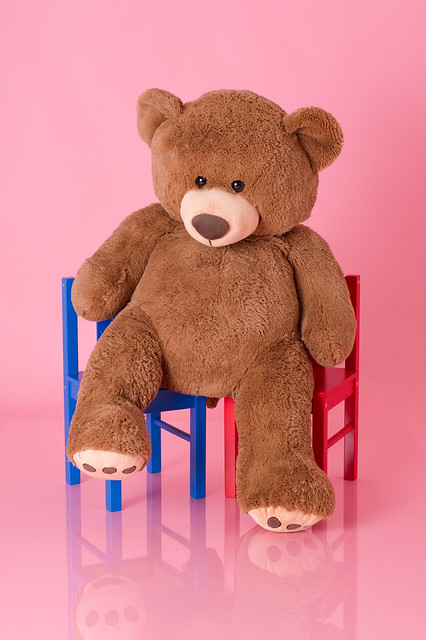
Lighting paper

donkeymusic

Suspended / Banned
Messages
2,524
Name
Carlo
Edit My Images
Yes
Hi,

I have been using paper backgrounds with multi panel to create my studio set up, this when lit gives me a reflective flooring and high key images, with white backgrounds.

I decided to move on from this and looking at colour paper backgrounds flooring, which if needs be will have a piece of acrylic placed on top to give me the reflective floor look.

Just looking for some advice on lighting paper backgrounds, i am going to test tonight but just looking for some advice. For the white i was lighting about 1-2 stops above f8 which is what i am using to lighting the subject with. Do i still go for this increase in steps or is this going to blow the blackground like before?

Any advice is much appreciated.

Thanks
 
If you want the background to photograph lighter than it really is, put more light on it than on the subject.

If you want the background to photograph darker than it really is, put less light on it than on the subject.

If I'm reading your post correctly, you want the background to show it's true shade or colour, so you put the same amount of light on it as you put on the subject
 
Exactly as Garry says :thumbs:

You can also experiment with gels together with light shaping tools (snoot/grids) to concentrate the BG lighting for some great effects. If using dark BG don't forget to introduce a hair light to stop the subject from melting into the BG and to add a bit of depth to the subject.
 
If you want the background to photograph lighter than it really is, put more light on it than on the subject.

If you want the background to photograph darker than it really is, put less light on it than on the subject.

If I'm reading your post correctly, you want the background to show it's true shade or colour, so you put the same amount of light on it as you put on the subject

Thanks thats what i thinking. Just wanted to check,
 
ok, first time i have had the chance to test this.

set up my roll of coloured paper, set up a test subject metered the subject at f8, test shot, background is near to white.

the subject was about 2 metres from the background, do i need to move the subject further away?

any advice with lighting coloured backgrounds?

thanks
 
Did you meter the light on the background as well as the subject?
 
any suggestions on where i am going wrong with this?

Thanks
 
As descibed above, set up the background and light it as you like. Incident reading from the background towards the camera, and set that f/number. Background should be rendered it's natural tone and hue.

Assuming you've got the white balance right this time, and that your meter and camera are calibrated the same. It shouldn't be very far out though, then over-expose or under-expose to make the colour lighter or darker. It's generally easier to make a darker tone lighter by increasing exposure than the other way around, if only because it's usually easier to add light than to take it away.
 
As descibed above, set up the background and light it as you like. Incident reading from the background towards the camera, and set that f/number. Background should be rendered it's natural tone and hue.

Assuming you've got the white balance right this time, and that your meter and camera are calibrated the same. It shouldn't be very far out though, then over-expose or under-expose to make the colour lighter or darker. It's generally easier to make a darker tone lighter by increasing exposure than the other way around, if only because it's usually easier to add light than to take it away.

the key light of the subject metered at f8 is turnign the colour to white.
 
the key light of the subject metered at f8 is turnign the colour to white.

What colour is the background supposed to be? If it's a very light tone, maybe being half a stop over (easily possible) could turn it close to white.

But otherwise, if you're metering it right and every thing is in order, either your meter is duff or summat's wrong with the camera/lens.

Double checked ISO? Try a different camera/lens.
 
its a pink background, i haven't been able to get back in there to test but will do some test shots to see where i am going wrong again.
 
If it's a light pink background, just a small error could throw it out. Meter and camera out of calibration (ie one set for 18% grey, the other for maybe 12%). Lens aperture that says f/8 but is actually only closing down f/5.6d5. F/number and T/stop (transmission) error, though that would throw it the other way. That kind of thing, apart from possible user error.

There was a thread a little while ago where two cameras used side by side in a controlled studio situation that were giving very different exposures, like more than a stop apart as I recall.

But if there isn't anything actually not functioning properly, all you've got to do is reduce the exposure until it's right.
 
Your problems all seem to be about colour.

Again, that review of your camera

http://reviews.cnet.co.uk/digital-slrs/sony-alpha-dslr-a550-review-49304956/

and quote
Verdict

If you're a live-view-orientated shooter who doesn't care about colour accuracy, the Sony Alpha DSLR-A550's good performance and decent noise profile will make it attractive for the money. Otherwise, you can find a better camera


Also, I would have a look at this http://www.nativedigital.com/training-and-services/ and download Rob Griffith's 'Practical Colour Management' Its free to download and cheap enought to buy and is a brilliant easy to read guide to proper colour management.:)
 
Great link, thanks Steve
 
Your problems all seem to be about colour.

Again, that review of your camera

http://reviews.cnet.co.uk/digital-slrs/sony-alpha-dslr-a550-review-49304956/

and quote
Verdict

If you're a live-view-orientated shooter who doesn't care about colour accuracy, the Sony Alpha DSLR-A550's good performance and decent noise profile will make it attractive for the money. Otherwise, you can find a better camera


Also, I would have a look at this http://www.nativedigital.com/training-and-services/ and download Rob Griffith's 'Practical Colour Management' Its free to download and cheap enought to buy and is a brilliant easy to read guide to proper colour management.:)

The reviews of the camera obviously point to an issue with the colour handling of the camera, however I am unable to change that situation. So i need to work on what i have.

What i need to know is if i meter both the background and the subject at f8, they should both be evenly lit?

My problem is that even if i dont light the paper and just light the subject at f8, then i seem to blow out the background. I only did a quick test the other day and plan to spend this evening looking at the problem, so was just looking for some steps of advice.

I have two backgrounds, which are champagne and a pink one and i am trying to light these evenly to try some different shoots away from the white backgrounds.

I think i may need to increase the the distance from background to subject so that i am not getting the keylight falling onto the background, which i think may be causing the problem
 
The reviews of the camera obviously point to an issue with the colour handling of the camera, however I am unable to change that situation. So i need to work on what i have.

What i need to know is if i meter both the background and the subject at f8, they should both be evenly lit?

My problem is that even if i dont light the paper and just light the subject at f8, then i seem to blow out the background. I only did a quick test the other day and plan to spend this evening looking at the problem, so was just looking for some steps of advice.

I have two backgrounds, which are champagne and a pink one and i am trying to light these evenly to try some different shoots away from the white backgrounds.

I think i may need to increase the the distance from background to subject so that i am not getting the keylight falling onto the background, which i think may be causing the problem
Yes, you need to work within the limitations of your equipment and just accept the need to do some PP work that really shouldn't be necessary.

It's really about about distance (or at least relative distance, how far your light has to travel before reaching your main [front] subject and then how much further it has to travel before reaching your rear [background] subject). For example, if you have say 1 metre between the two subject but your light is 100 metres away, then the fall off of light over that extra metre is virtually nothing and you will have far too much unwanted light on the background, but if the light is 1 metre from the front subject then it has lost 75% of its effective power by the time it reaches the background... So relative distance is really more important than actual distance.

Personally I like grey backgrounds, they can be selectively lit and can also be gelled, to produce very creative coloured effects, I'm not a great fan of solid colour backgrounds.

Richard has explained the exposure principles to you and I've expanded a bit on the effect of the inverse square law, what you need to do is to experiment and to find ways of getting the results you're looking for.
 
Last edited:
Yes, you need to work within the limitations of your equipment and just accept the need to do some PP work that really shouldn't be necessary.

It's really about about distance (or at least relative distance, how far your light has to travel before reaching your main [front] subject and then how much further it has to travel before reaching your rear [background] subject). For example, if you have say 1 metre between the two subject but your light is 100 metres away, then the fall off of light over that extra metre is virtually nothing and you will have far too much unwanted light on the background, but if the light is 1 metre from the front subject then it has lost 75% of its effective power by the time it reaches the background... So relative distance is really more important than actual distance.

Personally I like grey backgrounds, they can be selectively lit and can also be gelled, to produce very creative coloured effects, I'm not a great fan of solid colour backgrounds.

Richard has explained the exposure principles to you and I've expanded a bit on the effect of the inverse square law, what you need to do is to experiment and to find ways of getting the results you're looking for.

thanks,

i am happy to work with what i have and to try and test, was just looking for some advice as i wanted to try and do a shoot like this for family, http://sarahwilkesphotography.co.uk/w/cake-smash/

i just presumed the subject would have been sat just in front of the backdrop, but maybe i am wrong
 
i am appreciating the help and advice offered, and my post are just me thinking aloud.

If i was shooting a subject against a coloured backdrop and the keylight is blowing out the colour, if i was to shoot the subject sat in a chair against a patterned wallpaper, would i get the same results of it being blown?
 
i am appreciating the help and advice offered, and my post are just me thinking aloud.

If i was shooting a subject against a coloured backdrop and the keylight is blowing out the colour, if i was to shoot the subject sat in a chair against a patterned wallpaper, would i get the same results of it being blown?
I really hate these flash websites with constantly changing photos, it's really hard to see the photos long enough to get any idea of how they were lit, and the flat lighting of 'cute' subjects doesn't help either....

But from the little that I can see, I would say that the light is overhead and angled forward, which takes care of both excessive light on the background and unwanted shadows, with a reflector at the front to fill in the shadow areas.
Perfectly valid for shots of this type.

Subject to the reflective qualities of the wallpaper, yes you'd get the same effects as on a plain background.
 
Subject to the reflective qualities of the wallpaper, yes you'd get the same effects as on a plain background.

so i guess i need to give more consideration to the direction of lighting and positioning of the lights.

thanks
 
Garry, the pics against a continuous background in a pastel colour with a refelective floor effect. Were these shot on one of those perspex table things and lit from underneath/behind?
 
Garry, the pics against a continuous background in a pastel colour with a refelective floor effect. Were these shot on one of those perspex table things and lit from underneath/behind?
God Knows, but I don't see why they would be - I suppose the answer is to ask Sarah Wilkes... As I said, my guess is a light (probably a softbox) above and pointing down/forward, with a reflector forward and pointing up/back

Reminds me of a comment by a pro magician, talking about Yuri Geller - "Well, I suppose that he could be bending spoons using some supernatural force, but there's a much easier way of doing it..."
 
Back
Top